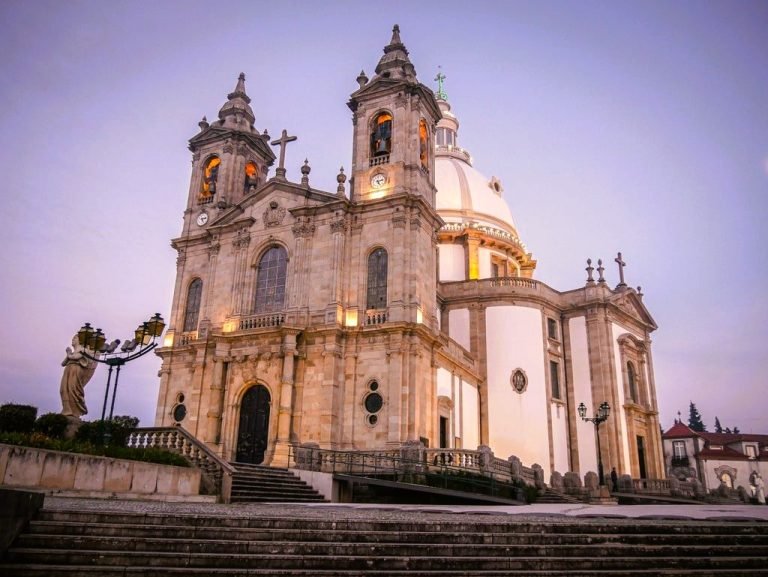
Tomar
is one of those beautiful Portuguese towns where history feels quietly present rather than overwhelming. With its rich past and charming, unhurried sens of a place, it sits perfectly at the heart of the region, making it an ideal base for visiting nearby places like Fátima and Ourém. Yet Tomar itself deserves more than just a stop on the way, it invites you to slow down and stay.
Tomar offers a beautiful balance between cultural heritage and natural calm, stretching along the Nabão River, where shaded paths and the peaceful Mouchão Park offer a softer, greener contrast to the stone walls and ancient architecture. but like many historic towns, trying to see everything at once can quickly turn a visit into a checklist. So instead of rushing, I chose to slow down.
We left Coimbra heading toward Cascais, stopping in Nazaré during the day, then continued on to Tomar, where we stayed for two nights, drawn by its history and the idea of a quiet farm stay, a chance to relax and experience quinta life. After busy cities and long drives, we were craving calm, fresh air, and quite nights
What we forgot, though, was one important detail: farm nights are short. People sleep early. Very early.
Nazaré, however, had other plans for us. Watching the sunset from the lighthouse took our breath away. The light, the ocean, the silence, it felt heavenly. Even though I kept asking my husband to leave, he refused. “How many times in your life will you witness something like this?” he said. And honestly, he was right.
We had told our host we would arrive at 7:30 p.m. We arrived at 10 p.m.
By then, the road to the quinta was pitch dark, so dark you couldn’t even tell where you were. Without Google Maps, we would have been completely lost. When we finally reached the place, the gate was closed, the surroundings were silent, and everything felt unsettling. I panicked. Then the gate opened.
A very old lady, maybe 85 years old, stood there. At that moment, I wanted the ground to open and swallow me. I felt so ashamed. She calmly said, “This is not a hotel. We don’t have a front desk. I sleep early.”
I apologized at least a hundred times. I apologized for both of us. My husband, of course, was completely fine, because I was the one doing all the apologizing. Inside, I was blaming him for everything, and plotting my revenge in silence.
And yet, that night became one of those moments you never forget, messy, uncomfortable, human, and strangely beautiful. Exactly the kind of story travel leaves you with.
Convent of Christ
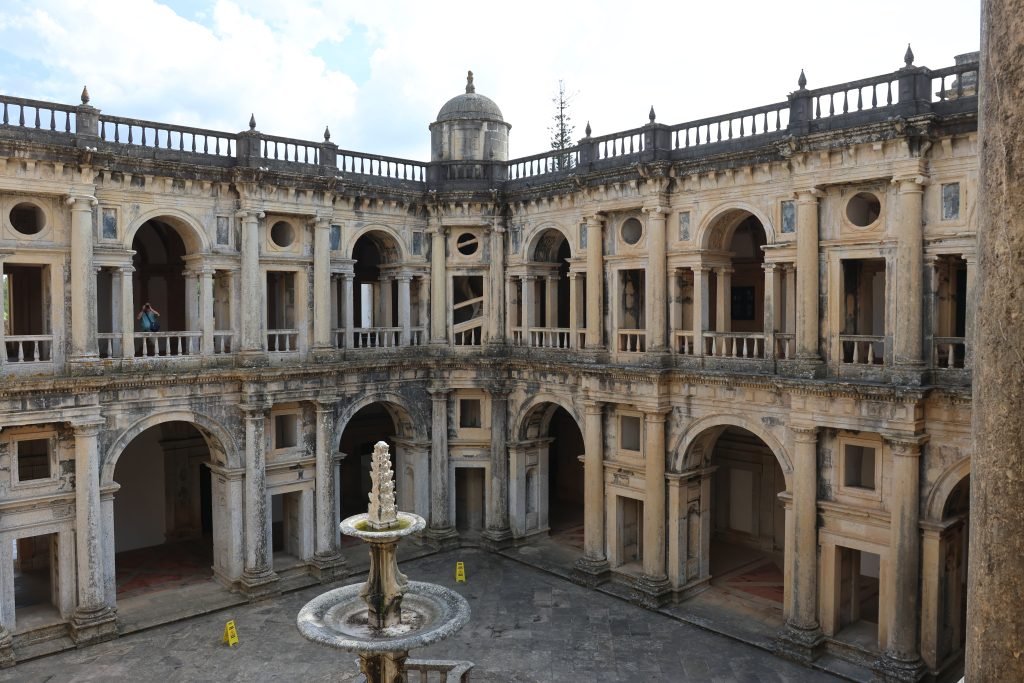
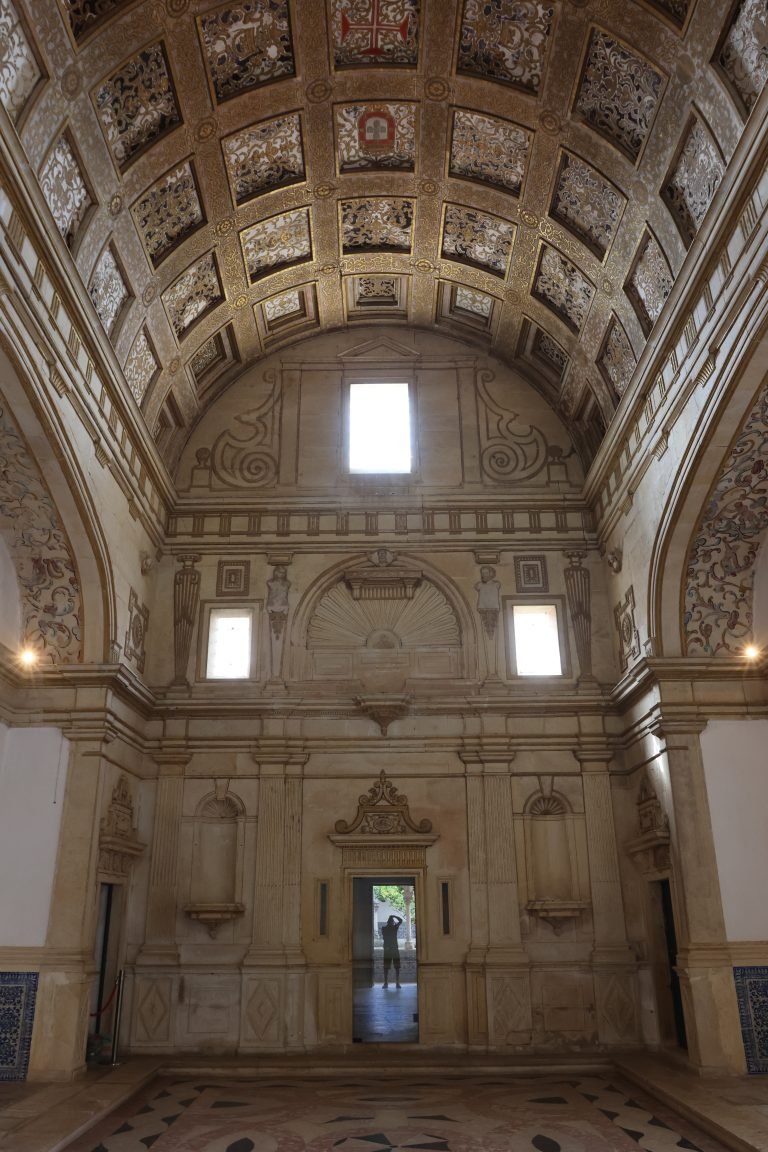
Our host recommended that we start with a visit to the Convent of Christ, and we followed her advice. From the moment we entered, the place felt unlike anything I had seen before. It wasn’t just one building, it was a whole world. Multiple courtyards, castle-like walls, elegant arches, stone staircases, kitchens, many rooms, and quiet corridors unfolded one after another, each telling a different story.
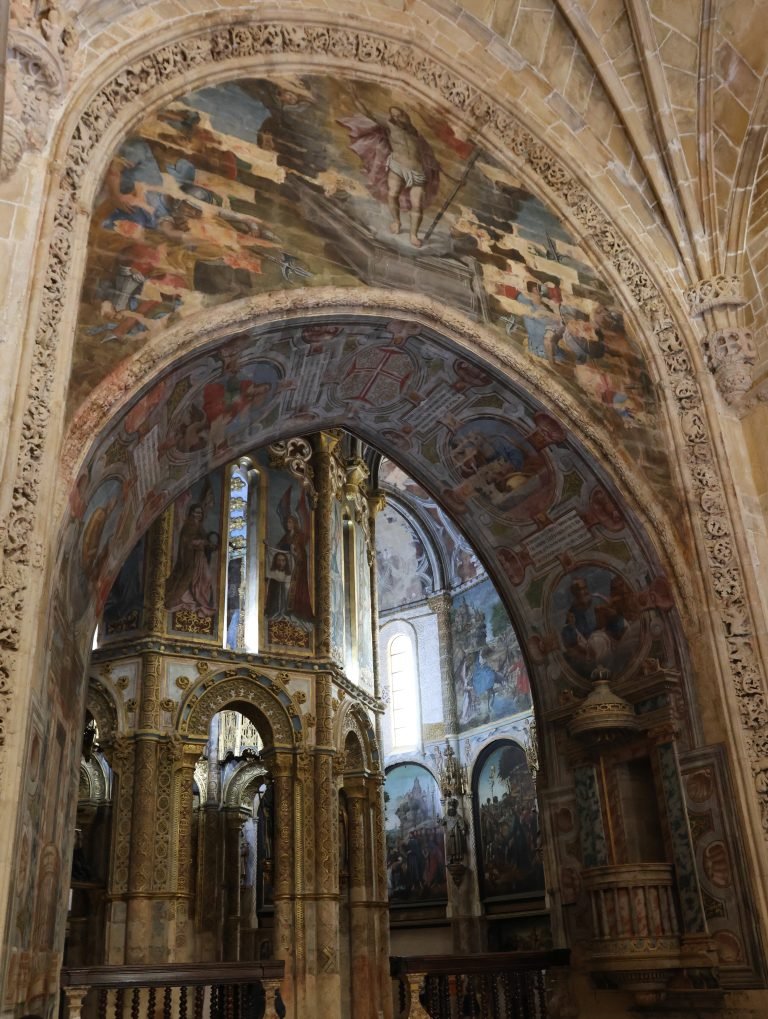
At the heart of it all is the church, originally built as a Templar oratory, where the Knights could attend mass without dismounting their horses, a detail that immediately transported me back in time. Walking through the complex, you can feel the layers of history: the Knights Templar, the Order of Christ, and centuries of expansion that blended Romanesque, Gothic, Manueline, and Renaissance styles into one extraordinary place.
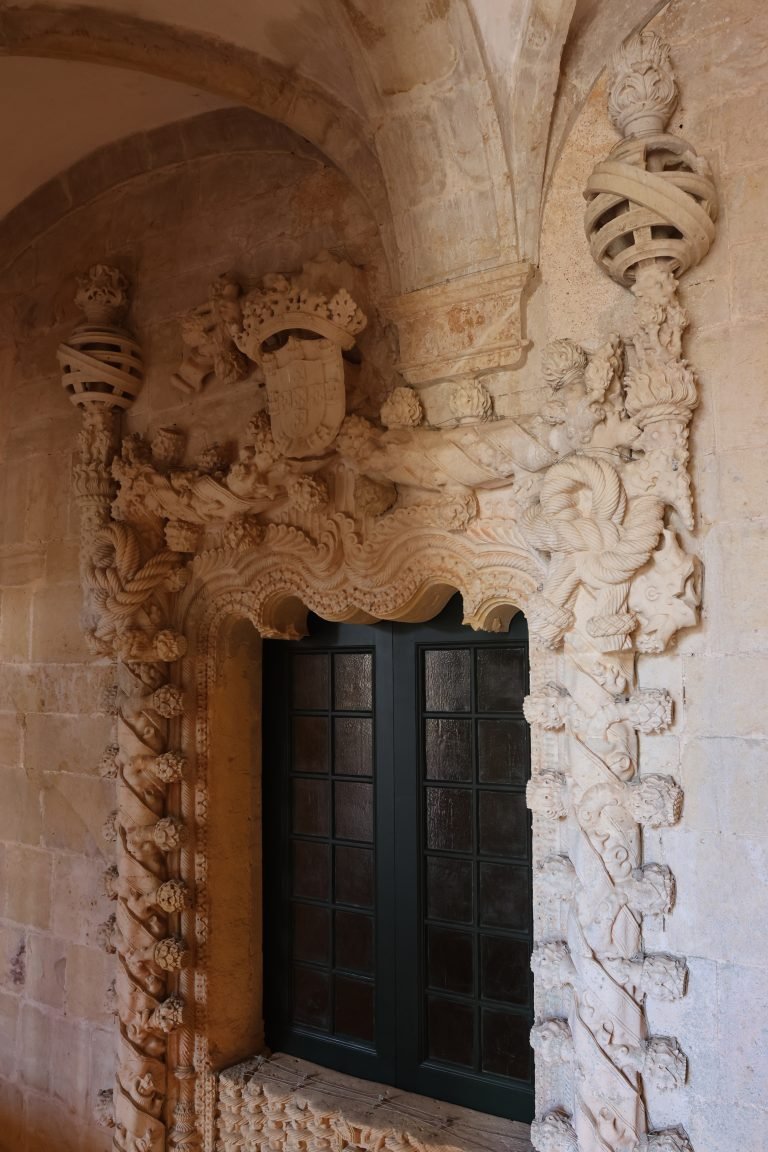
As a UNESCO World Heritage Site, the Convent of Christ stands as a powerful testament to Tomar’s importance in Portuguese history. It reflects not only religious life but also Portugal’s Age of Discoveries, with maritime symbols carved into stone, especially in the famous Manueline window, one of the most remarkable architectural details in the country.
It’s the kind of place that demands time. Not to rush, not to skim—but to walk slowly, pause often, and let the past reveal itself, one courtyard at a time.
Architecture, azulejos and arches
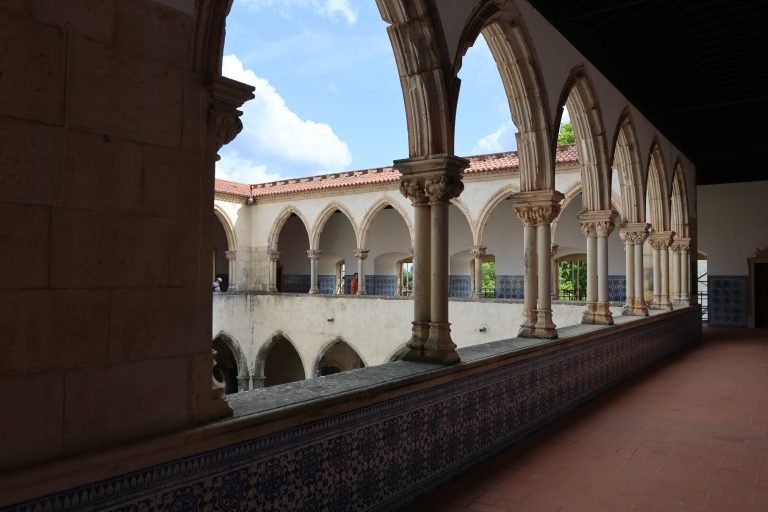
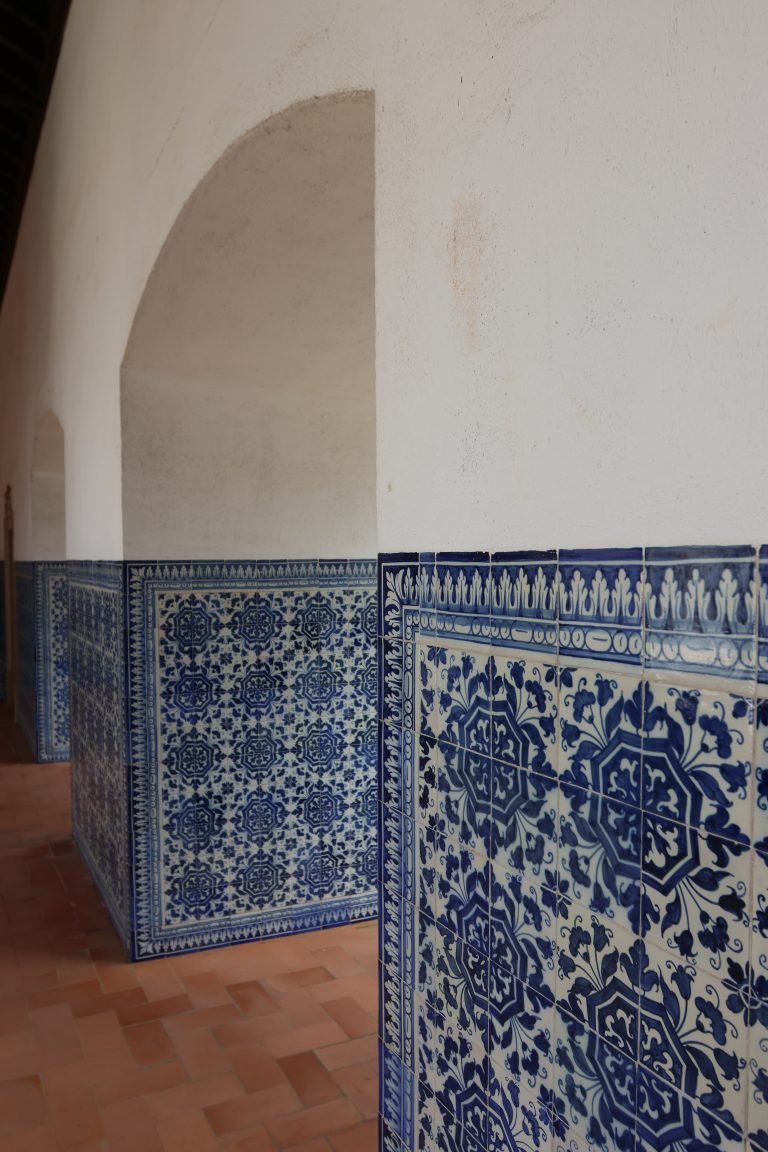
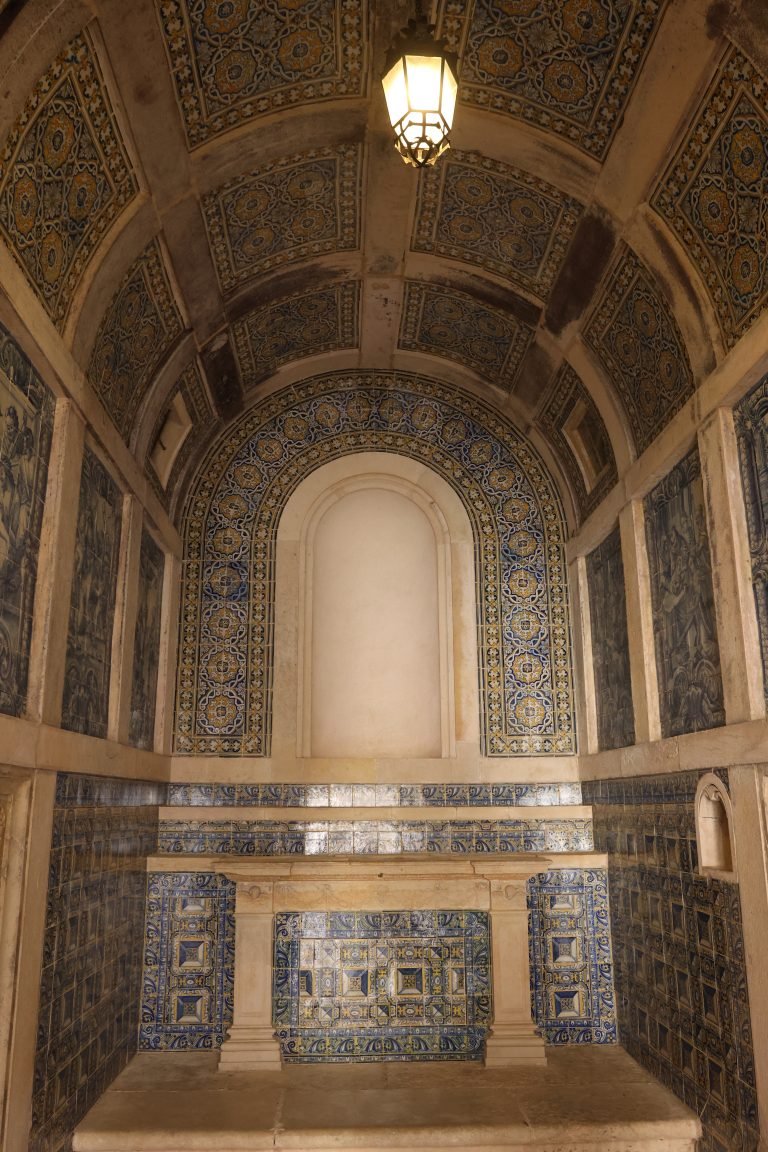
As you step into the convent, your attention is immediately drawn to the exquisite blue azulejos adorning the walls, especially in the Cemetery Cloister, where knights and monks of the order were once buried. The atmosphere there feels quiet and contemplative, with history lingering in every corner. You’re then drawn to the elegant twin columns of the arches, the majestic Cloister of John III, and the grand halls and chapels, each revealing a breathtaking fusion of Manueline and Renaissance architecture.
I honestly thought I would be tired of blue tiles by then, I had seen so many throughout Portugal. But instead, I loved them. Somewhere along the way, I became completely addicted to blue porcelain. There’s something deeply beautiful and unique about the way the blue patterns catch the light, tell stories, and bring warmth to stone walls that have stood for centuries.
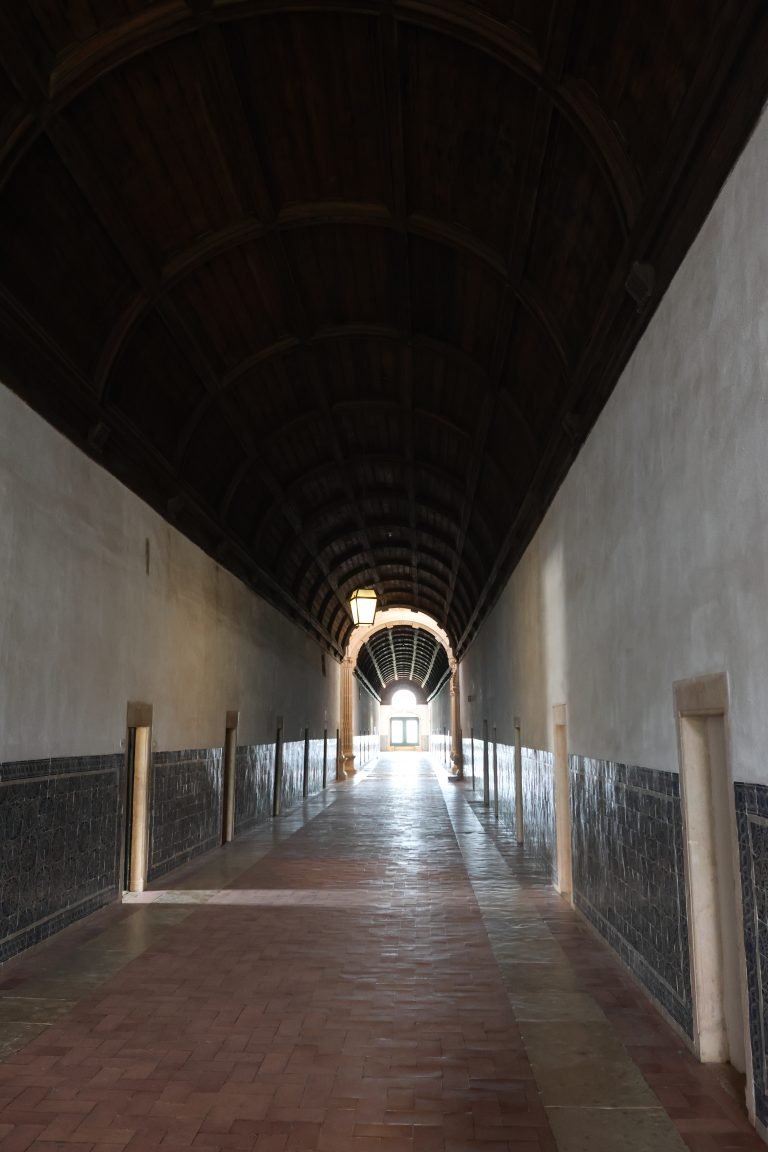
As I strolled through the convent, marveling at the high ceilings, gigantic halls, and endless corridors, I couldn’t help but wonder how people managed to keep warm during the colder months in the past. The sheer scale of the building, combined with its solid stone construction, felt beautiful yet intimidating, surely a challenge when it came to comfort and warmth.
Today, we have heating systems, hot running water, and en-suite bathrooms, and still we complain about the cold. Imagining life here centuries ago makes you pause. Moments like this always deepen my appreciation for the engineering ingenuity and resilience of past civilizations, who built not just for beauty, but for endurance.
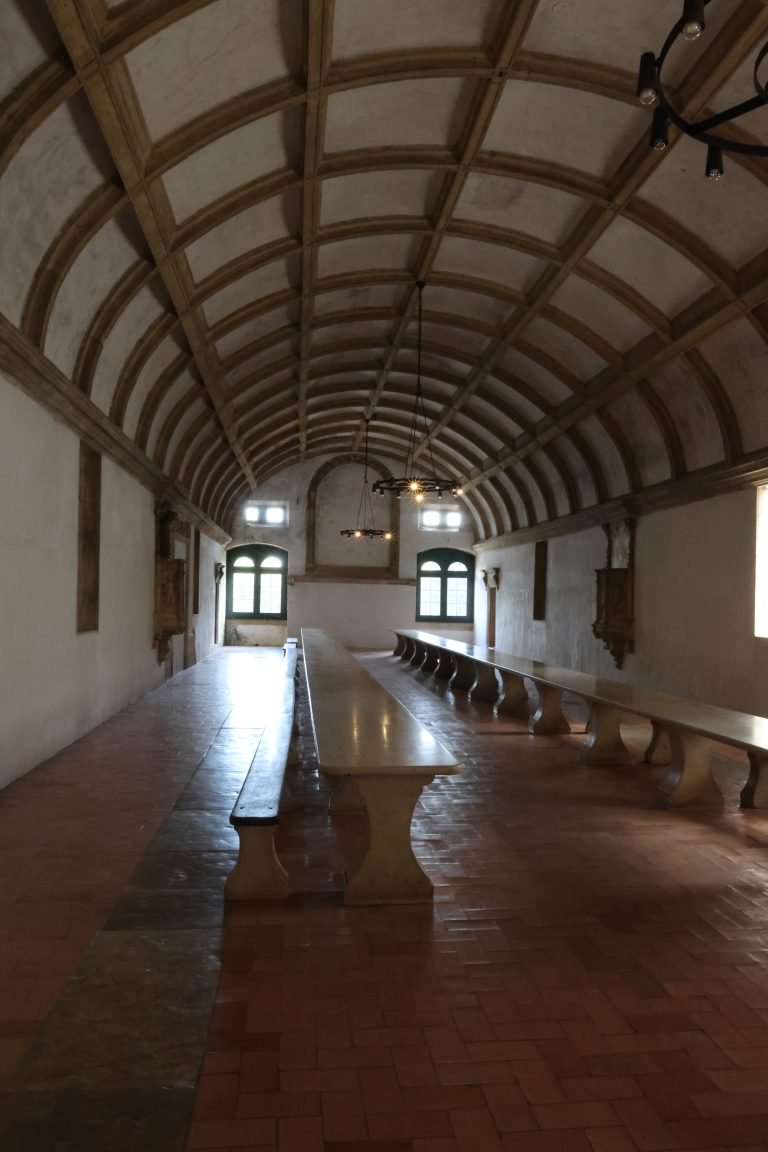
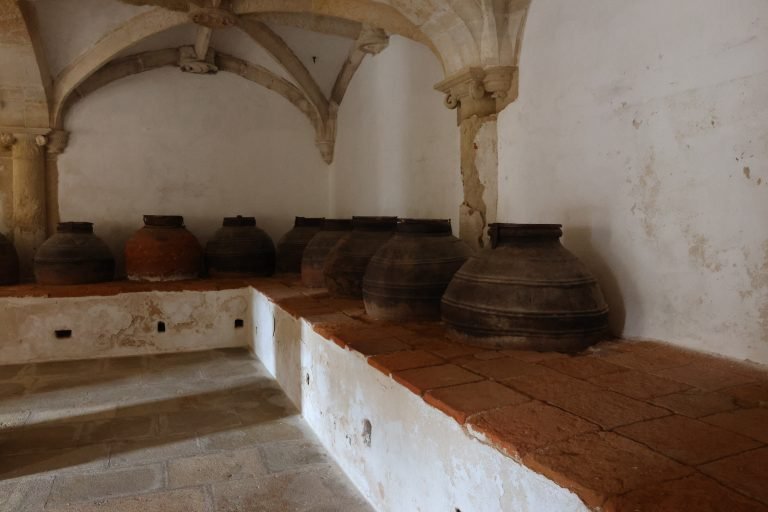
Then I wandered into the kitchen, where enormous clay jars once used to store olive oil, and likely wine and other drinks, were lined up in perfect order. Their size alone was impressive, a reminder of how life here was organized around self-sufficiency and communal living. Nearby was the dining hall, with its very long marbel table and benches on both sides, exactly like the scenes we’re used to seeing in films about kings and knights, where celebrations and grand feasts unfold under candlelight.
As I moved from room to room, I couldn’t stop imagining what daily life must have been like in this place. The rituals, the gatherings, the quiet moments between them. Honestly, despite its age, the convent felt fabulous, grand, alive, and full of stories waiting to be remembered.
The Round Church
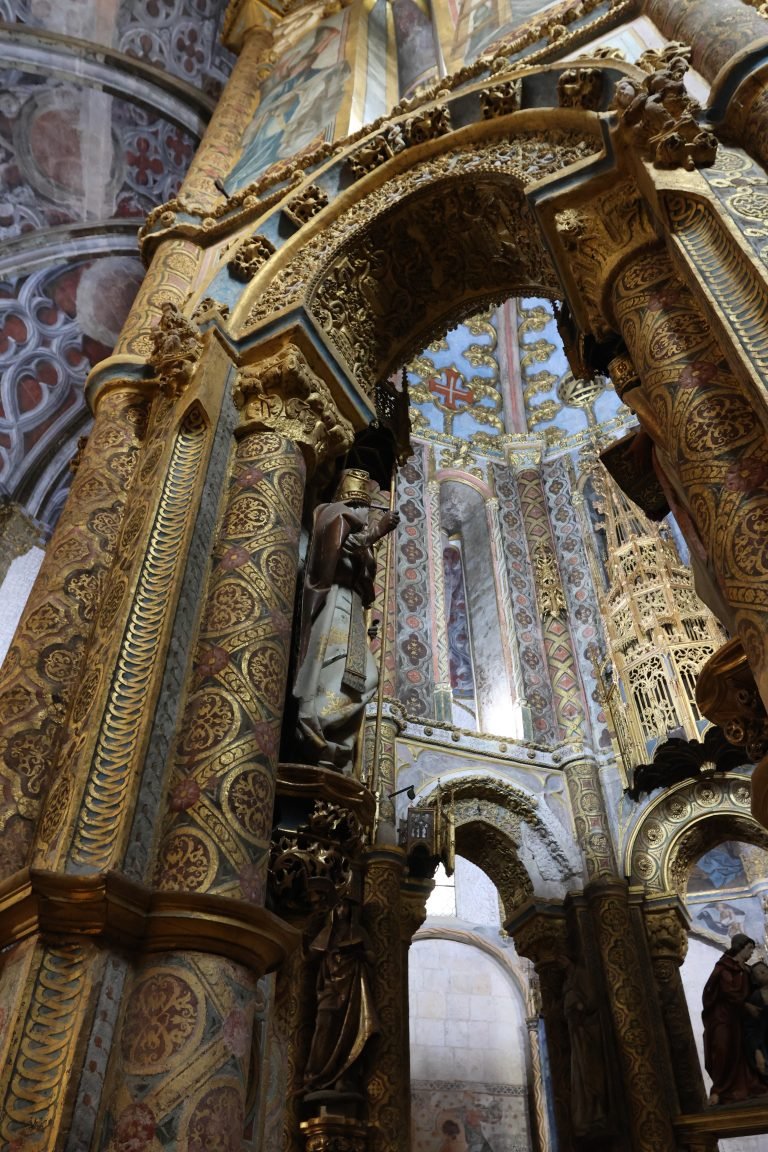
The Round Church is a true masterpiece, drawing you in with the intricate details crafted in its walls and ceilings. The ambulatory is covered in carvings and reliefs that illustrate key scenes from the life of Christ, inviting you to slow down and study every story etched into stone.
Built in the 12th century (around 1160–1185) by Gualdim Pais, the Grand Master of the Knights Templar, it was originally designed as a Templar oratory and part of the original Templar stronghold. Its octagonal shape is immediately striking, connected to the surrounding convent through elegant arches. This layout allowed warrior monks to ride in on horseback, a fascinating practical feature that also gives the church a sense of movement and life, even centuries later.
Learning that the church’s design was inspired by the Mosque of Omar in Jerusalem and the Church of the Holy Sepulchre added yet another layer of intrigue. It reflects the deep connections between cultures, religions, and architecture during the medieval period, a reminder of how ideas traveled and evolved across lands and generations.
Standing inside, it’s impossible not to marvel at the engineering brilliance and artistic vision of the builders. The church is powerful, it’s a place where faith, history, and innovation meet in one unforgettable space.
Exterior of the Convent
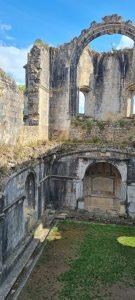
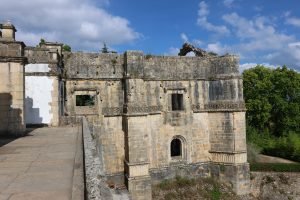
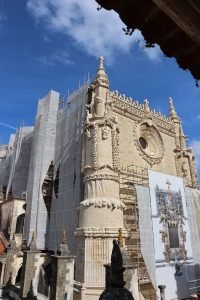
Even from the outside, the Convent of Christ is breathtaking. Its stone walls rise majestically above the town, a mix of fortification and grandeur that hints at its centuries of history. Some parts of the complex were under renovation when I visited, but that didn’t diminish the sense of awe. In fact, seeing the layers of old and restored buildings added to the story, a reminder that this place has been alive and evolving for nearly a thousand years.
One section stood out vividly in my memory: a part of the building without a ceiling, only walls and tall windows, opening onto a vast terrace that offered a spectacular view of the nearby castle. The terrace seemed to float above the town, giving a sense of openness and perspective that contrasts beautifully with the enclosed courtyards and stone corridors inside.
Walking along the exterior, I noticed the variety of architectural styles, from Romanesque solidity to Manueline flourishes, each telling a chapter of the convent’s history. The towers, terraces, and fortified walls create a castle-like silhouette, blending defense with elegance. From here, you can almost imagine knights patrolling the walls, or monks gazing out over the town, the river, and the surrounding hills, a perfect balance of beauty, strategy, and spiritual calm.
I also remember the big, ancient trees surrounding parts of the convent, shading the stone walls adding to the beauty. Nearby, stretches of the aqueduct caught my eye, arches rising gracefully over the landscape. When we visited later, we learned that this aqueduct once supplied water directly to the convent, explaining how it reached even the highest walls. Seeing it in person made the engineering feat all the more impressive; centuries ago, people designed these structures not just for beauty, but for practical life, ensuring the convent could sustain itself.
Aqueduto do Pegoes
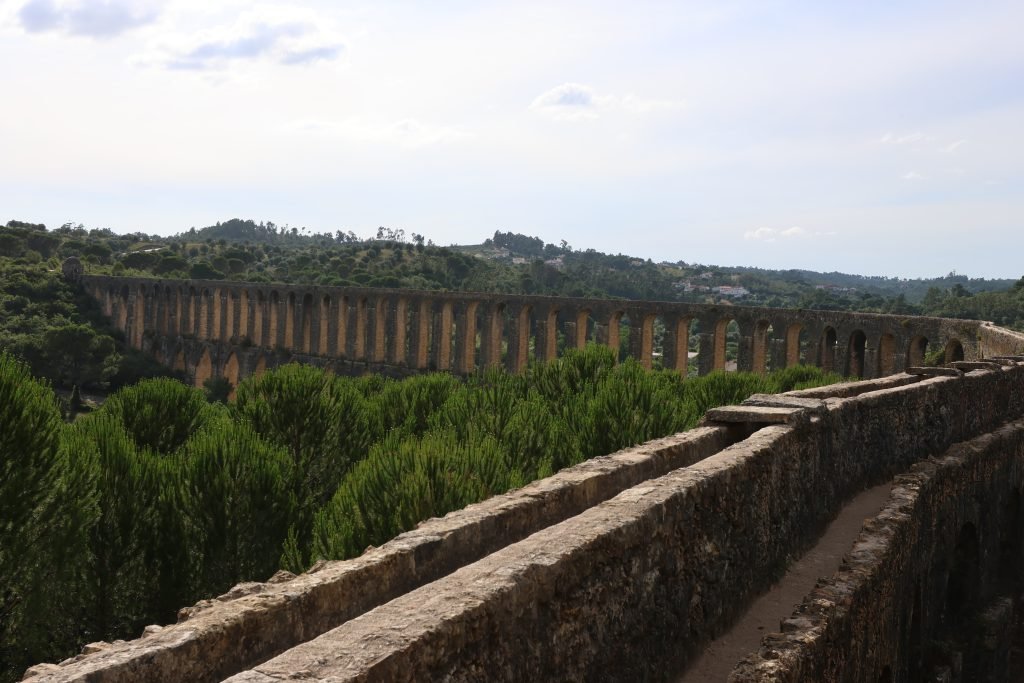
From afar, the Aqueduto do Pegões draws attention with its majestic presence and wonderful arches. As you approach or drive under the Aqueduto, it’s easy to mistake it for a bridge, perhaps meant for a railway line. However, the magnificent Aqueduto do Pegões was constructed to provide the Convent of Christ with fresh water from the Pegões River, spanning a distance of 6 kilometers.
Construction began in 1593 under the reign of Philip I of Portugal, after about 25 years of work, the aqueduct’s stone channel finally reached the convent’s cloisters and fountains, delivering water from four natural springs, The aqueduct has around 180 arches in total, and in its most striking section over the Pegões Valley, it rises up to 30 meters high with two layers of symmetrical arches that rhythmically follow the contours of the land.
Its wonderful arches not only served as conduits for water but also enhanced the natural beauty of the landscape. Even today, the aqueduct stands as one of the most important hydraulic engineering works in Portugal. Standing atop the aqueduct’s walls offers a breathtaking view that drives one to wonder: how was such a remarkable structure built with the limited tools available at the time?
Tomar Castle
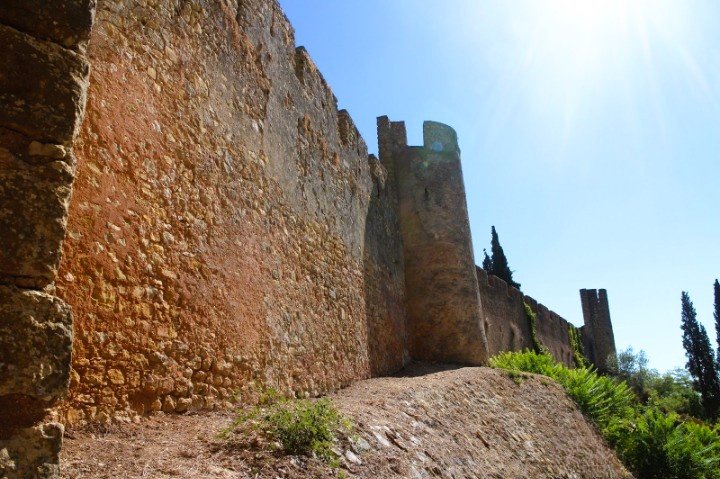
The castle sits just next to the Convent of Christ, so close that while visiting the convent, you can already see its stone walls, towers, and gardens, almost as if they belong to the same complex, which, in truth, they do. From within the convent grounds, the castle feels less like a separate attraction and more like an extension of the site, quietly overlooking Tomar from its hilltop position.
Originally built around 1160 by Gualdim Pais, the Grand Master of the Knights Templar in Portugal, Tomar Castle was one of the most important Templar strongholds in the country. It was designed not only as a fortress but as a strategic headquarters, protecting both the convent and the growing town below. Thick stone walls, fortified towers, and the old keep (alcáçova) still reflect its defensive purpose, offering sweeping views over the Nabão River and the surrounding landscape.
The castle watching over Tomar as it has done for nearly nine centuries. Calm, powerful, and deeply rooted in history, it completes the story of the convent and reminds you that this place was once the very heart of Portugal’s spiritual and military power.
Mouchao Park
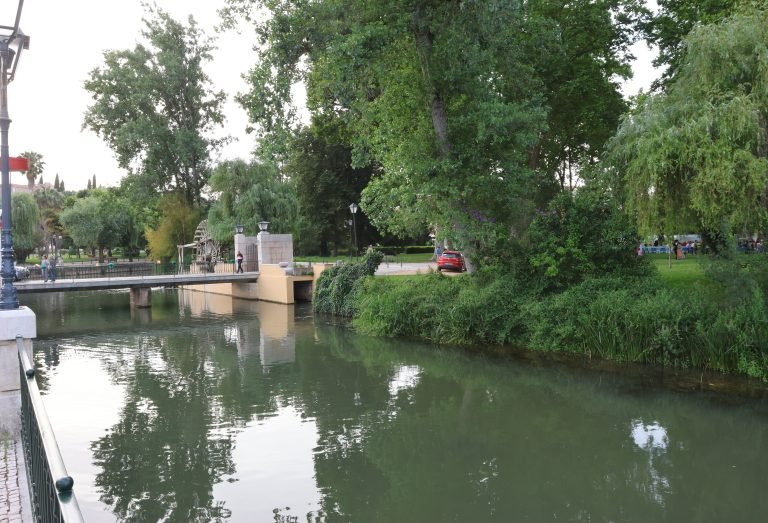
The tranquil Mouchão Park by the Nabao River, is a lovely spot for an evening stroll when everything else is closed and you’re looking for somewhere to visit, and that’s exactly what we did, after visiting to the convent and the castle, we felt it early to go home, so we went to the city to explore it and we came across this beautiful park so we stopped to visit it. It is right in downtown, sitting on a small island on the river, connected by charming footbridges. One of the park’s most iconic features is the large wooden water wheel (the nora do Nabão), which still turns gently with the river’s flow. Originally built to harness the river’s power for irrigation and milling. From the park you can also glimpse Tomar’s historic landmarks, likethe silhouette of the Templar Castle rising above the trees. And because it is in downtown it allowed us to enjoy a nice walk through the old streets to observe the buildings and narrow streets of the charming town of Tomar.
Tips for your visit to Tomar
- If you’re not particularly interested in history and prefer lively nightlife, Tomar may not be the ideal destination for you, as it tends to be a calm and tranquil town.
- If you enjoy the rural charm of farms, Tomar offers the perfect opportunity to stay in quintas. Based on my own experience, I recommand staying at Quinta “A Casa da Avo Genoveva” https://www.avogenoveva.com/
- While visiting the Aqueduto do Pegões, don’t miss the breathtaking view from the top. Just be sure to wear appropriate shoes and if you are accompanied with a child never allow them to climb to the top, as it is very narrow and high. The area around the Aqueduto do Pegões is very cozy and perfect for a small break or a picnic.
- Visit the Seven Hills Park to enjoy nature. It looked fascinating from the outside, but sadly it was closed when we finished our Convent tour.
- Parking is available at the convent, and it’s free. Just make sure to arrive early to secure a spot. For more driving tips, check this out https://theflipflopescape.com/driving-tips/
Related Articles