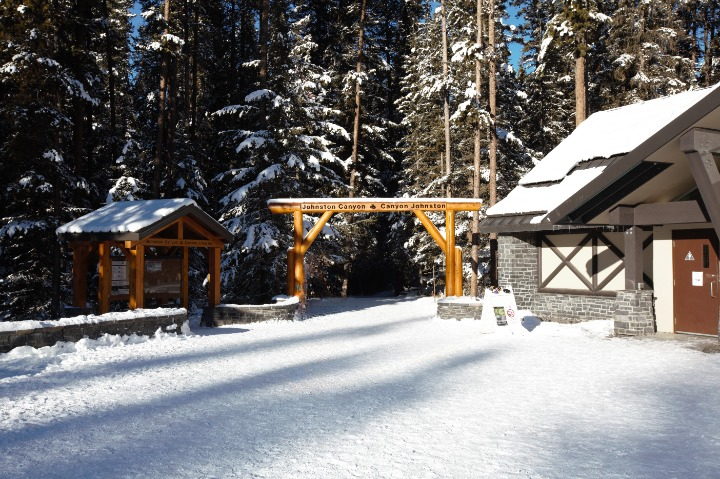
Johnston Canyon is one of the most iconic and popular hikes in Banff National Park, and it’s easy to see why. Located just 25 km from the town of Banff, it’s easily reached via the scenic Bow Valley Parkway (Highway 1A), making it a perfect stop for visitors of all ages.
The trail is famous for its suspended catwalks that cling to the canyon walls, allowing you to walk right above the rushing creek as it carves its way through the limestone cliffs. Along the way, you’ll be rewarded with breathtaking waterfalls, crystal-clear pools, and dramatic rock formations that make every turn feel like a postcard.
What I love most about Johnston Canyon is that it’s beautiful no matter when you visit. In summer, the canyon is surrounded by lush greenery and the sound of roaring waterfalls. In winter, it transforms into a magical wonderland, where frozen waterfalls and towering ice formations create a completely different experience.
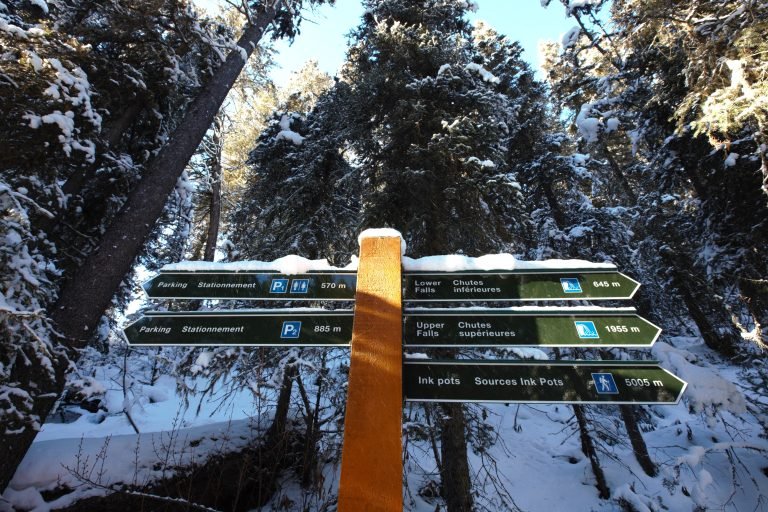
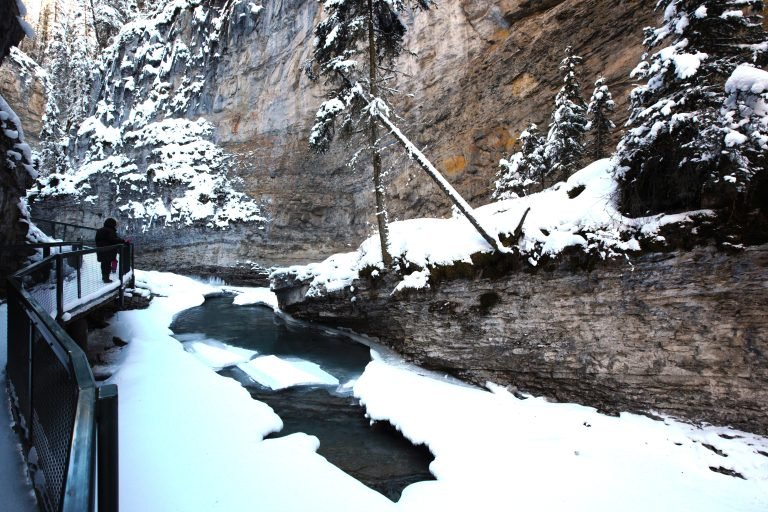
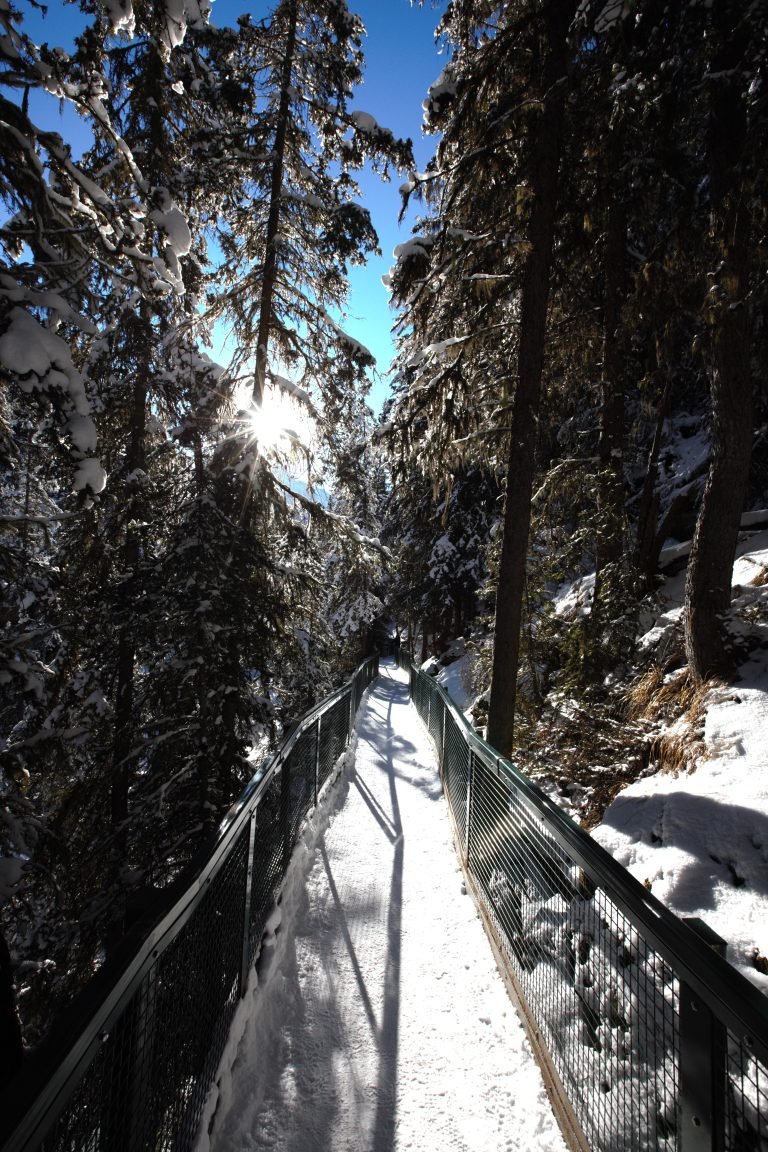
The trail through Johnston Canyon unfolds gently as you follow a series of suspended catwalks and forest paths clinging to the canyon walls. The turquoise creek rushes beneath your feet, while towering limestone cliffs rise on either side, making the walk just as impressive as the destinations themselves.
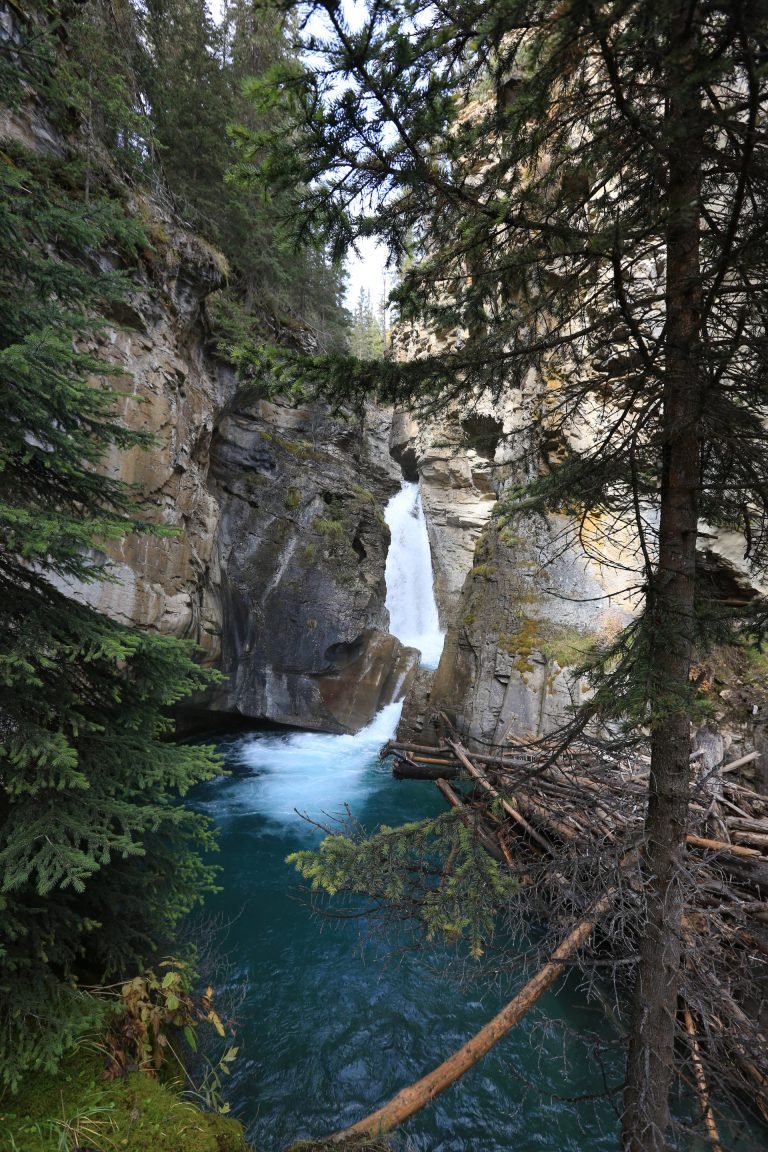
Your first stop is the Lower Falls, located about 1.2 km from the trailhead. This beautiful waterfall squeezes through a narrow gap in the rock, creating a powerful cascade that echoes throughout the canyon. For the best view, walk through the short tunnel carved into the cliff, which brings you right beside the falls. Just be prepared, you’ll probably leave with a misty face, damp clothes, and a big smile.
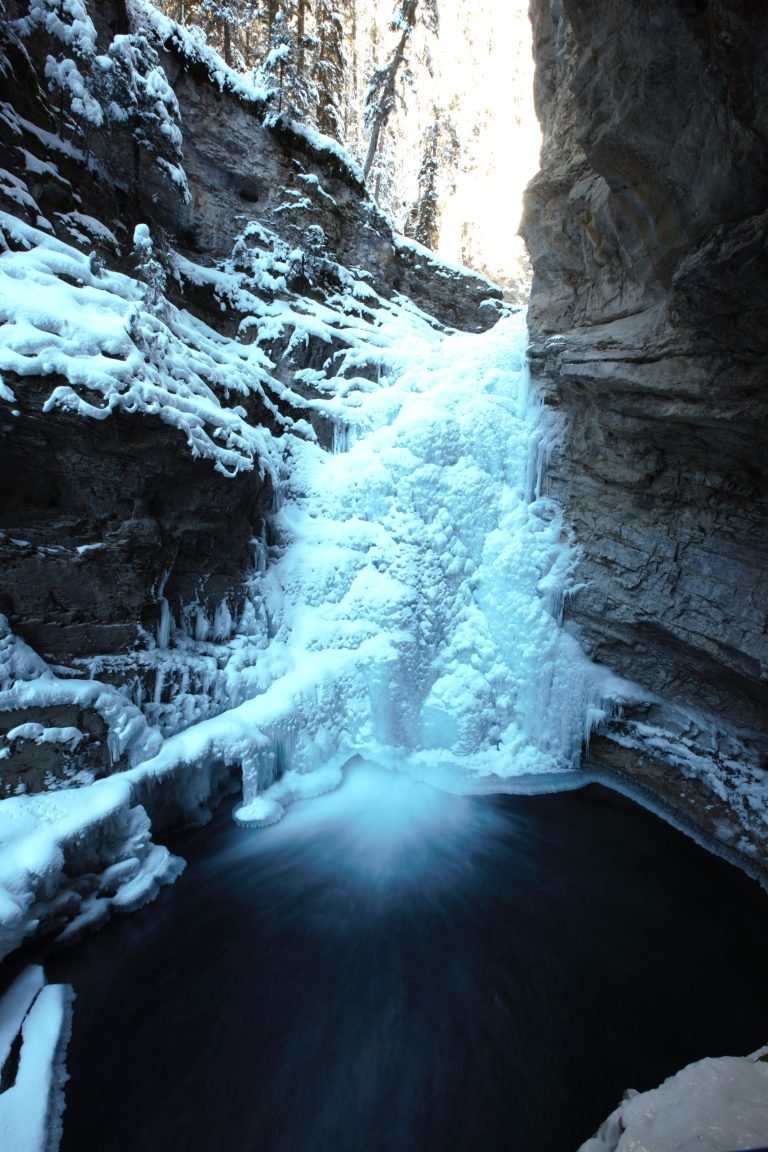
If you’re up for a little more adventure, continue another 1.3 km to reach the Upper Falls. Taller and even more impressive than the Lower Falls, this spectacular waterfall plunges over a rocky cliff into the canyon below, surrounded by moss-covered limestone walls and a canopy of evergreen trees.
A viewing platform at the top offers a breathtaking perspective and a chance to truly appreciate the power of the rushing water. In winter, the falls transform into towering blue-and-white columns of ice, creating one of Banff’s most magical frozen landscapes. Visit during the warmer months, and you’ll find a completely different scene, lush greenery, roaring water, and the soothing sound of the falls echoing through the canyon. No matter the season, the Upper Falls is well worth the extra walk.
At first, I wasn’t all that excited about visiting Johnston Canyon. In my mind, it was just a crack in the rocks with a stream running through it. After standing in awe of Lake Louise and Moraine Lake, I honestly thought this stop might be a little underwhelming.
But the moment I started walking, I realized how wrong I was.
The sound of the rushing water, the crisp mountain air, and the towering canyon walls, carved by nature over thousands of years, created a feeling I hadn’t expected. With every step, I found myself slowing down, admiring the narrow passageways, the moss-covered cliffs, and the way the sunlight filtered between the canyon walls. It wasn’t a place that impressed me all at once; it was a place that quietly grew on me. By the time I reached the waterfalls, I completely understood why Johnston Canyon is one of Banff’s most beloved hikes.
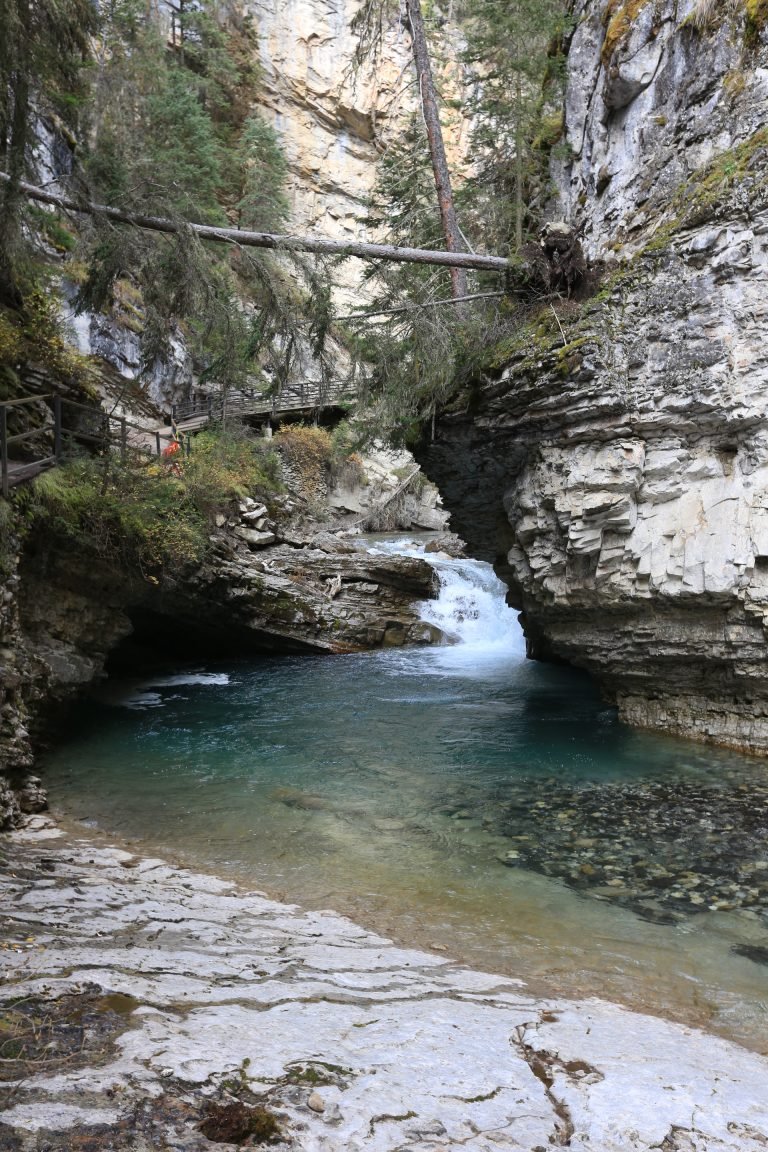
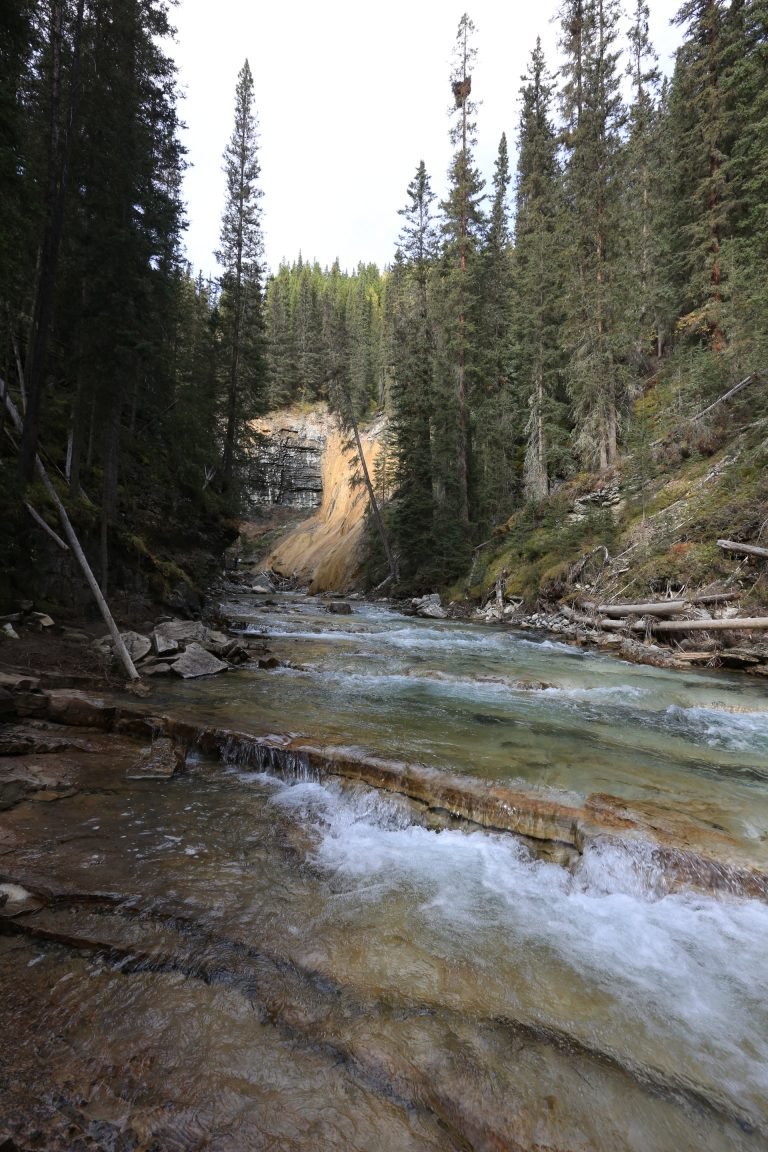
No matter the season, Johnston Canyon has a magic all its own. In summer, you’re surrounded by lush greenery and rushing waterfalls. In winter, towering ice formations transform the canyon into a frozen wonderland. With every step, the scenery keeps changing, and before you know it, you’re wishing the trail would never end.
What makes Johnston Canyon so special is the feeling of being inside the landscape rather than simply looking at it. Most of the time, we admire nature from a viewpoint above or from a distance. Here, you’re walking through the heart of it, surrounded by towering canyon walls, rushing water beneath your feet, and cliffs that seem to close in around you. It’s a completely different perspective, one that’s difficult to put into words but impossible to forget.
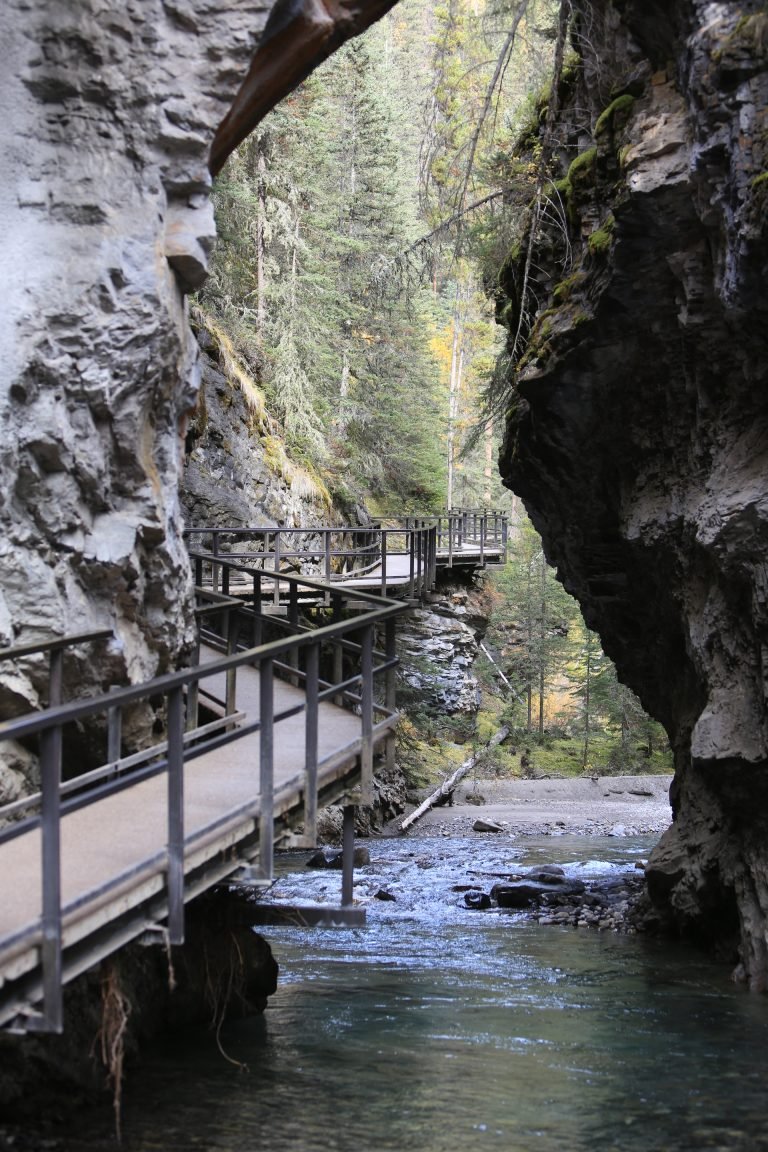
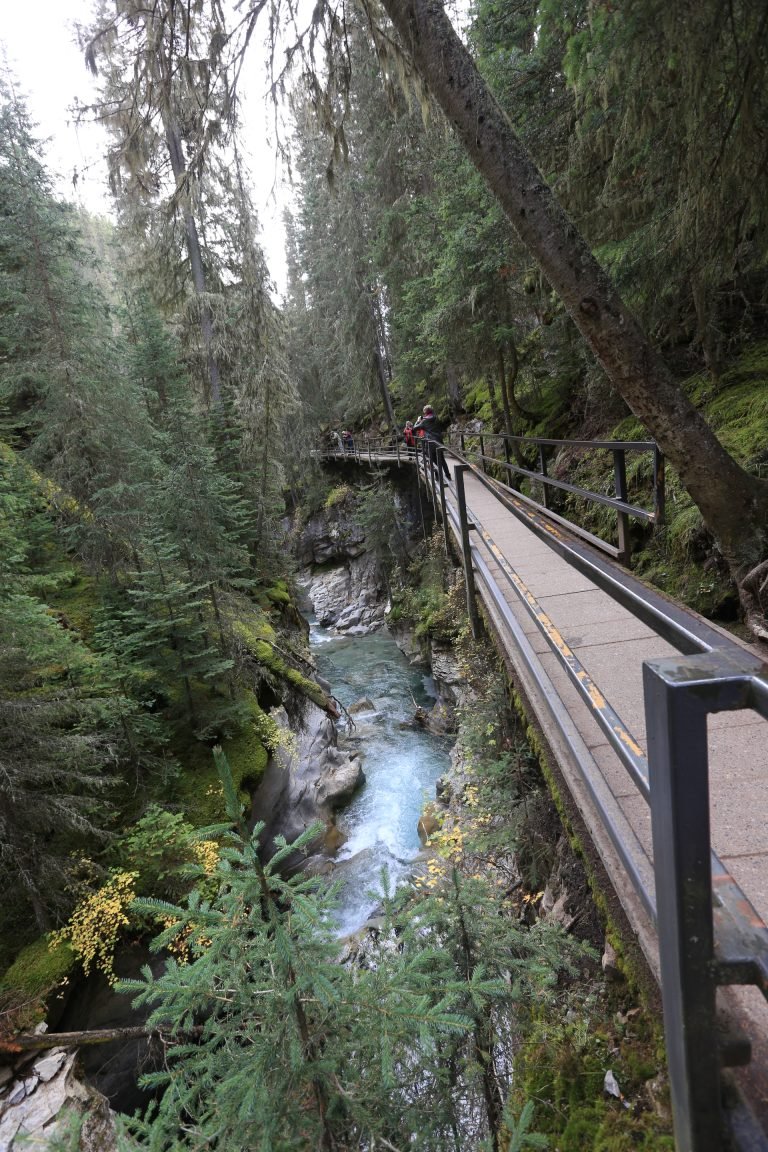
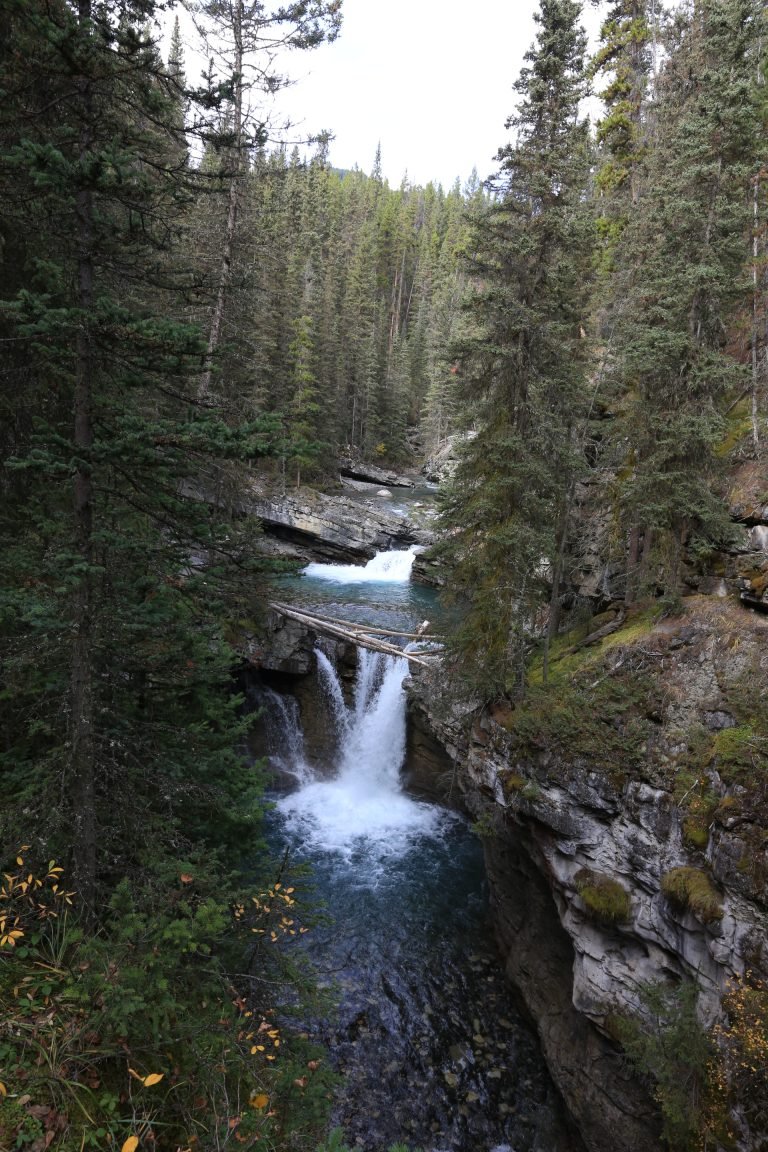
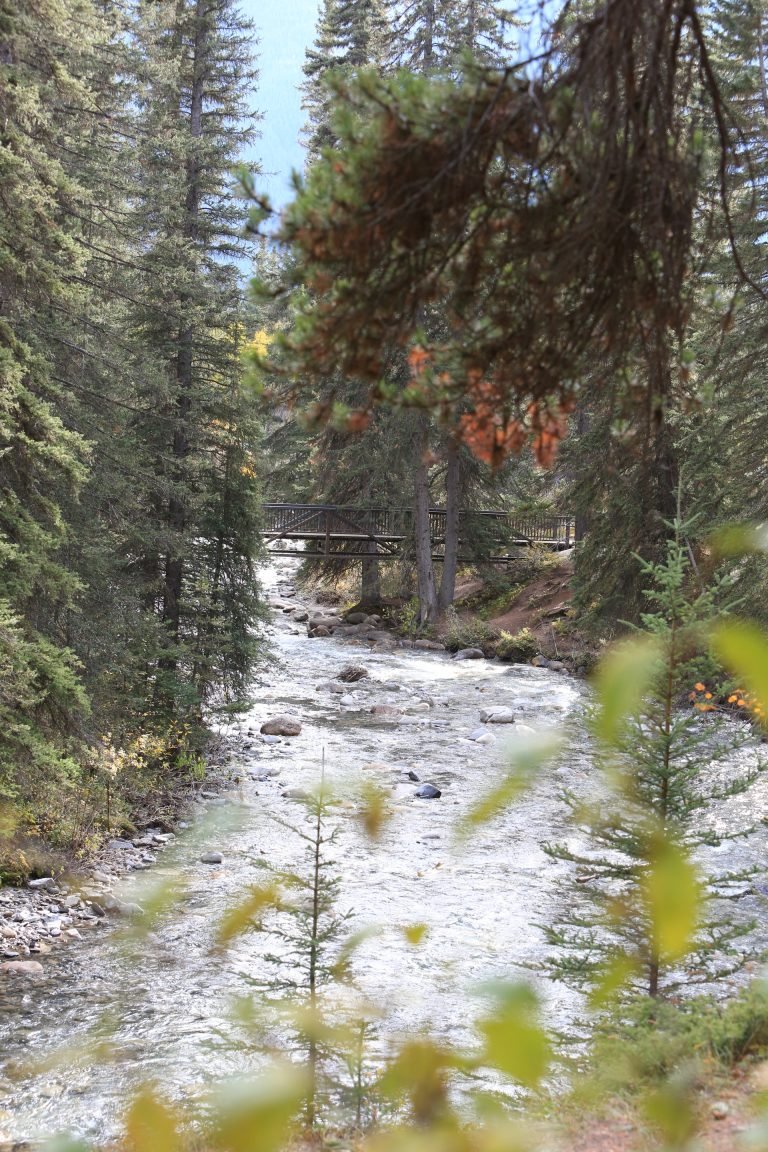
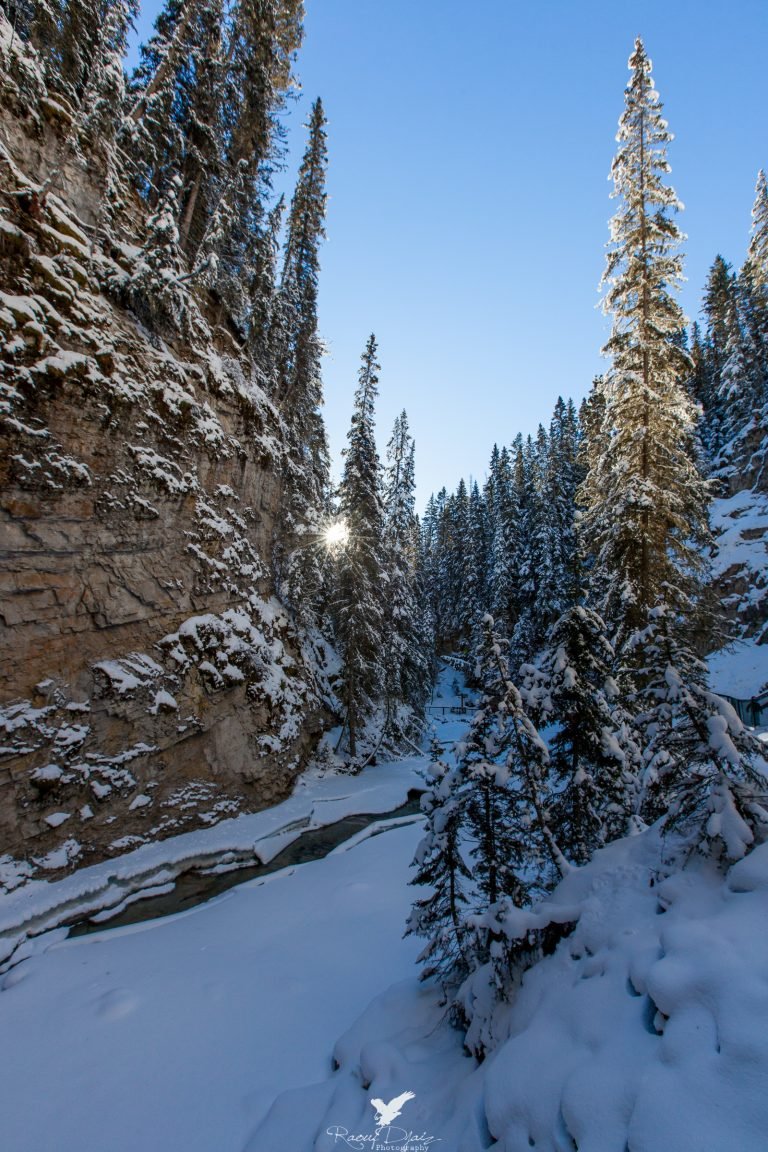
In summer and fall, you walk through pine forests, hear birdsong, and feel the cool mist of the canyon on your face. The trail is alive with color, light, and movement. But in winter, Johnston Canyon becomes something entirely different — a surreal icy world of frozen waterfalls, snow-draped trees, and shimmering rock walls. It feels like stepping into a different place altogether, with a completely new atmosphere, emotion, and kind of wonder.
If you have the chance, visit in both seasons. Each offers a unique experience that’s well worth the trip. I often struggle to find the right words to describe just how beautiful it is, sometimes I wish my photos could say what I can’t.
Peyto Lake
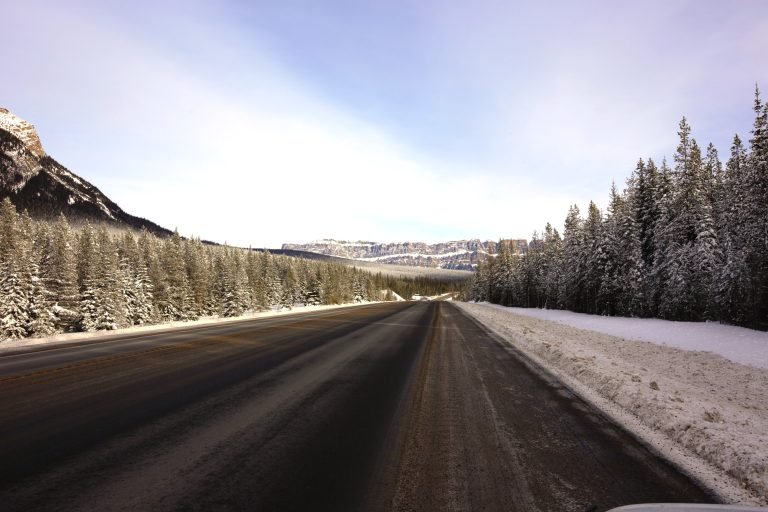
As we left Johnston Canyon and continued along the scenic Bow Valley Parkway, Castle Mountain suddenly appeared before us, rising like a massive fortress sculpted by nature. Majestic, rugged, and impossible to ignore, it immediately captured our attention.
Its distinctive castle-like shape, layered cliffs, and towering rock faces make it one of the most recognizable and photographed peaks in Banff National Park.
we continued our journey deeper into Banff National Park by heading toward one of its icons: Peyto Lake.
To get there, hop back on the Bow Valley Parkway (Hwy 1A) or the Trans-Canada Highway (Hwy 1) and drive west toward Lake Louise. From there, take the Icefields Parkway (Highway 93 North), one of the most scenic drives in the world.
Drive about 40 km north of Lake Louise until you reach Bow Summit. The parking lot for Peyto Lake will be on your left (watch for signs). The lake is just a short walk from the parking area, making it an easy but jaw-dropping stop.
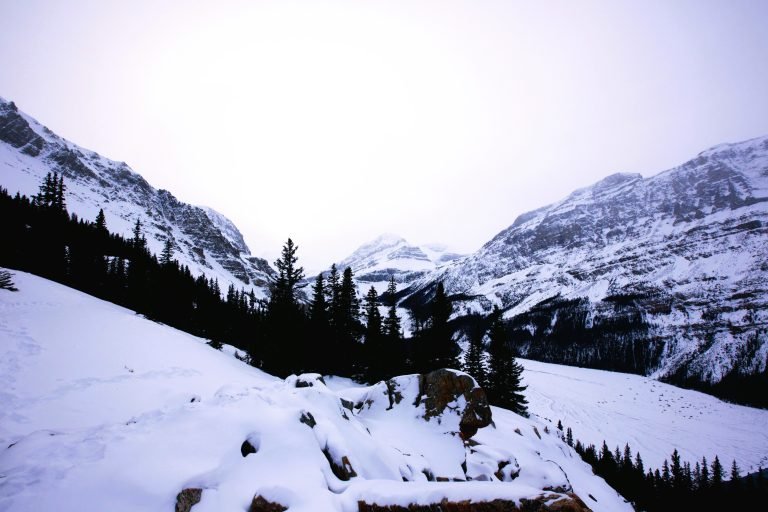
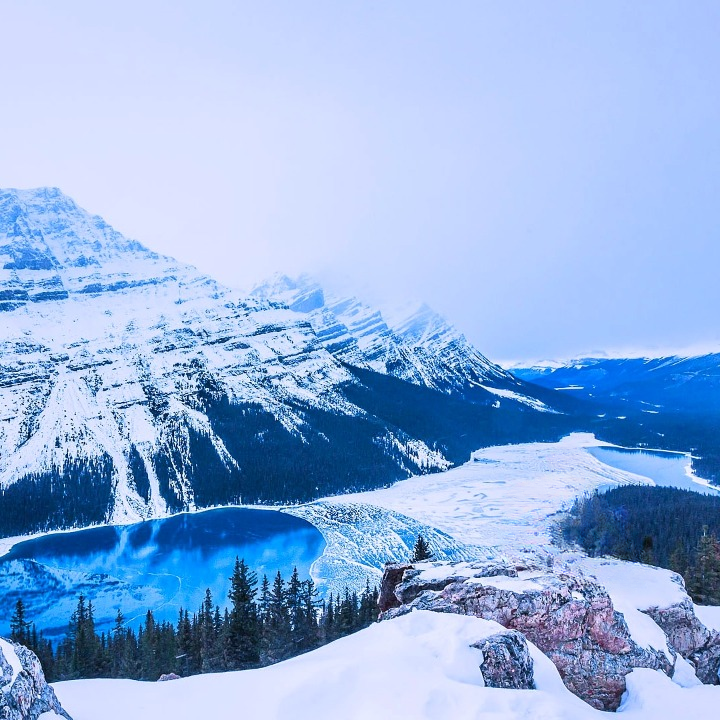
Peyto Lake is one of the most breathtaking lakes in Banff National Park and is instantly recognizable for its famous wolf-head shape when viewed from above. What truly sets it apart, though, is its extraordinary turquoise color, a shade so vivid it almost looks digitally enhanced, especially on a bright, sunny day. The striking color comes from fine glacial rock flour suspended in the water, which reflects the sunlight and gives the lake its almost unreal appearance. The lake is named after Bill Peyto, a legendary trapper, guide, and one of the Rockies’ earliest pioneers.
The transition from the narrow, intimate beauty of Johnston Canyon to the vast, sweeping panorama of Peyto Lake felt almost symbolic. One moment, we were walking through the heart of nature, surrounded by towering canyon walls and rushing water. The next, we were standing high above one of the most spectacular viewpoints in the Canadian Rockies. It felt like going from exploring nature’s living room to standing on its rooftop, taking in a view that stretched farther than the eye could see.
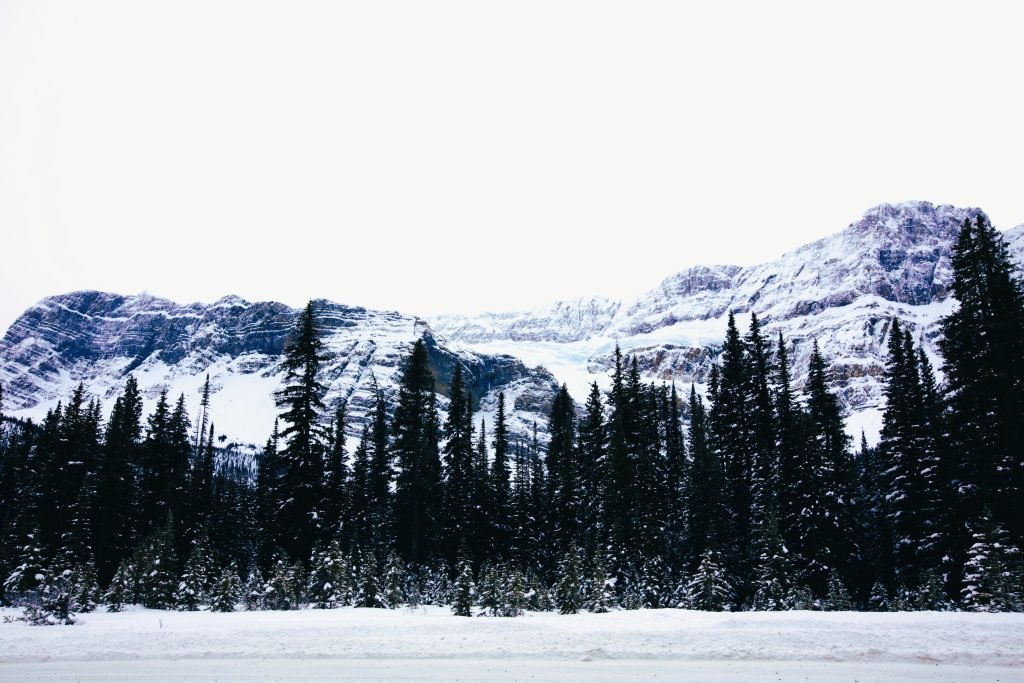
As you continue driving north toward Peyto Lake, keep an eye out for Crowfoot Glacier, clinging to the slopes of Crowfoot Mountain. It’s one of those landmarks that’s impossible to miss, and thankfully there’s a designated viewpoint where you can safely pull over, admire the scenery, and capture a few photos.
The glacier gets its name from its original shape, which once resembled a crow’s foot with three distinct “toes.” Over the years, however, one of those toes has disappeared as the glacier has gradually retreated, a visible reminder of how much these ancient ice fields have changed. Even so, it’s still an impressive sight and a worthwhile stop before continuing your journey to the stunning Peyto Lake.
Tips For Your Visit To Johnston Canyon & Peyto Lake
- Parking fills up fast, especially in summer and fall. Arrive early in the morning or later in the afternoon to avoid crowds and get better light for photos.
- You can use a shuttle in peak seasons from Banff and Lake Louise.
- Johnston Canyon is accessed via Highway 1A (Bow Valley Parkway), which is slower and scenic.
- Use the restrooms in the parking lot before you start the hike, there are no toilets along the trail.
- Wear proper shoes, the trail can be slippery in spots, especially near the falls. Hiking shoes or trail runners with good grip are ideal.
- In winter, parts of the trail become icy and steep. Ice cleats (microspikes) are a must for safety.
- The canyon stays cool, even on warm days, and can be quite cold in the shoulder seasons. Bring a light waterproof jacket and layers, especially if hiking early or late.
- There’s a lot of mist near the Lower Falls and in winter, condensation can be an issue. Keep your Camera and phone in a dry bag or pouch when not in use.
- There are no facilities on the trail. A small bottle of water and a snack will go a long way, especially if you continue to the Upper Falls or the Ink Pots.
- Stay on the trail: The canyon is a fragile ecosystem, don’t venture off designated paths.
- Fueling Tip when going to Peyto Lake: It’s advisable to fill up your gas tank in Lake Louise, as fuel stations are scarce along the Icefields Parkway. The next available gas station is at Saskatchewan River Crossing, which is approximately 80 km (50 miles) north of Lake Louise.
- For accomodation: When choosing where to stay while visiting Banff National Park, it truly depends on your travel style and priorities. During our trip, we stayed in Canmore, and it worked beautifully for us. It’s a calm and picturesque town just outside the park gates, offering more affordable accommodation options (Blackstone Mountain Lodge is our place), cozy cafes, and breathtaking mountain views, all without the hustle and bustle of Banff town. Since we had a yearly park pass, we didn’t worry about re-entering the park each day, which made Canmore a perfect base. However, if you’re planning a shorter visit or prefer being closer to key attractions, Banff or Lake Louise might be more convenient. Banff offers a lively atmosphere, plenty of restaurants, and easy access to places like Johnston Canyon and Lake Minnewanka. Lake Louise, on the other hand, is quieter and ideal if your focus is on visiting Lake Louise, Moraine Lake, or exploring the Icefields Parkway. Whichever you choose, each place has its charm and can offer an unforgettable Rockies experience.