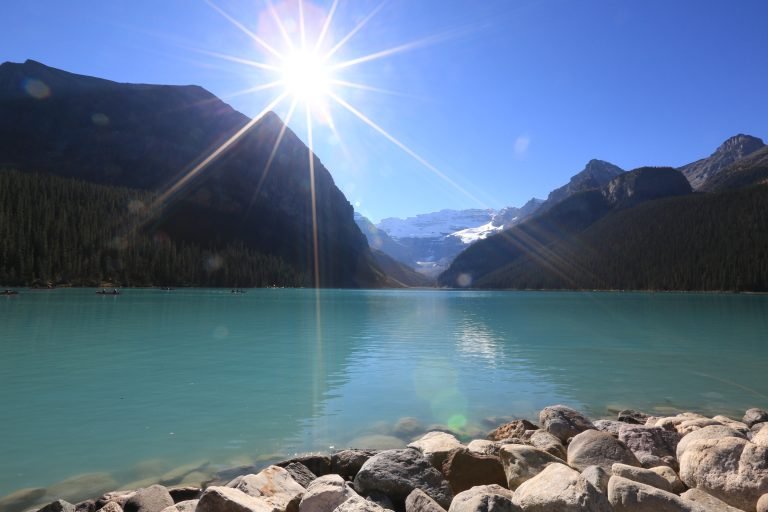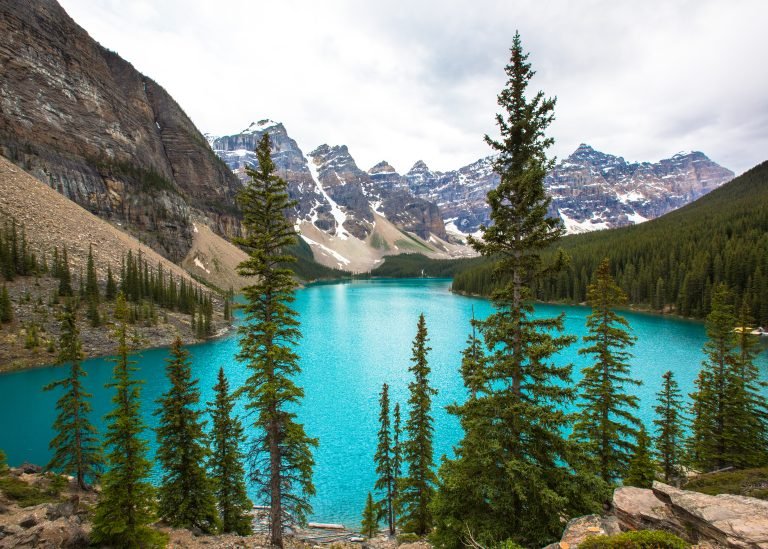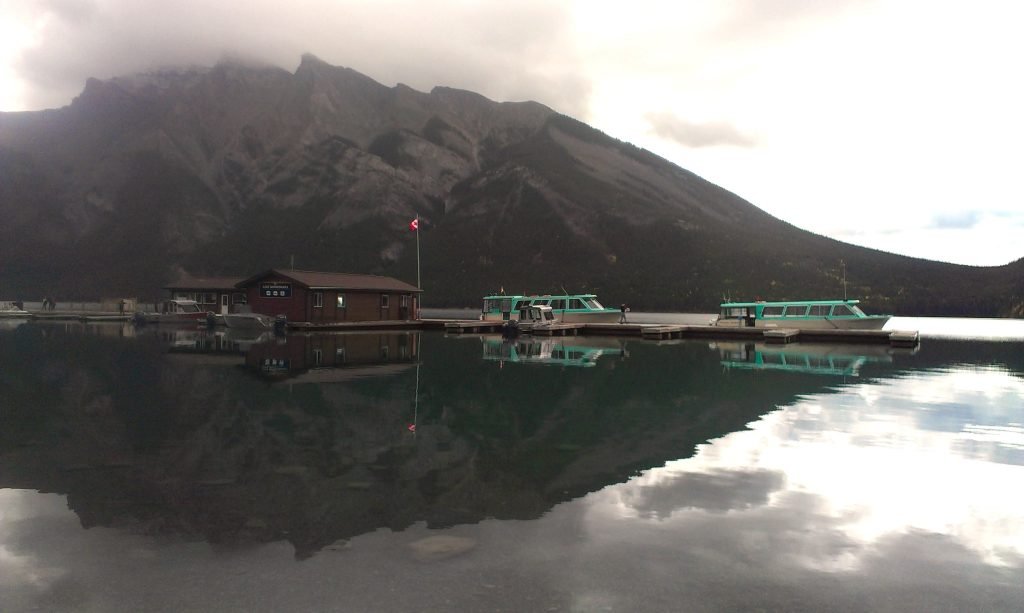
“They say a smell or a song can take you back to a moment in time, but sometimes, a place can do the same. Lake Minnewanka did that for me. As I looked at it in these pictures, it stirred feelings I thought I had buried long ago. Memories I tried to forget resurfaced, bittersweet, vivid, and unexpectedly powerful. Perhaps that’s why I stayed away for so long. But it reminded me that healing sometimes comes not from forgetting, but from facing the past in the beauty of the present.
Maybe that’s why they call it the Lake of the Spirits.”
Lake Minnewanka
Long before it became a popular tourist destination, Lake Minnewanka was an important place for the Indigenous peoples of the region, particularly the Stoney Nakoda First Nation. The name Minnewanka comes from the Nakoda language and means “Lake of the Spirits.” According to their beliefs, powerful spirits inhabited the lake, making it a sacred place that was treated with great respect. Archaeological evidence also suggests that people have lived and hunted around the lake for thousands of years, long before Banff National Park was established.
Just a short drive from Canmore and nestled within Banff National Park, Lake Minnewanka is a breathtaking glacial lake that offers a peaceful retreat away from the more crowded Lake Louise and Moraine Lake. Known for its impressive size and motorized boat tours, something unique within the national park, it is a paradise for water lovers and anyone seeking spectacular mountain scenery. Stretching over 21 km in length, it’s the largest lake in Banff National Park that can be explored by motorboat, making it a popular destination for sightseeing cruises, fishing, kayaking, and picnics along the shoreline.
If you’re up for a short hike, Stewart Canyon Trail offers a relatively easy walk beginning at Lake Minnewanka and following the turquoise waters of the Cascade River into a beautiful forested canyon. The trail is approximately 3.4 km round trip and is suitable for most fitness levels. Along the way, you’ll cross a bridge overlooking the rushing river and may even spot bighorn sheep, deer, or other wildlife. It’s a wonderful choice for families or anyone looking for a peaceful walk immersed in nature without tackling a strenuous hike.
This area is a perfect addition to your Banff itinerary, especially if you’re staying in Canmore. It offers a chance to escape some of the larger crowds while still enjoying everything that makes the Canadian Rockies so special, crystal-clear lakes, breathtaking mountain views, scenic hiking trails, abundant wildlife, and just the right amount of adventure. If you’re lucky, you might even catch sight of bighorn sheep grazing along the roadside or a bald eagle soaring above the lake, making your visit even more memorable.
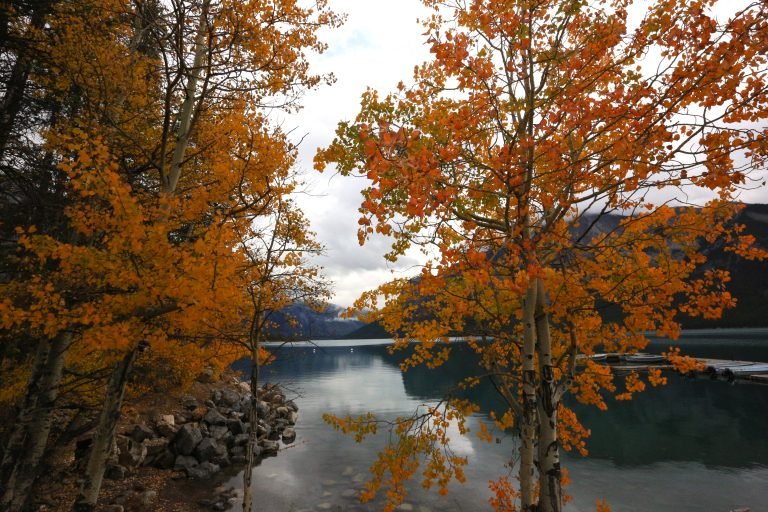
Because it’s so close to Canmore, where we always stay whenever we’re in the area, we usually leave Lake Minnewanka for a relaxed afternoon after checking into our hotel. Other times, we save it for our last morning before heading home. It’s the kind of place that doesn’t require much planning or effort, yet somehow leaves a lasting impression.
There’s no pressure to tick off a long list of attractions here. We simply stroll along the shoreline, sit on a bench for a while, watch the sunlight dance across the crystal-clear water, and take in the mountain views. Sometimes we’ll spot a boat cruising across the lake or bighorn sheep wandering nearby, adding to the peaceful atmosphere.
For us, Lake Minnewanka is less about sightseeing and more about slowing down. It’s a place to breathe in the fresh mountain air, enjoy the quiet, and appreciate the beauty of the Rockies without feeling rushed. Simple? Absolutely. But somehow, it always feels like the perfect way to begin, or end, a day in Banff National Park.
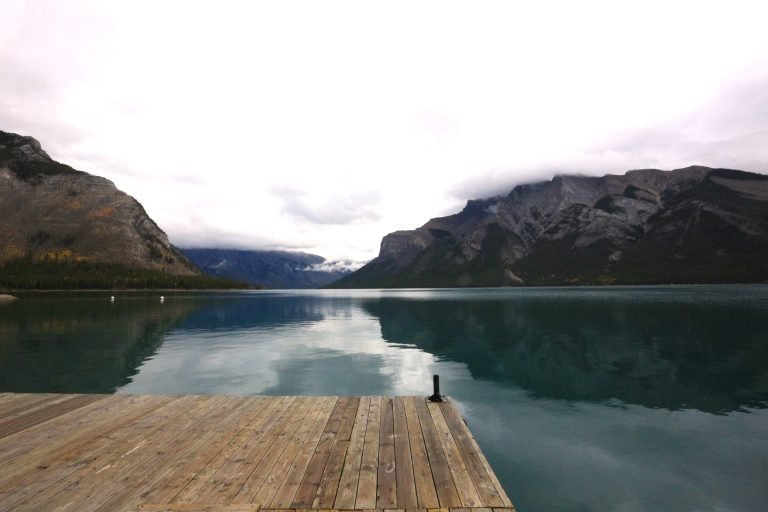
The drive from Canmore to Lake Minnewanka is one of those journeys that’s worth taking slowly. After passing through the town of Banff, you’ll follow the scenic Lake Minnewanka Drive, where one beautiful stop seems to lead to the next. Along the way, you’ll pass places like Cascade Ponds, Two Jack Lake, and Johnson Lake, each offering its own unique view of the surrounding mountains and forests.
We always find ourselves pulling over more than we planned, stretching our legs, taking a few photos, or simply standing for a moment to admire the scenery. It’s not a drive you want to rush. The road itself is part of the experience, winding through some of Banff National Park’s most picturesque landscapes, with plenty of opportunities to spot wildlife along the way. By the time you reach Lake Minnewanka, you’ve already enjoyed a mini adventure before the main destination even begins.
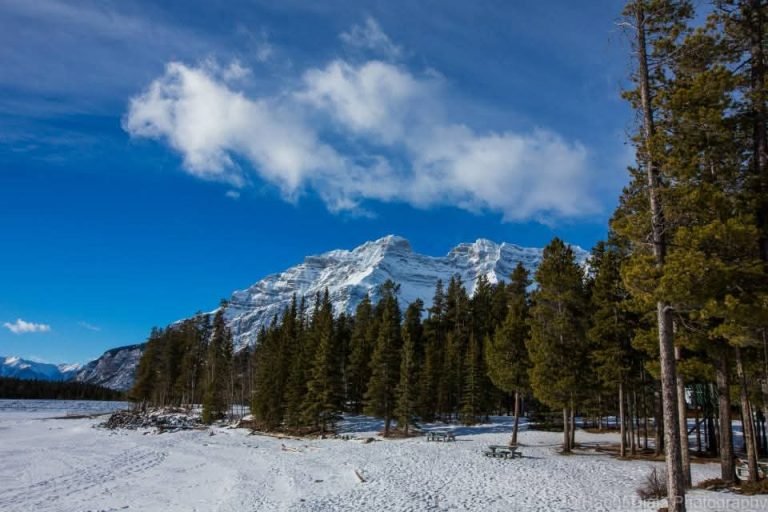
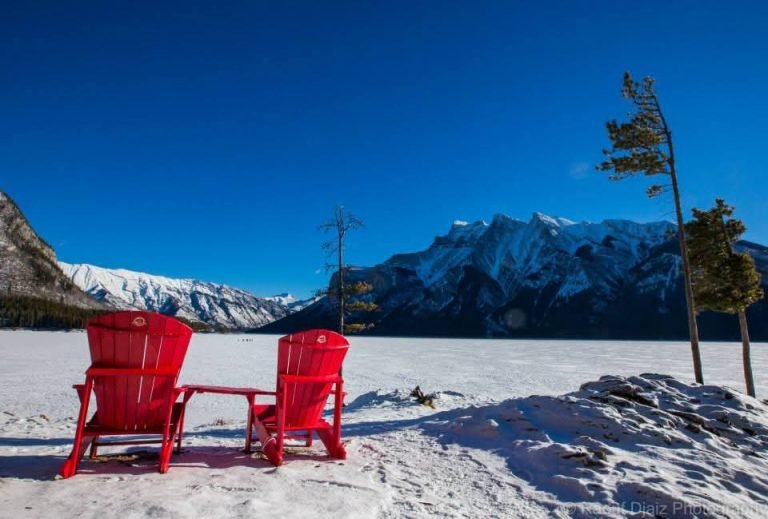
In winter, Lake Minnewanka transforms into a frozen wonderland. The sightseeing boats have long disappeared, replaced by a peaceful stillness that makes the whole area feel completely different from summer. It’s quieter, calmer, and somehow even more magical.
The good news is that you can still drive up to the viewpoint when the lake is frozen, and I highly recommend it. Step out of the car, take a deep breath of that crisp mountain air, and simply stand there for a moment. Before you stretches the frozen lake, surrounded by snow-covered peaks like Mount Inglismaldie and Mount Girouard. On a clear day, the views are absolutely breathtaking.
What I love most is the silence. Apart from the occasional crunch of snow beneath your boots or a light breeze sweeping across the ice, there’s very little to interrupt the moment. It’s the kind of place that makes you stop thinking, slow down, and simply feel grateful to be surrounded by so much natural beauty.
The Town of Banff
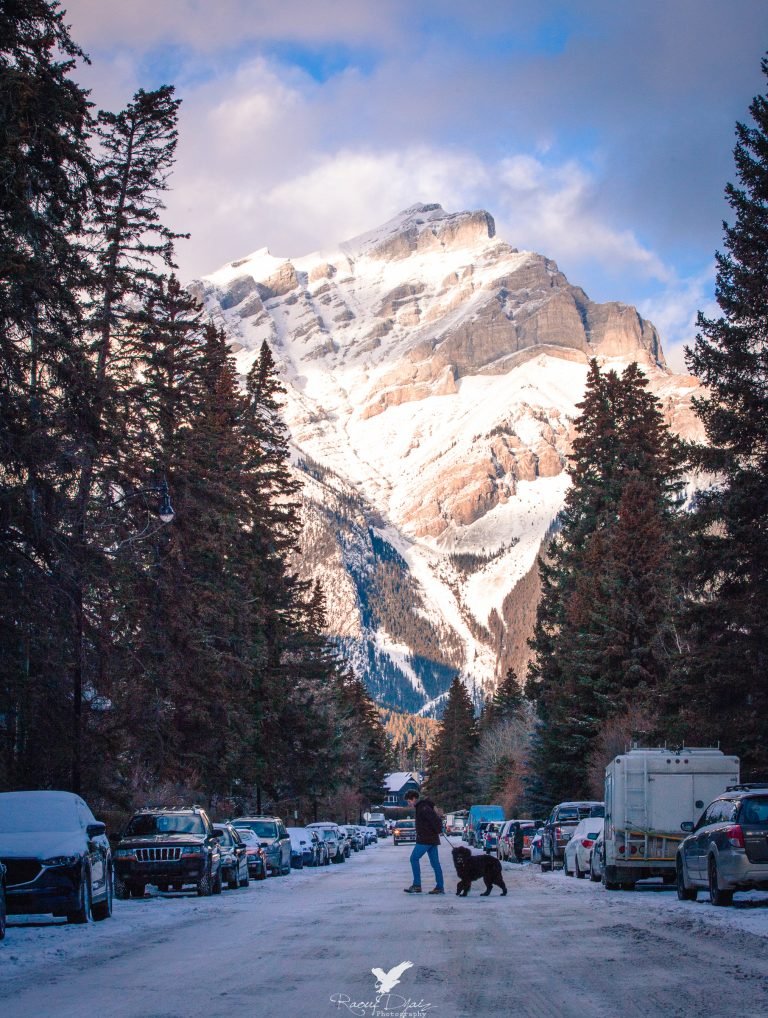
Banff is a name that echoes across Canada, a memory for those who have been there, and a dream for everyone else. It’s the beating heart of the Canadian Rockies, where breathtaking mountain scenery and small-town charm come together in a way that’s hard to describe until you’ve experienced it yourself. No matter the season, Banff has its own magic , from the crisp mountain air and snow-covered peaks in winter to the colorful wildflowers in summer.
The town itself has a history that’s just as fascinating as its scenery. In the early 1880s, while building the Canadian Pacific Railway, railway workers stumbled upon natural hot springs on the slopes of Sulphur Mountain. That unexpected discovery changed everything. In 1885, Banff National Park was established, becoming Canada’s very first national park and only the third national park in the world. It marked the beginning of Canada’s national park system and helped put the Canadian Rockies on the map.
Walking through Banff today, it’s easy to feel connected to that history. Historic buildings stand alongside cozy cafés, restaurants, and boutique shops, all framed by towering mountain peaks in every direction. It’s a place where nature and history blend so effortlessly that you never feel like you’re visiting a tourist town.
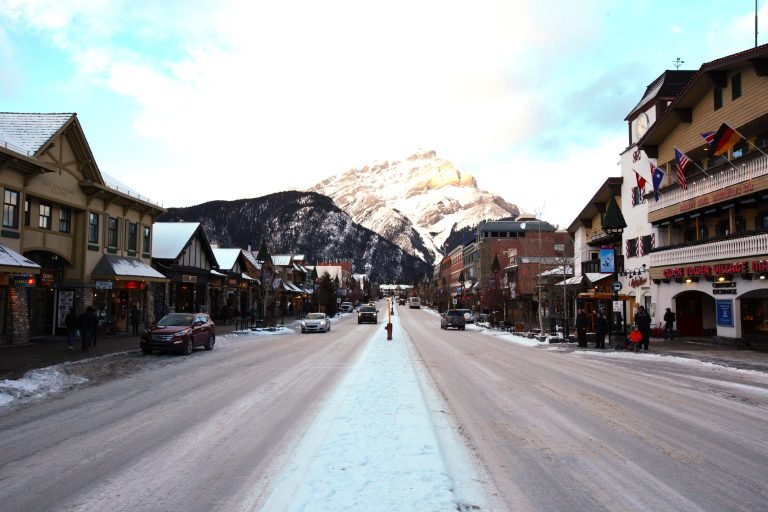
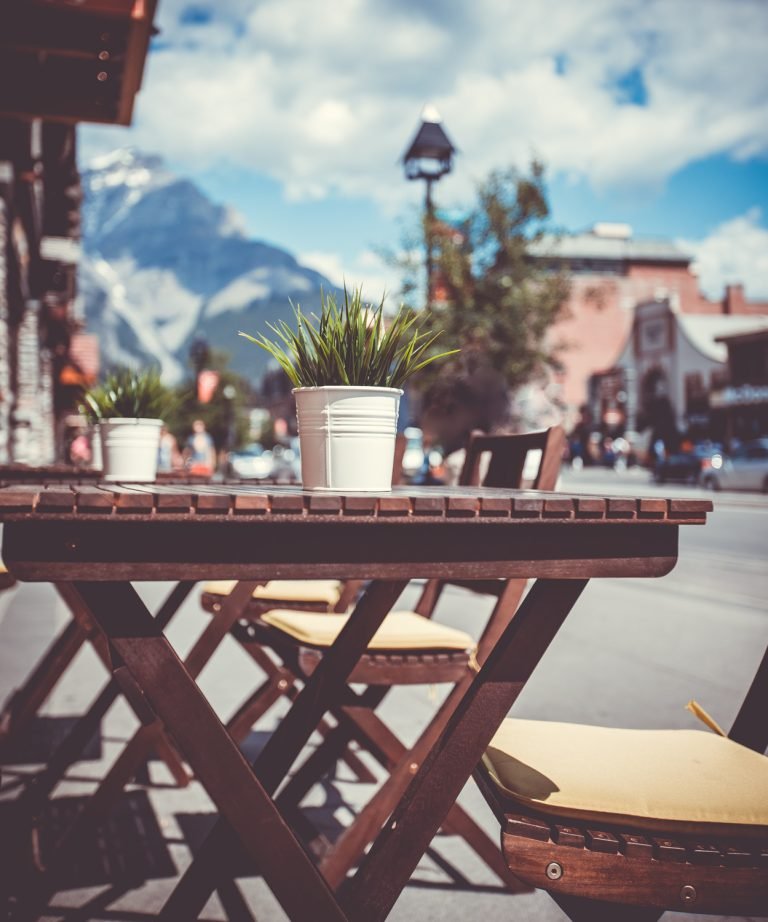
Banff offers that rare combination of being surrounded by nature while still feeling vibrant and full of life. Its streets, especially the lively Banff Avenue, are lined with boutiques, bookstores, art galleries, cafés, and restaurants serving everything from gourmet dining to Alberta’s famous bison burgers. What makes Banff truly magical, though, is the way the mountains seem to rise from every direction. Even while you’re sipping a coffee on a patio or browsing for souvenirs, you’re constantly reminded that you’re in the heart of the Canadian Rockies.
There’s no shortage of things to do in Banff, either. You can relax in the naturally heated mineral waters of the Upper Banff Hot Springs while enjoying spectacular mountain views, ride the Banff Gondola to the top of Sulphur Mountain, or spend time exploring the town’s museums. If you’re a fan of history and culture, don’t miss the Banff Park Museum, one of Canada’s oldest natural history museums, and the Whyte Museum of the Canadian Rockies, where you’ll discover fascinating exhibits about the region’s art, history, mountaineering, and Indigenous heritage.
Fairmont Banff Springs Hotel
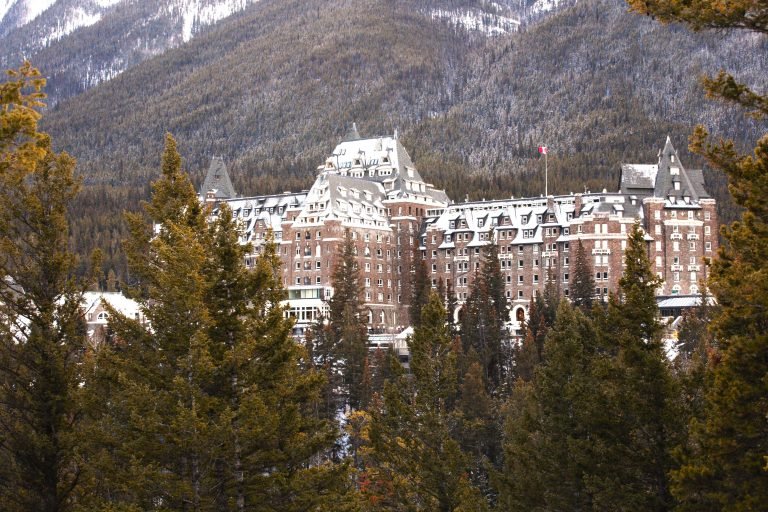
One of Banff’s most iconic landmarks—and a big part of its charm—is the Fairmont Banff Springs Hotel. Perched on a hillside and surrounded by forests and towering mountain peaks, it looks like something straight out of a fairy tale. Often called the “Castle in the Rockies,“ its grand stone architecture makes it feel even more enchanting than its sister property at Lake Louise.
Even if you’re not staying there, it’s well worth stepping inside. Wander through the elegant halls, admire the historic architecture, and soak up the atmosphere of a hotel that has been welcoming guests since 1888. Every corner seems to tell a story, from its impressive lobby to its beautifully decorated corridors.
You’re also welcome to dine in one of the hotel’s restaurants. I highly recommend the sushi restaurant inside the hotel to experience a refined dining experience with fresh, beautifully prepared sushi, all enjoyed in the luxurious setting of one of the most famous hotels in the Canadian Rockies. It’s not something you’d necessarily expect to find in the middle of the mountains.
Bow Valley & Bow Falls
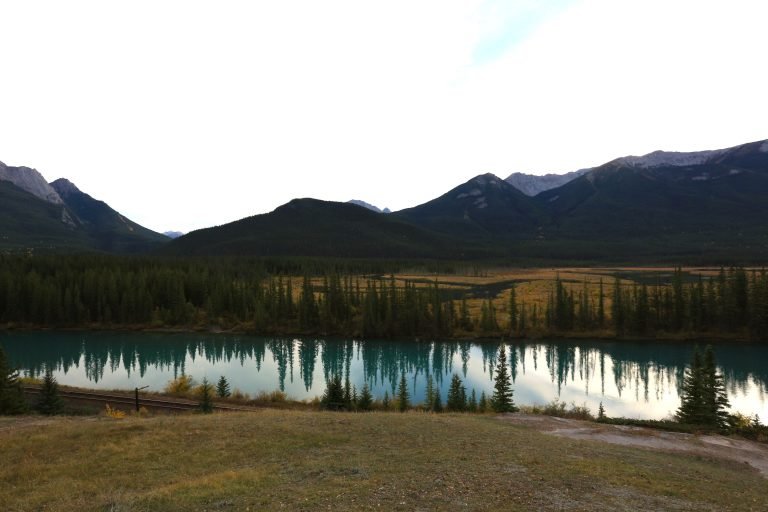
Just a stone’s throw from the town of Banff, the Bow Valley opens up like a living postcard. The Bow River winds its way through the valley, framed by dramatic peaks and lush forests, and every turn feels like a new picture waiting to be taken.
The scenic Bow Valley Parkway (Highway 1A) has connected this region for decades and today offers a quieter, more relaxed alternative to the busy Trans-Canada Highway. We always choose this route whenever we can. It’s not about getting to the destination faster; it’s about enjoying the journey.
Driving slowly, especially in the early morning or late evening, gives you the best chance of spotting wildlife. Elk grazing in open fields, deer wandering through the trees, bighorn sheep along the roadside, black bears searching for berries, and, if you’re incredibly lucky, even a wolf in the distance. Every drive feels a little different, and that’s part of what makes it so special
Bow Falls & Bow river
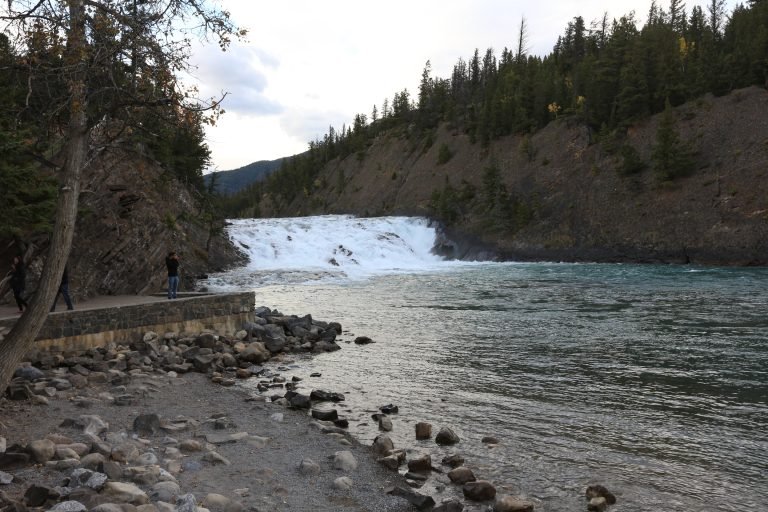
Just on the edge of town, and easily walkable from downtown Banff or the Fairmont Banff Springs Hotel, lies Bow Falls, powerful, beautiful, and kind of mesmerizing. It’s not one of those towering waterfalls, but wide and low, with the Bow River roaring steadily as it drops over the rocky ledge. In spring and early summer, the snowmelt makes the falls even more dramatic, and the view of Mount Rundle and Cascade Mountain from here feels straight out of a postcard. There’s a short trail that runs alongside the falls, perfect for a leisurely stroll or a quick photo break. The viewpoint is super accessible, which makes it a favorite for families or anyone who wants a taste of that wild Rockies beauty without hiking for hours.
Related Articles