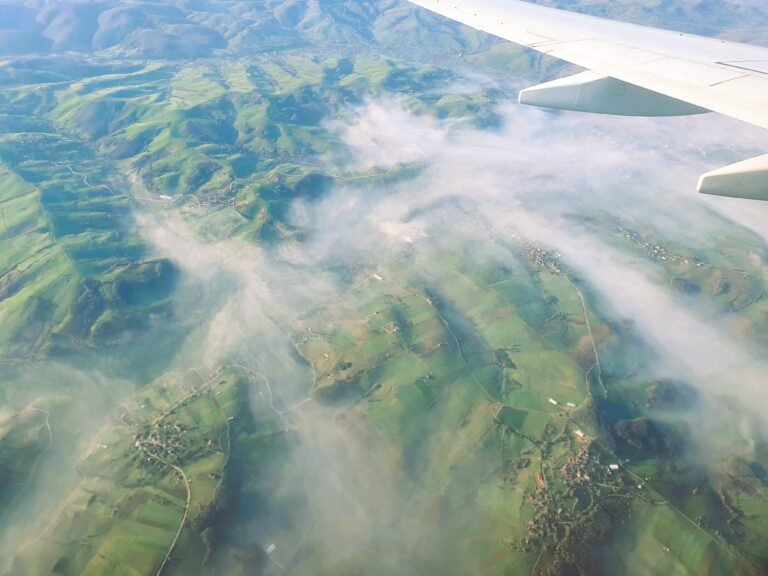
I had never heard much about Trabzon before this trip. Then one day, while watching a YouTube video by Joe Hattab, I saw the mountains of Trabzon and the surrounding Black Sea region covered in endless forests and pine trees. I couldn’t believe what I was seeing, I had tears in my eyes; after months of lockdown during COVID, I was craving nature, mountains, trees, and most importantly, fresh air. And here I was, sitting at home watching this incredibly green landscape on a screen. I turned to my husband and basically made the decision for both of us: “Let's go there.” And that was it. Trabzon was officially our first stop in Turkey.
How We Got There
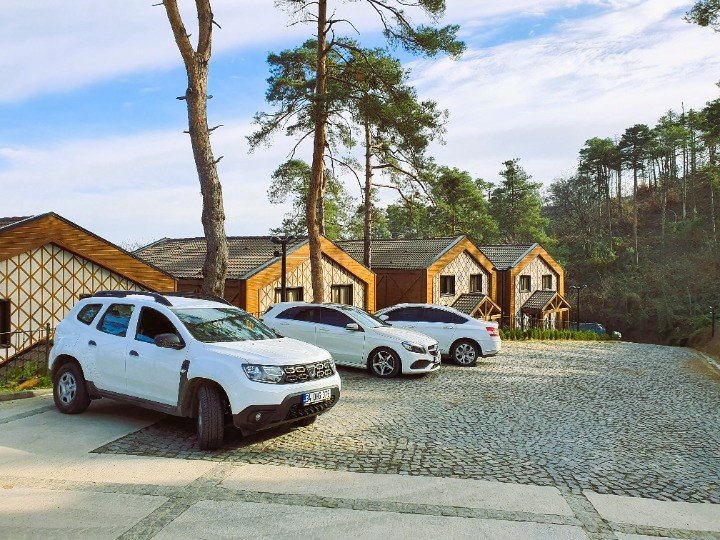
There was no direct flight to Trabzon from kuwait, so we flew to Istanbul Sabiha Gokcen Airport first, then took another flight of about two hours to Trabzon. When we finally landed, we picked up our rental car that we booked from Wish car rental and we were so satisfied with their service and prices, they gave us a brand new Dacia with free car seat to our son. You can check them here. After we picked up the car we headed to our accommodation.
Where We Stayed
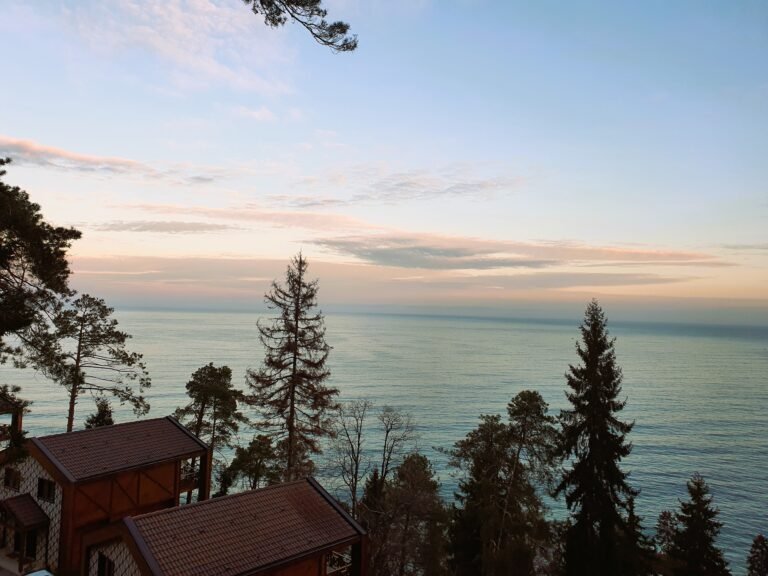
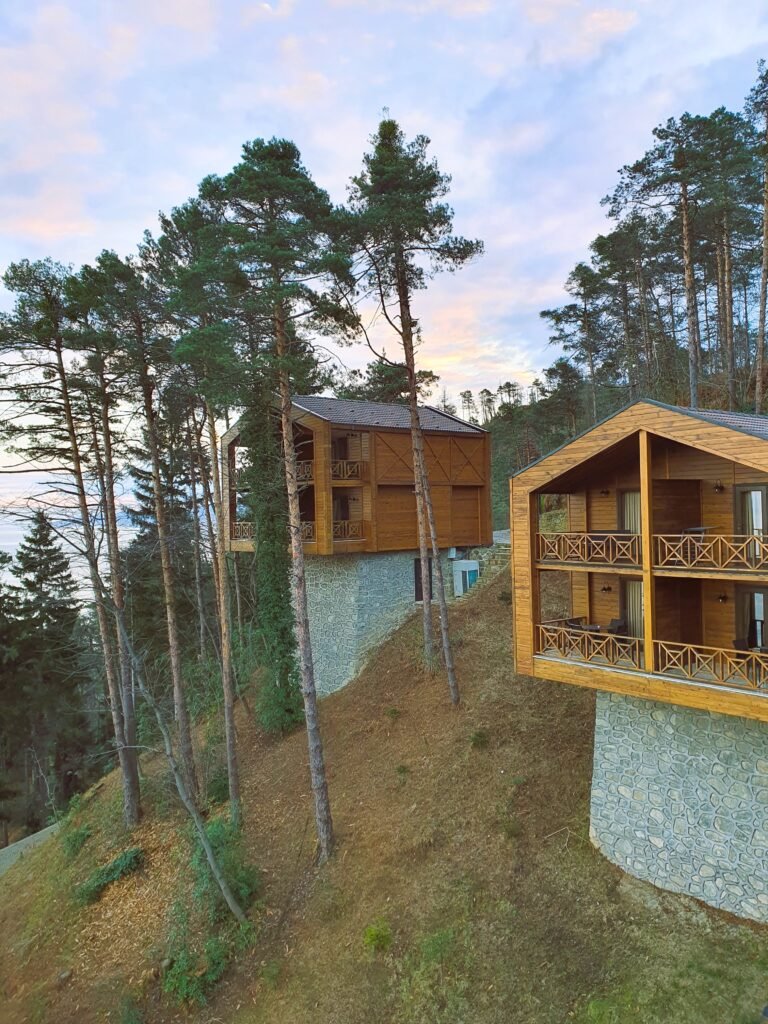
We stayed at Hancıoğlu Çamburnu Forest Houses, and honestly, I don’t think I have ever been happier with a stay like that one. Our wooden chalet was surrounded by pine trees, with breathtaking views of the forest and the sea. The smell of pine from the balcony and outside was something almost miraculous after everything we had been through during those long months of stress and lockdown. The place felt like a dream. We were surrounded by nature, with plenty of space to walk around and explore, a playground for the kids, and delicious food on top of it all, that I still remember years later. And it wasn't just breakfast. Everything we ordered for dinner was delicious, and the prices were surprisingly reasonable compared with what we were used to in other touristy places
A Taste of Trabzon
The food in Trabzon was also quite different from what we had experienced in Istanbul. Breakfast, for example, came with something I had never tried before: kuymak, also known as Muhlama or Mıhlama. It is made with corn flour, plenty of butter, and local cheese, which melts into a wonderfully stretchy, gooey mixture. For me, It was okay, but I wouldn't say it was wow. For my husband, however, it was heaven. He absolutely loved it
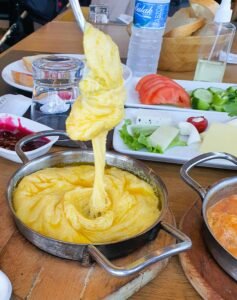
And there was another thing on the breakfast table that we absolutely loved: a smooth, creamy sesame spread that tasted almost like tahini halva. We kept spreading it on bread, thinking it was just another Turkish breakfast staple that we would find everywhere, but we didn't .After leaving Trabzon, we looked for it everywhere we went. We kept asking for it at breakfast, expecting someone to bring us the same delicious sesame cream. Nothing. I still can't believe I didn't buy some in Trabzon!

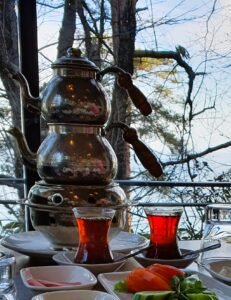
The tea was different too. We were in the Eastern Black Sea region, where tea is part of everyday life, with Rize being the heart of Turkey's tea-growing country. The tea plantations cover the hillsides, and during harvest season, you can even join the locals and try picking the tea themselves. Unfortunately, we were there in February, so there was no tea picking for us. Instead, we simply enjoyed cup after cup of that local tea and watched the beautiful landscape around us.
Uzungöl
On our first day, we were so excited to visit Uzungöl, the lake I had seen in almost every picture of Trabzon. After watching that YouTube video that convinced me to come here, I couldn't wait to see it with my own eyes. The drive there was beautiful, winding through the mountains and the incredibly green Black Sea landscape. We finally arrived in the village and started walking along the river before reaching the lakeside walkway and, finally, that view I had been waiting for.
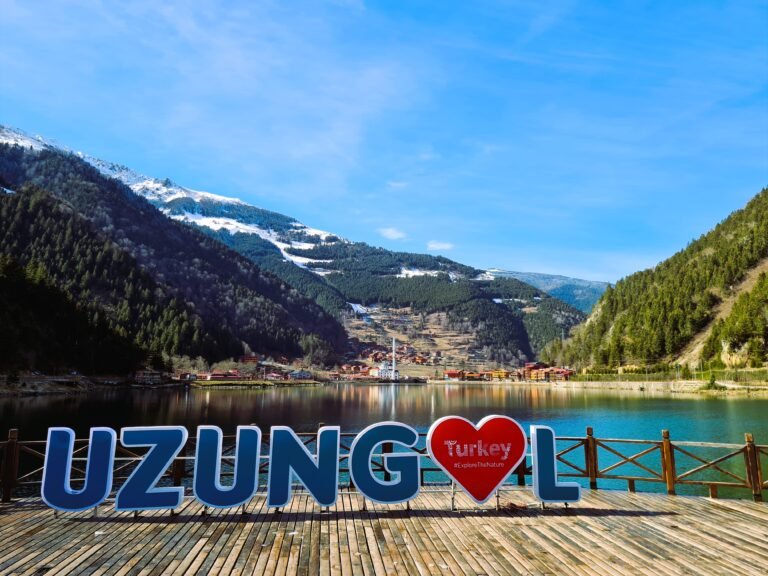
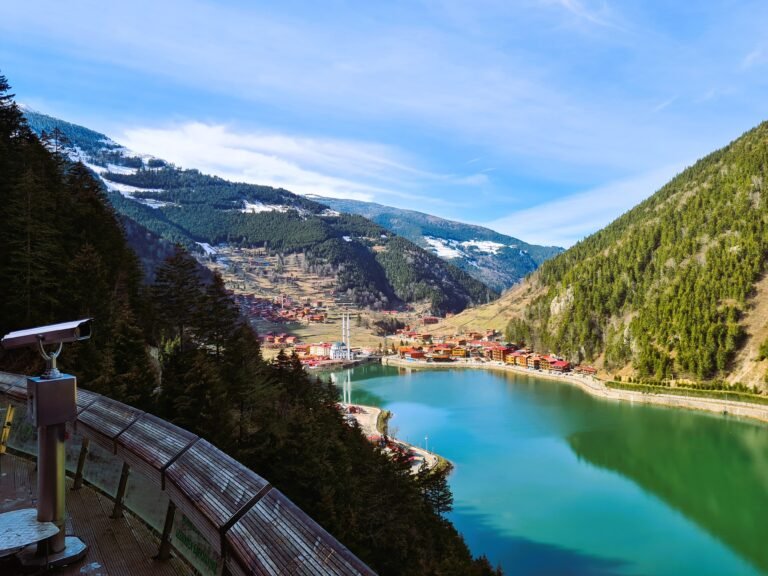
There it was, the lake sitting beneath the mountains, with the mosque and little houses in the background. It was even more beautiful in real life. The lake was formed naturally when a landslide blocked the Haldizen Stream, creating the lake we see today. But we were visiting in February, and winter there was freezing. Most of the walking path was covered in ice. Wherever the sun managed to reach, it had melted a little, but in the shaded areas it was icy and slippery. Walking was so slippery that it took us forever to reach the upper viewpoint. But once we got there, it was worth every careful step. From above, the lake looked a bit different. The viewpoint gave us another perspective of the scenery. And then there was the air, I don't know how to explain it, but it was so fresh and crisp that I found myself smiling with every breath.
There are plenty of guesthouses and restaurants overlooking Uzungöl, so if you enjoy staying in the countryside, surrounded by nature and mountain views, you can easily find a place to stay and enjoy the scenery at your own pace.
Hagia Sophia of Trabzon
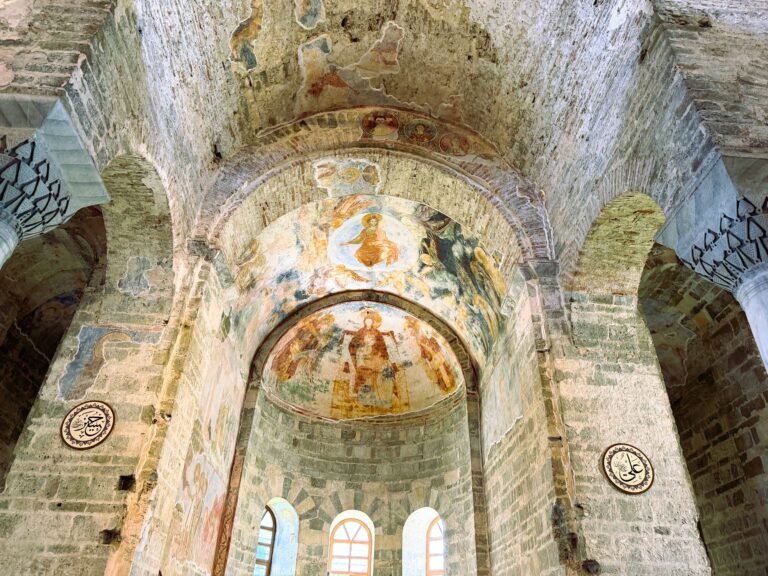
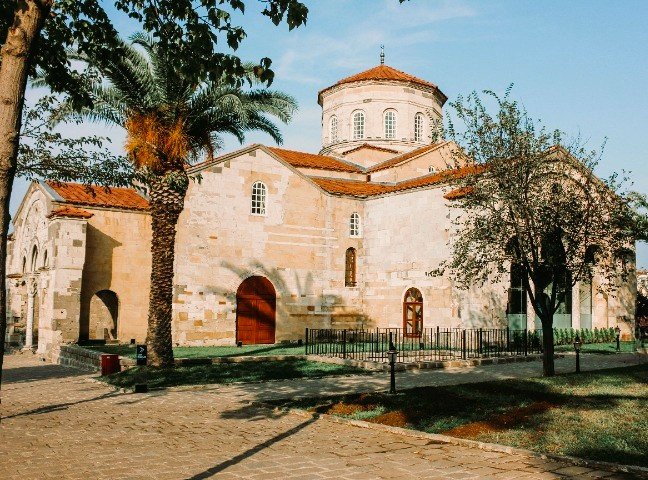
One of the places that really caught my attention was Trabzon’s Hagia Sophia. And yes, the famous Hagia Sophia in Istanbul is not the only one in the country, I was also surprised to know that there is a Hagia Sophia there, this one has a fascinating history. Originally built as a Byzantine church in the 13th century, it was later converted into a mosque and today serves as a mosque again. But when you stand in front of it, it doesn't feel like a mosque. I could easily understand why I remembered thinking it looked more like a cathedral than a mosque. The stone walls, arches and Byzantine architecture give it a completely different character from the Ottoman mosques I had seen in Istanbul.
Sumela Monastery
Sumela Monastery was another place I was really excited to visit. I had never seen a monastery tucked into rocky mountains before, and I couldn't wait to see it with my own eyes. We hit the road and enjoyed every bit of the drive. Winding roads through the mountains, lots of pine trees, and beautiful views all around us.
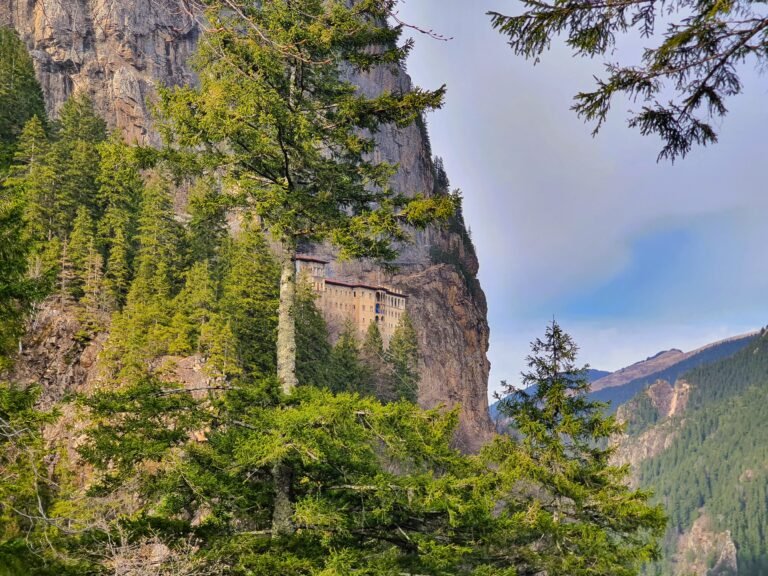
Sumela is a Greek Orthodox monastery dedicated to the Virgin Mary, built into the cliffs of the Altındere Valley. Its origins go all the way back to the 4th century, although the complex we see today was built and expanded over many centuries. It eventually became a huge complex with a rock church, chapels, monks’ rooms, guest rooms, a library and even a sacred spring. But all those facts came later, at that moment, I was just staring at it thinking: How on earth did people centuries ago, with such limited tools, manage to build something like this in a place like that? That was the question I kept wondering.
To reach the monastery, we had to walk paths and climb stairs, and that walk was like a remedy to my soul. I was breathing deeply, enjoying the smell of the woods, the quiet, the views, everything I had been missing after months of lockdown, and even before that, I had been missing hiking in Canada. So I couldn’t have been happier.
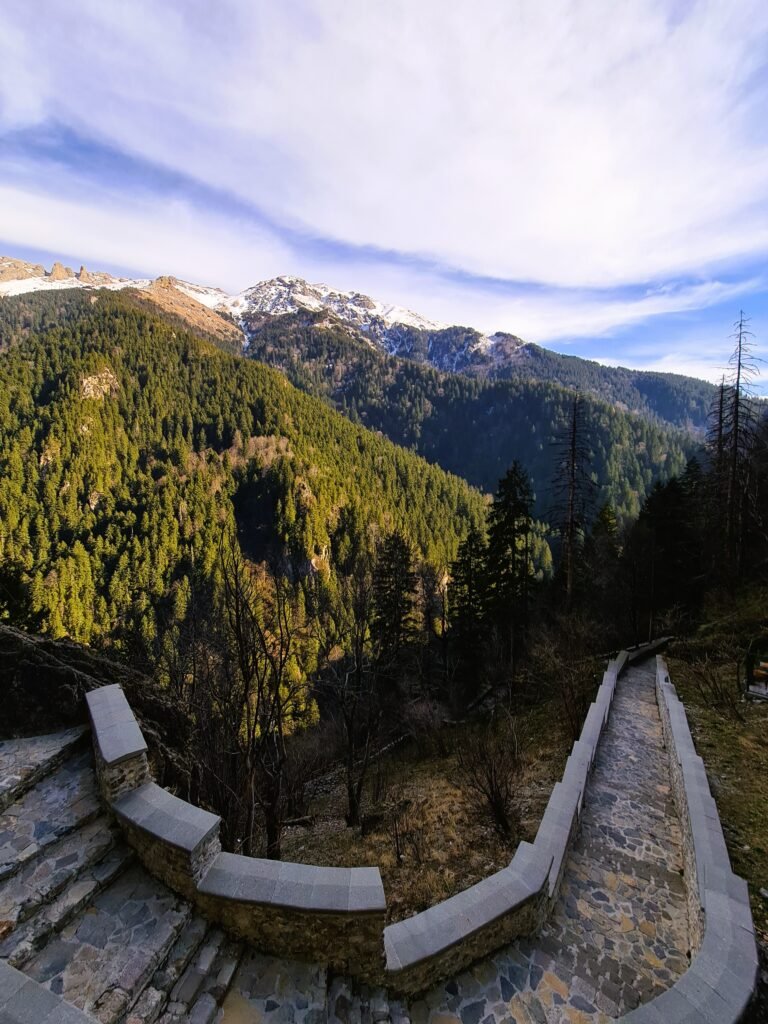
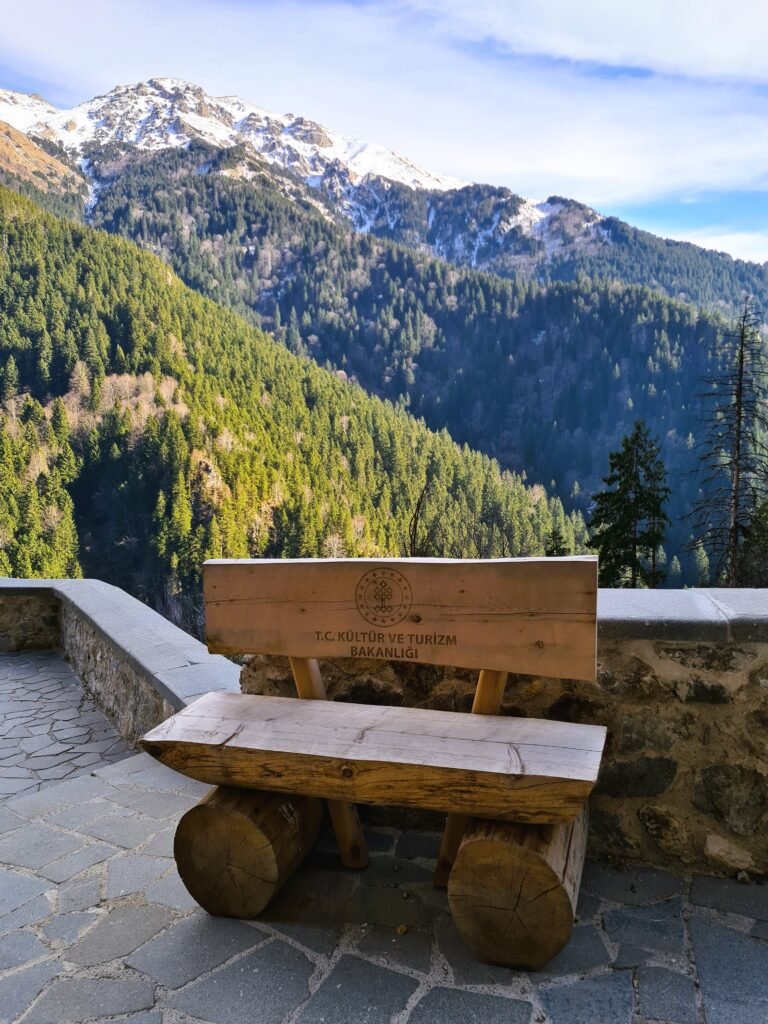
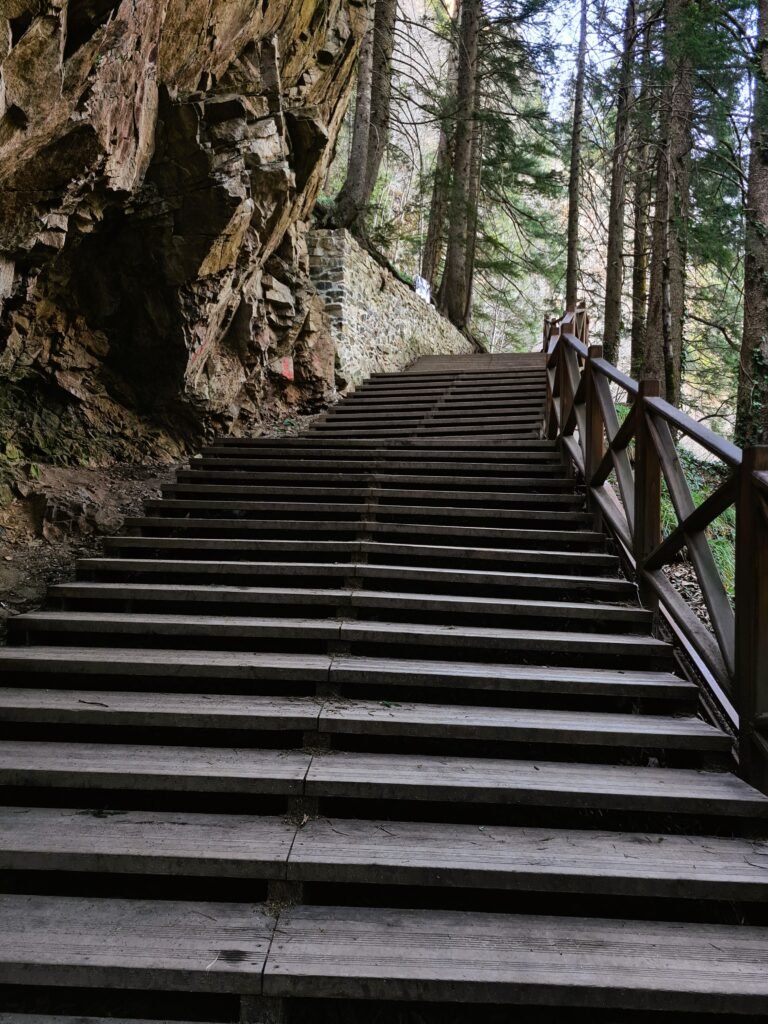
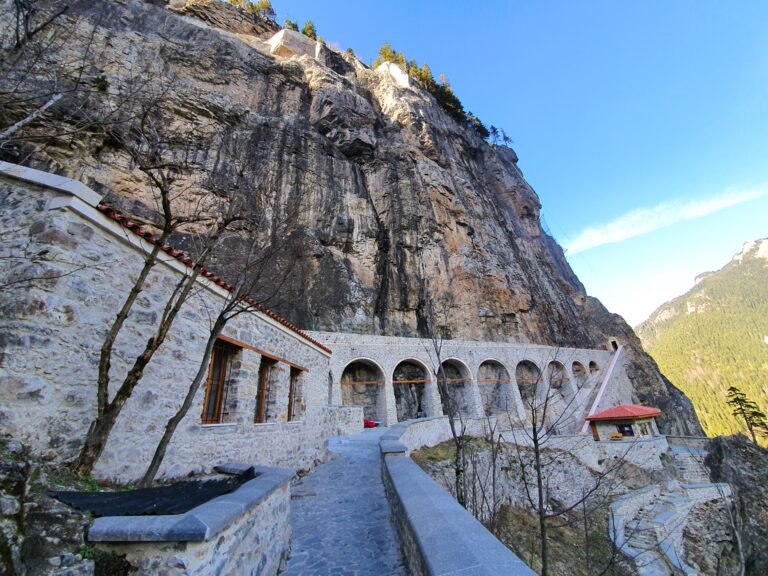
Unfortunately, we couldn't go inside because restoration work was underway during our visit. I was disappointed, of course, because I wanted to see the inside the rock church. But even from the outside, Sumela monastery was able to fascinate us. It wasn't just the monastery itself, but the whole setting around it. The mountains, the forest, the silence and that enormous cliff made the place feel almost unreal.
Aya Varvara Church
Just before reaching Sumela Monastery, on the right, you will see the sign for Aya Varvara. When I first saw the stones, I couldn't even tell what I was looking at. It just looked like a small stone ruin tucked into the mountain. Then I noticed the little gate connected to it, so of course, we went in to have a look. And even inside, I was still trying to figure it out. There were these small ruined chambers, but I couldn't tell if they had once been rooms, graves, or something else entirely. Nothing was really clear, and there wasn't much to explain what we were actually looking at.
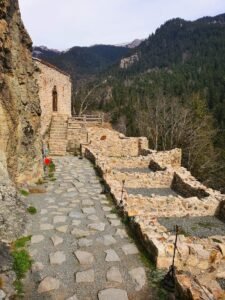
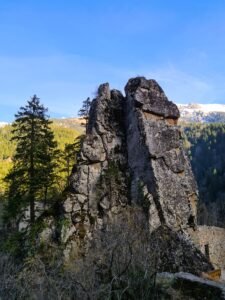
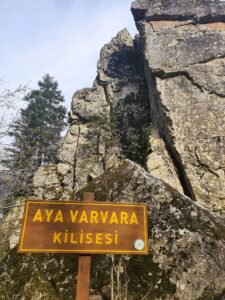
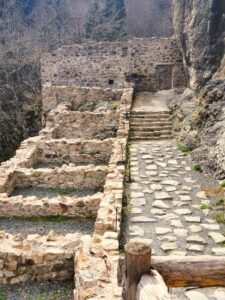
Apparently, Aya Varvara is a small historic church believed to have been connected to Sumela Monastery, but even its exact history isn't completely clear. So I guess I wasn't the only one confused! The church dates back to around the 18th or 19th century and may have been part of the wider monastery complex, possibly even serving as a cemetery.
What I do remember clearly is the setting. It has a beautiful view of the monastery through the trees, the picture of the monastery I shared earlier, was taking from there.
Karadağ Şelalesi (waterfall)
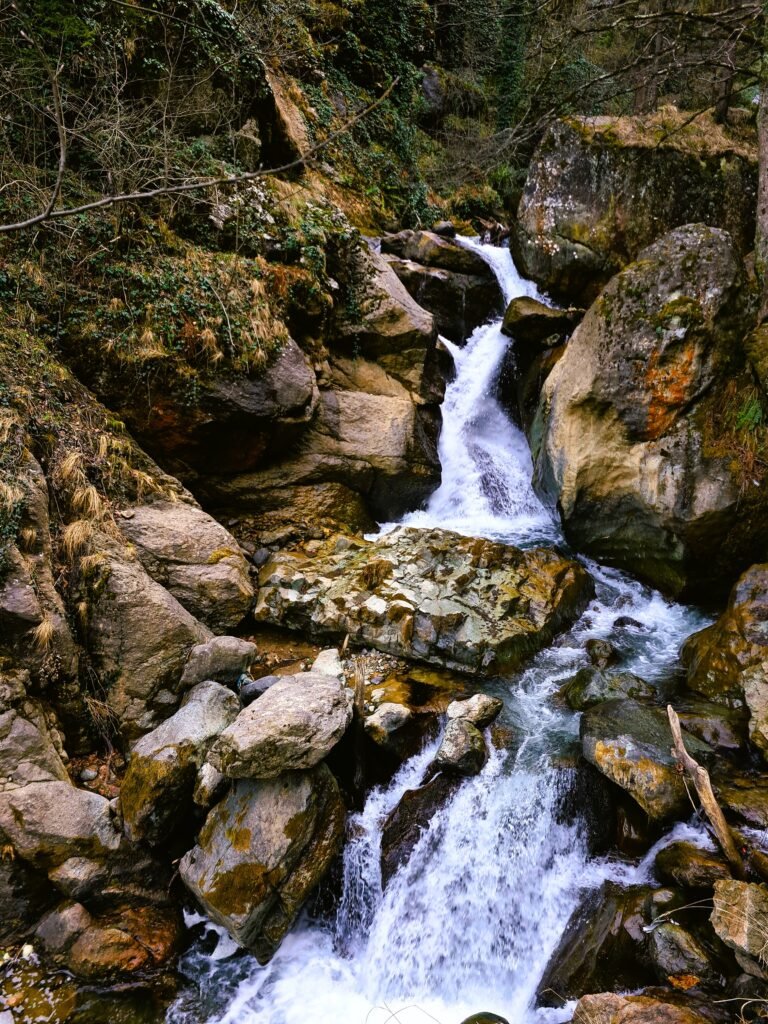
On our way back from Sumela, we noticed a small waterfall flowing over the rocks right beside the road, so of course, we stopped for a quick look. One thing I noticed was that the waterfall wasn't as heavy as I had seen later in some pictures online. Then I understood, most of those photos were probably taken in summer, when the snow in the mountains has melted and there is much more water coming down. We were there in February, with plenty of snow still sitting on the mountains, so the waterfall looked much smaller and gentler. Still, it was a beautiful little stop along the way, and I'm glad we pulled over to see it.
Limni Gölü Nature Park
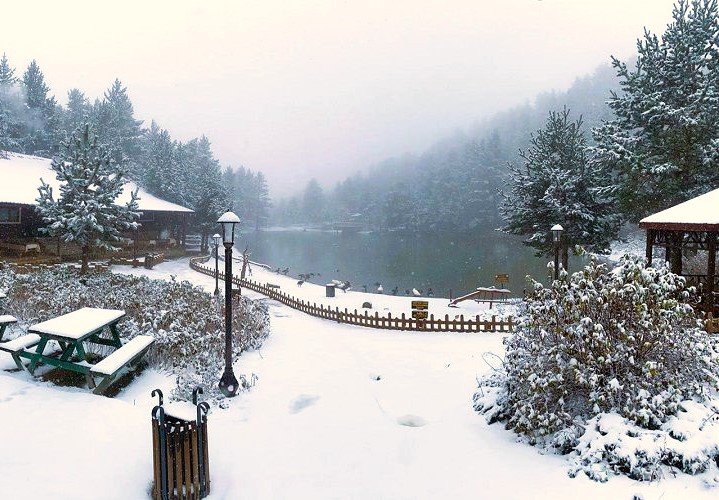
The next day, we decided to visit Limni Gölü and Kadırga Yaylası, two amazing places I had seen online. So we hit the road towards Limni.As we approached the mountains, snow started appearing on the road. The higher we climbed, the more the landscape changed. Soon, the road and trees were covered in snow, and little streams of mountain water were running through the rocks beside us.The higher we went, the deeper the snow became. At some point, even the smaller cars had started turning around. But we had a 4x4, so of course, we kept going…You might be wondering: if Sümela Monastery was also in the mountains, why wasn't there any snow when we went there?Well, Sümela is much lower down. It sits in the Altındere Valley, while Limni Gölü is up in the Zigana Mountains at around 2,025 metres above sea level. That's a huge difference in elevation, and in winter, it makes a big difference. By the time we were climbing towards Limni, we were in a completely different mountain environment, surrounded by snow-covered forests.And then we arrived at Limni Gölü. It was beautiful. I couldn't have been happier. Looking at those mountains, the forest and the lake, all covered in snow, brought back so many memories of the Rockies in Canada. This was exactly what I had been craving after months of lockdown, mountains, trees, fresh air, and nature everywhere I looked.
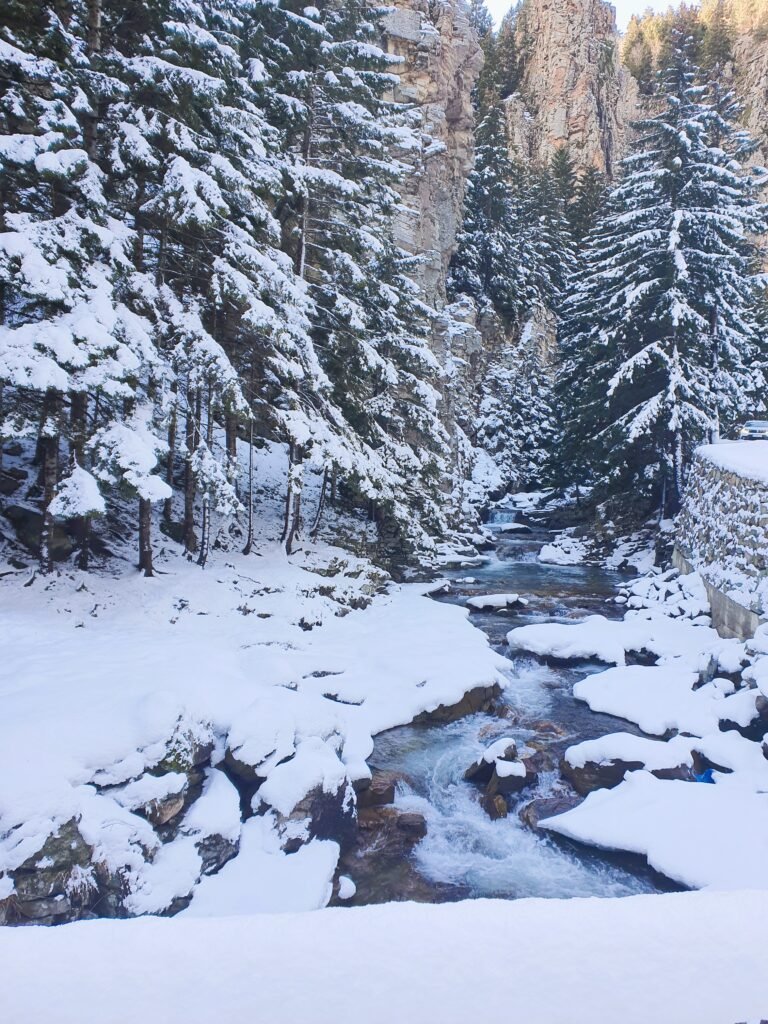
We spent some time there, taking all that beauty in, and then hit the road again towards Kadırga Yaylası. But because the sun goes down early in February, and with the cloudy weather, it started getting dark even earlier. By the time we reached the main road, it was getting too late to continue towards Kadırga. Honestly, there was no way I was going to take unnecessary risks just to tick another place off our list. It was COVID time, the roads were very quiet, and we were travelling with our child. If something happened to us up there, we couldn't exactly count on finding help easily ,and language could have made things even more difficult. Kadırga Yaylası would have to wait for another time.
Hamsiköy
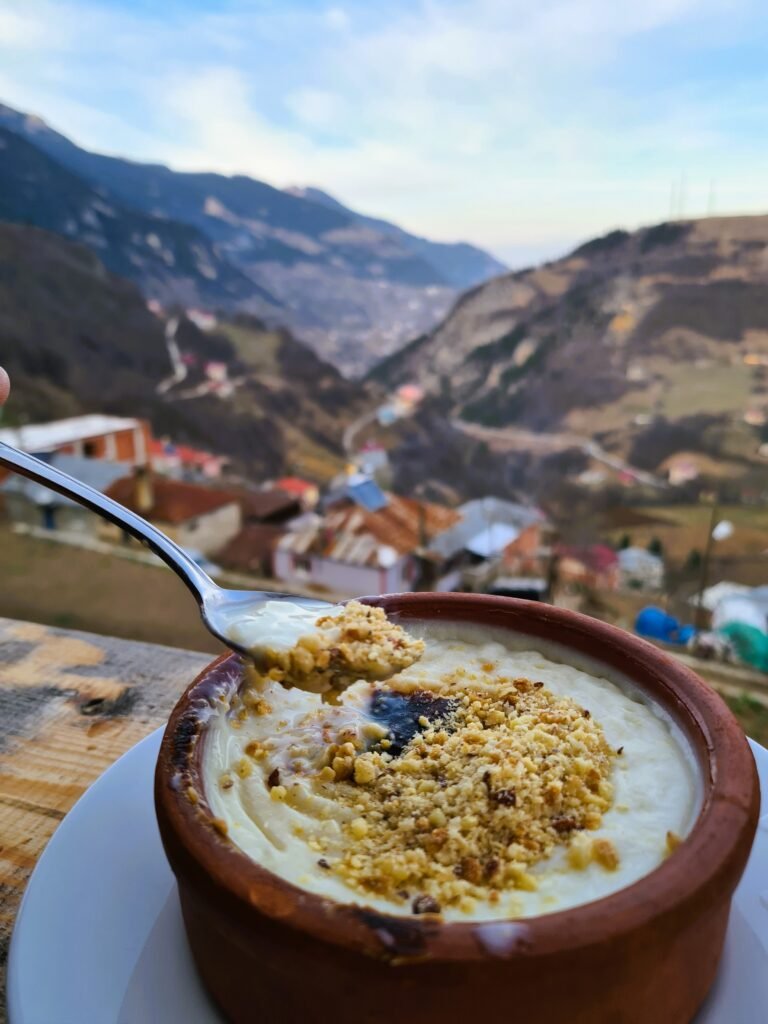
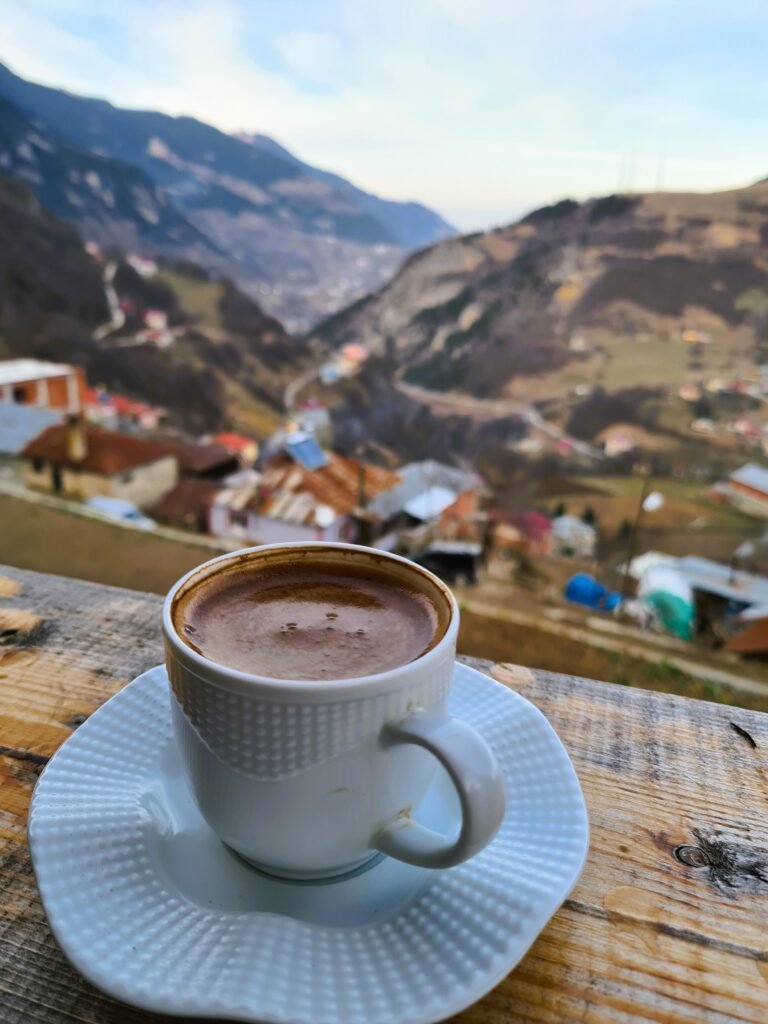
A friend at the hotel recommended that we visit Hamsiköy and try what he said was the best sütlaç (Turkish rice pudding) in Trabzon. We put Hamsiköy on Google Maps and hit the road. What we didn't expect was the village itself. Hamsiköy is up in the Zigana Mountains, and as we got closer, the whole atmosphere started changing.
First came the smell of cows, then we started hearing animals, and there was also the wonderful smell of wood burning somewhere nearby. I loved it. It felt so different from the city. Everything was simple, rural and authentic.
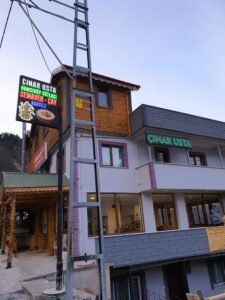
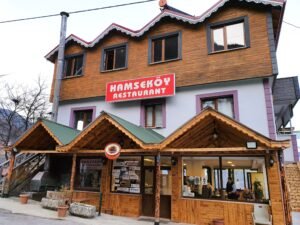
We eventually arrived at a little place that had a restaurant downstairs and a coffee shop upstairs. It was very simple, exactly the kind of place I love finding when travelling.
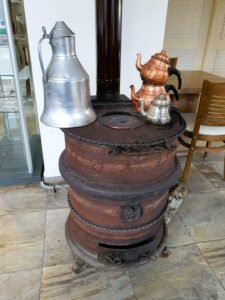
There was a stone fireplace right by the entrance, with a big tea pot sitting on top to keep the tea warm. The smell of the burning wood was priceless, and the mountain views made the drive completely worth it.
And yes, the sütlaç was delicious, exactly what we had come for.We enjoyed our coffee and sütlaç while sitting there looking at the mountains, surrounded by that peaceful countryside atmosphere. It was simple, cosy and somehow felt a little like being invited into someone's home rather than sitting in a tourist restaurant.
What I didn't know at the time was that Hamsiköy wasn't just a pretty mountain village. It is actually made up of five settlements and sits on the northern route of the historic Silk Road. For centuries, travellers crossing these mountains stopped here along the way. And those cows we could hear, and definitely smell, were actually part of what made the famous Hamsiköy sütlacı so special. The local cows graze on the mountain pastures and the area's rich variety of plants gives their milk its distinctive flavour.
After our little mountain escape, we headed home to relax and get ready for our next destination.
My Tips for Visiting Trabzon
1. Stay somewhere that lets you enjoy nature
I highly recommend the hotel where we stayed, Hancıoğlu Çamburnu Forest Houses. I loved the combination of forest, sea and nature while still being within reach of the city. But if you want to go deeper into the mountains, you can find plenty of chalets, guesthouses and mountain stays on Airbnb, Booking, or Hotels.com.
2. Check Sümela Monastery tickets and opening times before you go
You may be able to buy tickets online through the official Turkish Museums website, and also check the latest opening hours and ticket information before your visit. Click Official Turkish Museums – Sümela Monastery tickets
3. Try to visit during the tea harvest
Visiting the tea fields, watching or even participating in the harvest, and tasting fresh local tea would be such a great way to experience the region.
.4. Check if there are any local festivals happening
Trabzon and the Black Sea region have a strong local culture, with traditional costumes, music and dancing. Unfortunately for us, it was during COVID, so there were no events happening. Check the local calendar before your trip, you might be luckier than we were.
5. Don't forget Atatürk Mansion
This was on our list, but when we finally had time to visit, it was the weekend and it was closed. So learn from our mistake and check the opening days before planning your visit.
6. Visit Hamsiköy and don't just go for the sütlaç
Yes, the famous rice pudding is definitely worth trying, but the whole mountain atmosphere is part of the experience. If you have more time, you can also visit Hamsiköy Waterfall, which we unfortunately didn't get the chance to see. This is the place we visited for Sultlac. the main floor is a restaurant, and the first floor is the coffee shop.
7. Explore more of the yaylas
Places like Kadırga Yaylası and Sultan Murat Yaylası are worth adding to your itinerary if you love mountains, fresh air and quiet countryside. We had planned to visit Kadırga, but winter and the early sunset had other plans for us.
8. Visit Vazelon Monastery if you have time
If you are interested in history and monasteries, add Vazelon Monastery to your list. We visited Sümela but didn't have enough time to visit this one.
9. Explore Çal Cave
Çal Cave is another interesting place we missed. It is a good option if you want to see something different from lakes,
mountains and monasteries.
10. Rent a 4x4 if you visit in winter
If you are planning to explore the mountains in winter, I highly recommend renting a 4x4. We were very glad we had one when we drove towards Limni Gölü and the snow became deeper. Some smaller cars had already turned around, while we were able to continue a little farther.
11. Don't leave without trying the local food
Trabzon has its own specialties, so don't stick to the usual Turkish dishes you can find everywhere. Try Muhlama (kuymak), made with corn flour, butter and local cheese, as well as Akçaabat köfte, karalahana çorbası (black cabbage soup), Hamsi dishes, and of course Hamsiköy sütlacı. And don't forget the local tea, you are in the heart of Turkey's tea-growing region.
12. Don't rush Trabzon
This is probably my biggest tip. Trabzon is not just the city itself. Between Sümela, Uzungöl, Hamsiköy, Limni Gölü, the mountains, yaylas, waterfalls and tea regions, there is a lot to explore. Give yourself a few days and enjoy the road as much as the destination.