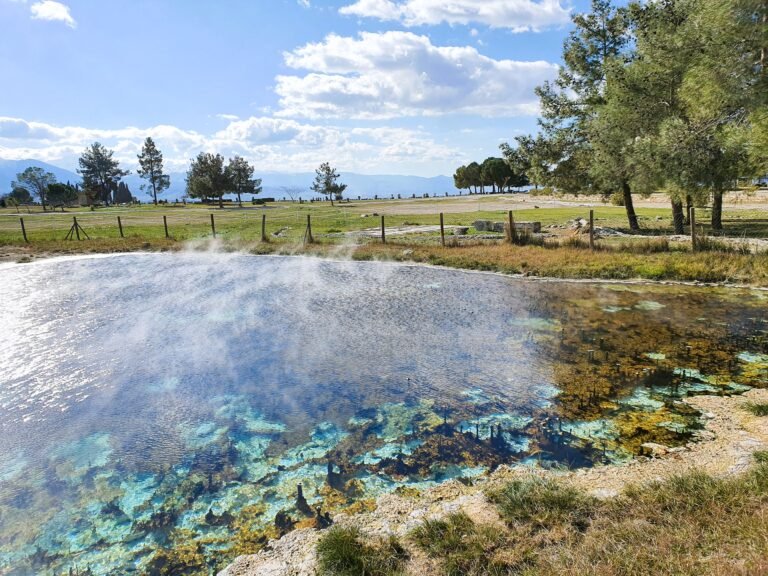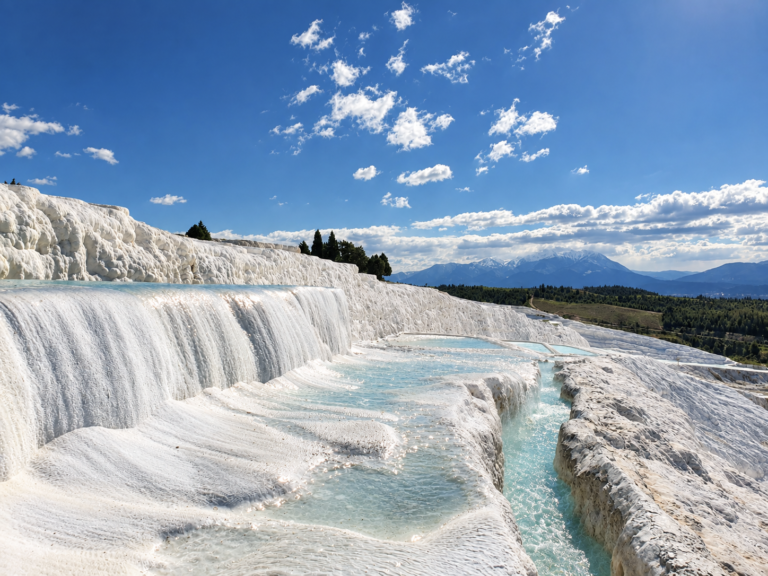
Who hasn’t seen the cascading white terraces of Pamukkale and wondered, “What is that?” The first time you see them, they look like beautiful white mountains covered in snow. But as you get closer, you start to notice the steam rising from the terraces and realize there is water running through them. That “smoke” is actually the steam from the hot thermal water flowing over these stunning white formations. Known in Turkey as the “Cotton Castle,” Pamukkale looks almost unreal, a landscape of white terraces, warm mineral-rich waters, and ancient history all in one place.
Where We Stayed
We stayed at Mucize Termal Spa (check it here)
I had specifically chosen this place for one reason: the natural hot-water bath in the room. After all our travelling, that sounded absolutely perfect. The room was so big and clean.
Our stay at the hotel gave us so many funny memories. Back then, I was furious. Now, I can't remember the details without laughing, especially when I think about the hotel at night.Because of COVID, the hotel was almost empty, and apparently, the owners had decided that if there were only a few guests, there was no need to waste electricity on all those unnecessary lights. At night, practically everything was turned off. It felt less like a hotel and more like the setting of a low-budget horror movie.One evening, my husband went to the hammam. A little while later, he came running back to the room looking genuinely alarmed.“The hotel is empty and dark! It's scary!”
Then came the omelette incident. One morning, I asked the owner, “Where is the omelette?” He looked at me completely seriously and said:“ This has omelette.” I looked at what he was pointing at. It was the bread dipped in egg and fried that they had served for breakfast. Apparently, in his logic, if he had already used the eggs for this, there were no more eggs left to offer me an omelette. Thankfully, his son came to the rescue and made me a proper omelette. Crisis solved.
At the time, I wanted to scream. Now, these are the stories that make me laugh the most.
The Cotton Castle
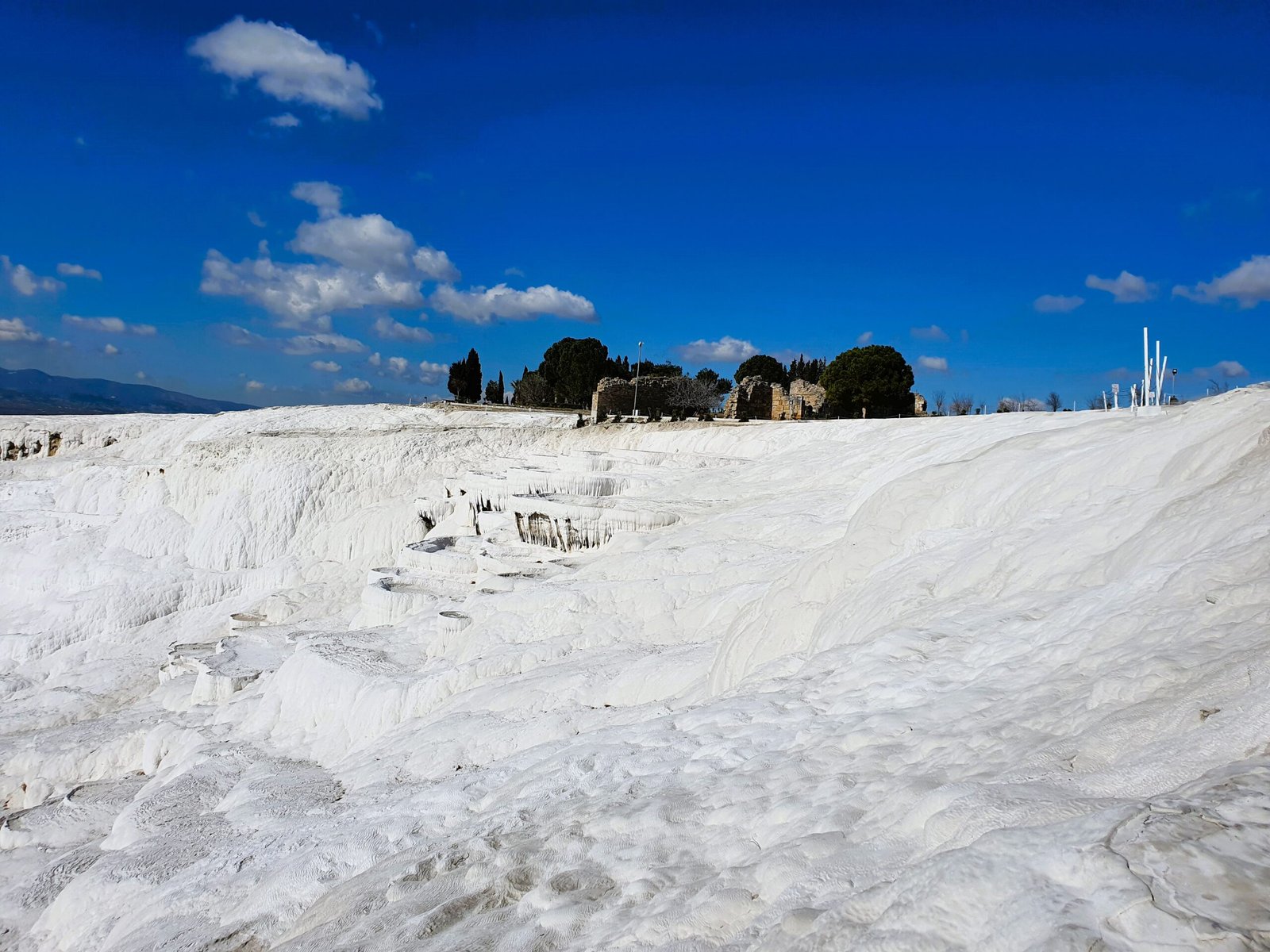
We visited the Cotton Castle early in the morning, and it was freezing. I mean properly freezing, the grass was covered in frost and there were hardly any tourists around. We also didn't realize it has Roman ruins, so imagine our surprise when we discovered just how large the ancient ruins area was. I had never seen that part of Pamukkale in any of the videos I had watched. Once inside, we ran toward the famous hot springs. But another surprise was waiting for us, they weren't full of water like in all those beautiful photos. Only a few of the terraces had water in them. I still don't know whether this was normal in winter or because there were so few visitors during COVID, but we weren't going to complain. We took off our shoes and dipped our feet into the warm thermal water. In that freezing weather, it felt absolutely wonderful. When the coffee shop finally opened, we practically ran inside for hot chocolate to warm ourselves up.
Hierapolis
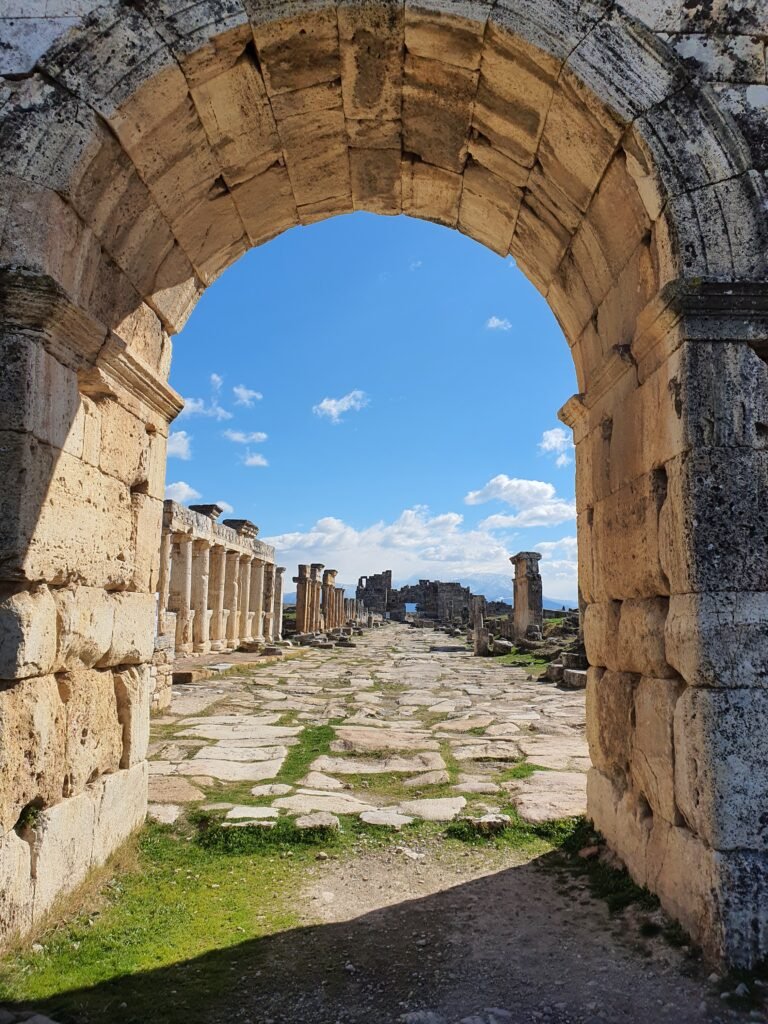
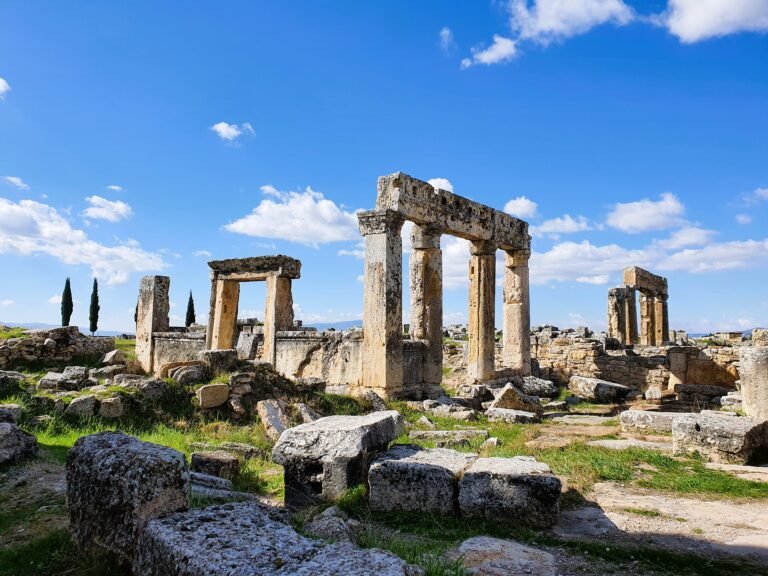
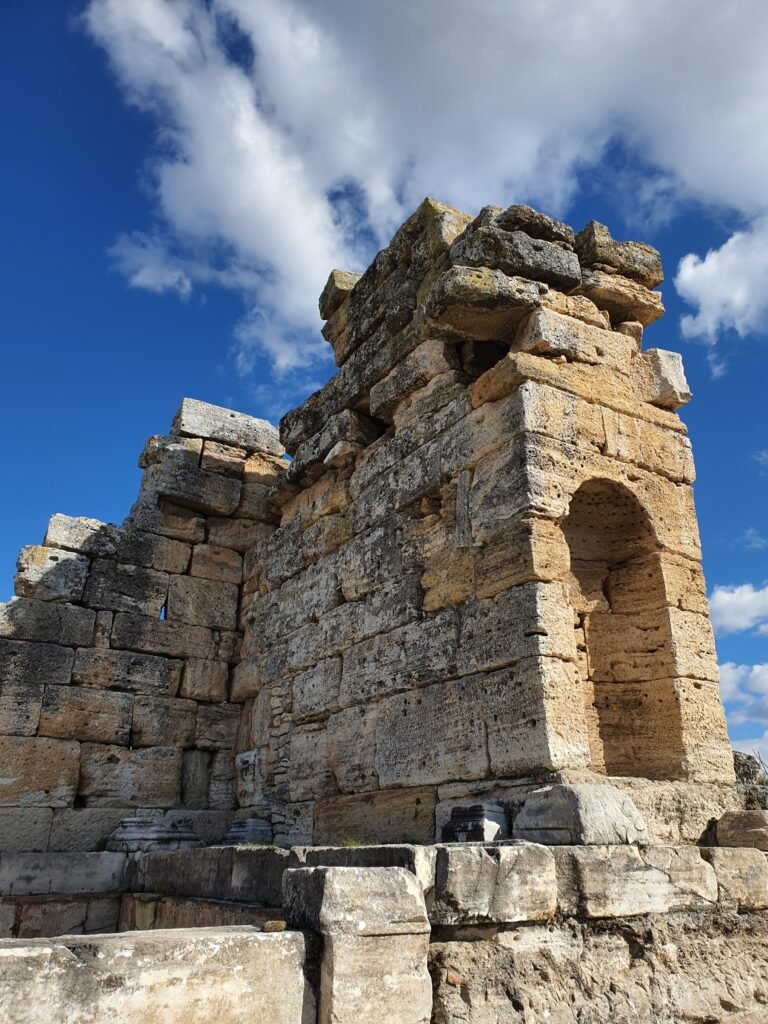
I was surprised by how big the archaeological site was. I knew Pamukkale was famous for its white terraces, but I hadn't expected to find an entire ancient Roman city spread across the hill above them. The place is called Hierapolis, and once I learned that people had actually lived, worked and bathed here nearly 2,000 years ago, the ruins became even more fascinating. Hierapolis was founded in the 2nd century BC by the kings of Pergamon, but it flourished under Roman rule. Its natural hot springs attracted people seeking relaxation and healing, making it an important thermal and religious centre. In a way, it was an ancient spa town, except that instead of modern hotels and swimming pools, it had grand baths, temples, theatres and monumental gates Like many ancient cities in this region, Hierapolis suffered from powerful earthquakes, and was rebuilt. It reached its height during the 2nd and 3rd centuries AD. Today, its remains stretch across a surprisingly large area, with ancient streets, stone columns, impressive gates, a theatre, baths and an enormous necropolis. As we walked around, there seemed to be ruins everywhere. It was hard to imagine that this whole area had once been a bustling city, rather than the peaceful archaeological site we were exploring that winter day.
The Frontinus Gate
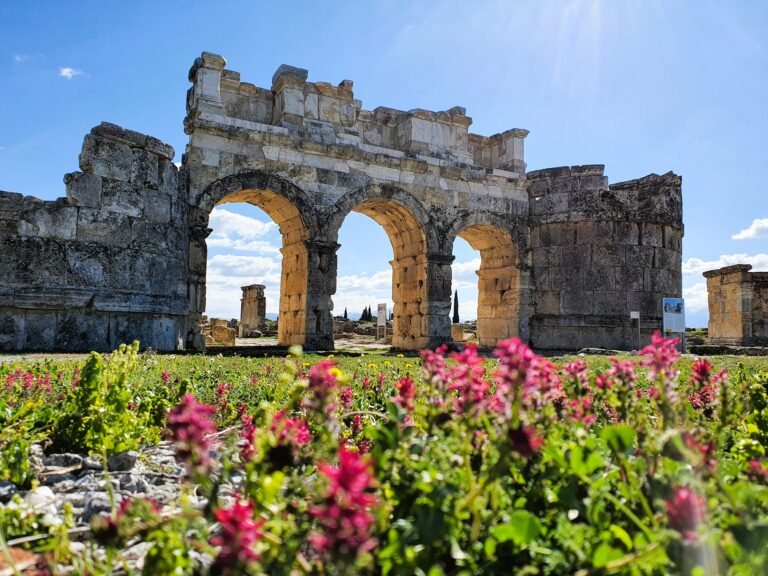
The Frontinus Gate was one of the first things that really made me realize how important this ancient city must have been. It is gigantic, and even from a distance, you can tell that you are not looking at an ordinary entrance. It feels like a grand welcome to a city that once mattered.The gate has three large arched openings, with two round towers on either side. It marked the entrance to Frontinus Street, the main street of Hierapolis, which continued through the heart of the ancient city. Standing there, looking at it from afar, I could easily imagine people arriving through this enormous gate centuries ago and entering a busy Roman city.
Frontinus Street
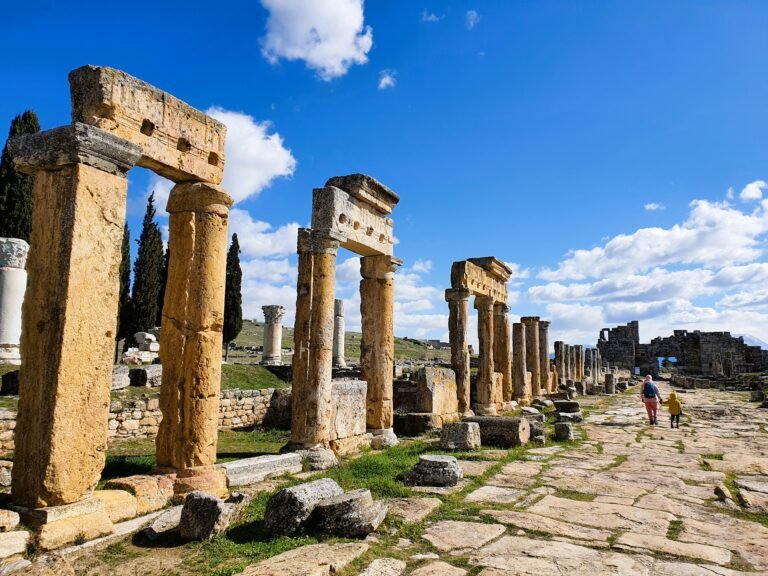
From the Frontinus Gate, we entered Frontinus Street, the main street of ancient Hierapolis. The street stretches for about one kilometre, running through the heart of the old city. It was once a busy part of Hierapolis, lined with houses, shops, columns and important public buildings. Just imagine walking along this same street almost 2,000 years ago, with people coming and going, merchants selling their goods and locals heading about their daily lives. Today, much of what is left are the stone remains, columns and ruins along the road, but its length makes it easier to understand just how large Hierapolis actually was.
The Latrine
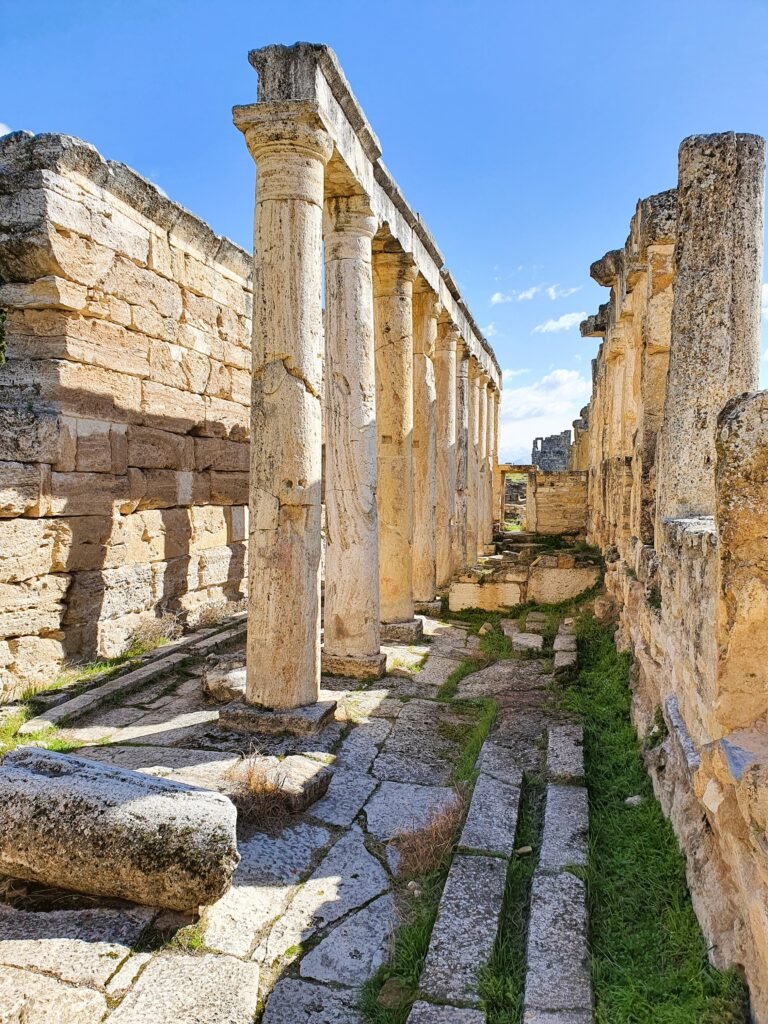
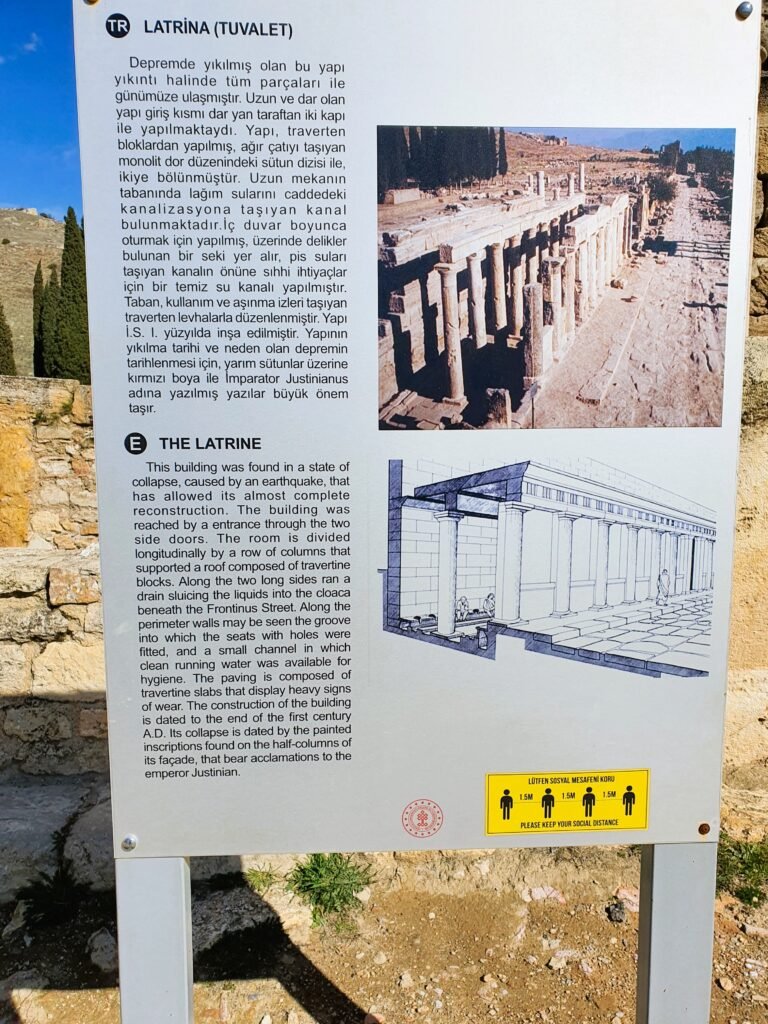
The latrine was one of those stops that I definitely had to investigate. At first, when I looked at it, all I could see were some old columns and stones. Then I read the sign and realized what I was actually looking at: a Roman public toilet! Once I knew that, I started looking more carefully. There were holes in the stone seats where people would have sat, with a water channel running along the front that helped with hygiene and drainage. Suddenly, those innocent-looking columns didn't look so innocent anymore.
I could imagine almost everything about ancient life here, but I have to admit, one thing was harder to picture: people sitting next to each other in a public toilet, doing their business with absolutely no privacy. And knowing the Romans, they may even have been chatting away while sitting there. We usually look at theatres, temples and giant gates and imagine the grand side of Roman life, but then you come across a public toilet and suddenly remember that people here were also just... people.
The Ancient Theatre
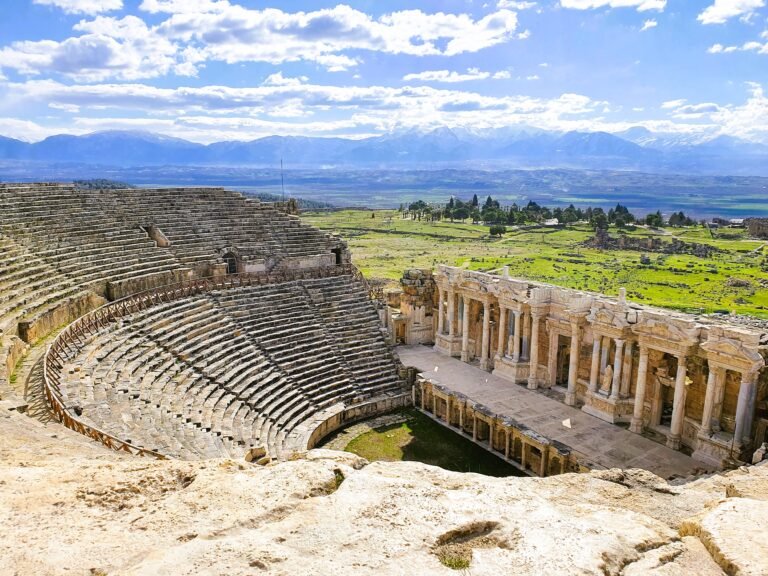
The theatre was one of my favourite stops in Hierapolis, not only because of the theatre itself but because of the view around it. We sat up above the theatre for a while, and I just enjoyed the beauty of the place and the landscape surrounding it. After walking around all those ruins, it was nice to finally stop and take everything in. The theatre dates mainly from the Roman period and was built on the hillside, taking advantage of the natural slope. It has the typical semicircular seating area, the orchestra in front and a large stage building. The theatre was not small either, it could hold around 7,000 spectators, which gives you another idea of how important and populated Hierapolis once was. It is very interesting to see the decoration that has survived so long on the stage building.
The Ancient Pool
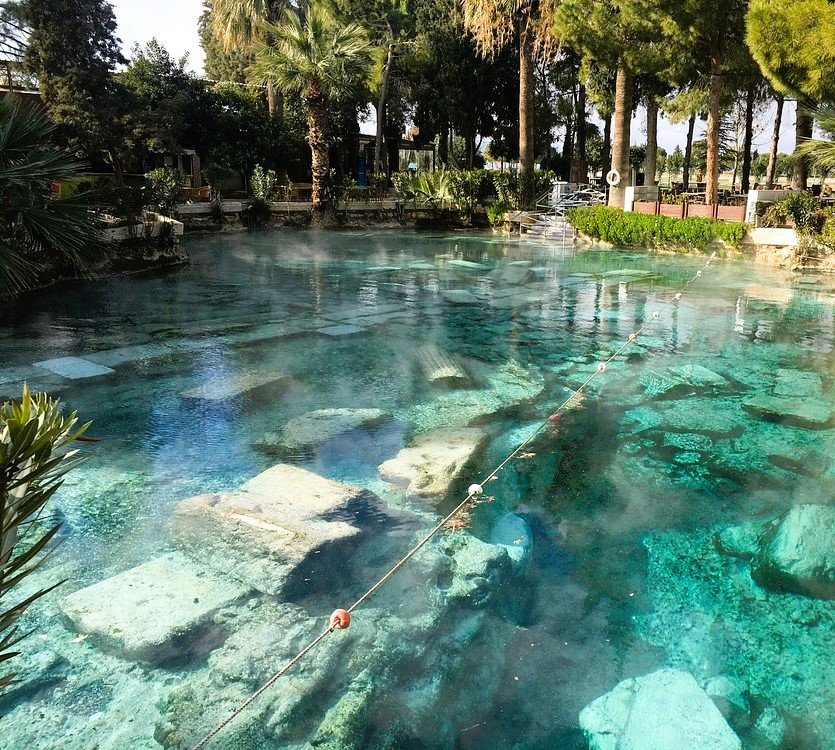
The thermal waters weren't just something pretty to look at. They were the reason Hierapolis existed in the first place. For centuries, people came to Hierapolis because of its natural hot springs, which were believed to have healing and therapeutic properties. The city grew around these waters, with baths and other facilities built to make use of them. In fact, Hierapolis became an important Greco-Roman thermal centre, and people travelled here not only to enjoy the warm water but also for its supposed health benefits. There was a Roman bath complex and the famous Ancient Pool, where people could bathe in the naturally warm thermal water among ancient marble columns and ruins. When we visited, the Ancient Pool was closed because of the COVID restrictions. So instead of getting into the famous thermal water, I had to admire it from outside. It was a little disappointing, especially knowing that people had been coming here for the same hot springs for thousands of years.
The Necropolis
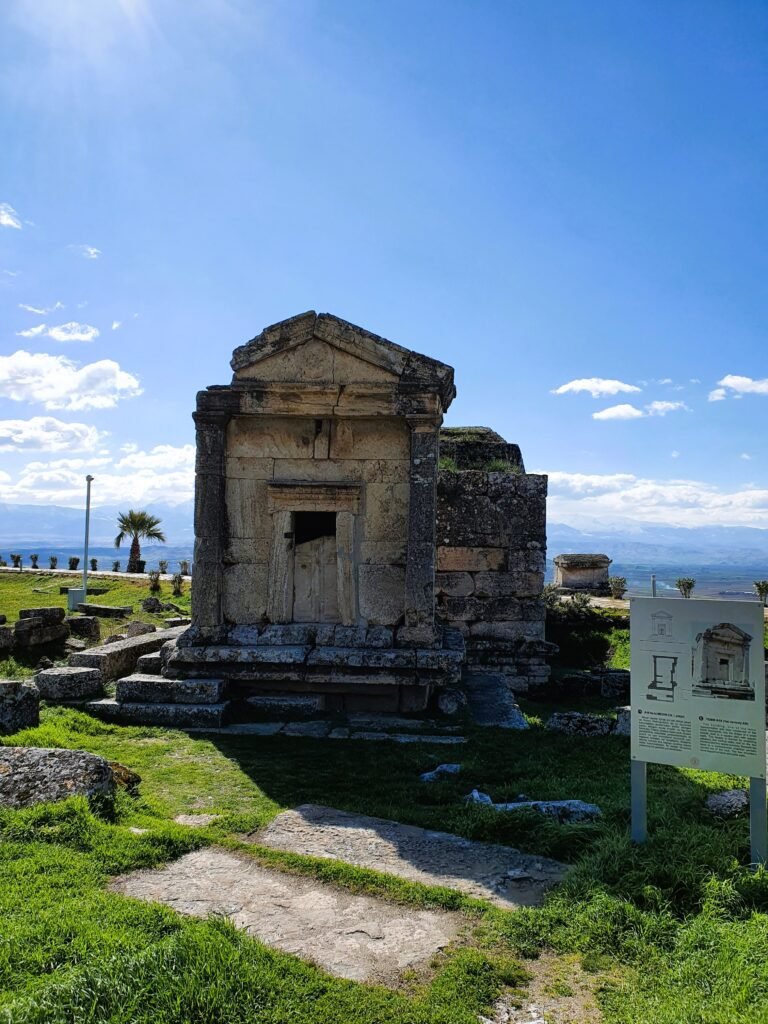
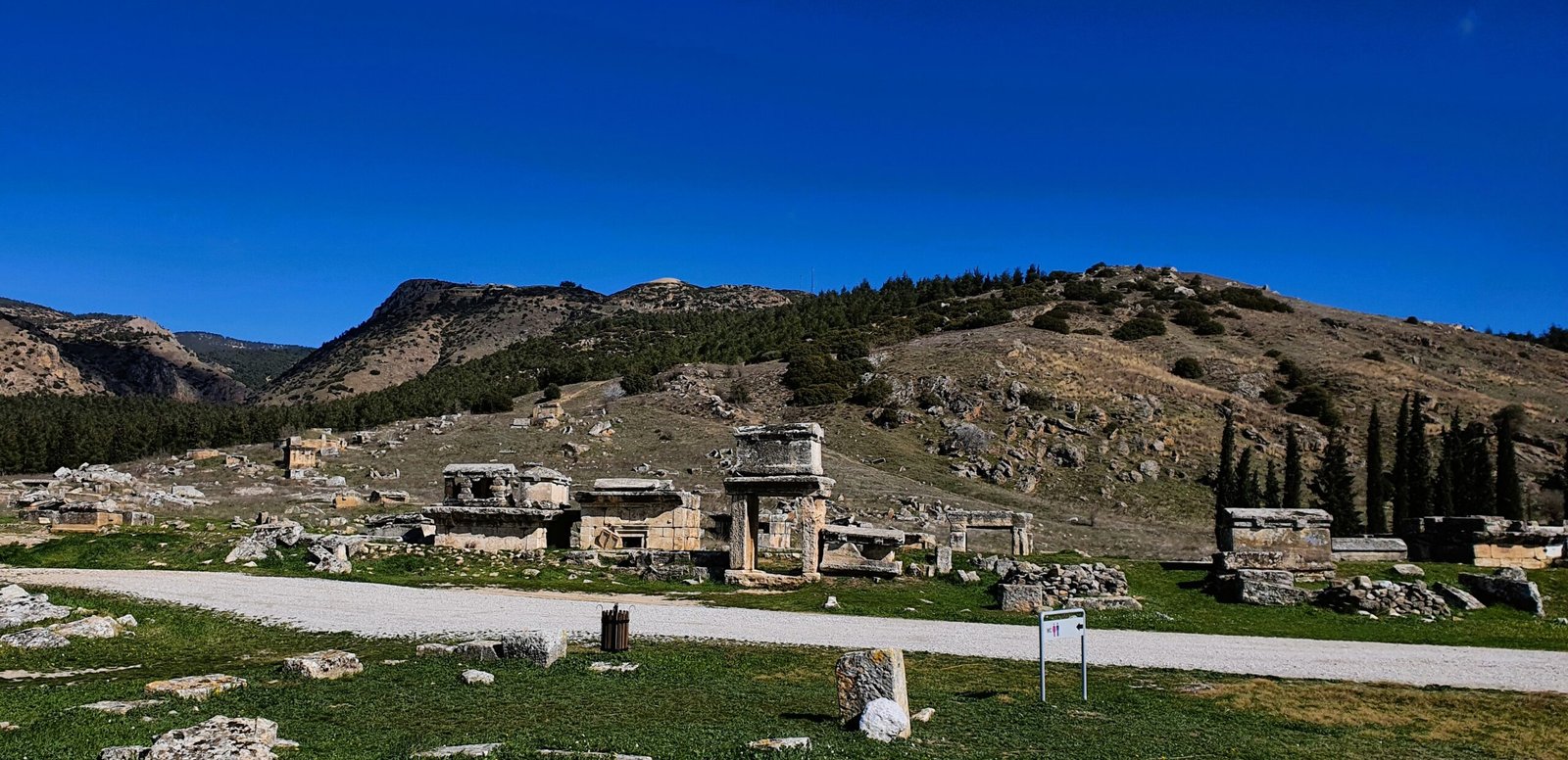
And then there was the necropolis, which made me realize even more how big and important Hierapolis must have been.
The ancient cemetery stretches for more than two kilometres, with tombs, sarcophagi and different types of burial monuments spread along the road. People came to Hierapolis from different places to seek the benefits of its famous thermal waters, and many who died here were buried around the city. Some of the tombs are surprisingly large and elaborate, which makes you wonder about the people who were buried there and the lives they lived. Walking through it, I kept thinking that this wasn't just a place with a theatre and a few broken columns. This was a real city, with streets, shops, baths, theatres, homes, public buildings and even a huge cemetery. The more we walked, the more I understood just how enormous Hierapolis had been. And honestly, I wasn't expecting any of this when we came to Pamukkale. I thought I was coming to see the famous white terraces. I didn't realize I would also be walking through the remains of an entire ancient city.
Tips For Your Visit To Pamukkale
If you are planning a trip to Pamukkale, don't make the mistake of thinking you only need a few hours to see the white terraces and leave. There is much more to the site than that, and I would plan it as a proper day rather than a quick stop.
Choose your accommodation wisely: If you want to make the most of Pamukkale's thermal waters, look for a hotel with its own thermal pool. Better still, plan to stay for at least two nights and give yourself a day or two to actually enjoy the thermal waters instead of rushing from one attraction to another. After all, if you come all the way to a famous thermal destination, you might as well take advantage of it!
Lower your expectations: Pamukkale is a small village/town, and you shouldn't expect a big-city shopping or entertainment scene.
Go early: Pamukkale can get very busy, and arriving early gives you a much more peaceful experience.
Choose your season carefully: I visited in winter, so I didn't experience Pamukkale's summer heat, but I have heard how hot it can get. Walking around the terraces and the huge archaeological site under the summer sun can be exhausting. Consider visiting during spring, autumn or even winter.
Give yourself at least 3 to 4 hours at the site: And honestly, more if you can. The travertines alone are worth taking your time over, but then you have the entire ancient city of Hierapolis to explore. I was genuinely surprised by how big the site was.
Take some food and make a picnic of it: The archaeological site is surrounded by beautiful natural scenery, and there are plenty of moments when you will want to stop walking and simply sit down. Pack some snacks or a light lunch and enjoy a little picnic with the ancient city around you. Just remember to take your rubbish with you and respect the archaeological site.
Don't forget the Antique Pool: If it is open during your visit, bring your swimsuit and take the opportunity to swim in the naturally warm thermal water among the ancient ruins. Imagine floating in the same thermal waters that attracted people to Hierapolis thousands of years ago, with ancient columns and stones around you