Skopje,
the city where history lives in every statue and every sculpture
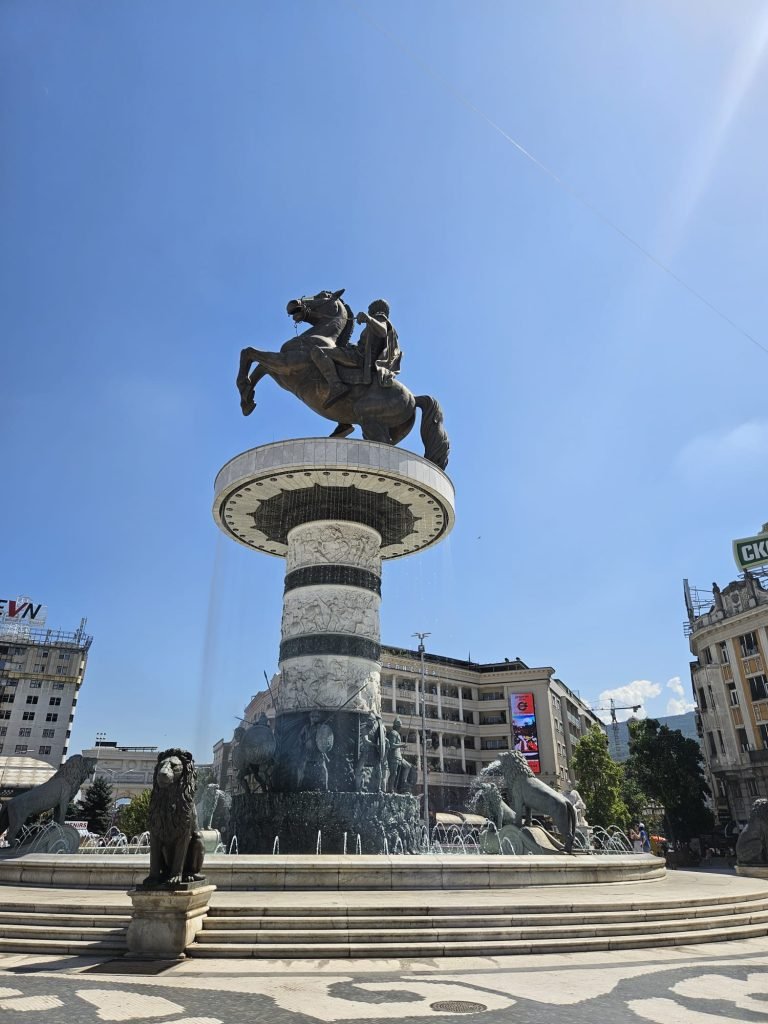
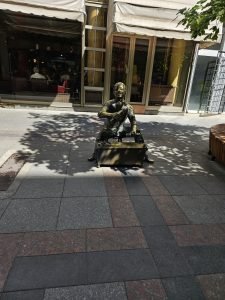
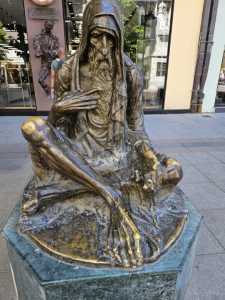
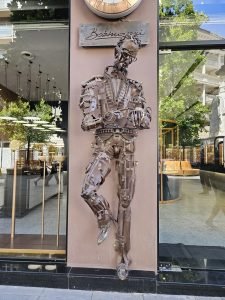
Have you ever seen a city where every wall, plaza, bridge, and square is filled with sculptures? That’s Skopje. Not graffiti, not murals statues. Everywhere. Walking through the city feels like moving inside an open-air museum, where history watches you from every corner. I have honestly never seen so many statues in one place, and I later learned that Skopje is home to around 284 statues.
This unusual landscape is largely the result of the “Skopje 2014” project, a government initiative aimed at reshaping the city’s identity through monumental art and architecture. The idea was to tell the story of the country, its heroes, leaders, and historical moments, through sculptures, fountains, and grand buildings. Whether you love it, question it, or feel overwhelmed by it, one thing is certain: Skopje leaves an impression.
As you walk, you naturally slow down. Every few steps, you find yourself wondering, Who is this person? Why are they important? What story are they trying to tell me? Some statues feel majestic, others surprising, and a few even confusing, but together they create a city that constantly invites curiosity. Skopje doesn’t whisper its history; it puts it right in front of you, unapologetically and at full scale.
Initially, our journey in Macedonia started in Skopje, which we reached by bus from Thessaloniki, Greece. The journey was short, smooth, and passed through beautiful landscapes. Our accommodation was within walking distance of the bus station and conveniently located in downtown Skopje, which made everything very easy. We didn’t need a car while staying in the city, as most places were accessible on foot. We only took a taxi once to reach a mall a bit farther away, as we already had one SIM card that worked across Europe, but we were experiencing some issues with it and needed to visit the service office. Taxis were very affordable, making getting around simple and stress-free.
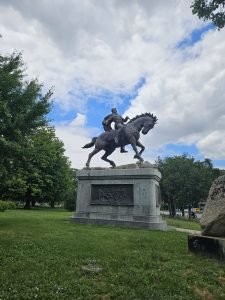
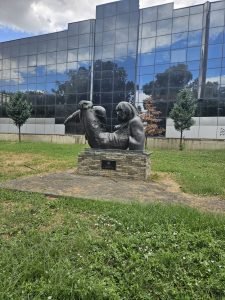
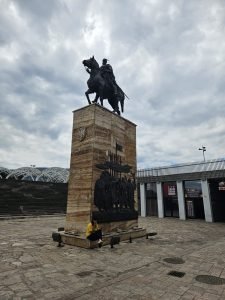
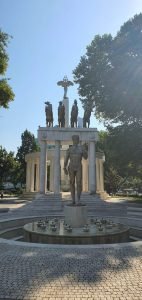
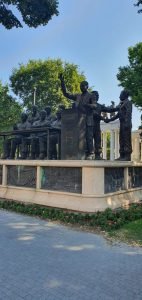
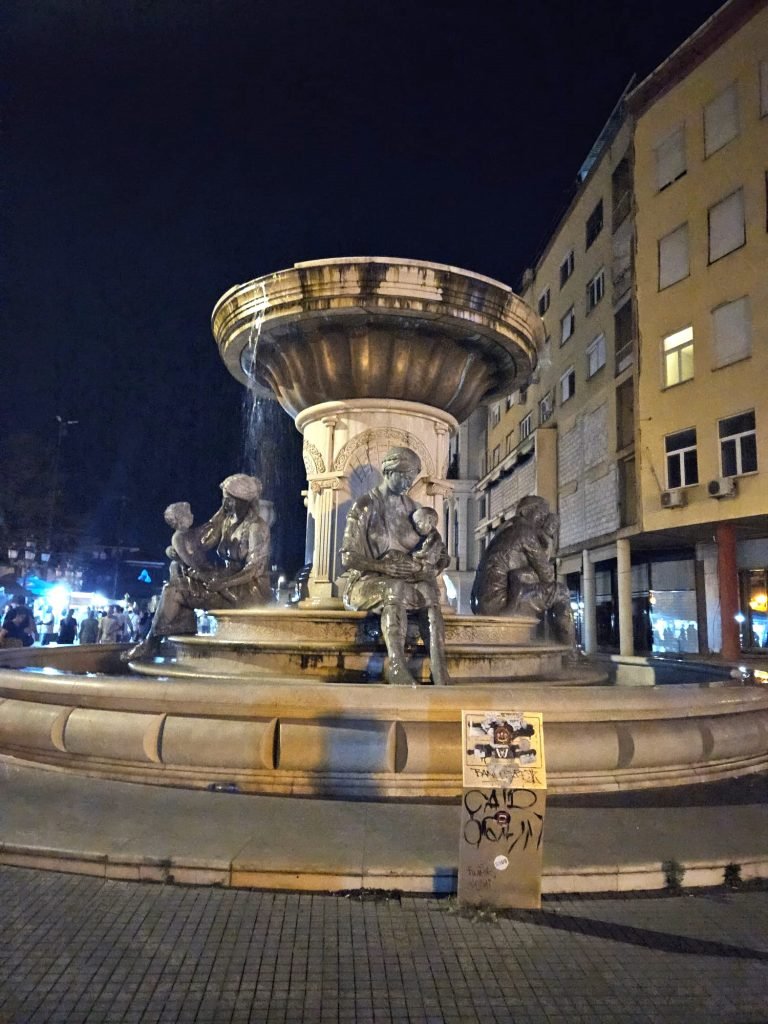
Fountain of The Mothers of Macedonia
Among all the sculptures we saw in Skopje, only one truly touched my heart and made me stop for a long moment: the Fountain of Motherhood. While many of the city’s monuments celebrate historical figures and national heroes, this one celebrates something much more universal. It beautifully portrays the different stages of a mother’s journey, from pregnancy and breastfeeding to caring for a baby and then watching that child grow.
As a mother, I found it impossible to just walk past. The sculpture radiates tenderness, unconditional love, and the quiet strength that motherhood requires every single day. Surrounded by Skopje’s grand statues and monumental architecture, it stood out for a completely different reason. It didn’t try to impress with its size or grandeur; it spoke to the heart. For me, it became one of the most meaningful pieces of art we discovered in the city.
Old Town
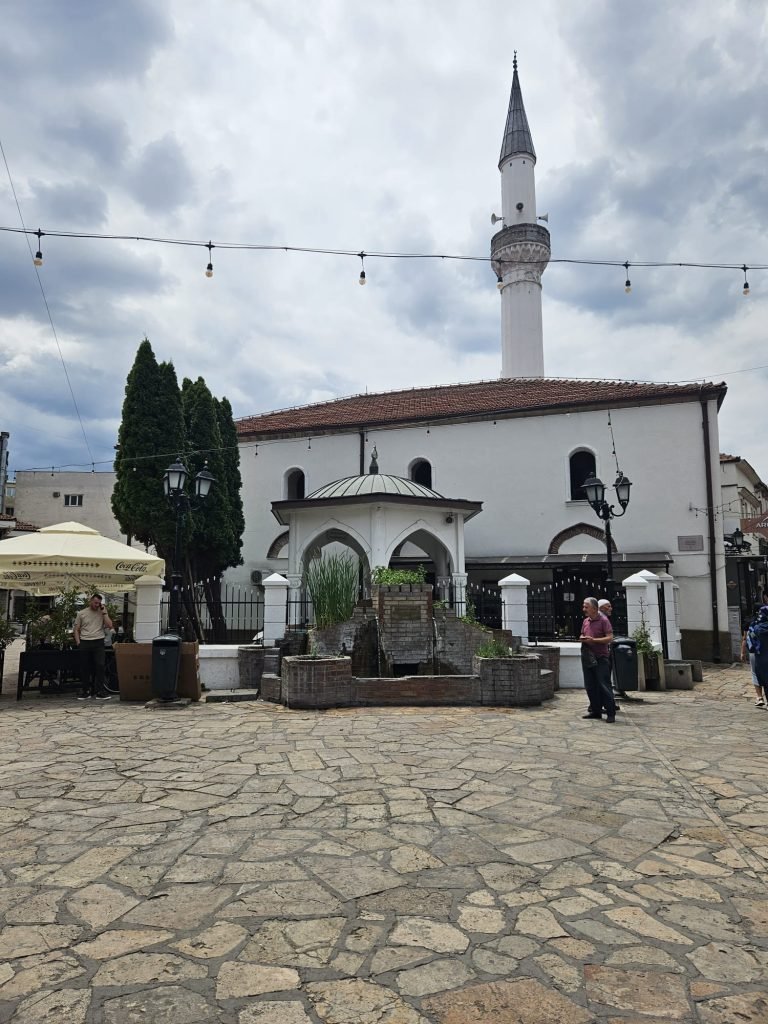
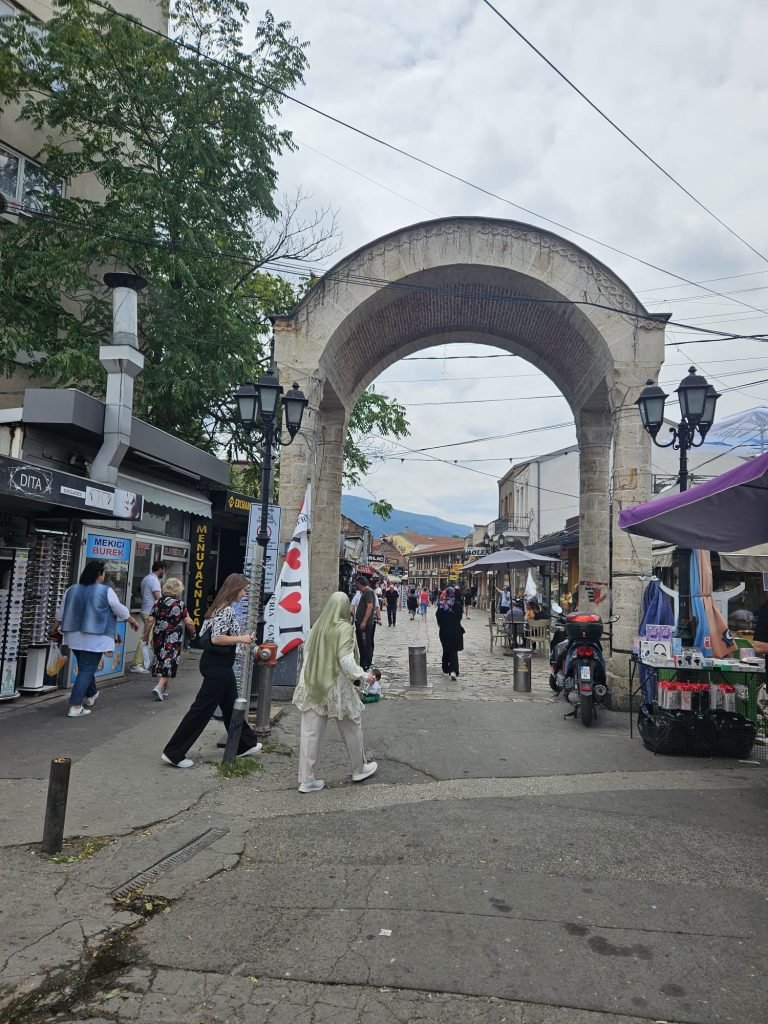
Skopje is a small, walkable city that you can easily explore at your own pace. Its charming center is divided into two distinct areas: the modern town, with wide boulevards, grand statues, and modern cafés, and the old city, known as Čaršija, where history and tradition seem to linger in every street and corner.
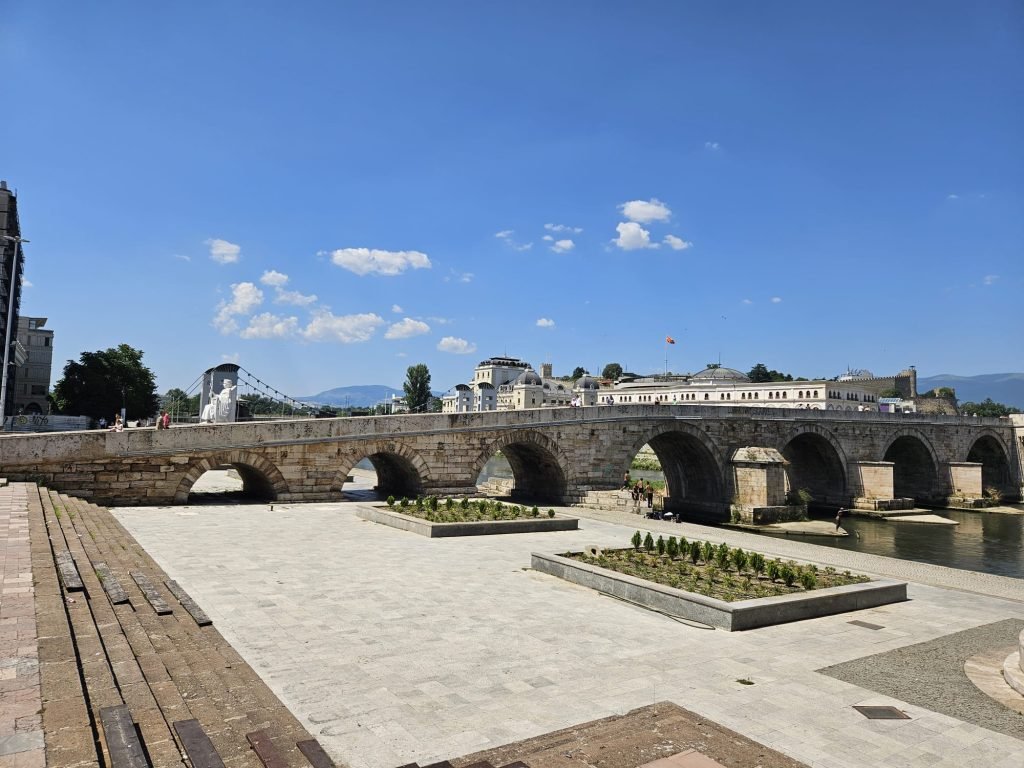
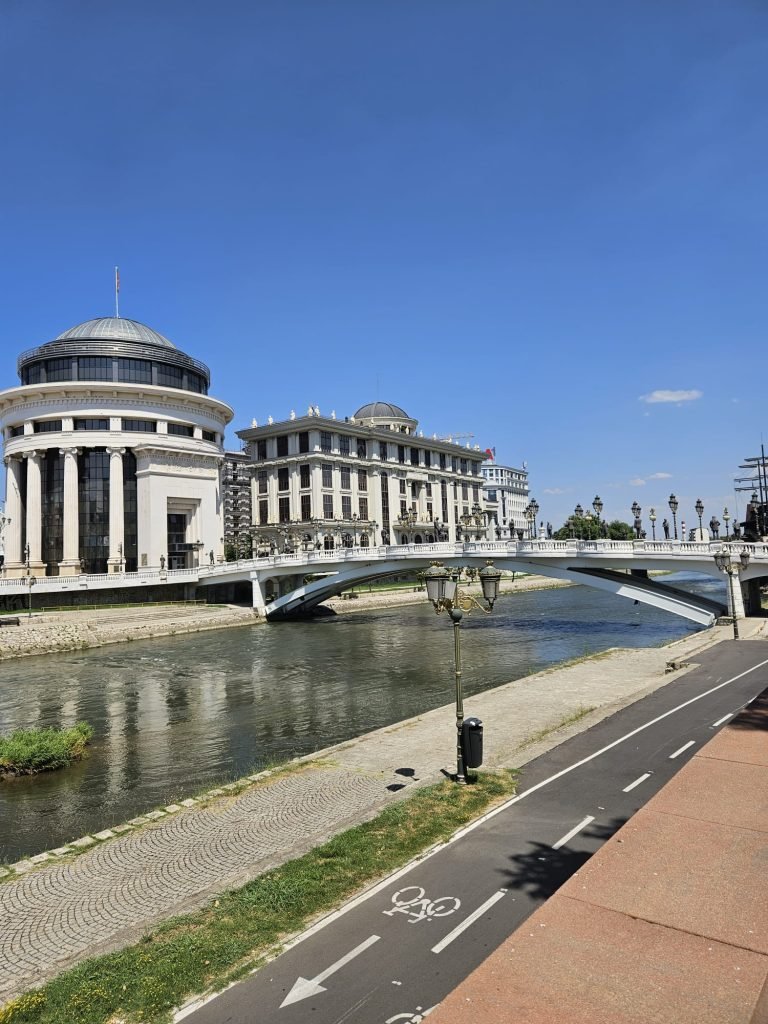
The historic Stone Bridge connects the two areas, allowing you to stroll from the contemporary heart of the city to the timeless vibe of the bazaar. Crossing it feels almost like changing the city, with the Vardar River flowing beneath and statues observing from the plazas on either side.
The old town truly comes alive in the evening, as the streets fill with the warm glow of lanterns and the sound of music drifting from cafés and restaurants. Souvenir shops and small boutiques line the cobbled streets, inviting you to explore traditional crafts and local delicacies, enjoy a coffee or a bite to eat, and soak in the charm of a place that feels both historic and welcoming at the same time.
Porta Macedonia
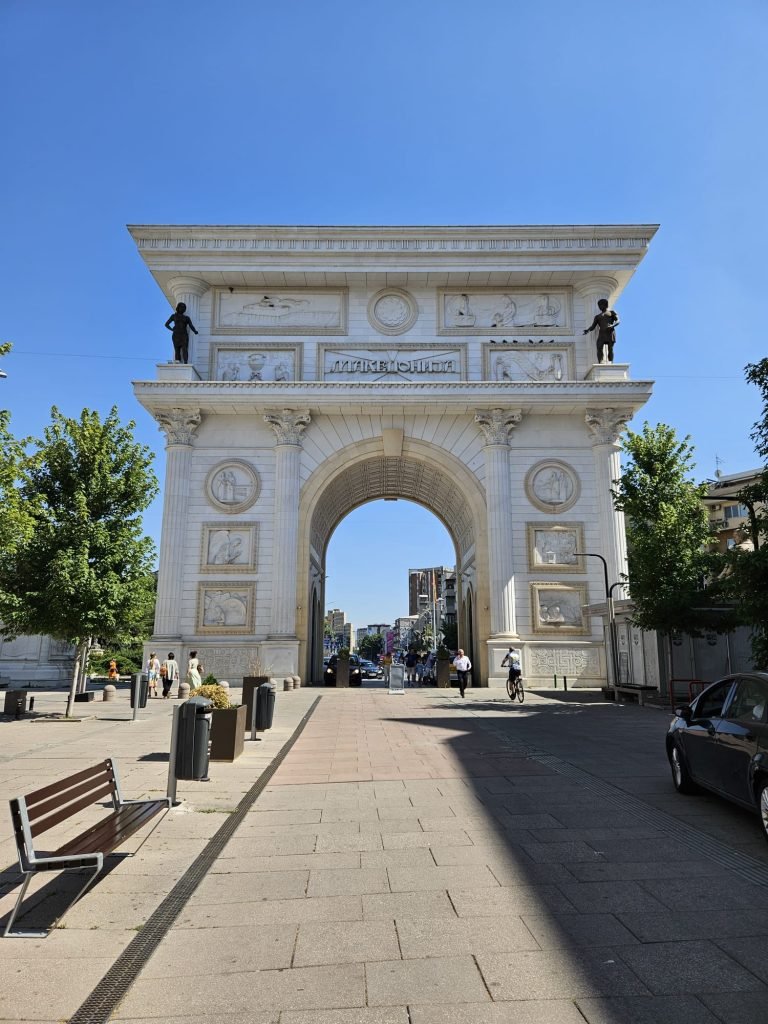
One of the landmarks we passed during our walk was Porta Macedonia, a large triumphal arch standing in the middle of Pella Square. Built to commemorate 20 years of Macedonian independence, it’s impossible to miss as you explore the city center. The arch is beautifully decorated with detailed reliefs depicting important moments and figures from the country’s history.
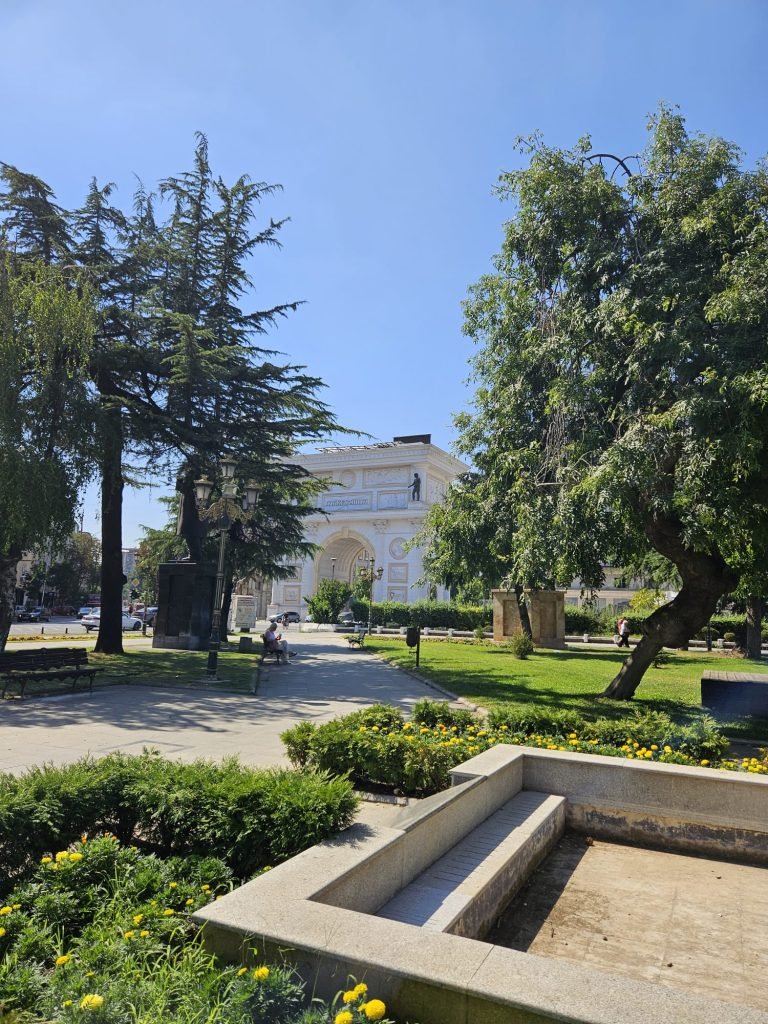
What I liked most, though, wasn’t the monument itself but everything around it. On one side, you have the lively square, while on the other there’s a pleasant garden filled with statues, making it a lovely place to slow down for a few minutes and enjoy Skopje’s artistic atmosphere. From there, it’s an easy walk to a shopping mall, which leads you down to the Vardar River.
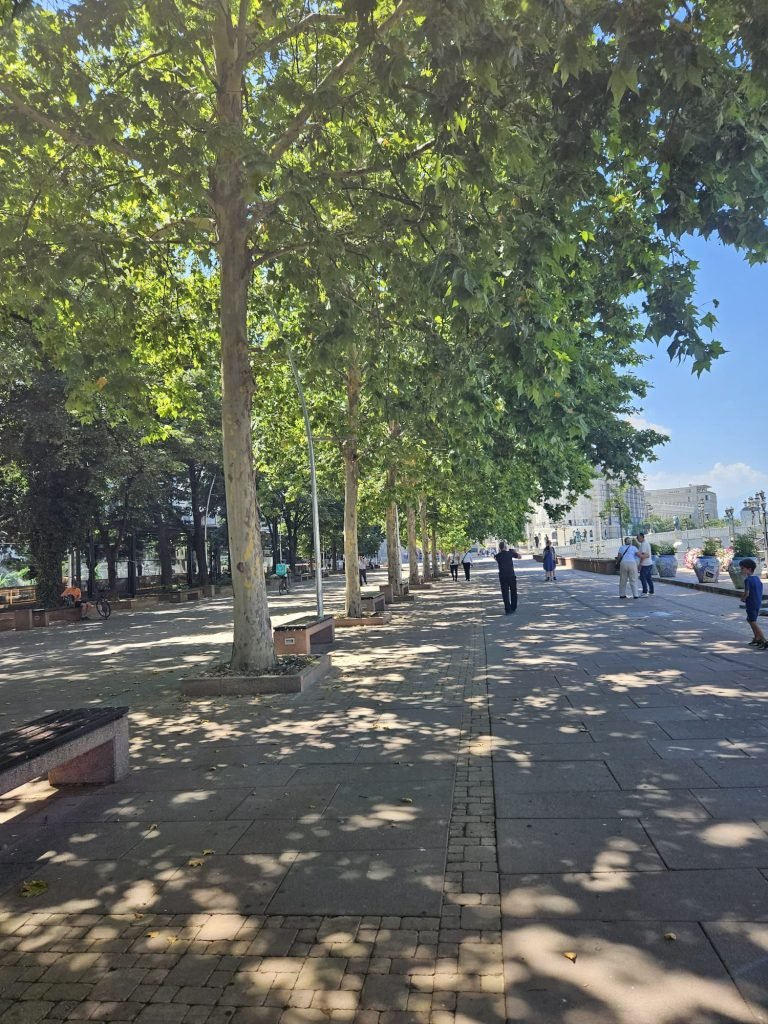
As I mentioned earlier, Skopje is a small, walkable city, and this is one of the reasons we enjoyed it so much. The riverside promenade is lined with large shady trees, benches, cafés, and walking paths, making it the perfect place to take a break after sightseeing. One of the things that caught our attention were the boats permanently moored along the river, many of which have been converted into restaurants and cafés. It’s a fun and unusual place to enjoy a meal while watching the river flow through the heart of the city.
Pella Square
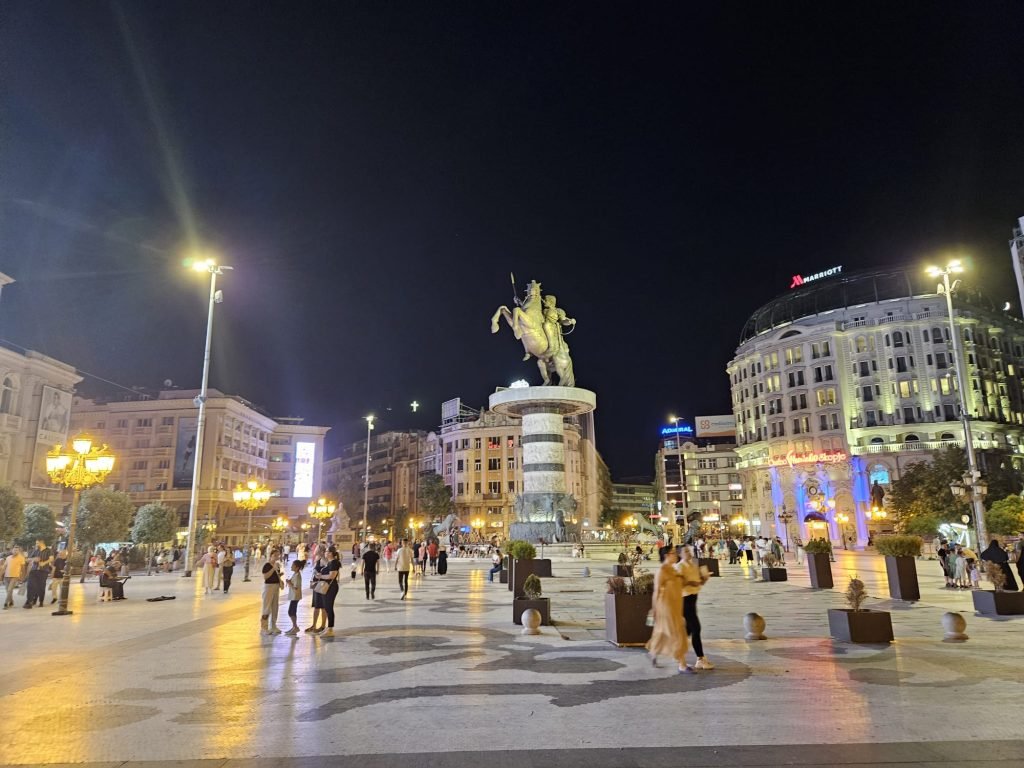
Sooner or later, every walk in Skopje seems to bring you back to Pella Square. It’s the city’s main meeting point and always full of people, whether they’re locals catching up with friends or tourists exploring the sights.
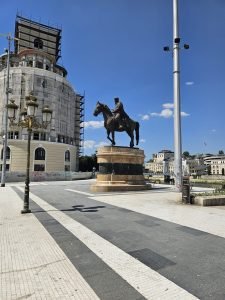
At the center of the square stands its most famous landmark, the impressive fountain topped by a towering statue of Alexander the Great on horseback. Alexander the Great was one of history’s greatest military commanders. In the 4th century BC, he built an empire that stretched from Greece and Egypt all the way to India, making him one of the most influential figures of the ancient world. Around the base of the fountain are sculptures of warriors, horses, and scenes inspired by his life and military victories. Although the monument is officially called “Warrior on a Horse,“ it’s widely understood to represent Alexander the Great.
We visited both during the day and in the evening, and the atmosphere felt completely different. As night fell, the square came alive with music, street performers, families out for a stroll, and people sitting at the surrounding cafés. It had such a lively atmosphere that we found ourselves returning more than once during our stay.
Mother Teresa House
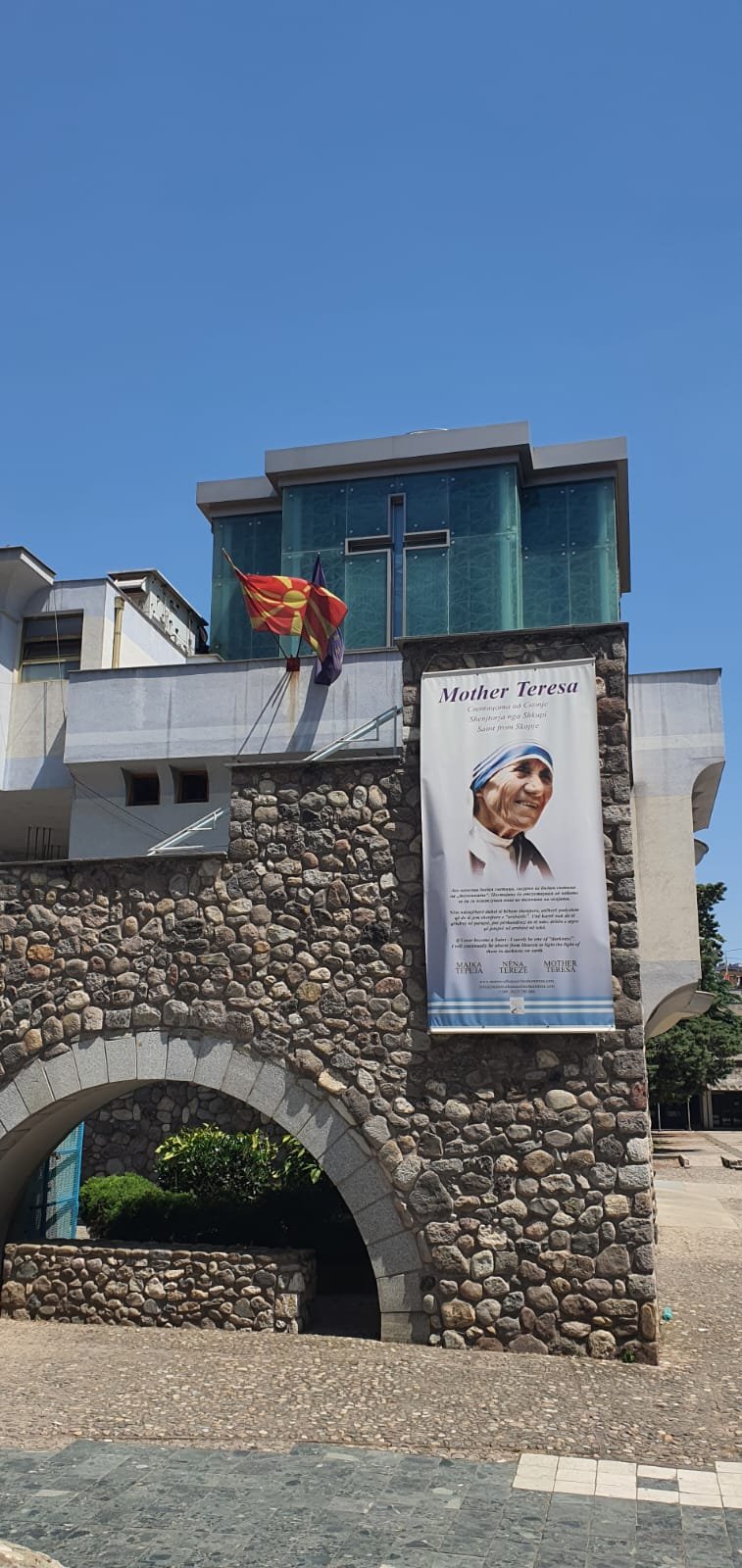
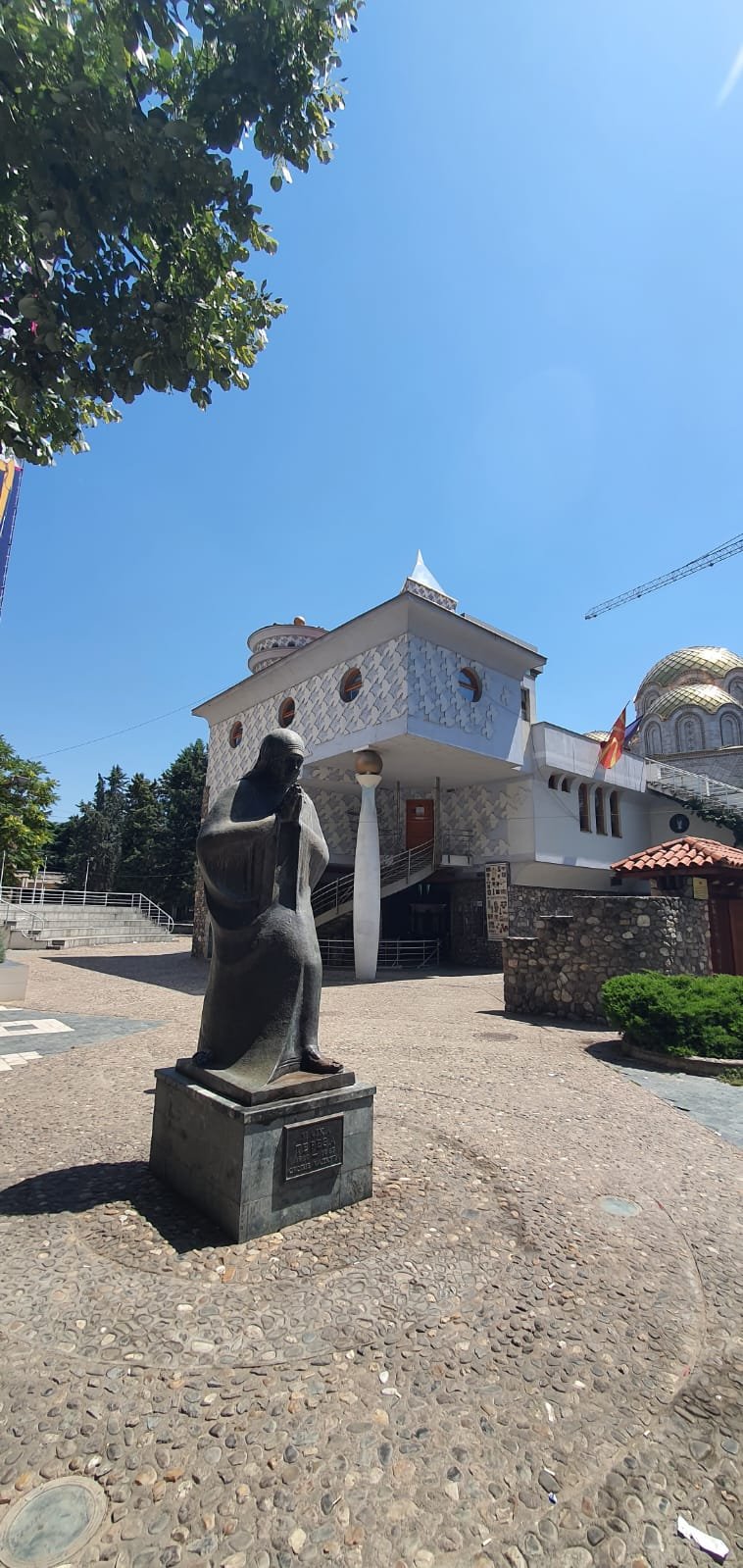
Who doesn’t know Mother Teresa? Born Anjezë Gonxhe Bojaxhiu in Skopje in 1910, she spent her early childhood here before her missionary journey eventually led her to India. From a young age, she felt called to dedicate her life to helping those most in need, a mission that would inspire millions around the world.
She went on to found the Missionaries of Charity in Kolkata, an organization devoted to caring for the poor, the sick, the abandoned, and the dying. What began with a small group of sisters has grown into a worldwide mission, serving communities in more than 130 countries. In recognition of her humanitarian work, she was awarded the Nobel Peace Prize in 1979 and was canonized as Saint Teresa of Calcutta in 2016.
Visiting the Mother Teresa Memorial House gave us a chance to learn more about her early life in Skopje and the extraordinary journey that followed. Through photographs, personal belongings, and exhibits, the museum tells the story of a woman whose compassion changed countless lives. Whether you’re religious or not, it’s difficult not to leave feeling inspired by the legacy she left behind.
Our time in Skopje was short, but it left a lasting impression. It’s a city where history, culture, and everyday life come together in an unexpected way. Around almost every corner, there was something that caught our attention, whether it was a monument with an interesting story behind it, a lively square filled with music, or a quiet café tucked away in the Old Bazaar where we could simply sit and watch the world go by.
What I’ll remember most isn’t just the landmarks, but the atmosphere. Skopje felt welcoming, easy to explore, and full of character. I left with a better understanding of its history, an appreciation for its resilience, and admiration for the pride its people have in their city. It may not be the first destination that comes to mind when planning a European getaway, but it certainly deserves a place on the list.
Tips for your visit to Skopje.
If you’re arriving in Skopje by bus and plan to buy a local SIM card, I recommend getting it at the bus station before heading into the city. That’s what we did, and it saved us quite a bit of time. When we later passed by some of the mobile phone stores in the city center, we noticed long queues, and the process seemed much slower.
One thing to keep in mind is that you’ll usually need to show your passport to register a prepaid SIM card, as this is required by law in North Macedonia. Buying it at the bus station made the whole process quick and easy, allowing us to start using maps and the internet as soon as we arrived.
- If you need to exchange currency, you’ll find a convenient exchange office inside Big Jumbo Mall. We found it much easier than searching around the city, and the process was quick and straightforward. As with anywhere, it’s worth comparing the exchange rate with another exchange office if you’re changing a larger amount, but for convenience, this was a great option during our stay.
- For taxis in Macedonia, if you don’t have a Macedonian credit card, the best option is to use the Wizi.mk app.
- One of the things we appreciated most in North Macedonia was how easy it was to communicate. Almost everyone we met, especially in Skopje and other tourist areas, spoke very good English. Whether we were asking for directions, ordering food, or chatting with locals, we never had any trouble being understood, which made exploring the country much more relaxed and enjoyable.
For the best panoramic views of Skopje, head to Skopje Fortress (Kale Fortress). Perched on a hill overlooking the city and the Vardar River, it offers one of the finest viewpoints, especially at sunset. The fortress itself dates back many centuries, with parts of its walls built on foundations from the Byzantine period, making it one of Skopje’s most important historical landmarks.
We decided to skip it, though. Our time in the city was limited, and personally, I’m not much of a fortress person. Instead, we chose to spend more time wandering through the Old Bazaar, the city squares, and the riverside, which suited our travel style much better. If panoramic views and history are your thing, however, Kale Fortress is definitely worth adding to your itinerary.
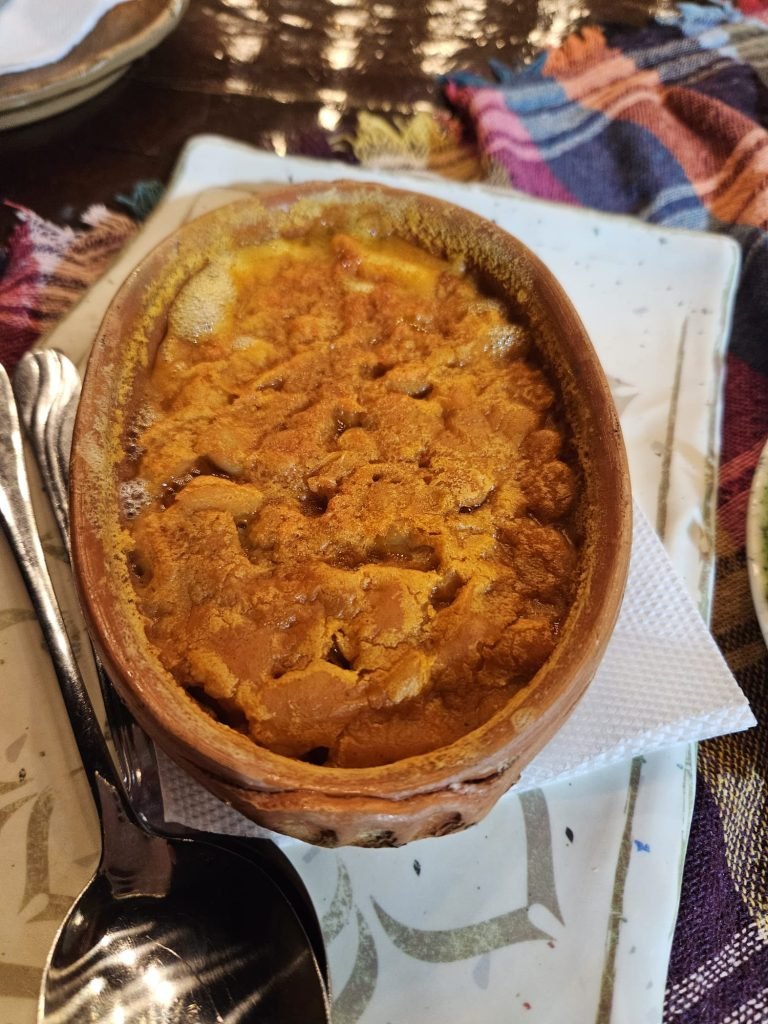
- A dish you have to try to complete your visit to Skopje, besides the famous kebap, is “Tavče Gravče”,it is beans baked in the oven. It’s a traditional and delicious Macedonian dish that’s rich in flavor and perfect for experiencing the local cuisine.
- If you have limited time in Macedonia, I recommend spending just one day in Skopje and investing the rest of your time in visiting Lake Ohrid and Mavrovo. These places offer stunning natural beauty and unique experiences. To learn more about Ohrid, check out my article by clicking here.
Related Articles
Great article! I really appreciate the clear and detailed insights you’ve provided on this topic. It’s always refreshing to read content that breaks things down so well, making it easy for readers to grasp even complex ideas. I also found the practical tips you’ve shared to be very helpful. Looking forward to more informative posts like this! Keep up the good work!
Thank you for your kind feedback, I am happy you liked it.