Pena Palace
Pena Palace, the most visited palace in Portugal and one of the most famous in Europe. Its vivid colors, unique architecture, and stunning setting within the lush green forests make it an irresistible destination. Looking like a crown on the head of the Sintra Mountains, it adorns the landscape with a regal presence, visible from many surrounding areas, even from Lisbon on clear days.
This dreamy yellow palace, so familiar from photos and videos on social media, has a uniquely blended architecture that makes you wonder whether you are looking at one palace or many, as different styles come together in a way that feels both bold and magical. A UNESCO World Heritage Site, Pena Palace was built in the 19th century on the ruins of a 16th-century monastery that was badly damaged by the 1755 Lisbon earthquake. King Ferdinand II transformed the ruins into a royal summer residence, guided by his deep admiration for Romanticism. This influence is clearly reflected in the palace’s imaginative, fairy-tale appearance, blending Neo-Gothic (towers), Neo-Manueline (windows), Neo-Islamic/Moorish (arches), and Renaissance styles (elements), making it feel like several palaces merged into one.
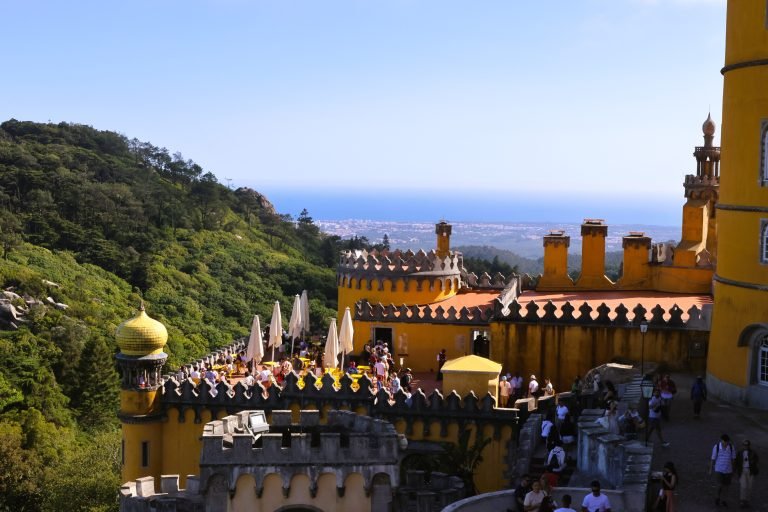
For me, the most striking features of Pena Palace is its location. Set on the very top of a mountain, dominating the surrounding forests and the distant Atlantic Ocean, giving the palace an almost mythical presence above the landscape.
The journey to Pena Palace continues along the winding roads of Sintra, where the landscape becomes even more breathtaking.
As we approached Pena Palace, we kept raising our heads, eager to see more of its colorful towers and intricate details. We were so excited to finally see this magical place in person. Towering green trees and vibrant flowers line the way, complemented by quaint old Portuguese houses that seem frozen in time. Every turn of the road builds anticipation, hinting at the fairy-tale palace waiting above.
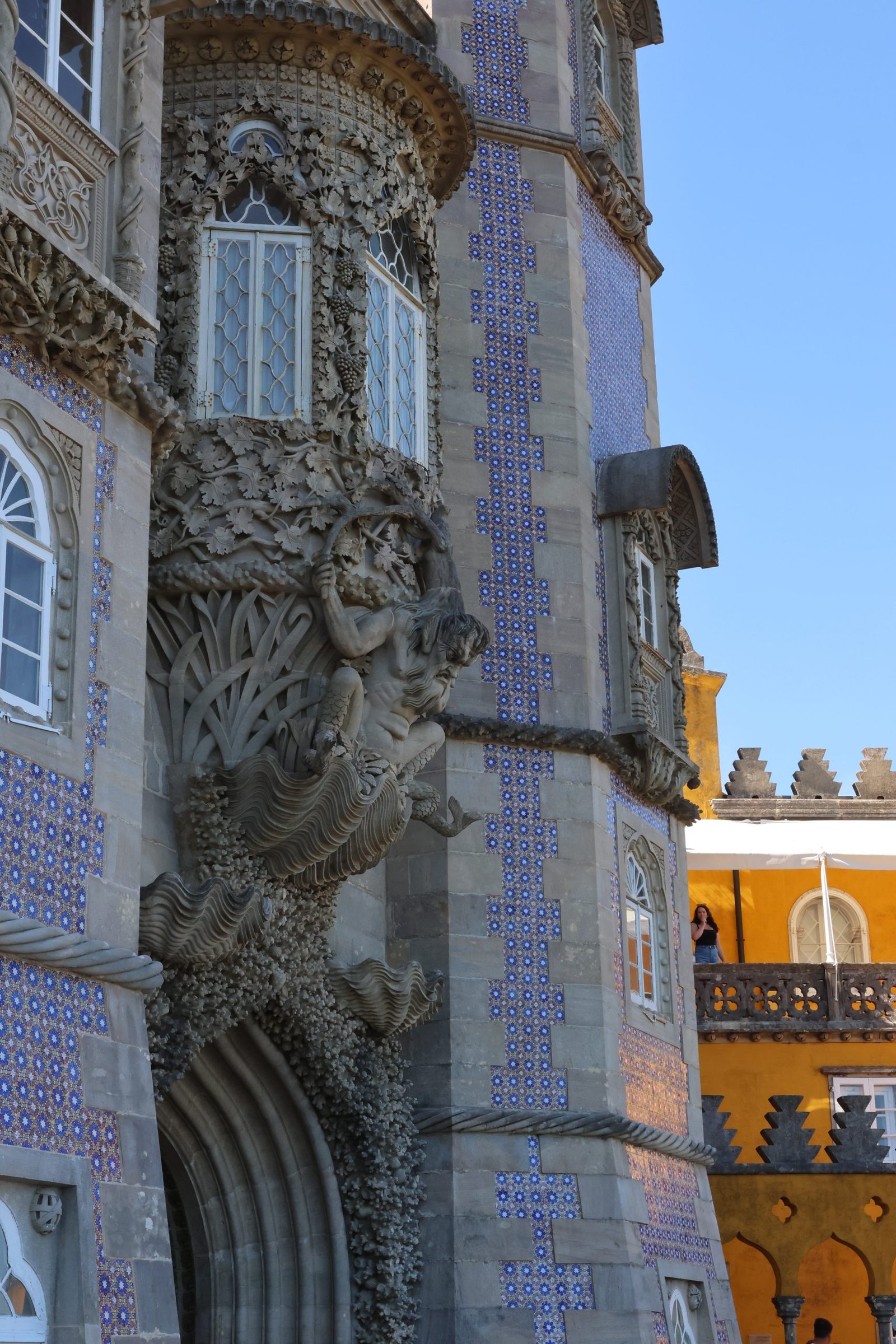
Pena Palace itself is adorned with exquisite art, both inside and out. Its façades are decorated with beautiful sculptures, such as the “Fisherman” at the entrance, symbolizing the enduring connection between the Portuguese people and the sea. On many walls, stunning blue Azulejo tiles add an artistic touch, to the palace’s magical and timeless beauty. Inside, each room is richly decorated, offering glimpses into royal life and the imagination of King Ferdinand II, who transformed the ruins of a monastery into this Romantic masterpiece.
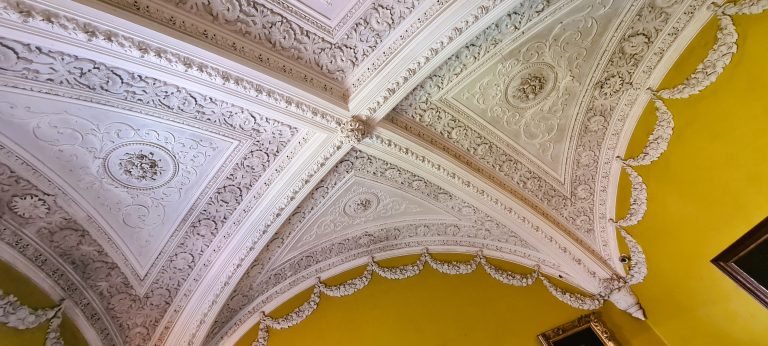
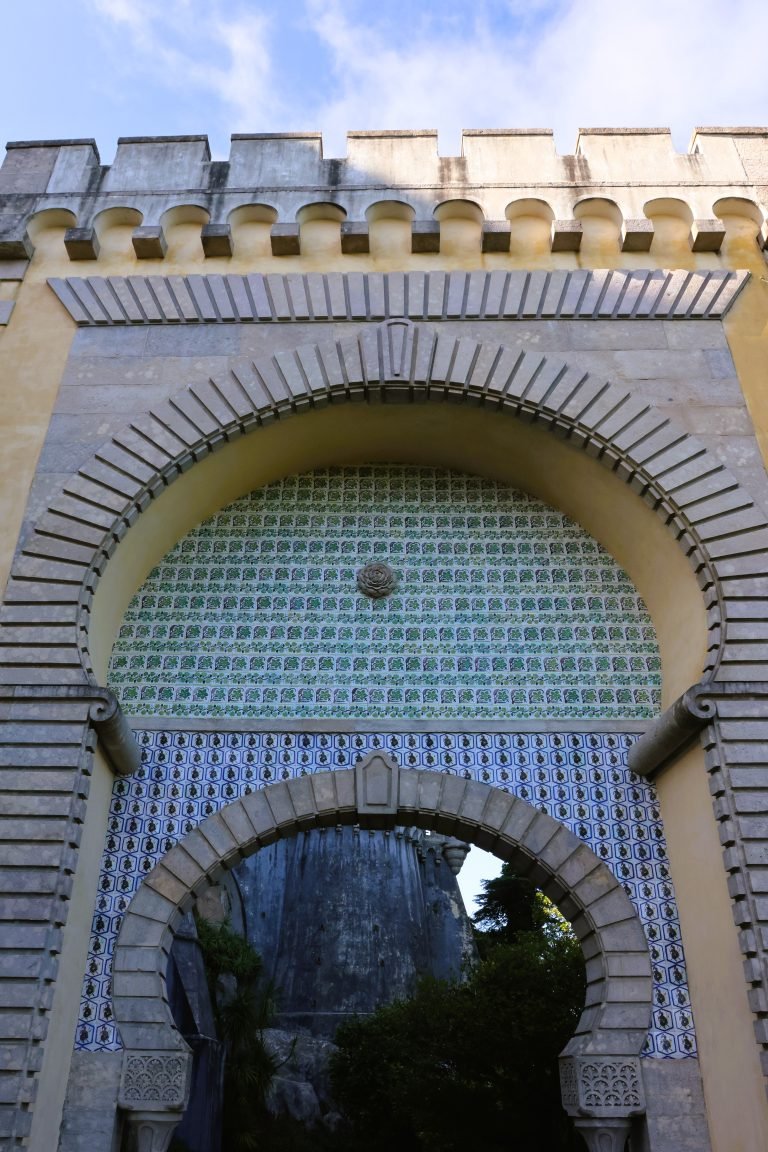
Palace buildings
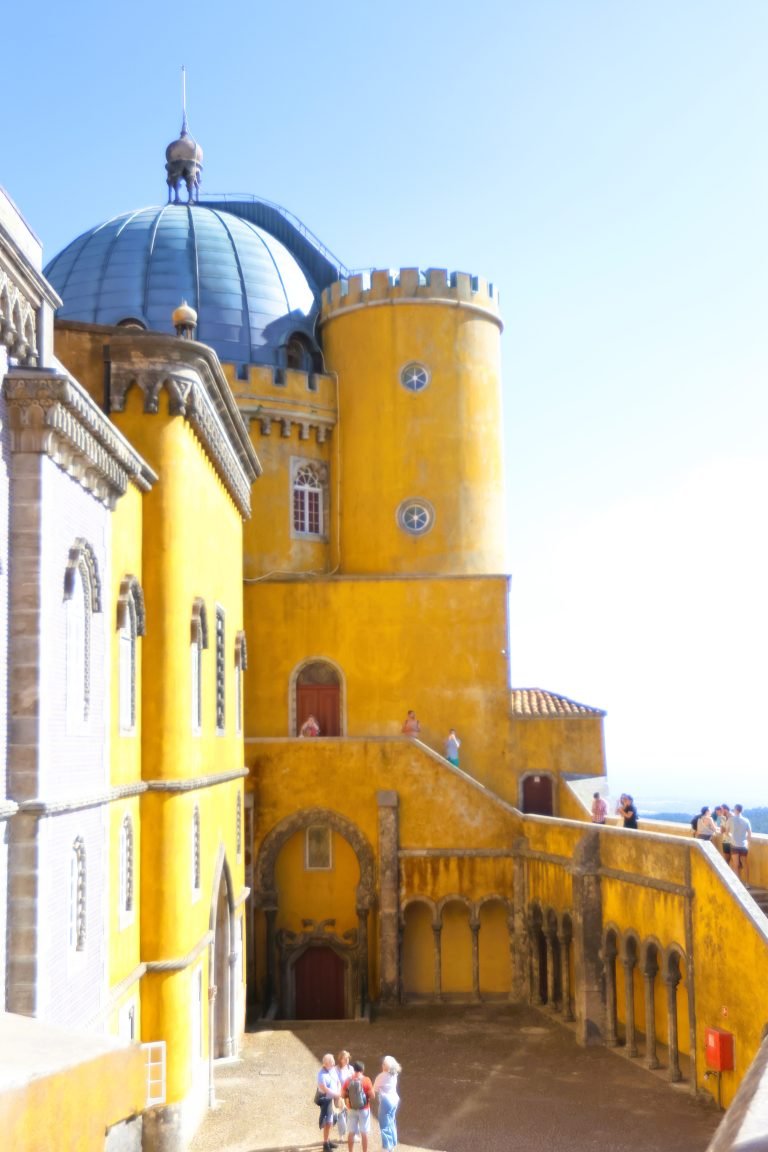
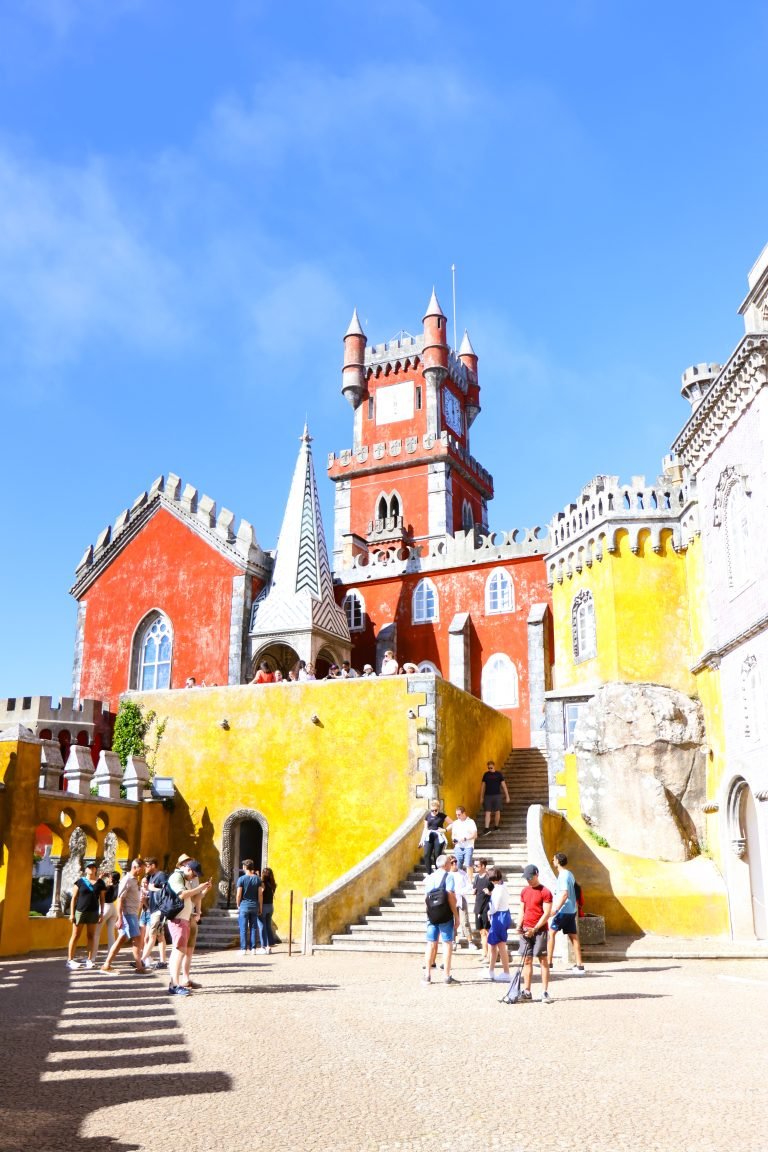
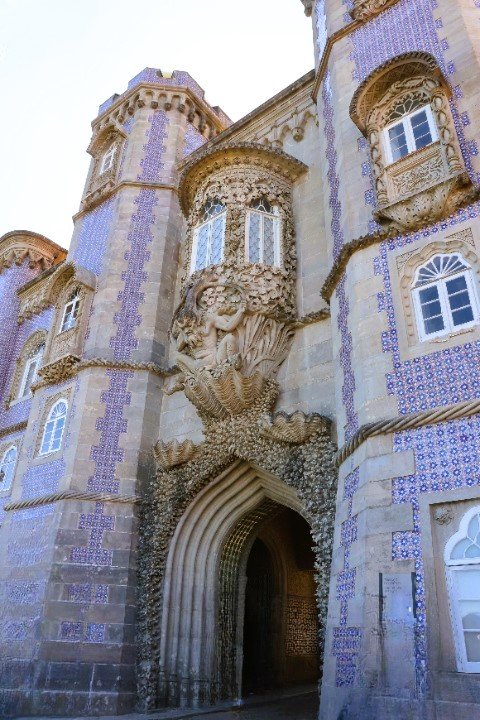
Pena Palace is not just a single building, it is a complex of structures that together create a magical architectural ensemble. It is clear from the photos how many parts the palace has. The main palace is the heart of the complex, surrounded by smaller buildings, towers, and open courtyards. Each part of the palace has its own character: the clock tower rises proudly above the rest, while the Terrace of the Sun offers breathtaking views over the Sintra mountains and forests.
The courtyards and patios, some decorated with colorful tiles and intricate stonework, provide quiet, intimate spaces amid the grandeur. The palace also features chapels, decorative staircases, and hidden passageways, which add to its whimsical, fairy-tale charm. Every building, tower, and courtyard contributes to the blend of architectural styles—Neo-Gothic, Neo-Manueline, Moorish, and Renaissance, making Pena Palace feel like a collection of palaces merged into one.
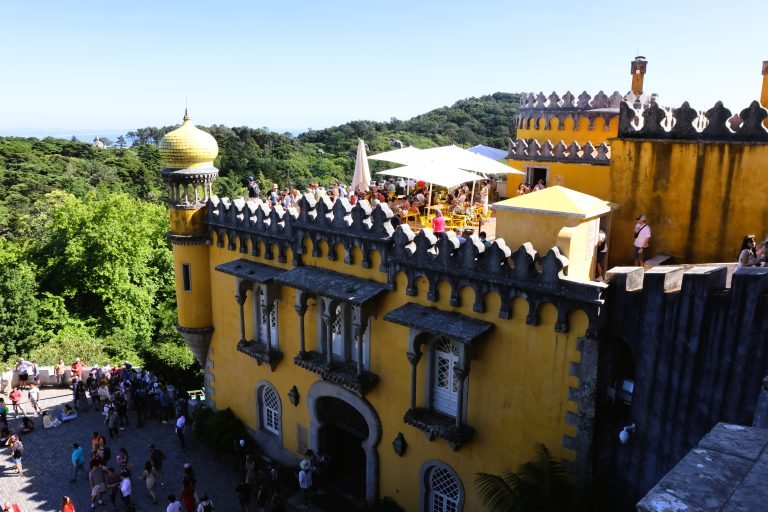
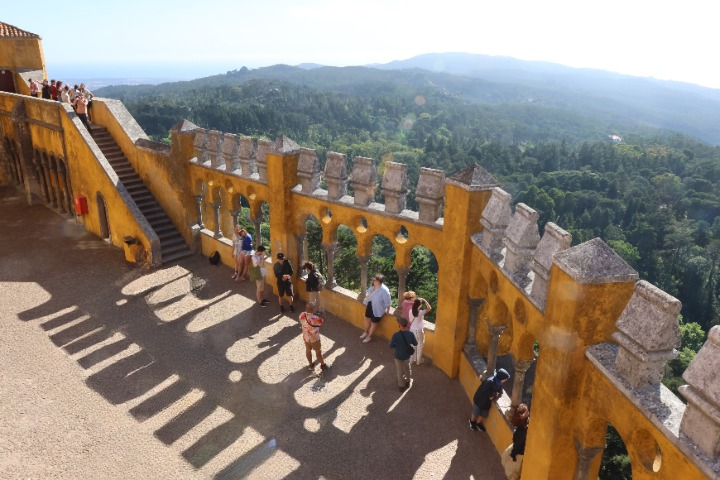
I was completely stunned by the views from the terrace over Sintra Park, they are simply breathtaking. I could have spent the entire day just admiring the scenery, watching the forests stretch endlessly below. Unfortunately, you have to keep moving, as everyone is waiting for their turn to take photos. The same goes if you want a picture yourself, you need a lot of patience, as most people take at least ten shots before moving on. Still, even with the crowds, the views are more than worth it.
The Inside
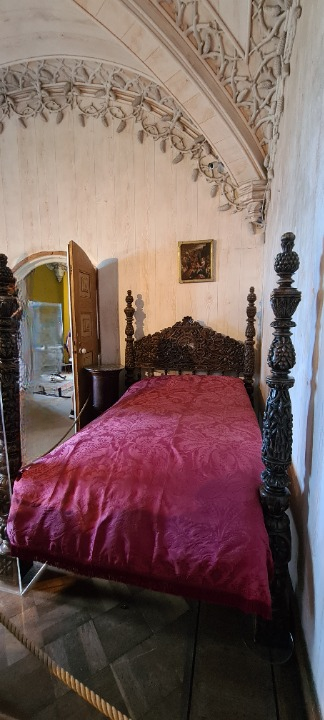
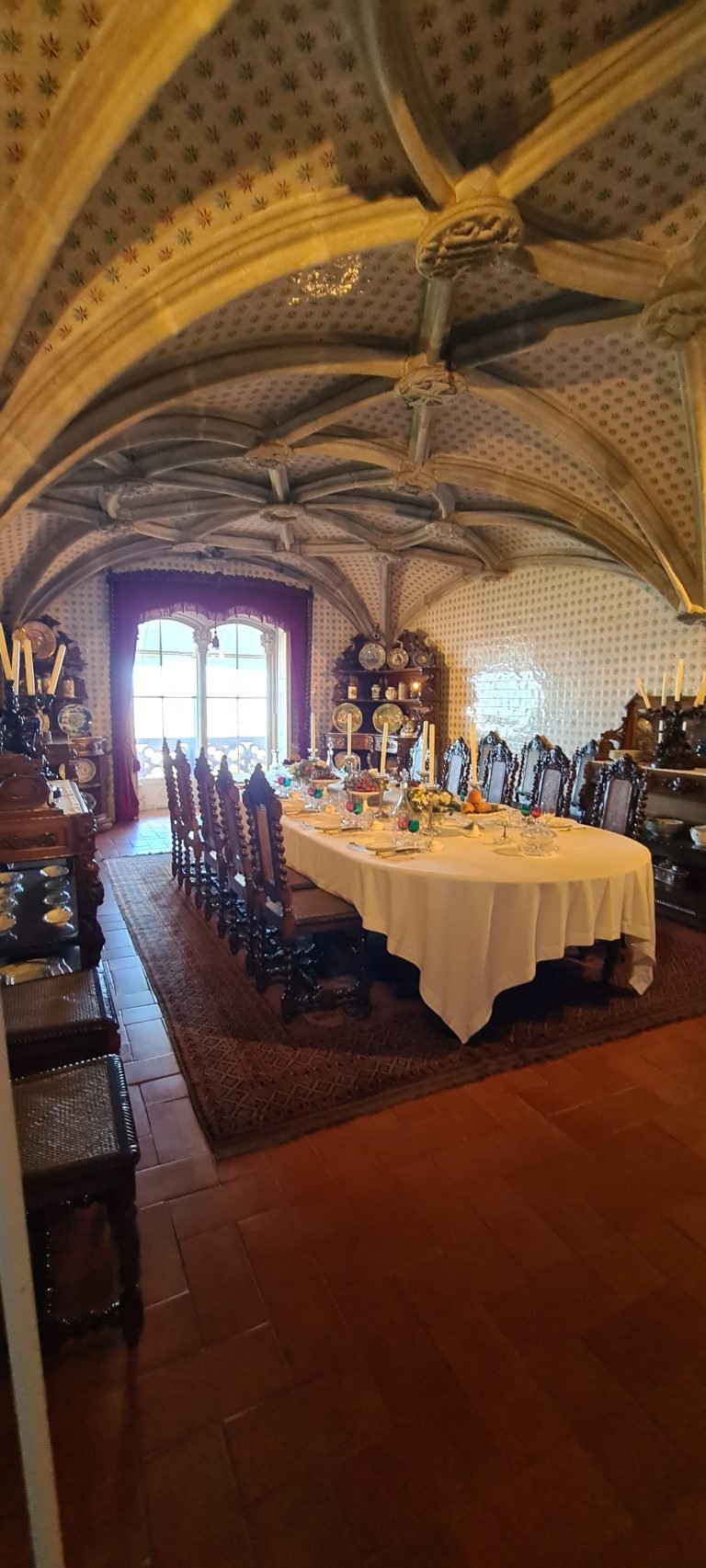
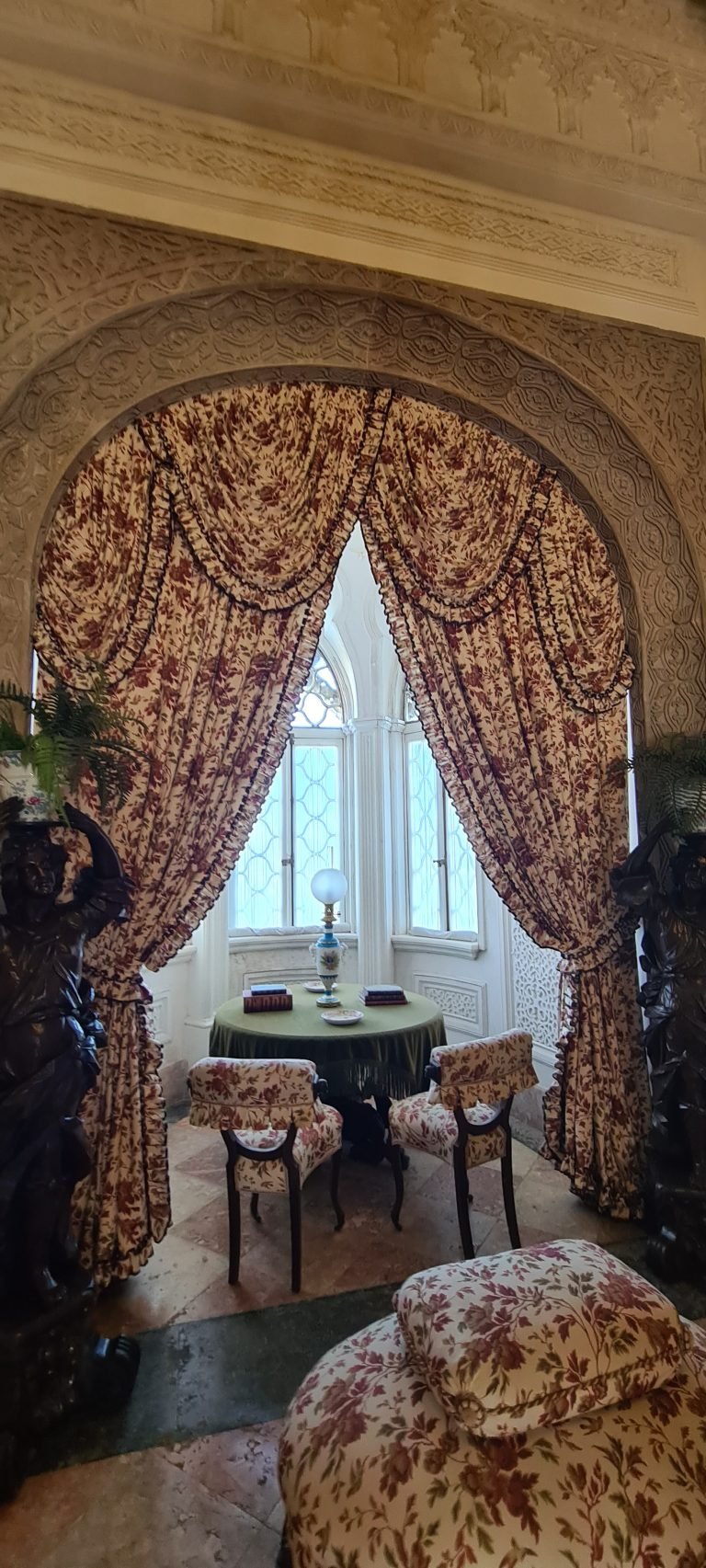
Then came the interior, which I was impatient to see, and it was absolutely amazing. The intricate details caught my attention immediately: the craftsmanship of the furniture, the ceilings, the walls, the flooring, the doors, the dishes, everything was beautifully made and carefully thought out. You don’t actually walk inside most of the rooms; instead, you view them from the doorways, while in other sections you walk along a central corridor that allows you to see the furniture arranged on either side.
Taking photos was quite challenging because of the crowds, but even a few simple shots are enough to give a glimpse of the palace’s interior beauty. One thing that always surprises me in palaces is the size of the beds. Everything else feels grand and oversized, yet the beds are small and high. At the same time, when you see the swords and the knight uniforms, they seem made for gigantic people. It’s so different from what we imagine today, and I still haven’t solved that little historical mystery.
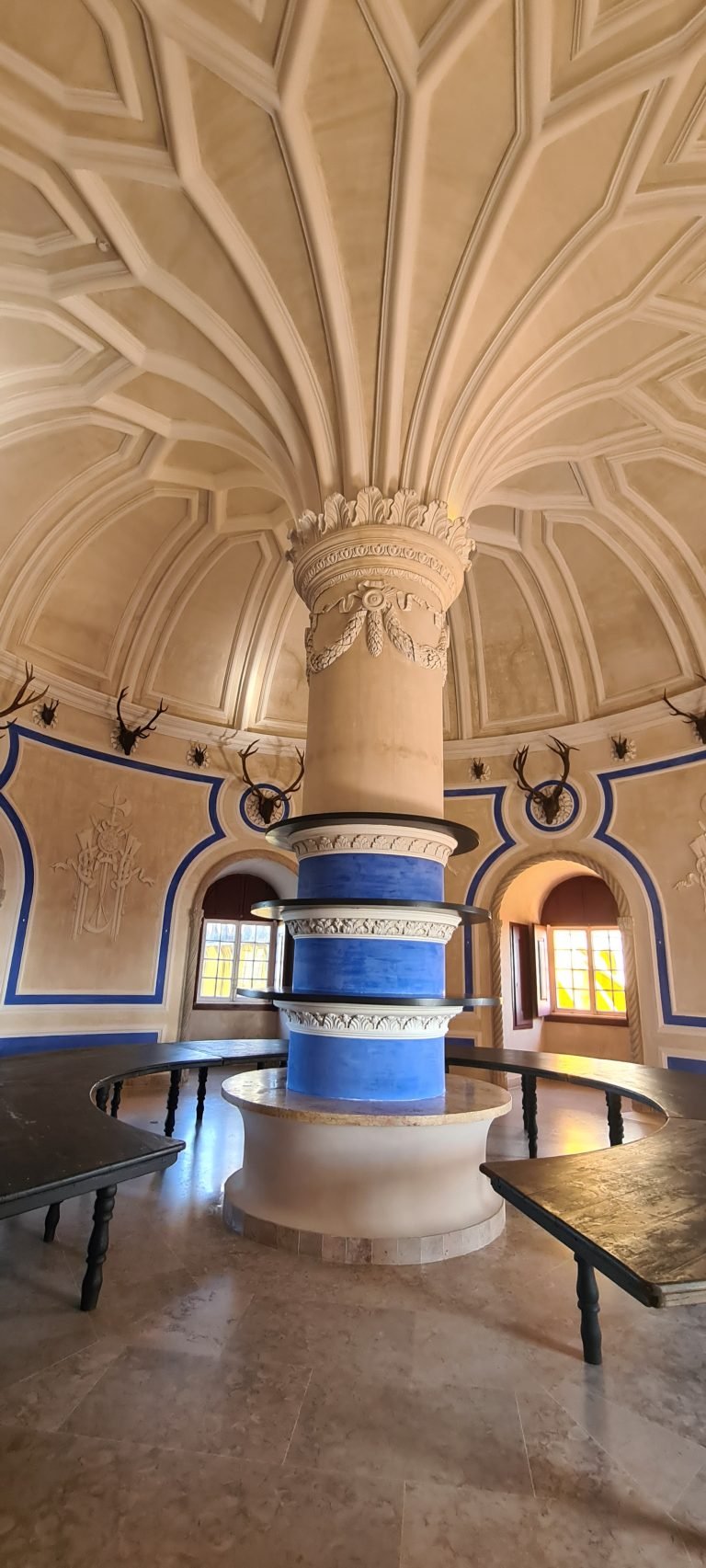
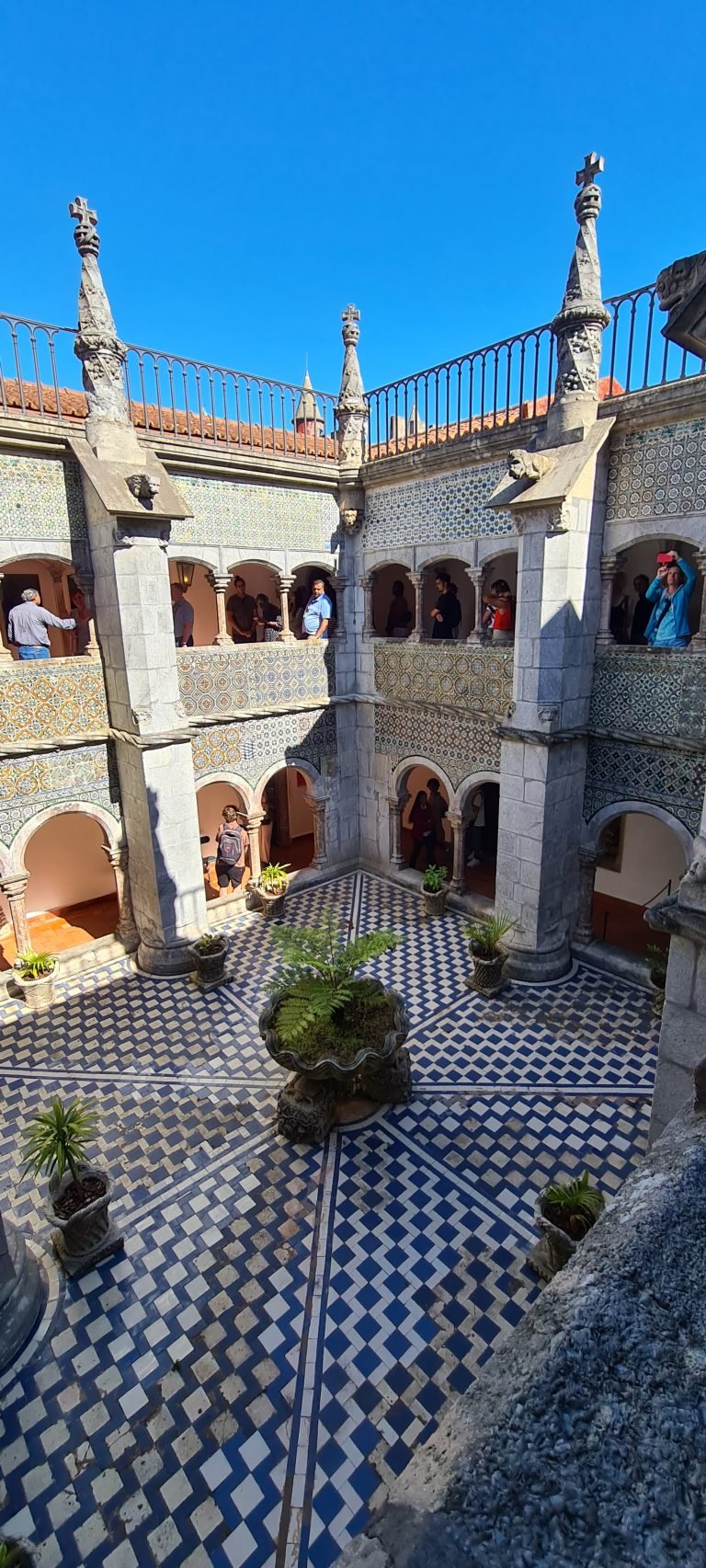
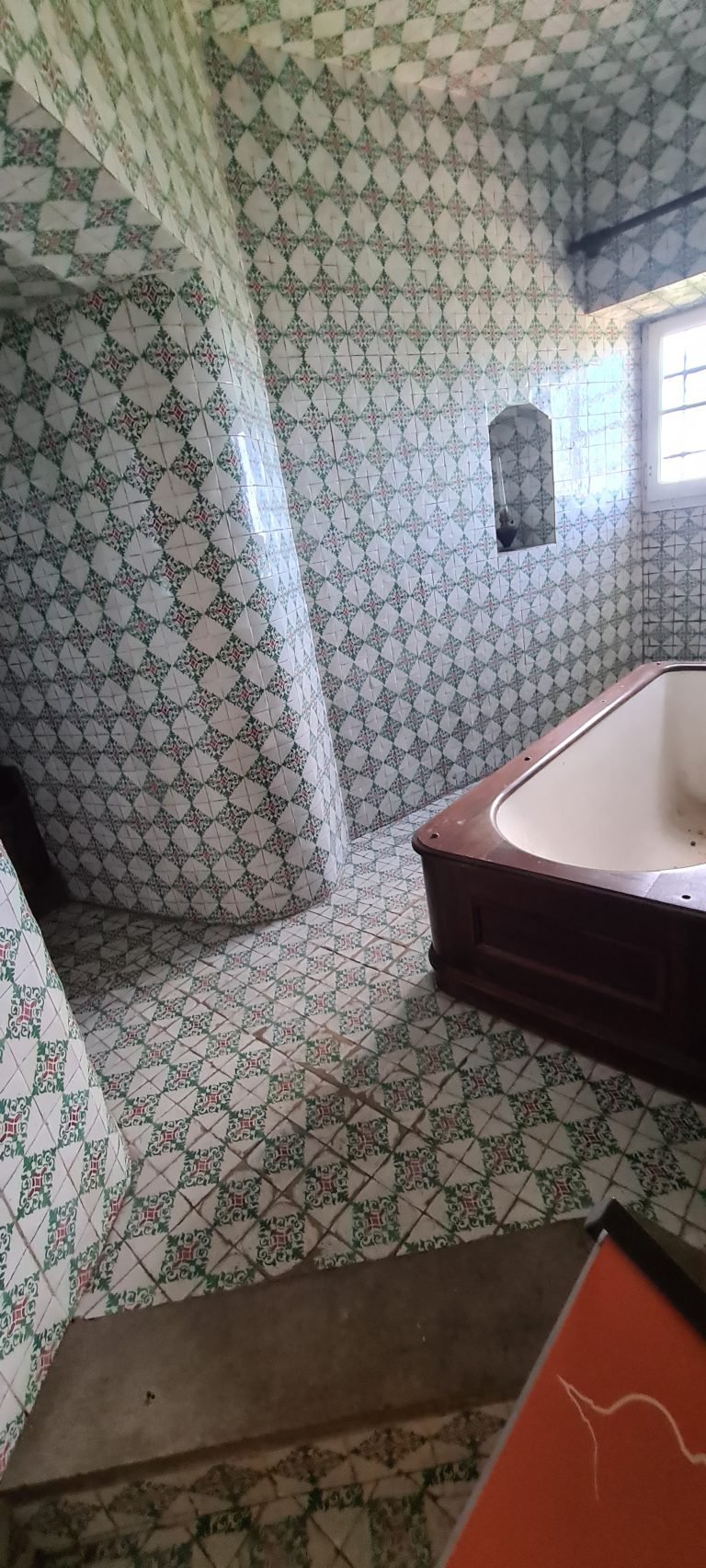
The bathrooms also caught my attention, fully covered in tiles, which felt surprisingly advanced and unique for that time. I couldn’t help but imagine what daily life must have been like back then. Honestly, it felt as though we hadn’t seen everything; only certain parts of the palace are open to visitors, and it’s easy to understand why, covering every room would be impossible.
Eventually, we found ourselves in the kitchen, my absolute favorite part. I love old dishes, cookware, stoves, everything about it felt warm and real. The funny thing is, I always imagine myself as a princess in a palace, but once I step into the kitchen, I get stuck choosing: princess or cook? Honestly, the best option might be a princess who occasionally uses the kitchen for special meals.
The Chapel

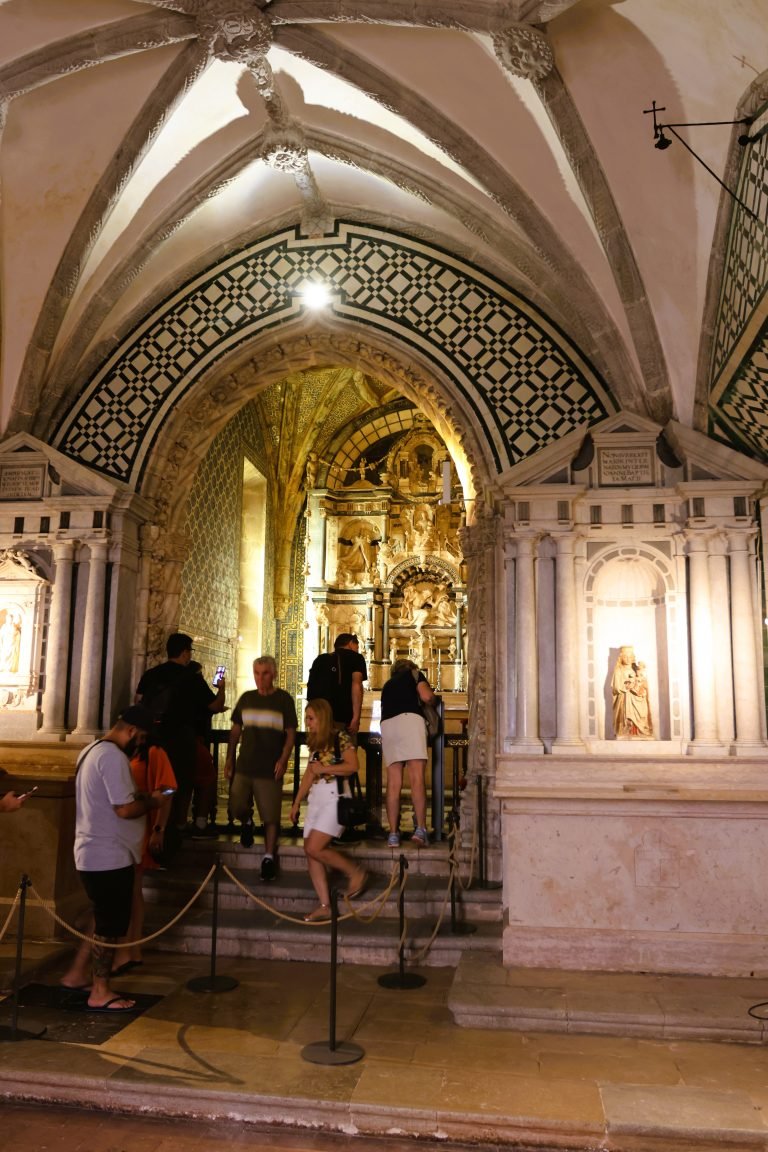

The chapel of Pena Palace is small, quiet, and quite different from the bold colors and dramatic towers outside, the chapel belonged to the Hieronymite monastery that stood on this site in the 16th century, long before the palace was built. When King Ferdinand II transformed the ruins into Pena Palace, he chose to preserve the chapel, respecting its spiritual and historical importance.
Inside, the chapel is richly decorated with 16th-century azulejo tiles, arranged in geometric patterns and soft blue tones that feel calm and timeless. The highlight is the marble altarpiece, attributed to Nicolau de Chanterene, a Renaissance sculptor, which contrasts beautifully with the colorful and romantic style of the rest of the palace. The visit was quick as many people were lined up waiting for their turn to see what this small chapel has to offer to history.
The Gardens
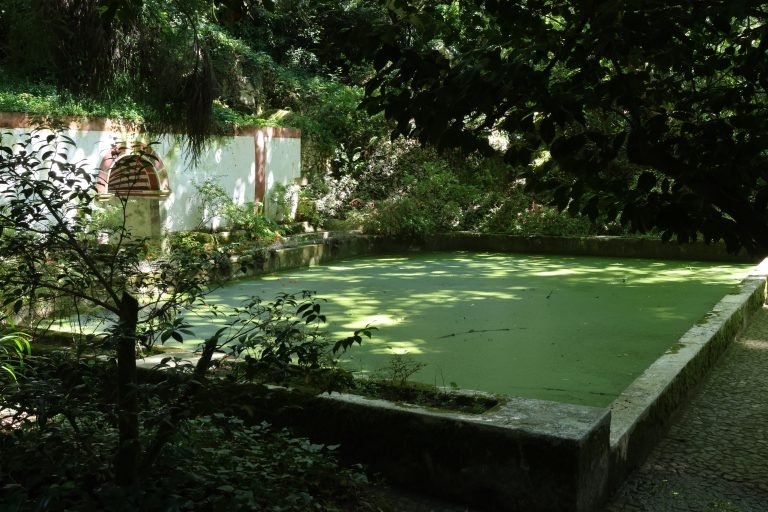
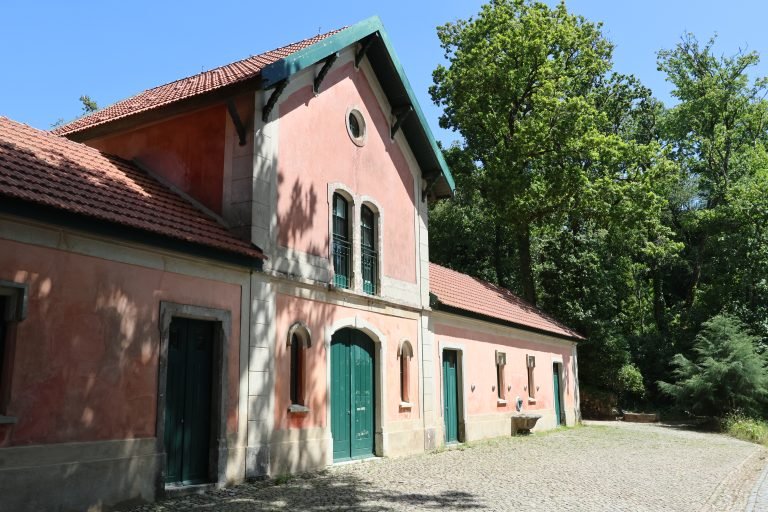
The gardens of Pena Palace are vast, spreading over more than 200 hectares of uneven terrain, which makes exploring them quite demanding. Even though there are paths and roads, walking through the grounds feels less like strolling in a palace garden and more like hiking through a forest. There are many areas to explore, including the stables, the farm, the glasshouse, ponds, and hidden corners scattered throughout the park. However, moving from one area to another can be challenging, especially on hot days.
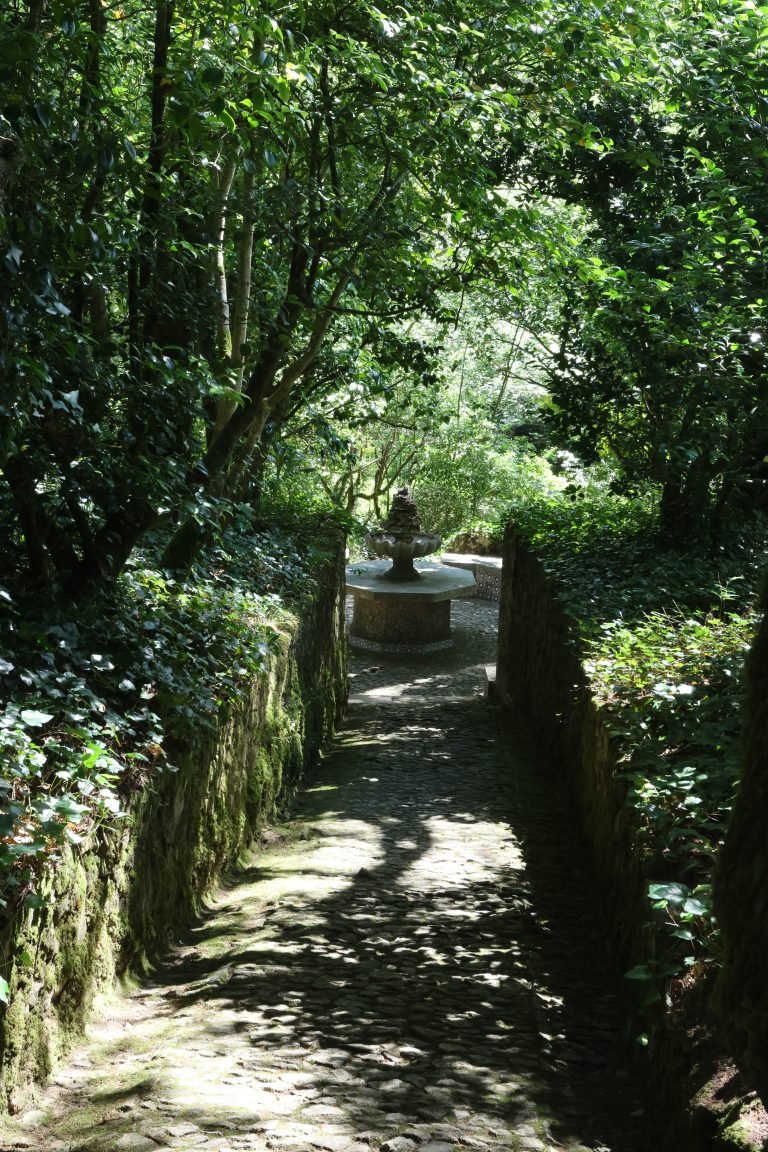
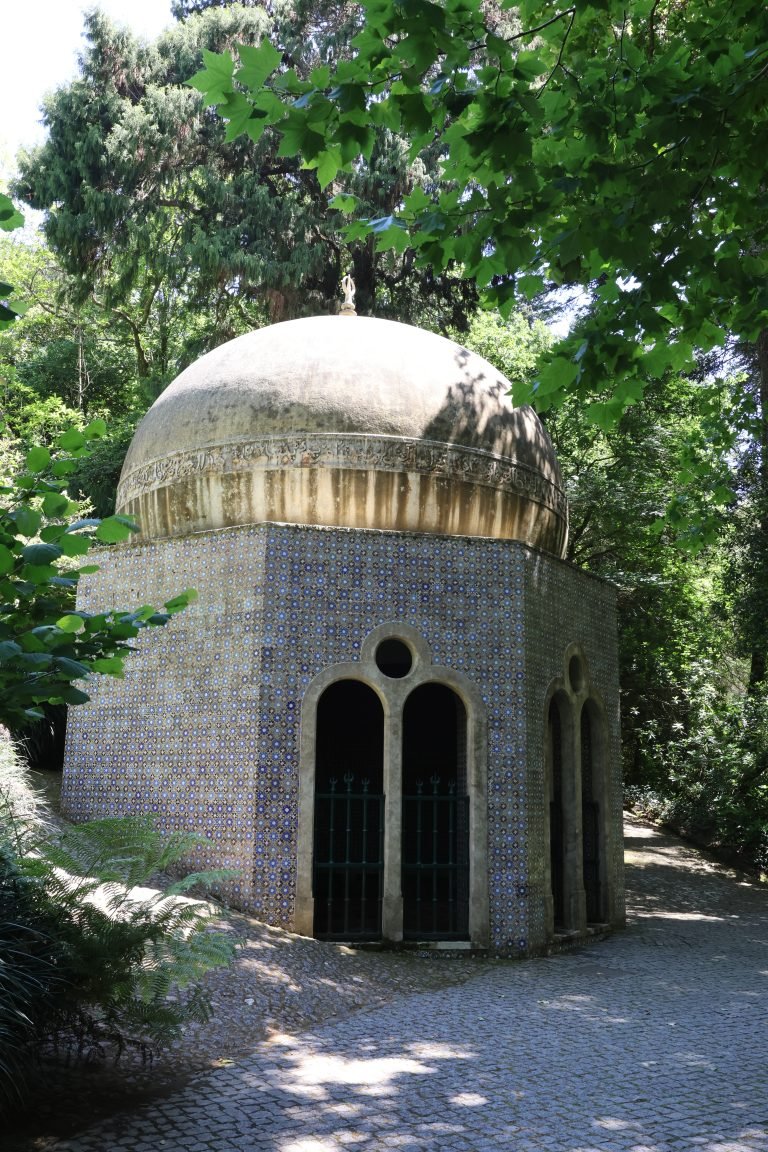
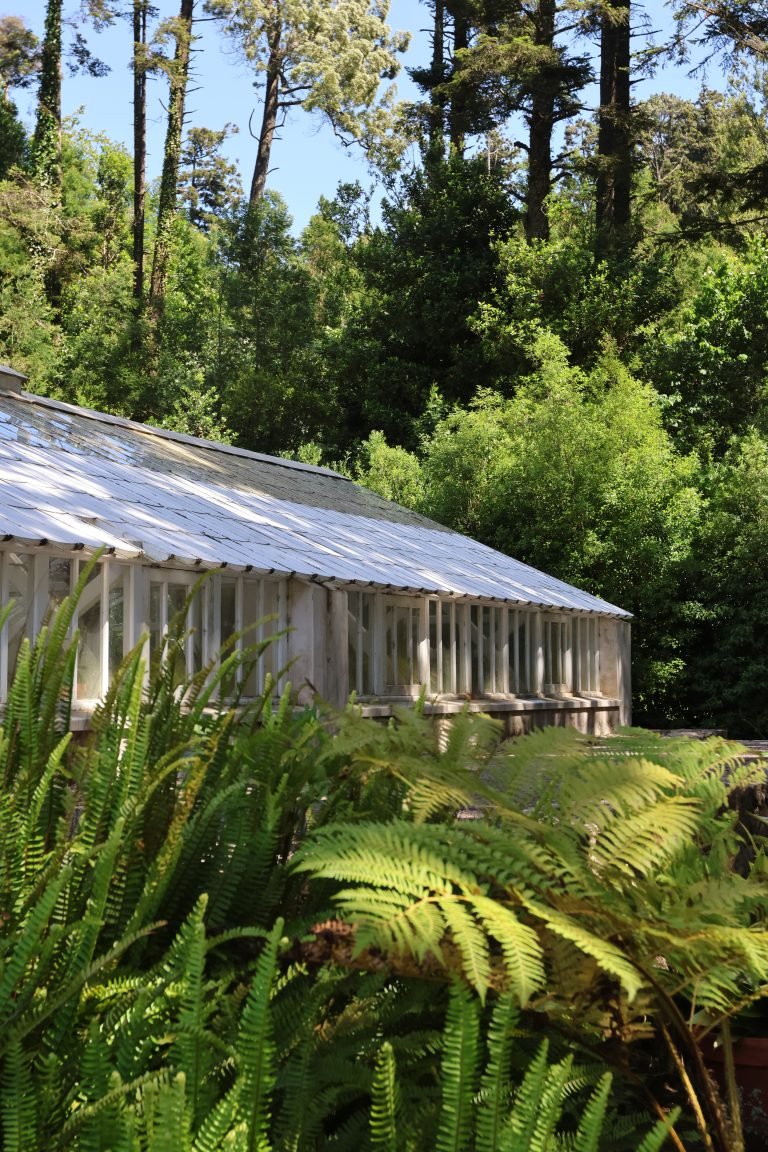
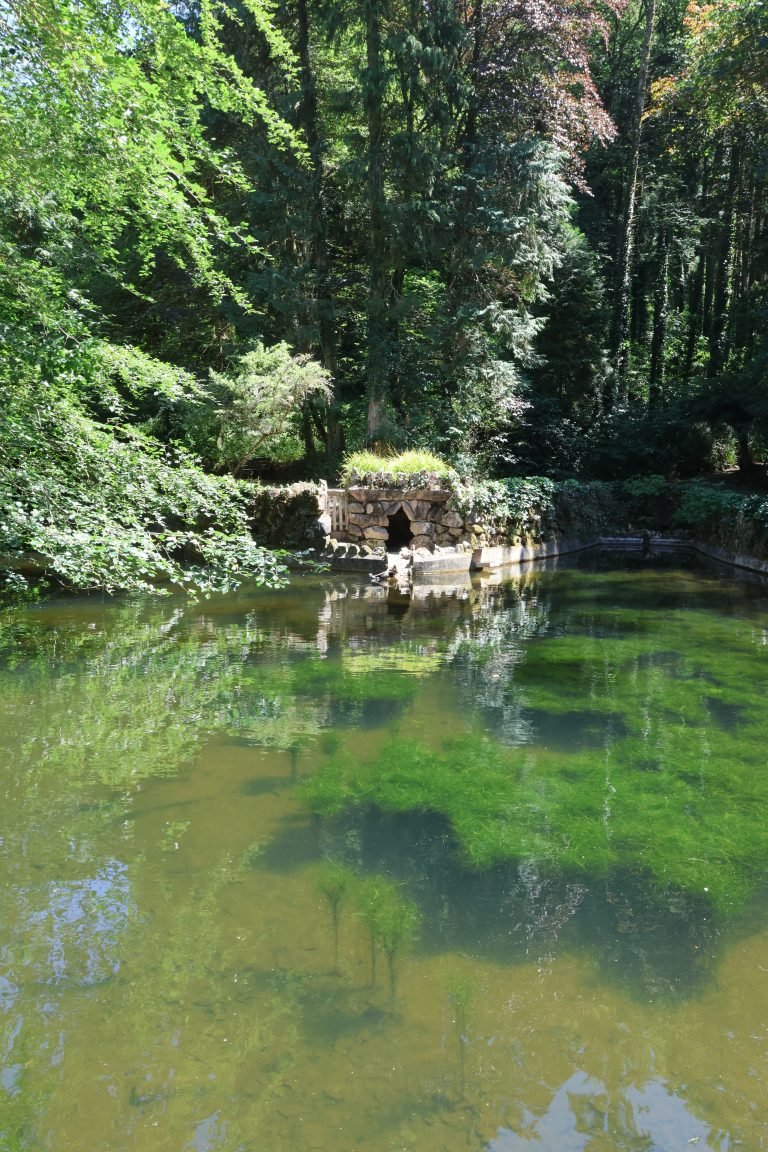
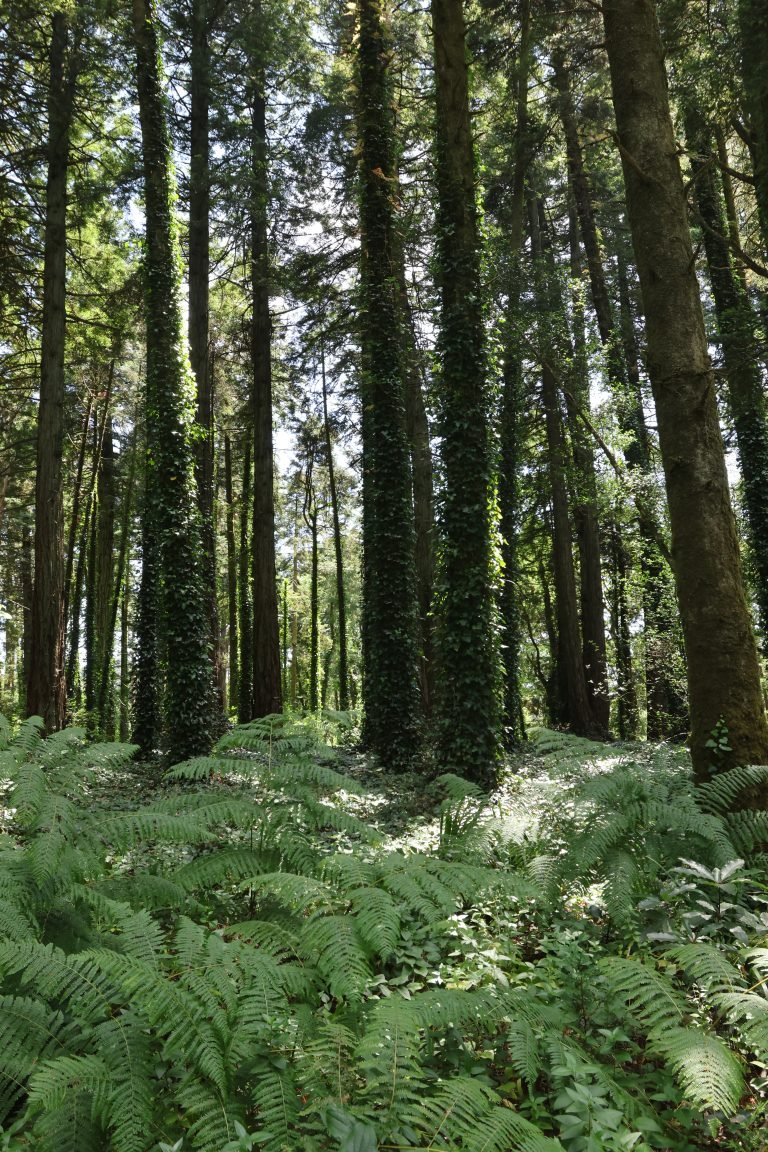
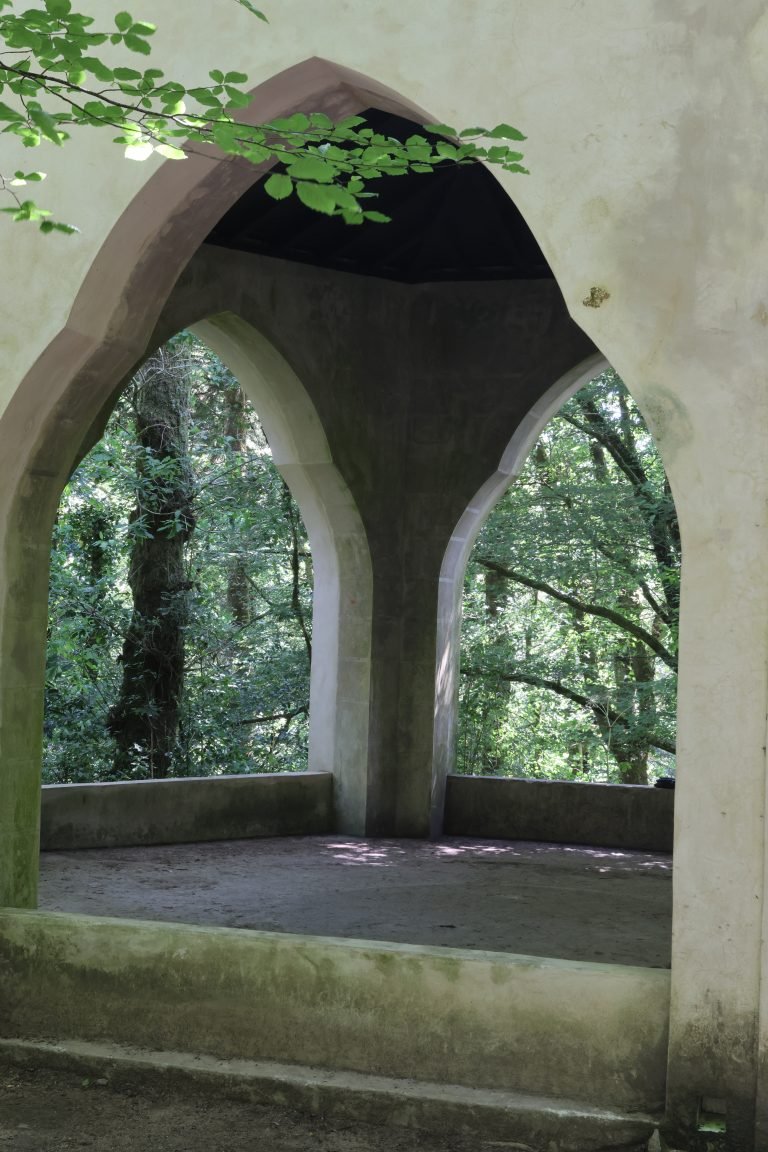
Although they are called gardens, they are very different from the formal palace gardens we are used to, with neat flower beds and symmetrical layouts. Pena Park feels wild and untamed—almost like a natural forest, punctuated by ponds and quiet spots to rest. We were a bit disappointed when we searched for the lakes, as they were much farther than we expected. By the time we finally reached the glasshouse and the stables, both were closed, or maybe they were closed from the beginning, which was frustrating after the effort of walking downhill and back uphill. It’s one of those moments where you realize that exploring Pena Park requires not only time, but also energy and a bit of planning.
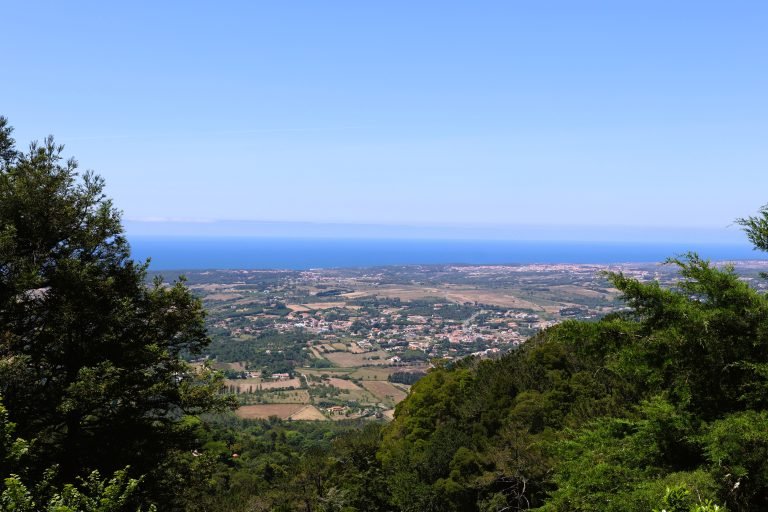
I will say it again, if there is one truly extraordinary thing about Pena Palace, it is definitely its location. The views are stunning from almost everywhere. The palace itself offers several terraces, some with small cafés, designed simply to let visitors slow down and enjoy the scenery. Even as you wander through the park, you keep discovering beautiful viewpoints hidden among the trees.
As for the rest, I wouldn’t personally describe Pena Palace as extraordinary, or perhaps we didn’t manage to see everything (not all the rooms where open). The gardens, combined with the intense heat and the sheer number of visitors, left us feeling tired and exhausted even before we stepped inside. We waited in line for a long time, to the point where we had to take turns standing while the others sat and rested in the shade.
In my honest opinion, the palace is somewhat over-hyped on social media. While the setting and views are undeniably spectacular, the overall experience didn’t fully match the expectations created online. Still, every visit is personal, and Pena Palace remains a place worth seeing, if only to understand why its location continues to leave such a powerful impression.
Plan your visit with our tips
Disclosure: “This post may contain links that could result in me earning a commission from purchases you make through these links (no extra cost to you). I exclusively recommend products that I’ve personally used or that have been utilized by my family.”
- It is advisable to book your tickets in advance to avoid the queue. We booked ours from the booth at the entrance, and there was no crowd at all; it seems like everyone booked online. You can buy your tickets online from https://www.penapalacetickets.com/
- Wear comfortable clothes and shoes, as if you are going for a hike, especially if you are planing to visit the gardens, also make sure to wear a hat and sunscreen.
- Carry water with you and maybe a snack as you may wait a long time for your group’s timing slot to enter. Outside the gate, there are no washrooms, water fountains or stores, you have to wait till you enter the Palace where there are washrooms and a coffee shop. I always carry this bottle
- If waiting for long periods or standing for extended durations due to health conditions is challenging for you, or if you dislike crowded places, then Pena Palace may not be the best destination. During peak seasons, the palace can be quite crowded, with long waiting times and limited personal space inside. It may be difficult to pause for photos, and capturing clear images or videos without including other visitors in the frame.
- Finding parking can be quite challenging, so I recommend arriving early in the morning. This way, it’s easier to find parking and the area is less crowded, allowing you to fully enjoy your tour. For more driving tips please click here.
- If you’re feeling tired, it’s advisable to conserve your energy for exploring the palace rather than the gardens. We were disappointed after walking quite a distance to the stables and the glasshouse only to discover them closed. . Also the ponds didn’t offer anything particularly special.
Visit In The Area