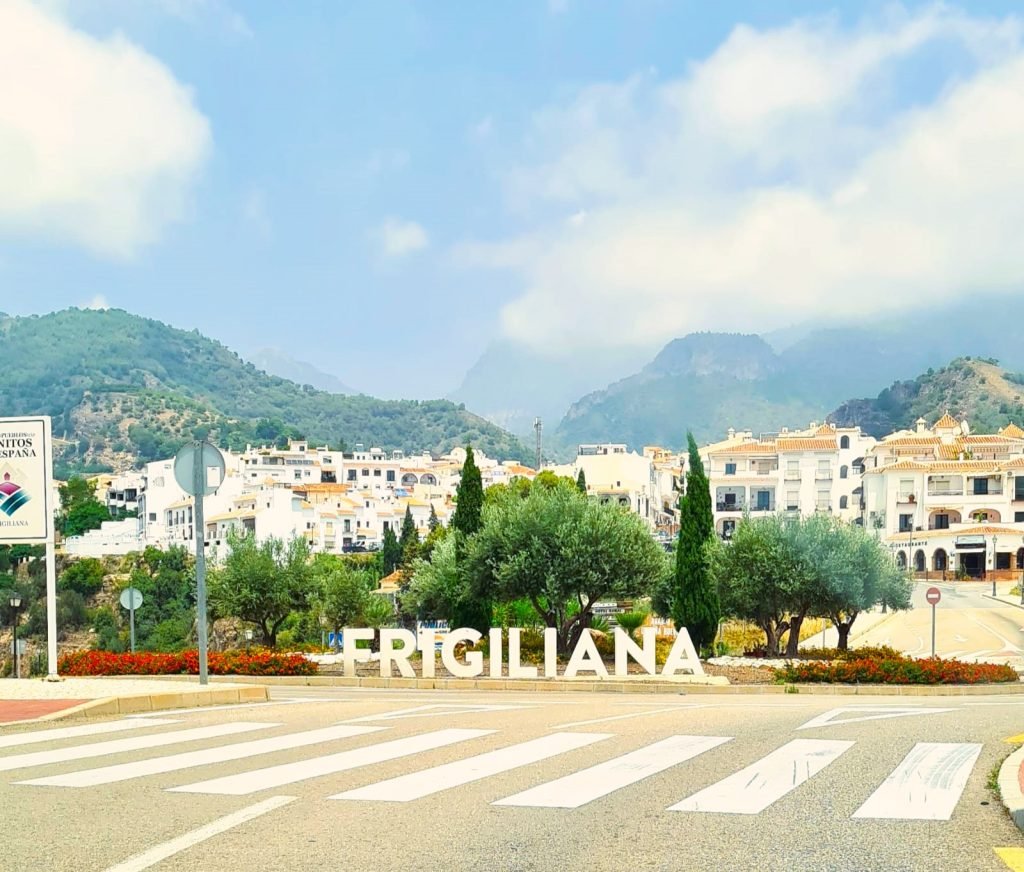
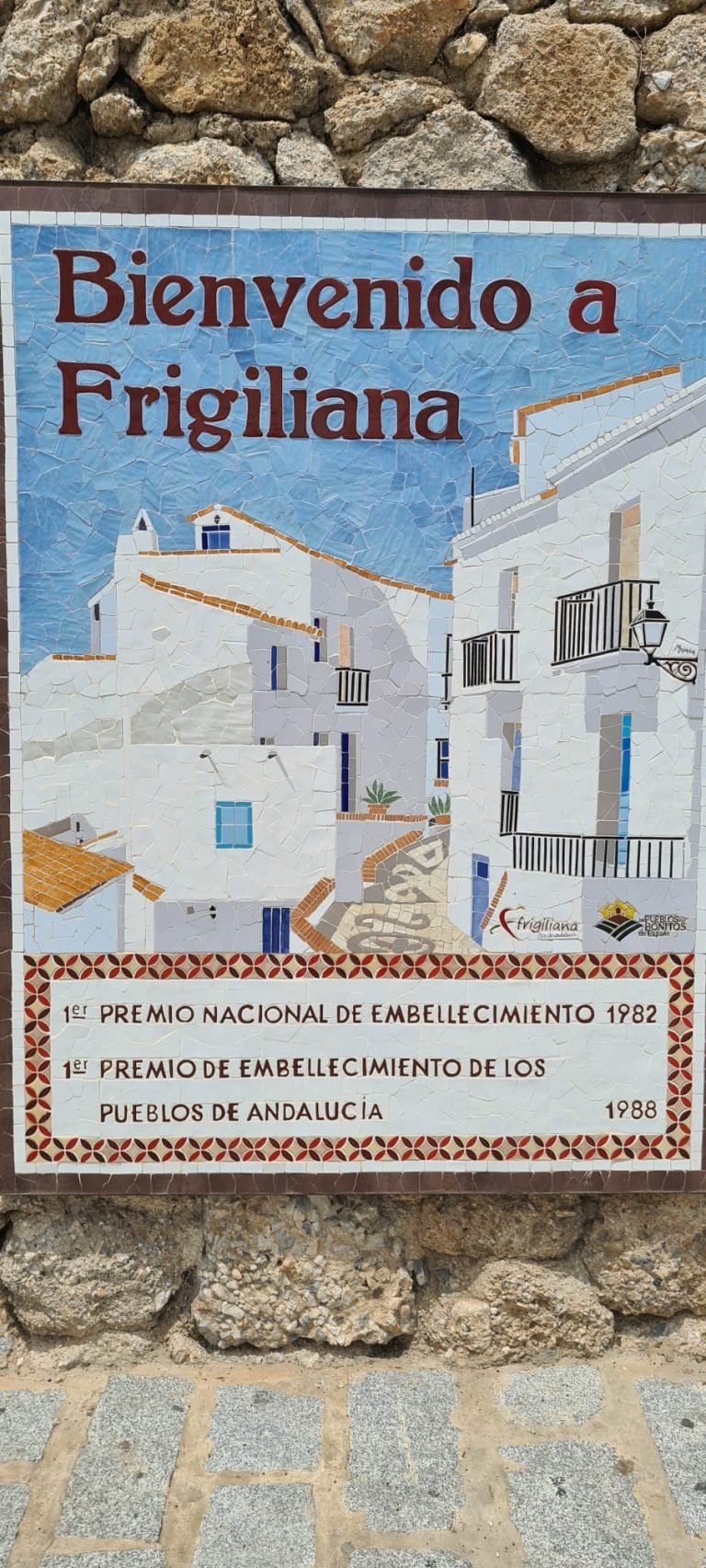
Our journey through southern Spain was nothing short of incredible, Seville, Córdoba, Granada, each city full of history, beauty, and unforgettable moments. And just when I thought the trip couldn’t get any better, we reached our final stop before Malaga: Frigiliana, a place so charming that it instantly became one of my favorite memories from Andalusia.
Often called one of the most beautiful Pueblos Blancos, Frigiliana is the kind of town that looks like it was created for a postcard. Perched on the hills of Málaga province, it welcomes you with whitewashed houses glowing under the sun, flower-filled balconies, narrow cobblestone streets, and views stretching from the mountains of the Sierra Almijara all the way to the Mediterranean Sea.
As soon as we arrived, that familiar mix of curiosity and excitement kicked in, the feeling that something beautiful was waiting around every corner. The old town rises slowly like a white labyrinth, and as you walk its cobblestone steps, you can’t help but stop every few minutes to admire a colorful door, a mosaic tile, or bougainvillea cascading down a balcony.
There’s a quiet charm in Frigiliana, a peaceful rhythm you feel the moment you start wandering. This isn’t a place where you rush from one attraction to another, it’s a place to get lost, to breathe in the mountain air, to sit for a moment and simply watch everyday life unfold. The beauty hides in the details: a wooden door frame, a bright blue window, a cat sleeping in the sun, or a sudden panoramic view opening between two white houses.
Frigiliana was our last stop, but it felt like the perfect ending to our journey, calm, beautiful, and full of simple pleasures that stay with you long after you leave.
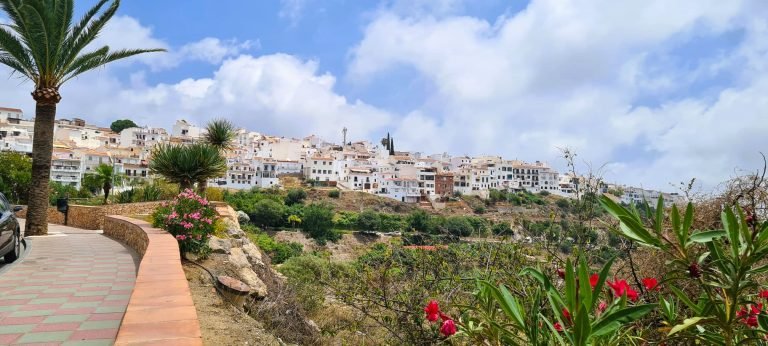
Before starting our walk through Frigiliana, it was lunchtime, so we decided to take a little break. We had our sandwiches and fruits with us, and we found a quiet bench under a big tree facing the mountains. It felt like the perfect picnic spot, peaceful, shaded, and with a view that made everything taste better.
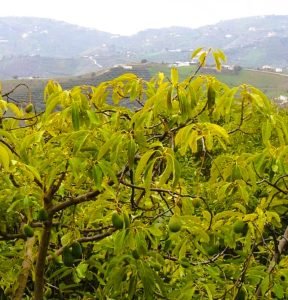
What truly caught our attention were the trees covering the surrounding hills. At first, I kept staring without understanding, and then I realized: they were avocado trees. Hills and hills filled with avocados, something I had never seen before, especially not in such huge numbers. It felt almost surreal, like discovering a hidden garden.
That little picnic break was exactly what we needed. After resting and enjoying the scenery, we finally started exploring.
The Historic Center
The historic center of Frigiliana is a charming maze of cobblestone streets, each one lined with colorful flowers spilling from balconies and pots. Walking through it feels like stepping into a painting. The whitewashed houses, the patterned stone paths, the quiet corners, it all reflects the town’s strong Moorish heritage, still beautifully preserved.
As we wandered from one alley to the next, we kept stopping at the viewpoints, the miradores. Each one offered a different breathtaking perspective: some overlooking the mountains, others facing the distant Mediterranean Sea. Every view was more beautiful than the last, and it’s impossible not to pause and just take it all in.
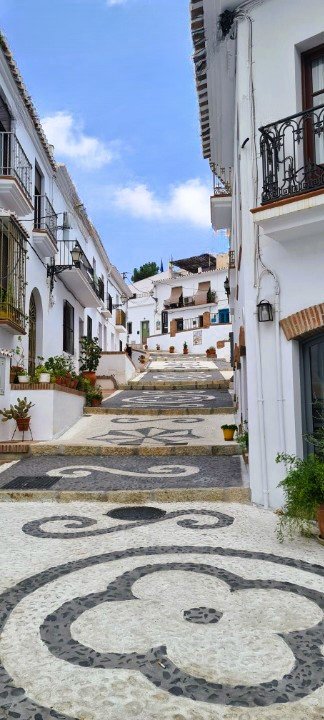
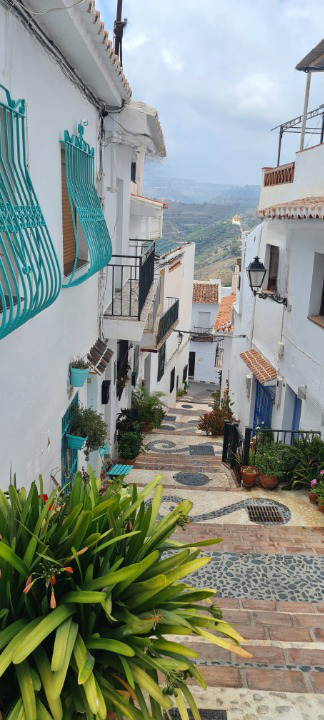
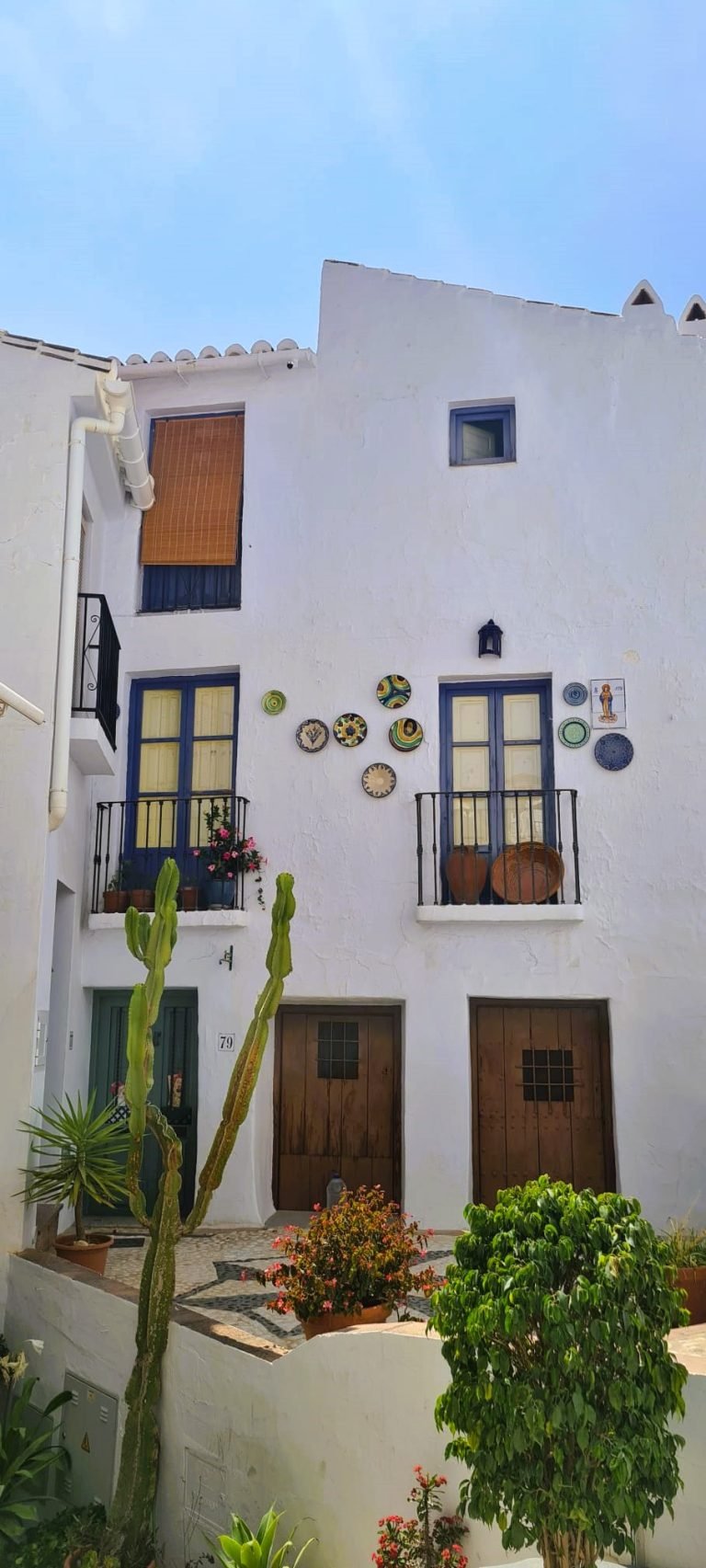
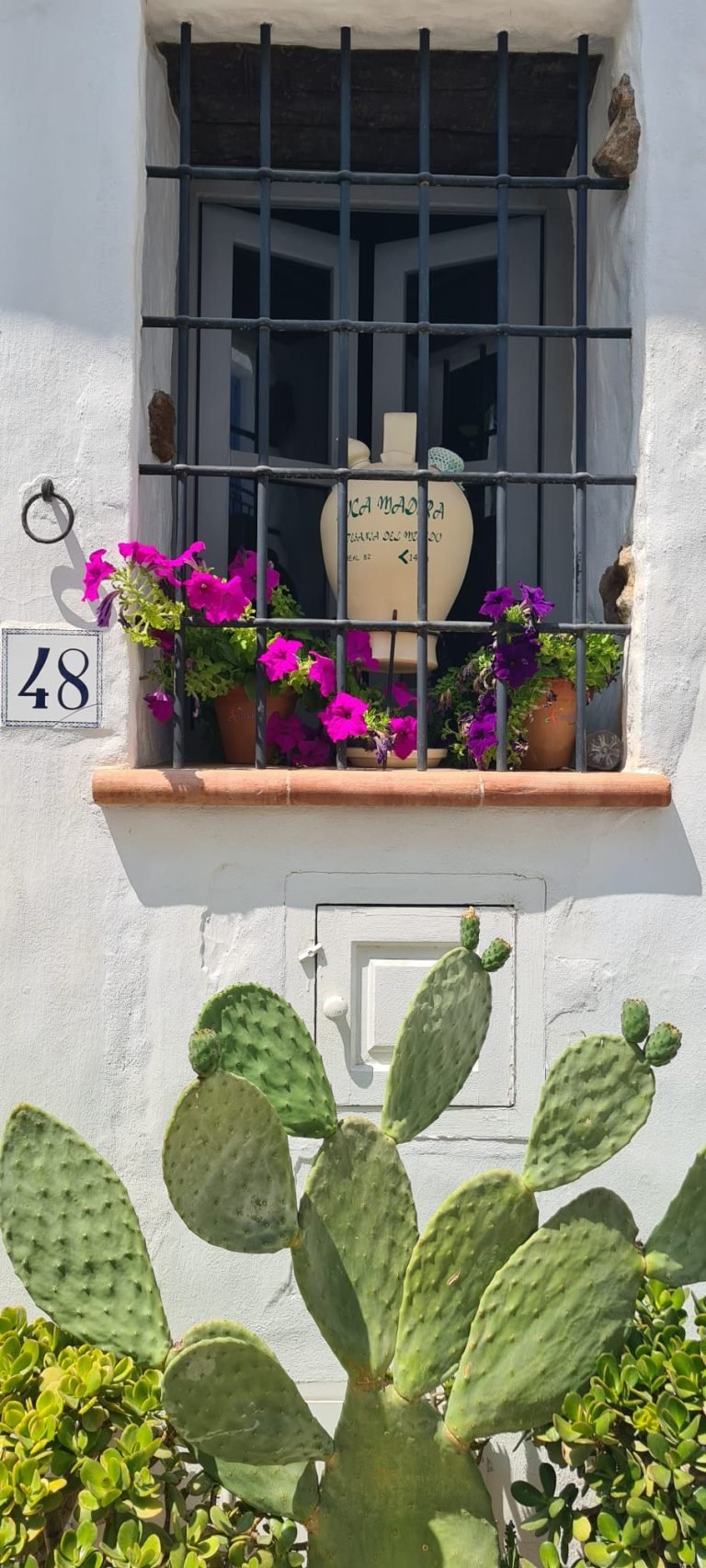
Frigiliana center is essentially a maze, but that’s part of its charm. I loved getting lost, turning corners, and discovering hidden squares, tiny chapels, and rustic wooden doors that looked like they hadn’t changed in centuries. The Mudejar quarter, in particular, felt like the soul of the town, a perfect blend of Moorish architecture and Andalusian style. The arches, patterned tiles, and stone streets reminded me how much history is layered into this village. While I was wandering, I kept thinking: all these beautiful details I’m noticing, the windows, balconies, terraces, cobblestone stairs, the stunning views, these are normal, everyday things in the lives of Frigiliana’s people. For a moment, I envied them. Then I realized, maybe if I were one of them, I wouldn’t even pay attention; I’d see it as just a simple village. As humans, we rarely appreciate what we have and often long for what others hold in their hands.
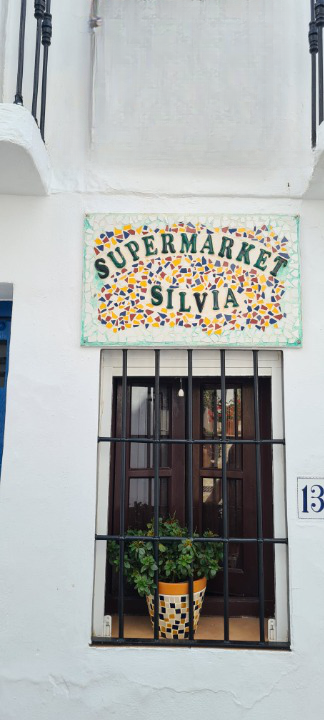
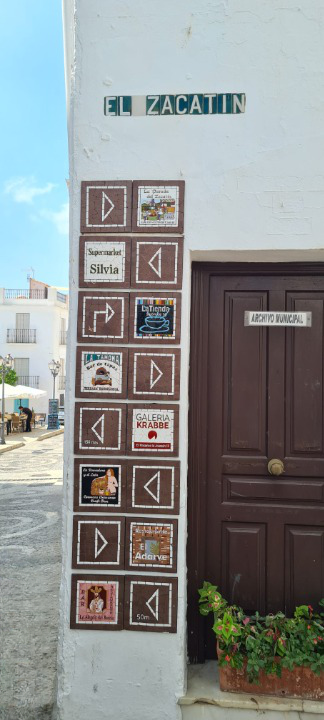
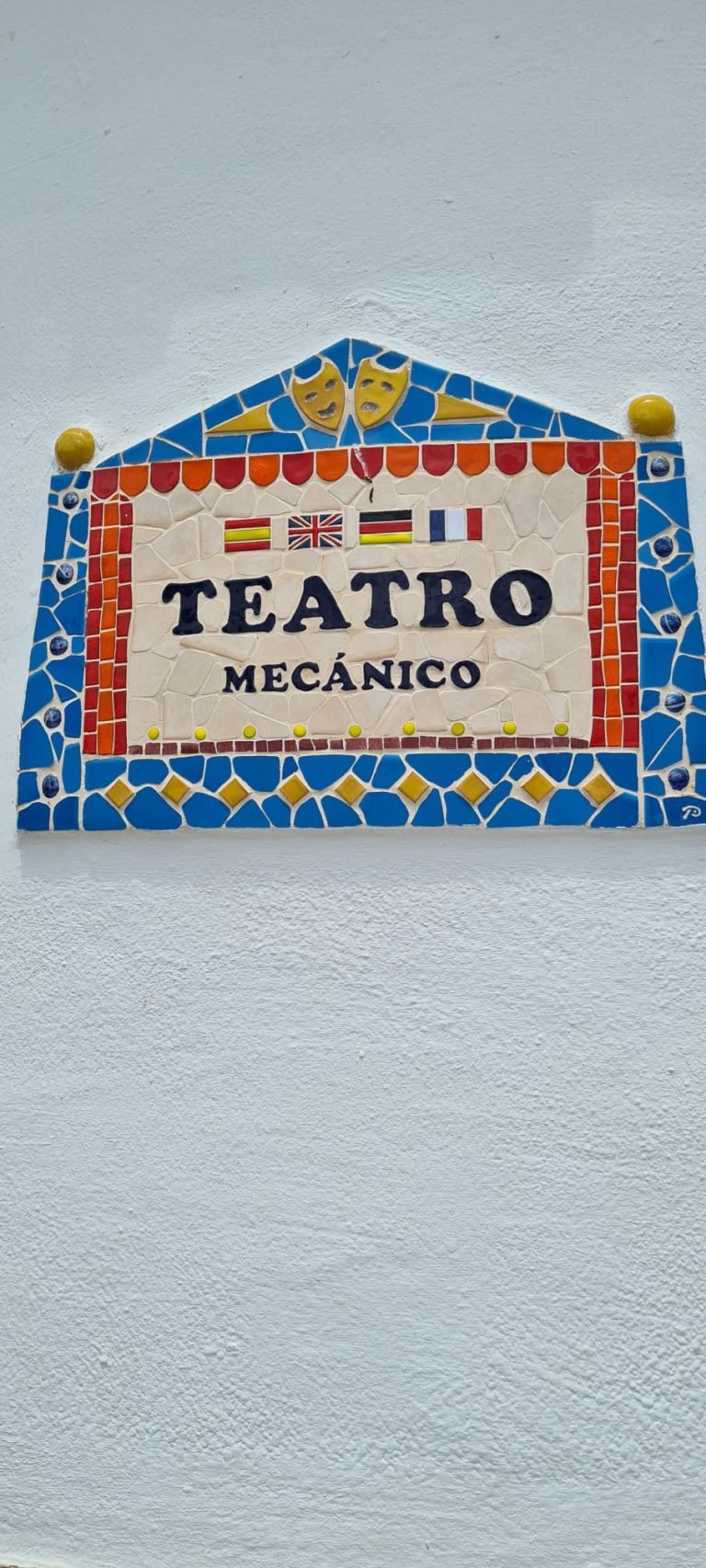
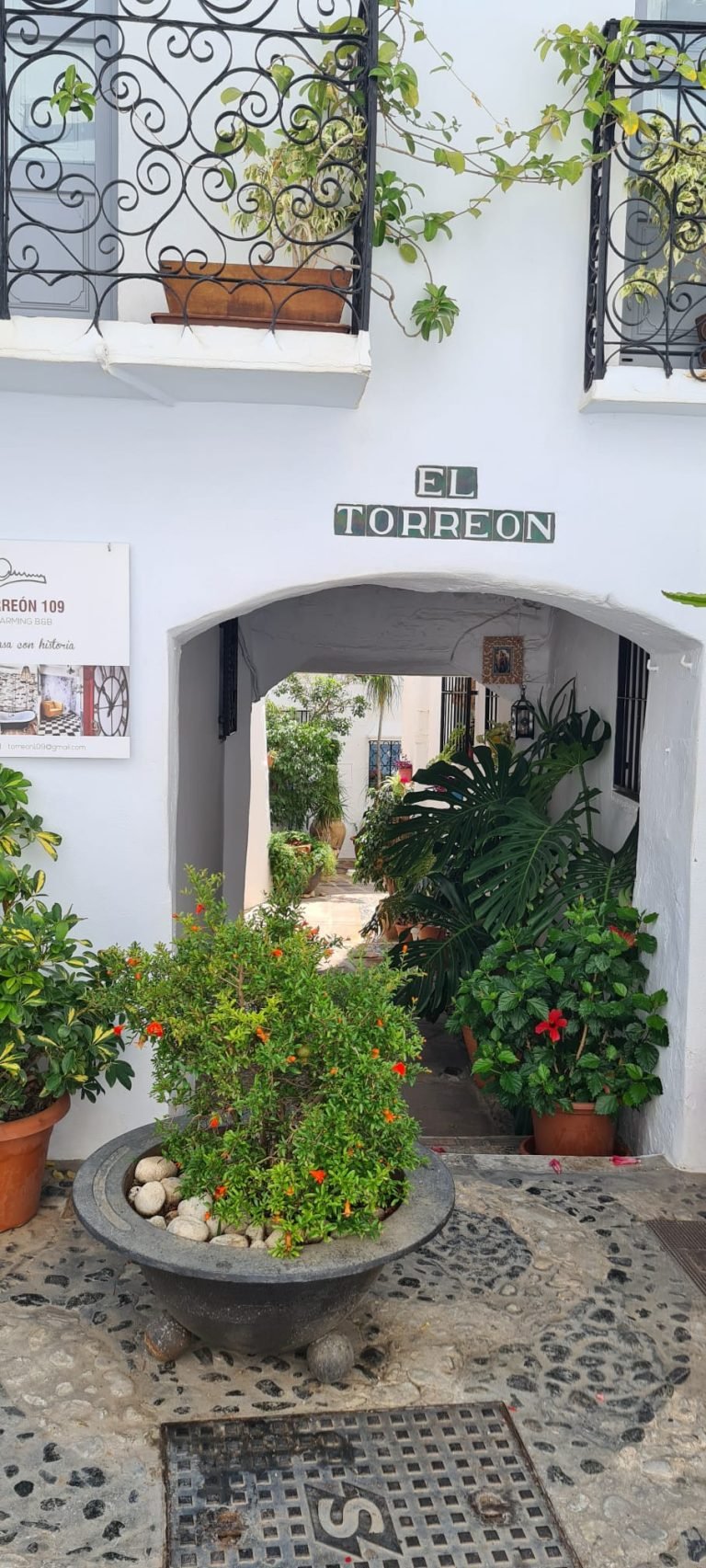
The street signs:
Walking here isn’t about rushing to check off sights. It’s about pausing to notice the details: a hand-painted tile, a wrought-iron balcony, or even a sleepy cat soaking up the sun. Every corner had something to admire, and it made me feel connected to a slower, simpler way of life. Something I especially loved were the tiled street signs scattered throughout Frigiliana. Each one is handcrafted from ceramic, shaped and painted like a small mosaic, carrying the unmistakable identity of Spain. These decorative signs don’t just guide you, they add charm, color, and authenticity to the streets, making every alley feel even more special.
streets.
The shops:
As you wander the narrow streets of Frigiliana, the charming shops and small boutiques immediately catch your eye. Each one feels like a treasure waiting to be discovered. The stores are filled with locally crafted products:Spanish hand fans, scarves, ceramics, clothing, home décor, jewelry, carpets, and more. What I loved most was how the colors seemed to pop from afar, immediately catching your eye and drawing you in. Each item feels carefully chosen, full of life and character, making wandering the streets feel like a treasure hunt for beautiful, unique pieces. Even if you don’t buy anything, browsing these little shops adds to the joy of exploring the town.
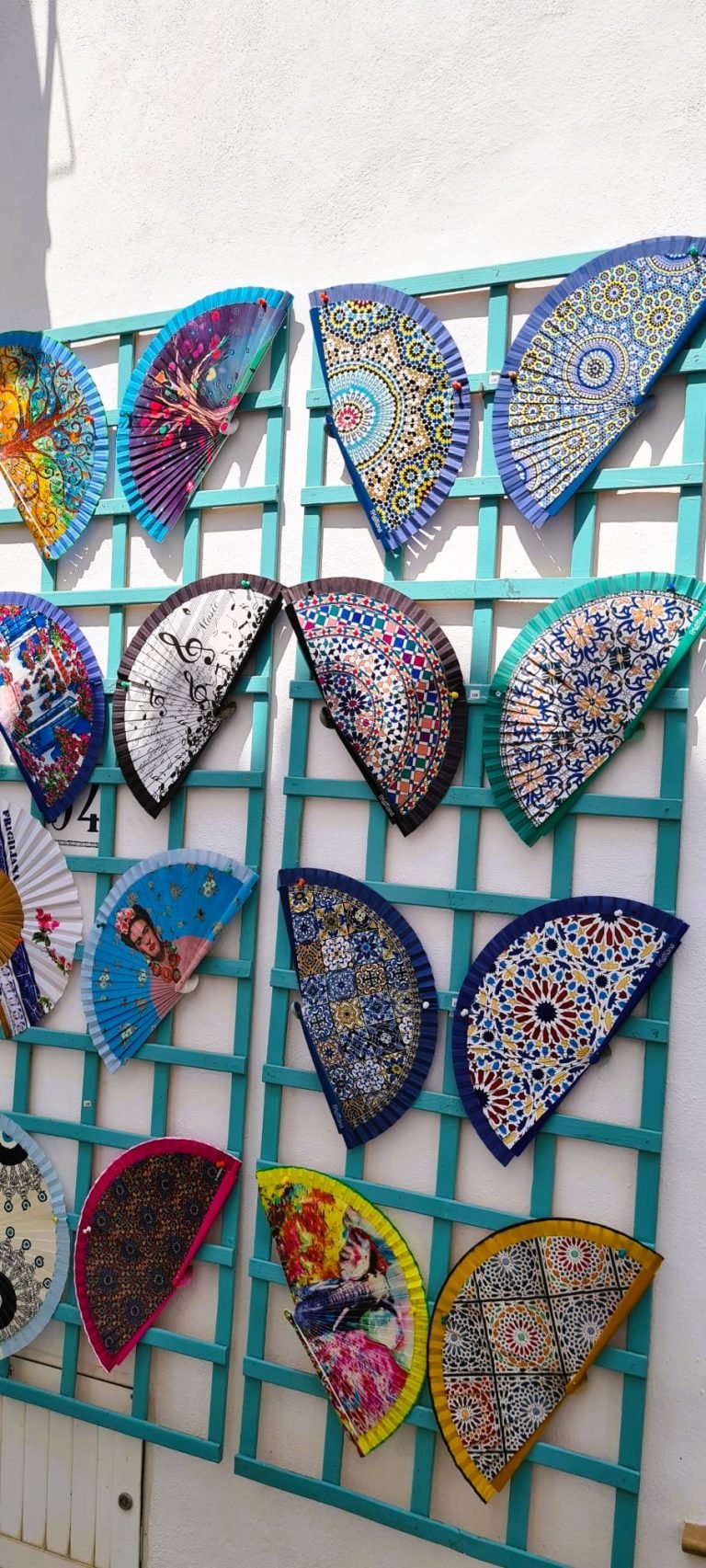
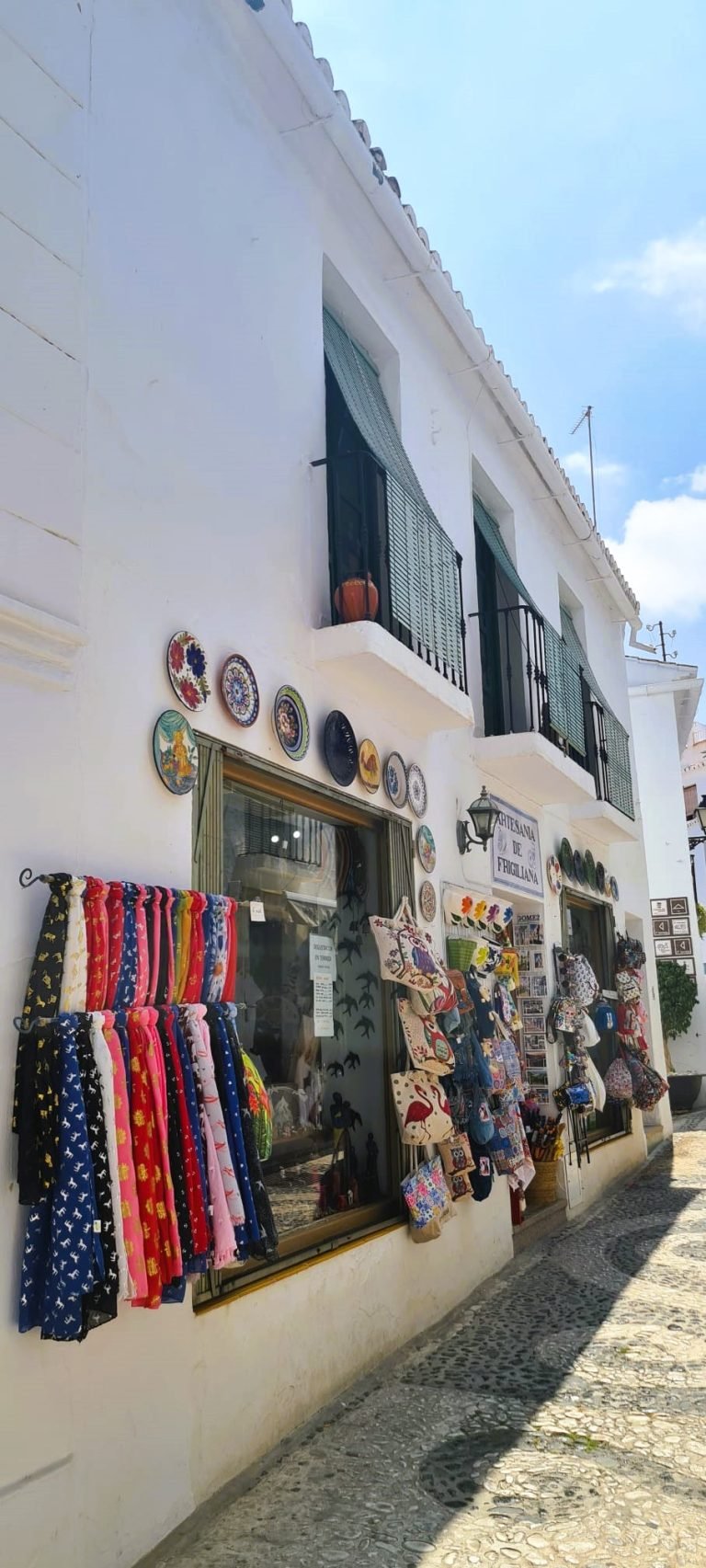
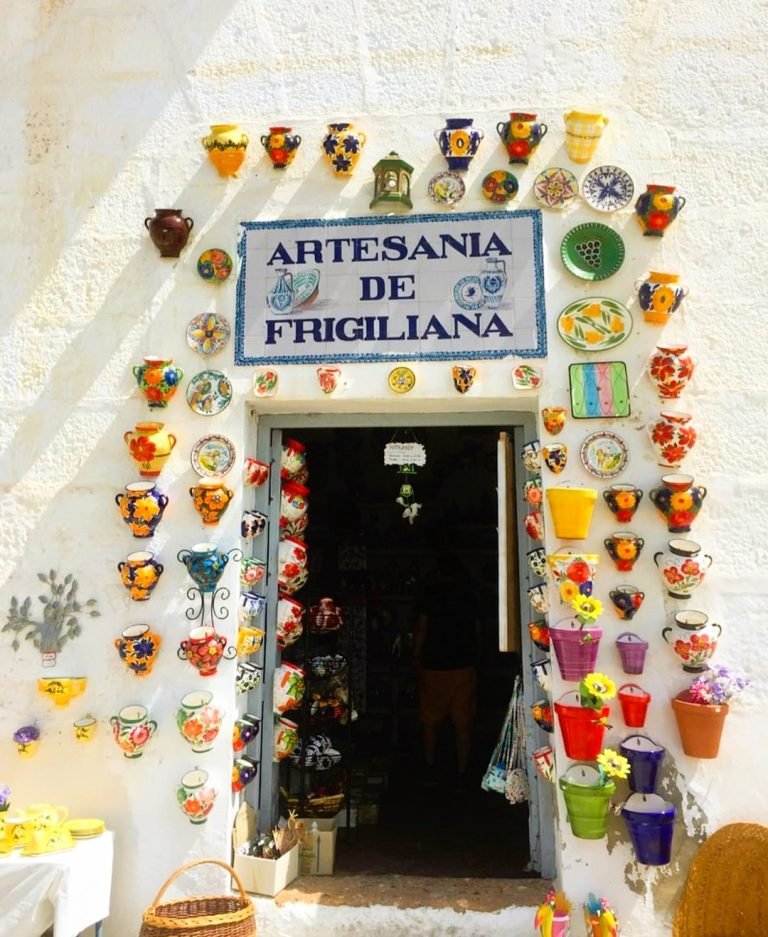
Tip: Wear comfortable shoes, because the cobblestone streets and steep, winding alleys can be uneven. Take your time strolling, there’s no rush. Pause at every corner to admire the details, walking slowly allows you to truly soak in the charm and uncover little surprises you might otherwise miss.
Plaza de las Tres Culturas
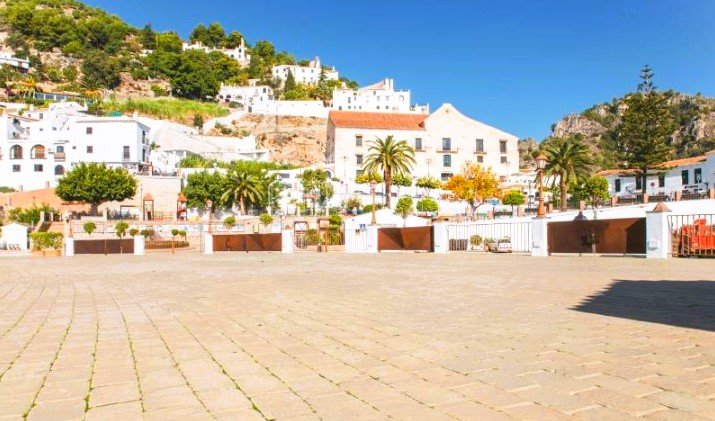
The Plaza de las Tres Culturas is more than just a square, it’s a symbol of Frigiliana’s rich and layered history. The name itself reflects the peaceful coexistence of three distinct cultures that shaped the town: Jewish, Christian, and Muslim. Walking into the plaza, you immediately feel this sense of harmony, which is echoed in the architecture, the layout, and the art around you.
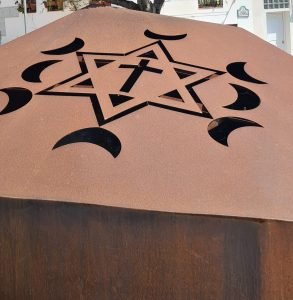

At the heart of the square, a mosaic mural captures your attention. Its colorful patterns depict the fusion of traditions, reminding visitors of the town’s multicultural past. It’s a small but powerful visual story of tolerance and cultural richness.
The plaza is also a hub for community and celebration. Every year, Frigiliana hosts the Three Cultures Festival, a lively event with music, dance, food, and performances that bring the town’s history to life. Even outside the festival days, sitting here for a while is a pleasure, watching locals chat, children play, and the sun cast warm light across the whitewashed buildings gives you a small glimpse into everyday life in this enchanting town.
Tip: Try to visit during the Three Cultures Festival (usually in June), the plaza comes alive with music, performances, and local traditions, which makes it even more special.
La Fuente Vieja (The Old Fountain)
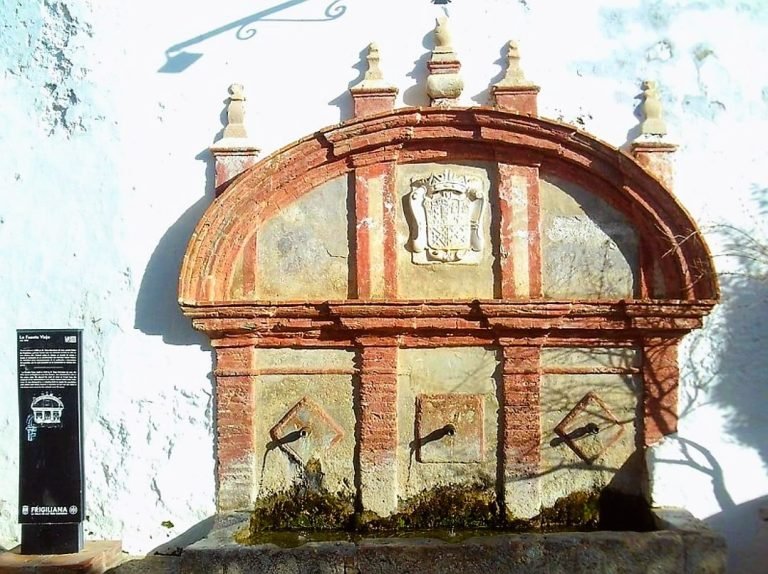
At first, the Old Fountain looked just like a simple village fountain. Nothing special, just a small stone structure with water flowing quietly. But when I got closer and read the sign, I realized it actually carries centuries of history. Built in the 17th century under the Count of Frigiliana, this fountain was once one of the main water sources for the whole village. Knowing that people gathered here every day, filling their jugs and sharing their daily stories, made me look at it differently. It’s one of those little details that make Frigiliana so charming, something ordinary that turns meaningful the moment you learn its story.
Iglesia de San Antonio de Padua
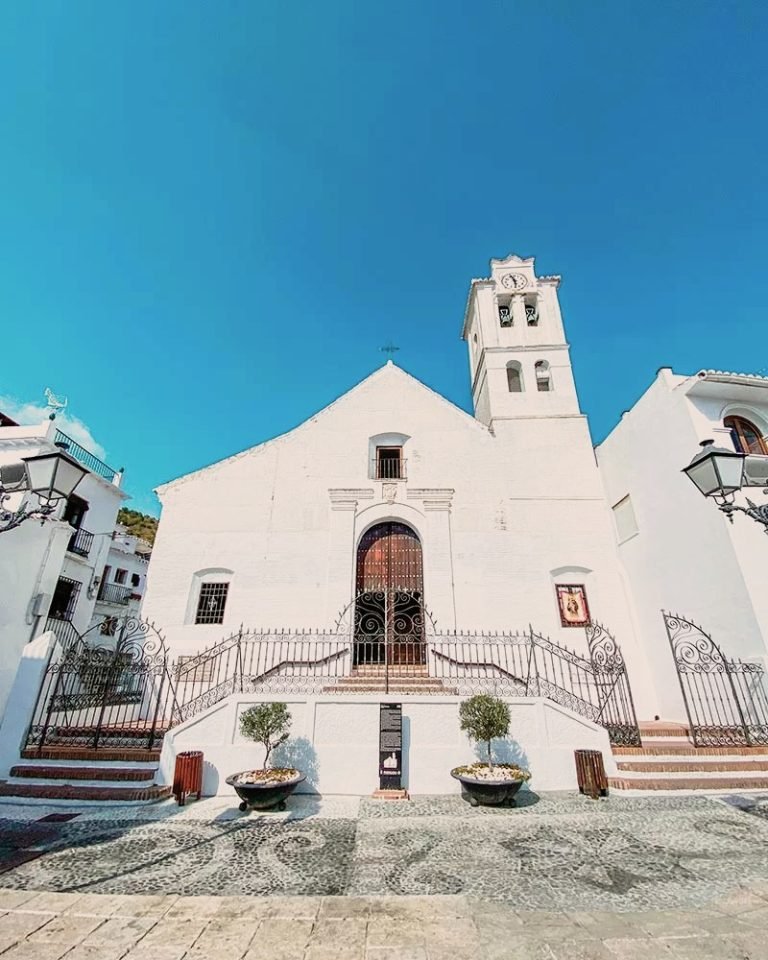
As you wander the charming streets of Frigiliana, you’ll notice the Iglesia de San Antonio de Padua, a small but beautiful church that reflects the town’s Christian heritage. Built in the 16th century on the site of a former mosque, it’s simple yet elegant, with a whitewashed exterior that blends perfectly with the village’s signature style.
The church is also part of the town’s festivals, where locals gather for religious celebrations, adding another layer of authenticity to your visit. It’s a lovely spot to step inside, light a candle, and feel the history and faith that have shaped the town.
Tip: Don’t just pass by the church, step inside if you can. Its simple whitewashed walls and wooden interiors reflect the village’s peaceful charm, and the small courtyard often has flowers and benches where you can pause and soak in the quiet atmosphere.
The Twelve Ceramic Panels
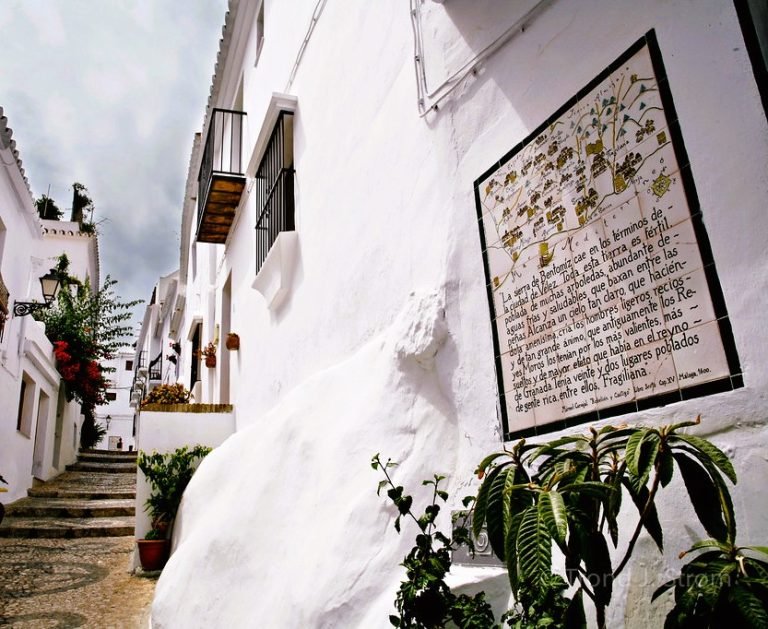
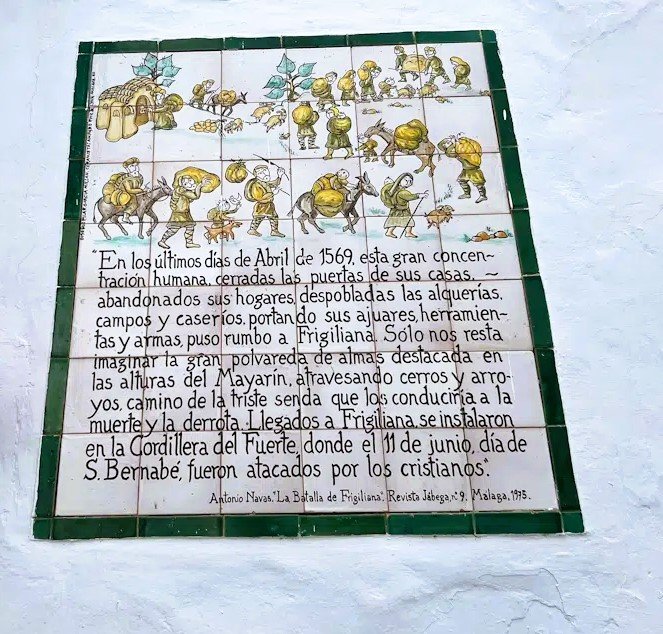
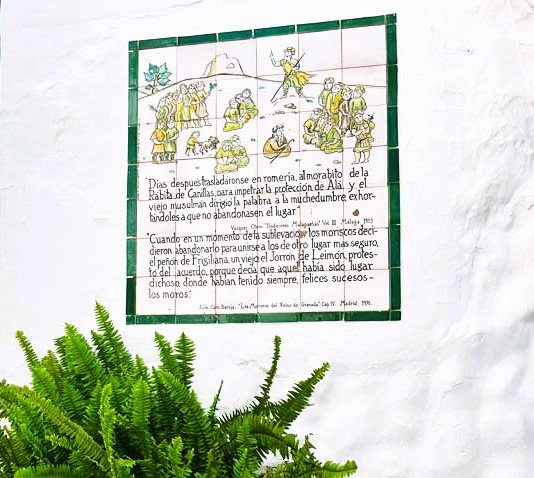
As you explore, you’ll also notice something special on the walls and pathways: the ceramic mosaics that tell the story of the Moriscos Rebellion, also known as the Rebellion of the Alpujarras (1568–1571).
These mosaics are one of Frigiliana’s most unique cultural treasures.
Handcrafted in colorful ceramic tiles, they are scattered throughout the old town, each one telling a chapter of the village’s dramatic past. They narrate how the Moorish population, who had lived in the region for centuries, rose up after being forced to abandon their customs, language, and traditions.
The The trail starts right under El Ingenio, where you’ll find the first four panels placed together on the wall. From there, the route continues through the narrow streets of the historic center, and you come across each panel as you walk uphill. Following them feels like reading a storybook written in ceramic and color. These mosaics don’t just decorate the streets; they teach you history as you walk. They’re vivid, expressive, and full of movement that make you feel you are in an outdoor museum.
some people even hire a guide just to follow the whole route, but for us, it was much simpler and honestly more magical.
We didn’t have time to search for all twelve panels, but that’s the beauty of it:
you don’t need to follow a map to enjoy them.
As we wandered through the narrow white streets, a ceramic panel would suddenly appear on a wall, beautifully crafted and telling a piece of the town’s dramatic past. Then a few steps later, another one. It felt natural, effortless, like Frigiliana was revealing its history to us little by little.
If you enjoy games or small quests, discovering these panels is a bit like a treasure hunt. Every time you find one, it’s a little victory, a missing piece of the story falling into place. And even if you don’t see all twelve, the experience is still meaningful because the panels blend perfectly into the village, just like its doors, flowers, and viewpoints.
That’s what I loved most: history becomes part of your walk, not something you chase, but something you stumble upon.
Tip: You can either hire a guide to follow the full Twelve Panels trail, or discover them yourself while wandering the streets. The panels are written in Spanish, but you can easily use Google Translate or your phone camera to read and understand the story as you go.
El Ingenio
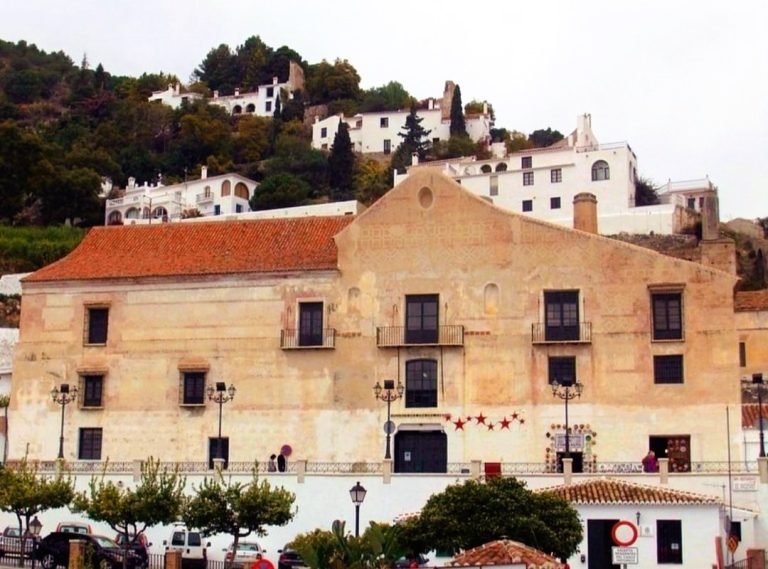
One of the most interesting landmarks in Frigiliana is El Ingenio, the iconic molasses factory that has been part of the town’s identity for centuries. Even if you don’t step inside, the building itself is impossible to miss, an elegant 16th-century manor house with a pale façade, arched windows, and a noble presence that instantly stands out among the whitewashed homes.
El Ingenio is home to the production of “Miel de Caña de Frigiliana”, a dark, sweet cane syrup often compared to molasses. What makes it truly special is that this is the only place in all of Europe where sugarcane syrup is still produced in a traditional way. The factory has been operating for hundreds of years, and remarkably, it still uses historic methods and equipment to create this unique product. The syrup itself is a beloved part of Andalusian cuisine. Locals drizzle it over fried eggplant, cheese, pancakes, yogurt, roasted vegetables, or simply enjoy it with bread and olive oil. Many of the shops in Frigiliana proudly sell bottles of this famous honey-like syrup, beautifully packaged and perfect to take home as a souvenir.
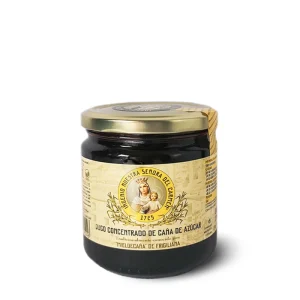
Tip: El Ingenio is not always open to the public, it typically opens during the annual Día de la Miel de Caña festival in late spring, when visitors can see the traditional process in action and even taste the syrup. Outside of that, visits usually require advance booking. Even if the factory isn’t open, the building is worth admiring from the outside, and you can still stop by the shop to buy fresh molasses and other artisanal products, a delicious souvenir to take home from Frigiliana.
Viewpoints
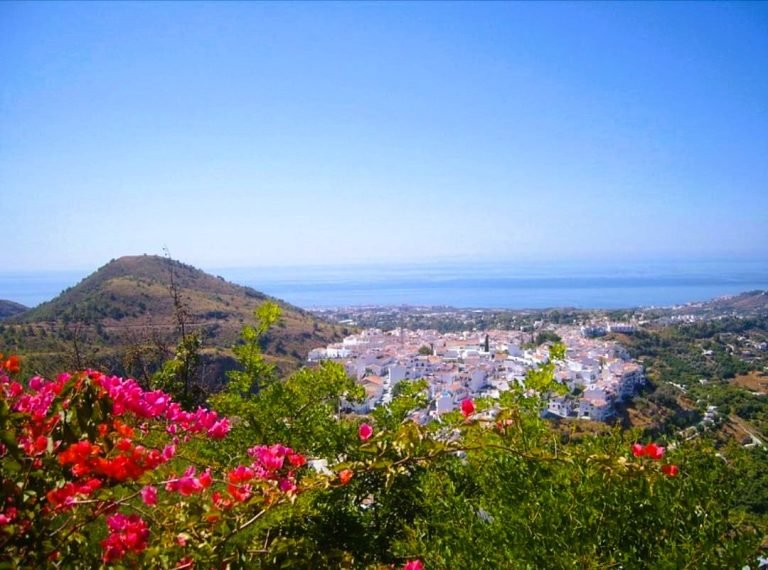
One of the things that I liked about Frigiliana is the number of viewpoints (miradores) you naturally come across as you wander its steep, winding streets. It feels like every turn rewards you with a new postcard, green hills, beautiful whitewashed houses stacked along the slopes, and, in the distance, the Mediterranean Sea shimmering under the sun.
You don’t need a plan to find them; the village simply offers them to you as you walk.
And if you decide to go a little further, whether by hiking the trails around the town or just driving a bit outside, you’ll discover even more breathtaking viewpoints. One of my favorite moments was at The Garden Restaurant, located high in the old town. Its terrace feels like a little oasis, and as you walk through the garden, a full panoramic view of Frigiliana appears right in front of you. The mountains, the white rooftops, the deep green hills, it’s the kind of view that makes you stop and take a deep breath, just to soak it all in.
It’s absolutely worth taking the time to stop, breathe, and enjoy those peaceful moments. In Frigiliana, the views are part of the experience, quiet, beautiful, and impossible to forget.
Tip: If you’re chasing viewpoints, make sure to bring water and a snack, you’ll want to take your time. Frigiliana has so many viewpoints in each corner f Don’t miss The Garden Restaurant viewpoint high in the old town; its terrace offers a full panoramic view of the village and surrounding hills, perfect for a little break and some quiet reflection.
Frigiliana is a town that settle in your memory, its charm and beauty revealing themselves little by little as you wander through the alleys. Every street, corner, and viewpoint has a story to tell, and exploring its whitewashed streets feels like stepping into a living postcard. From the historic center to the hidden viewpoints, the mosaics, the old fountain, and the gentle rhythm of village life, there’s a calm magic here that makes you want to slow down and savor every moment.
Frigiliana is definitely worth visiting, and how long you stay really depends on your preferences and travel itinerary. If you’re short on time, a day trip is enough to explore the picturesque streets, enjoy a meal at a local restaurant, and soak in the scenery. But if you have the chance, spending a night in Frigiliana allows you to experience the town’s charm at a more relaxed pace, dine at a traditional Andalusian restaurant, and enjoy a peaceful evening in this enchanting setting.
No matter how long you stay, Frigiliana leaves an impression, a gentle reminder that some of life’s most beautiful moments are found in simple, quiet places.
To read about our full journey through Andalucía, from Seville to Córdoba, Granada, and Malaga, please click on the picture

Great article, thank you for sharing. This makes me want to go visit this beautiful charming town of Frigiliana.
Thank you, Massicilia, for your feedback. I highly recommend visiting Andalucia in general; it is a blend of beauty and culture that is definitely worth experiencing.