Seville was a name we had heard countless times, but it truly became real for me one day while I was zapping through TV channels. Suddenly, a breathtaking piece of architecture appeared on the screen, elegant, grand, almost unreal. I wondered where is this place? It turned out to be the Plaza de España, and from that moment, that image stayed with me all the way to Seville. I couldn’t wait to see it with my own eyes.
We arrived from Portugal by bus, a short and comfortable ride, but the moment we stepped out, Seville hit us with a wave of dry heat that felt like opening the oven door. In Portugal it was a pleasant 25°C when we left; in Seville it was already 40°C. And the funniest part? That turned out to be the coolest day of our stay.
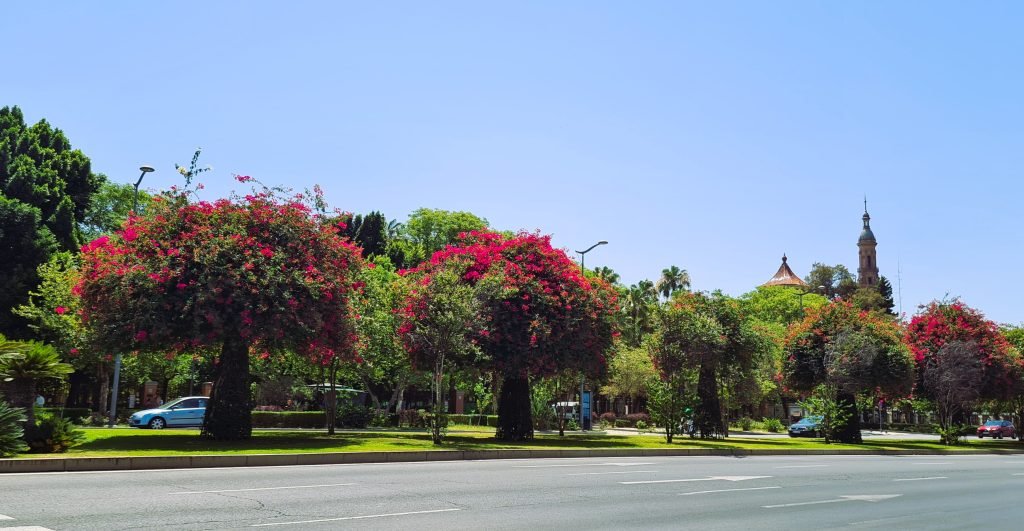
But heat aside, the city instantly felt alive, busy with tourists, orange trees, palm trees and flowers everywhere, the sound of guitars coming from hidden patios, and those beautiful vibes that make you realize right away you are in a very special place, a place full of history, passion, and beauty waiting to be explored.
Attention: Siesta Time!
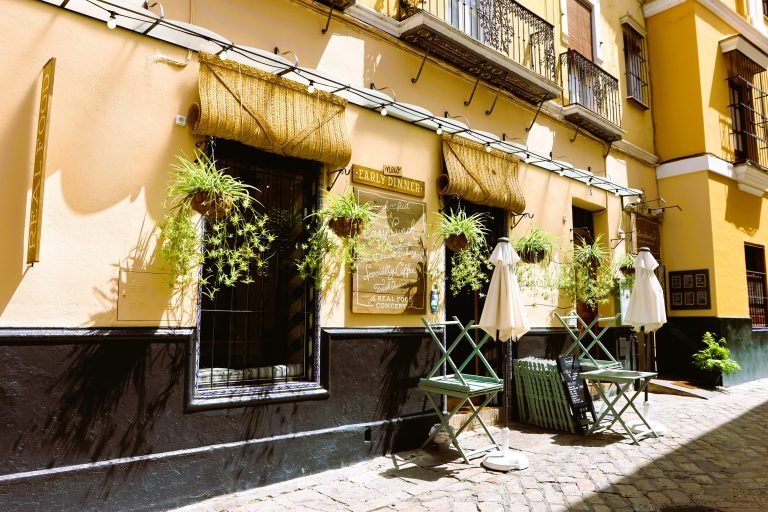
Seville was our first stop in Spain and my real introduction to the famous siesta culture. At first, I felt a bit nervous because I didn’t understand the rhythm of the day. In the morning, everything was open, fresh fruits, warm pastries, bakeries full of smells that make you want to buy everything. I thought, “Okay, I’ll get my groceries on the way back.”
Big mistake.
By the time we finished exploring, the entire city slipped into siesta mode, shutters down, lights off, streets suddenly quiet. Later in the evening, when the temperature finally became bearable around 8:30 PM, we went out again… only to find everything closed again!
Except Carrefour Express, and yes, I actually begged the kind employee to give me a few extra minutes to buy snacks for my son.
Tip: In Spain, always buy your groceries early in the morning before sightseeing. Otherwise, you’ll come back hungry while the whole city is taking a nap!
Plaza De Espana
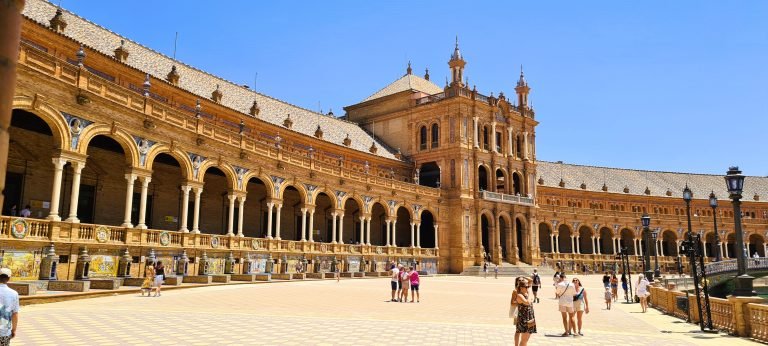
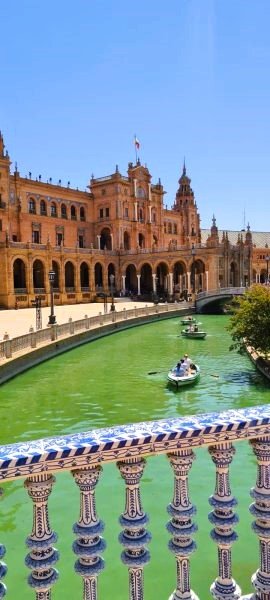
The Plaza de España is often called the “Venice of Spain”, and the moment you arrive, you instantly understand why. The charming canal with its little rowing boats gives the whole place a magical vibe, but the real surprise is the sheer size and beauty of the plaza itself. I was honestly shocked by how huge it is, a stunning curved building that feels endless, decorated from top to bottom with colorful ceramics, detailed tiles, elegant bridges, and artwork everywhere you look. I didn’t even know where to point my camera, every corner is a masterpiece. The crowds made it almost impossible to capture a clean shot, but it didn’t matter because the place is too magical to fit into one photo. Inside, it’s cool and peaceful, with artists singing and the architecture leaving you in awe, the staircases, the ceilings, the terraces, everything whispers you are in Spain.
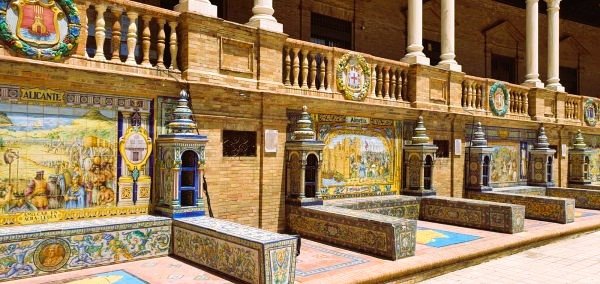
When you step inside the building, it becomes almost impossible to leave again, the temperature drops instantly, and the cool shade feels like heaven after the Andalucia heat. Inside, artists were singing and playing guitar, filling the space with that magical Andalusian atmosphere that makes you want to stay forever. We sat down for a small break, just enjoying the moment, before gathering the courage to walk back outside and take a closer look at the alcoves. Each one, representing a different Spanish province, was like a mini work of art, beautifully decorated with maps and colorful tiles. It felt like walking through the whole country in one place.
And no matter how many pictures you take, they will never compare to the real thing, because the true image stays with you. I can still see myself walking through the plaza right now, even as I’m writing this article, the colors, the shapes, the atmosphere. It’s a place that stays alive in your memory long after you leave.
Maria Luisa Park
After we finished exploring the Plaza de Espana, just a few steps outside led us directly into an exquisite park, Maria Luisa Park so the plaza is actually situated within this green oasis. From the moment we entered, I knew we had stumbled upon a true gem, far surpassing all my expectations for a public park. Beautiful parakeets flew freely above us, and we even spotted a peacock wandering among other birds. We took a moment to sit by a fountain and soak our feet in the cool water, escaping the heat, it felt like heaven.
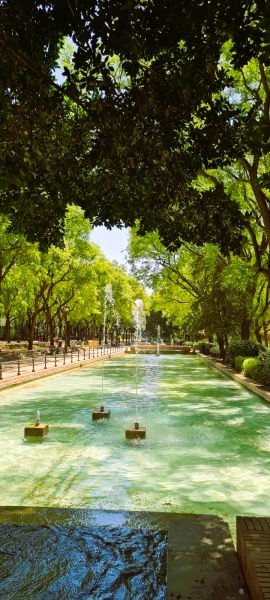
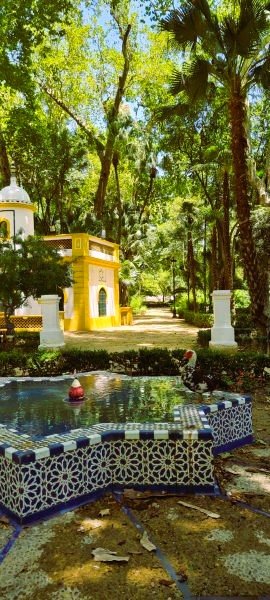
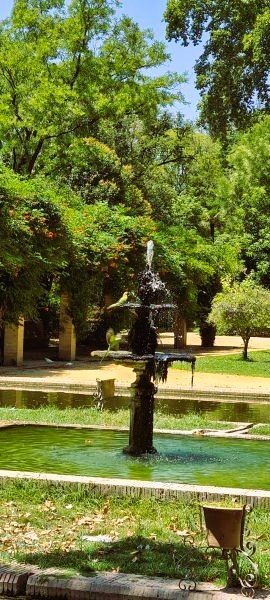
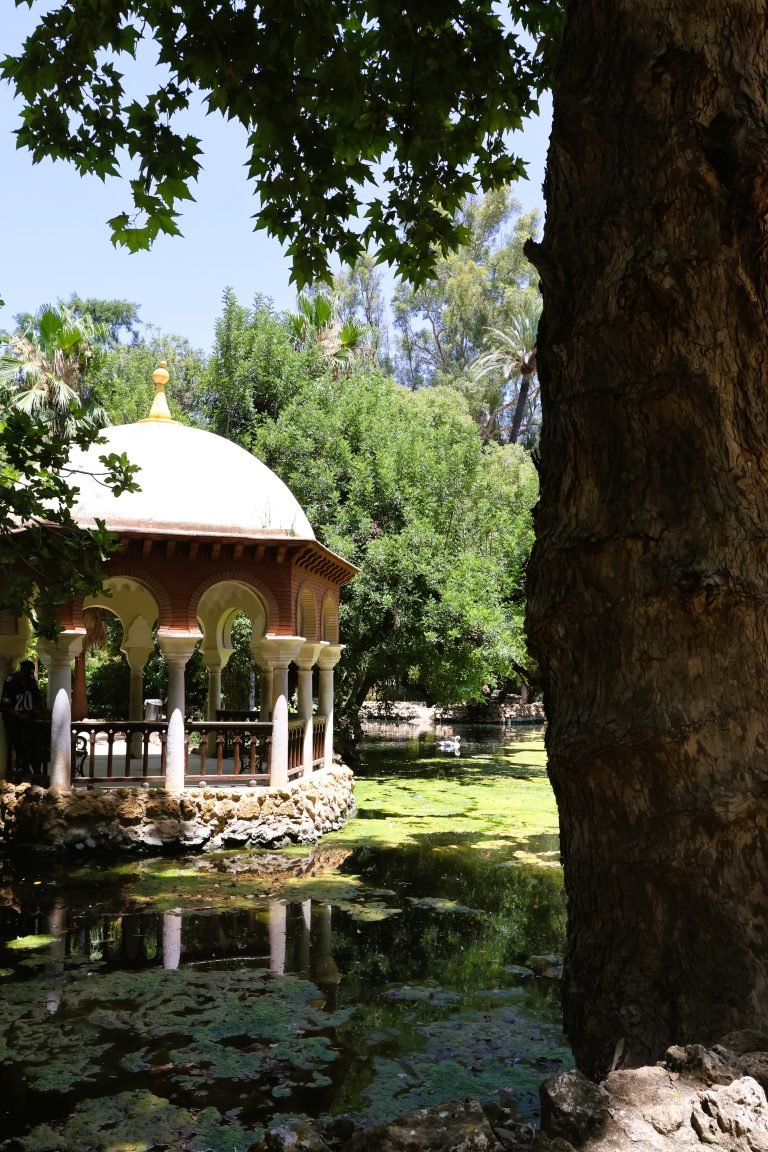
The park is immense, filled with towering trees that cast generous shade over winding paths, charming benches decorated with colorful azulejo tiles, and countless fountains that bring the space to life. Its sheer size and beauty made me curious, so I later learned that it was originally part of the gardens of the Palace of San Telmo and was donated by Duchess María Luisa for public enjoyment. With its lush greenery, vibrant flowers, and lively birdlife, María Luisa Park is a delightful oasis in the heart of Seville, a perfect spot to relax, wander, and soak in the city’s serene beauty.
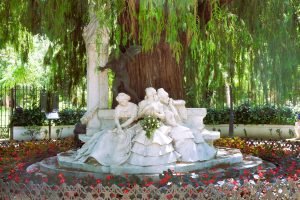
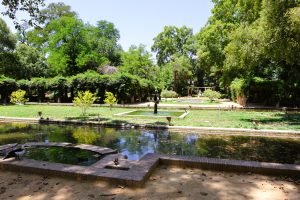
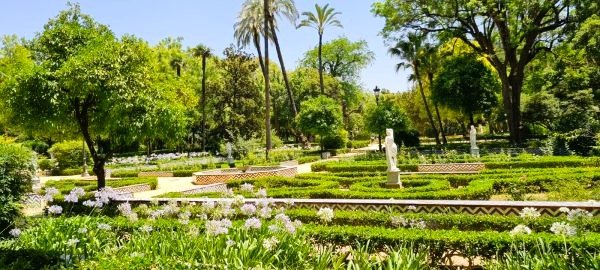
Staying in that park was such a wonderful moment for all of us. We had packed some snacks, so we enjoyed a little picnic under the shade of the big trees. There’s even a tap fountain with refreshingly cold water, and a small shop where we bought ice creams, perfect for the heat. With the gentle breeze coming from the fountain and nothing but the sound of birds and running water around us, it was the kind of peaceful place that makes you forget time. It was hard to leave. We promised ourselves we’d come back later during our stay, but Seville had so much to see that, unfortunately, we never got the chance.
Tip: When visiting Plaza de España, pack some snacks, you’ll love having a relaxing picnic in María Luisa Park right after your visit.
The Royal Alcazar
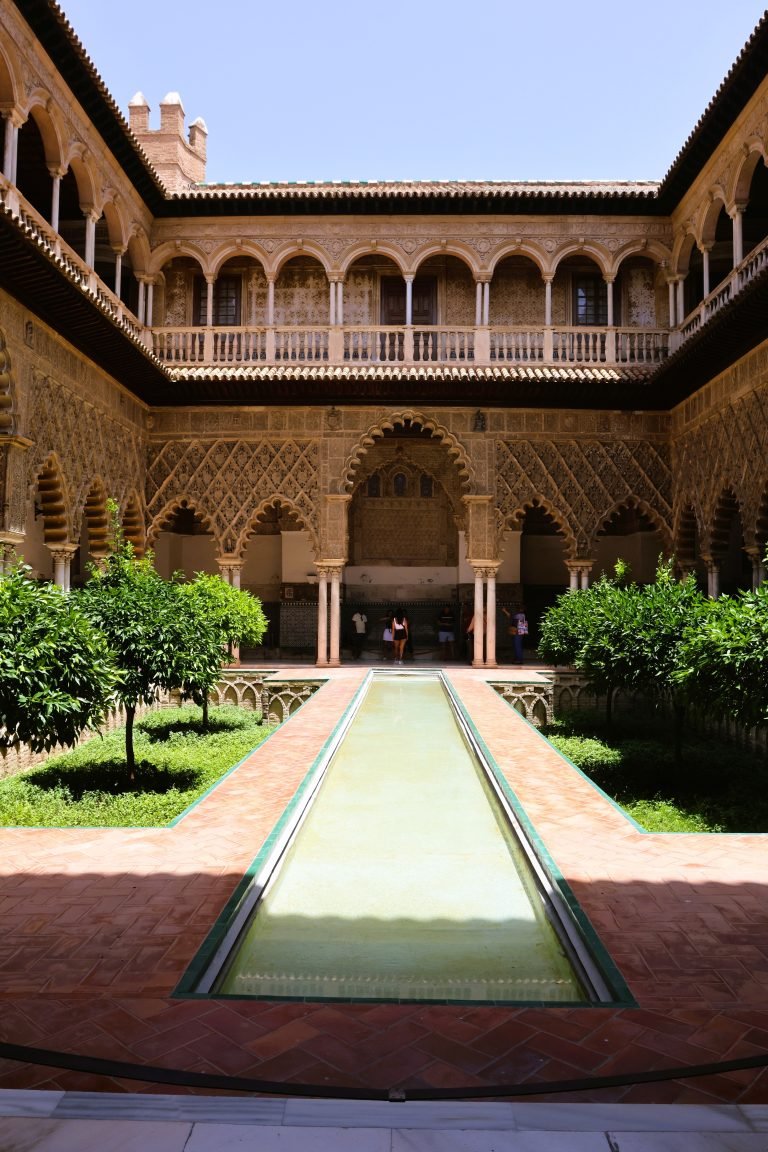
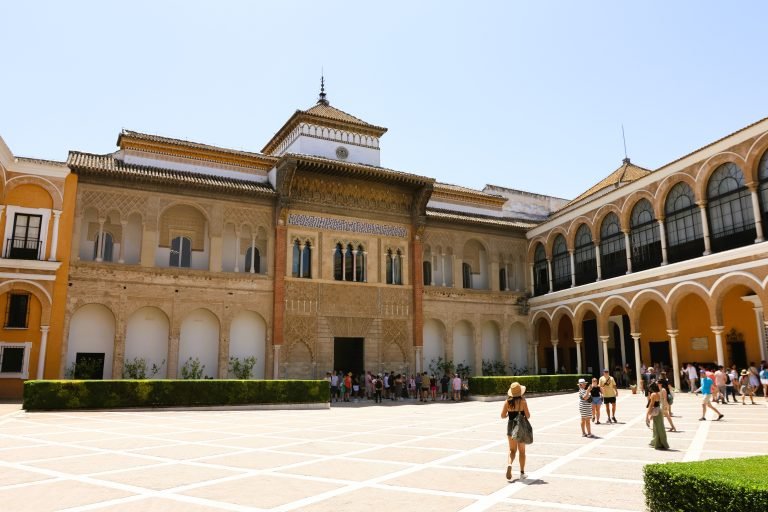
Then came the turn of the Royal Alcazar of Seville, the true gem of the city. We hesitated for a while between visiting during the day or at night. The night visit has its own magical charm with soft lighting and a mysterious ambiance, but in the end, we chose a daytime visit so we could fully enjoy the gardens, which you can’t really appreciate in the dark.
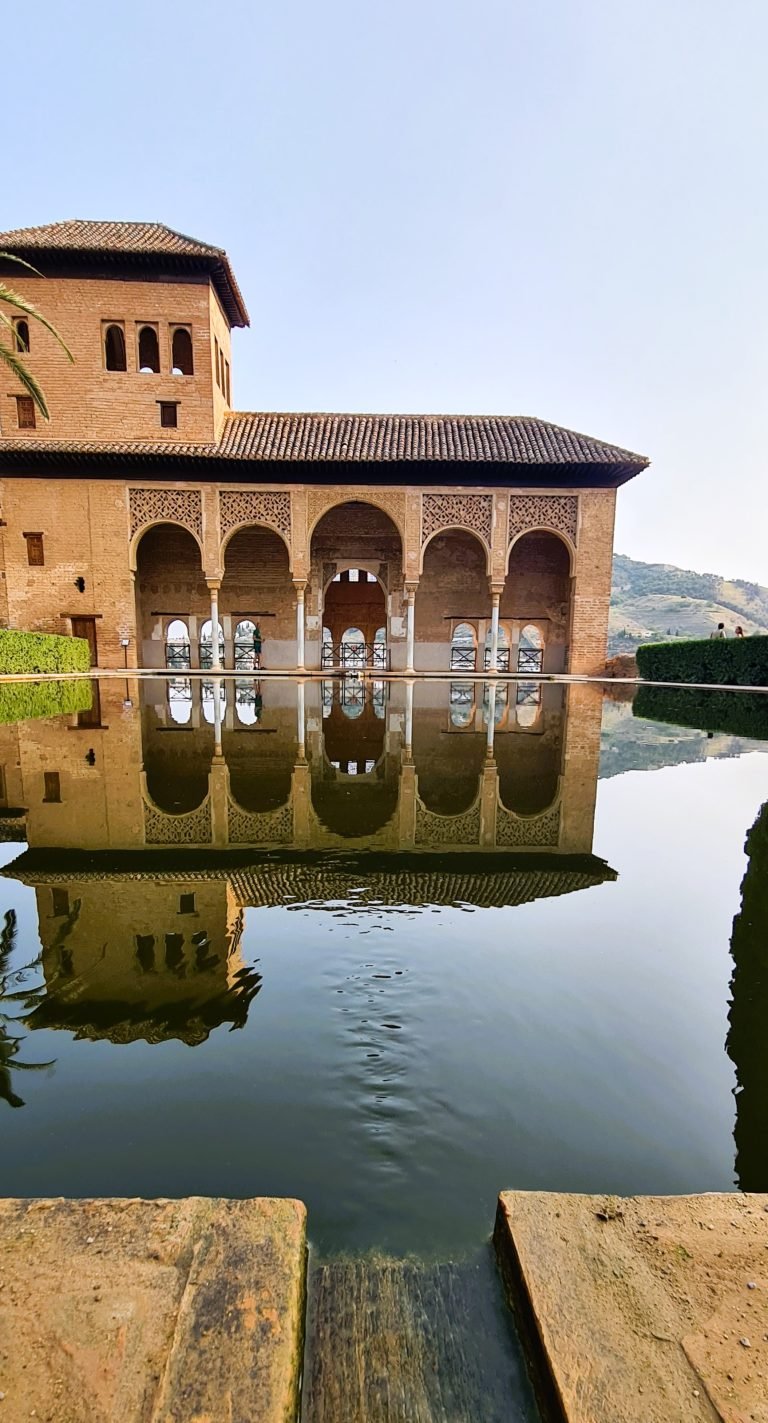
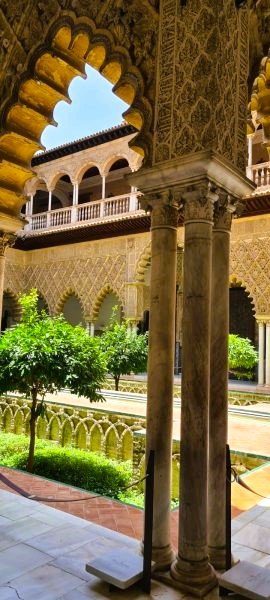
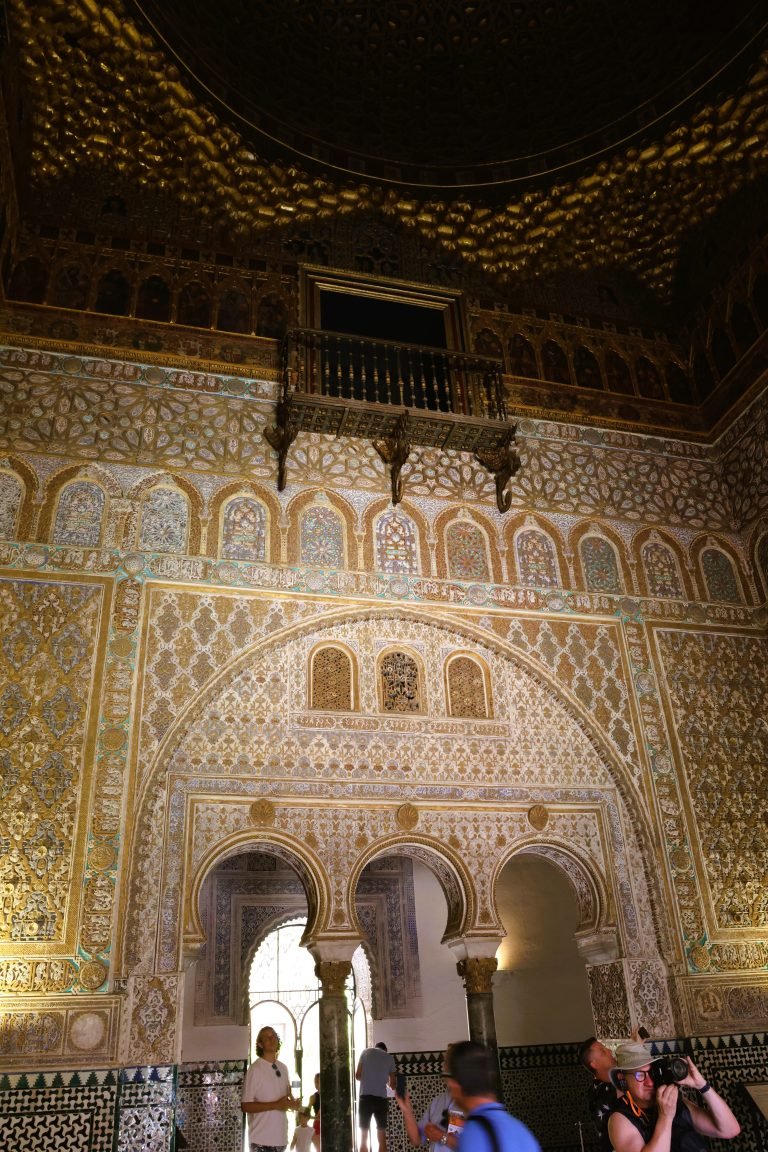
The moment we stepped into the courtyard, we instantly felt the majesty of the place. The elegant pool stretching through the center, the buildings with their beautifully arched windows, the intricate arches surrounding the entire yard, it all felt like walking straight into a living piece of art. The Royal Alcazar is simply breathtaking: the azulejo tiles shimmering with color, the delicately carved plaster, the magnificent wooden ceilings, and the endless arches that invite you from one wonder to the next. And I kept imagining what this palace must have looked like when it was alive with royalty. I honestly wish I could time-travel for one day, go back to that era, and be one of the princesses wandering through these halls.
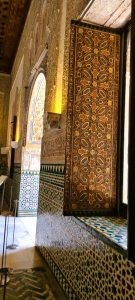
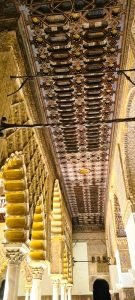
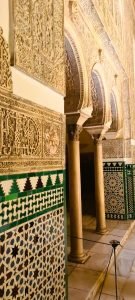
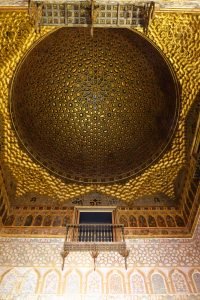
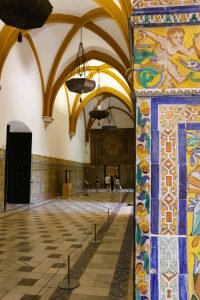
And here is the thing: the Royal Alcazar isn’t just beautiful, it’s one of the oldest palaces in Europe still in use. The Spanish royal family still stays there whenever they visit Seville. It was originally a Moorish fortress, then transformed and expanded by different rulers, which is why you can see a mix of Islamic, Gothic, Renaissance, and Baroque architecture all in one place. This layering of civilizations is exactly what makes Andalucía so special.
Just when you think you’ve finished exploring the palace, another corridor or courtyard appears, pulling you deeper into its beauty. And with the intense heat outside, every time I looked through a window and saw the gardens, it felt like they were calling me.
My favorite place ended up being the underground area from the garden side, a cool, quiet space almost like an old cellar. And there’s also the famous Baños de Doña María de Padilla, the long vaulted hall with a still pool of water, it was historically used as a rainwater cistern, but standing there feels like stepping into a secret world. No wonder the Alcázar became a filming location for Game of Thrones, representing the Water Gardens of Dorne.
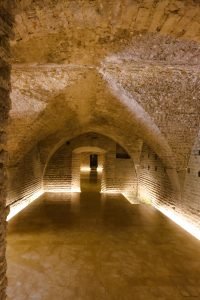
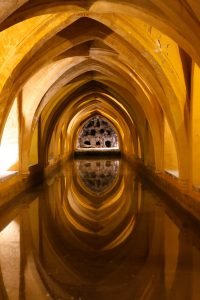
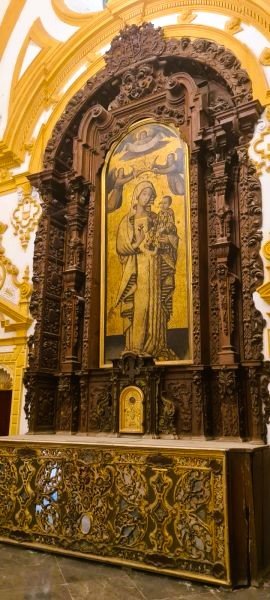
One of the most interesting things I noticed inside the Royal Alcazar of Seville is the beautiful blend of religions that coexist in the palace. As you walk through the rooms, you’ll see Arabic inscriptions and verses from the Qur’an delicately carved into the plaster and ceilings, reminders of the palace’s deep Islamic and Moorish roots. Then, as you move to the upper floors, you suddenly see Christian symbols, references to Santa María, and elements added later by the Christian kings who lived here.
This mix of Islamic art and Christian influence makes the Alcazar feel incredibly unique. It’s like walking through a place where history, culture, and beliefs were layered on top of each other with respect rather than destruction. Instead of erasing what existed before, each new ruler added their own style, creating a palace that tells a story of coexistence, creativity, and mutual influence.
For me, this religious and cultural fusion is one of the most fascinating aspects of the Alcazar. It’s a powerful reminder of how two worlds, Islam and Christianity, once lived side by side in Andalusia, leaving behind a heritage that is still admired today. The result is a masterpiece where every wall, ceiling, and arch whispers
The Gardens
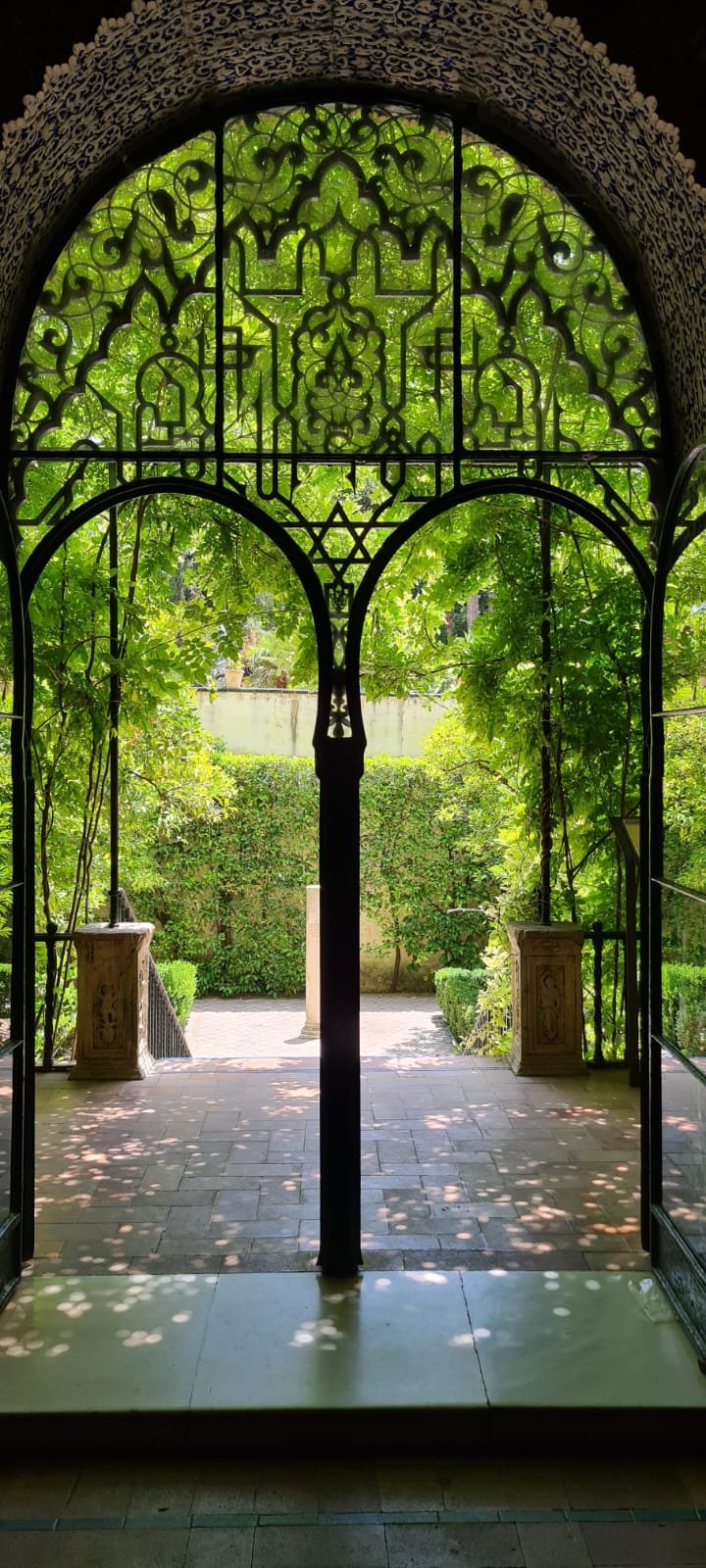
While walking through the palace, my eyes were constantly drawn to the greenery behind the windows, as if the gardens were calling me. I was so eager to step outside and discover what was waiting there, and when I finally did, I understood why the Alcazar’s gardens are considered one of its greatest treasures. What amazed me most is how every corner feels like stepping into a completely different world. One moment you’re in the romantic Jardín de la Danza, with its terraces, arches, and the soft trickle of fountains, and the next you’re surrounded by tall palm trees, orange trees, and rich greenery in the Jardines del Príncipe. The mix of aromas, roses, jasmine, orange blossom, and fresh earthy scents, gives the whole place a dreamy feeling.
As I wandered through these different spaces, I couldn’t help but imagine palace life centuries ago. In my opinion, the gardens weren’t only created for beauty, but also for comfort, privacy, and daily life. Back then, with no TV or internet, gardens were their entertainment. And imagine on a beautiful sunny day, every princess wanting to sit outside for tea, of course they wouldn’t choose the same spot. So the gardens became a world of many corners, each one offering shade, scents, fountains, and a little piece of solitude.
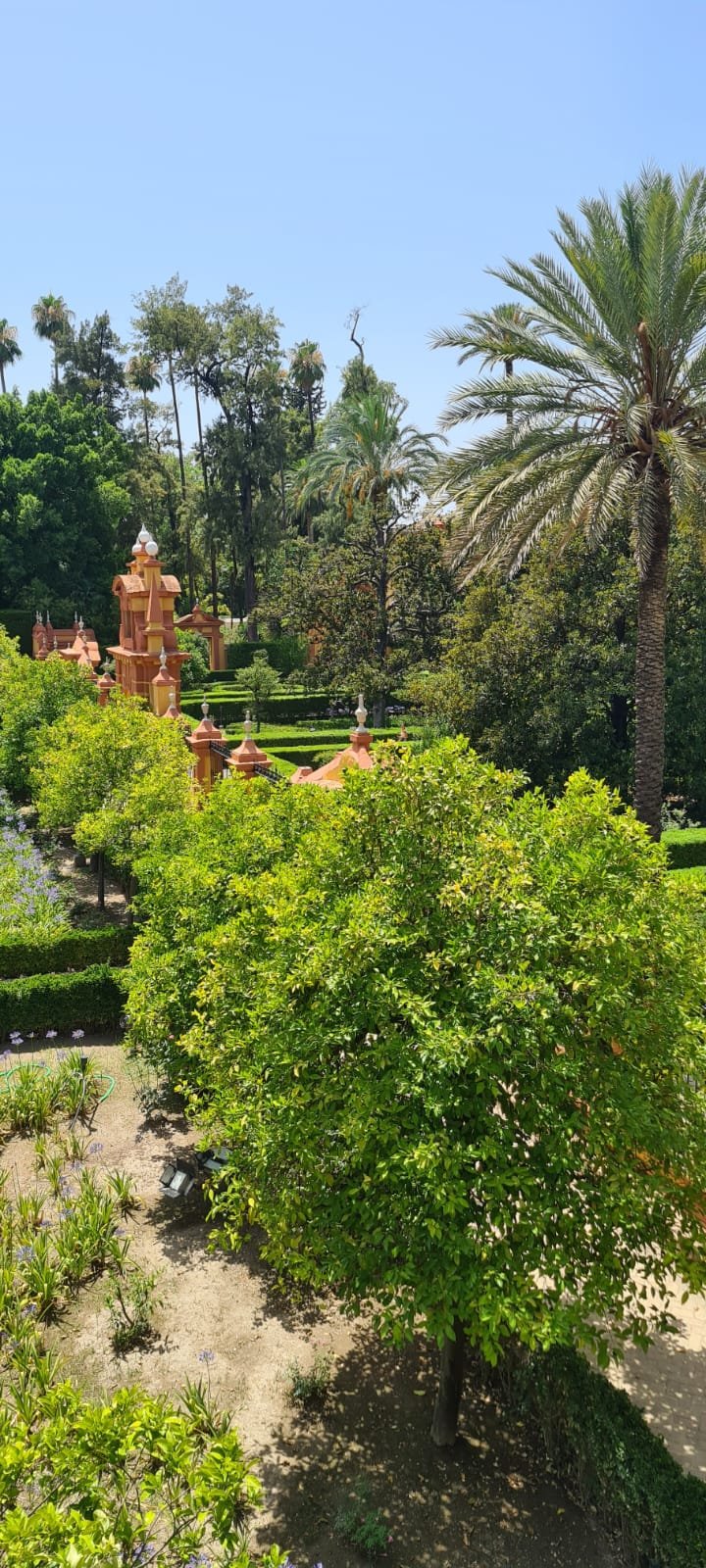
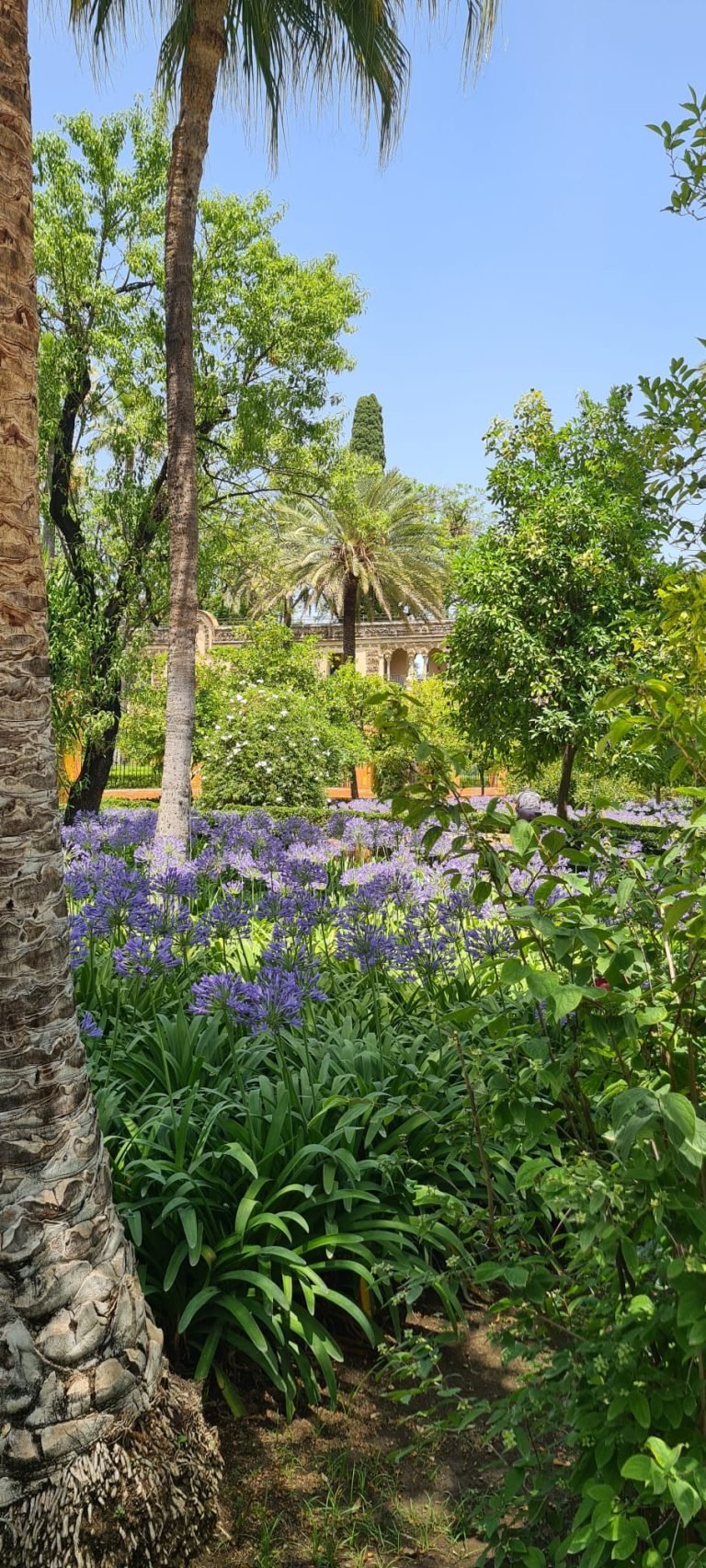
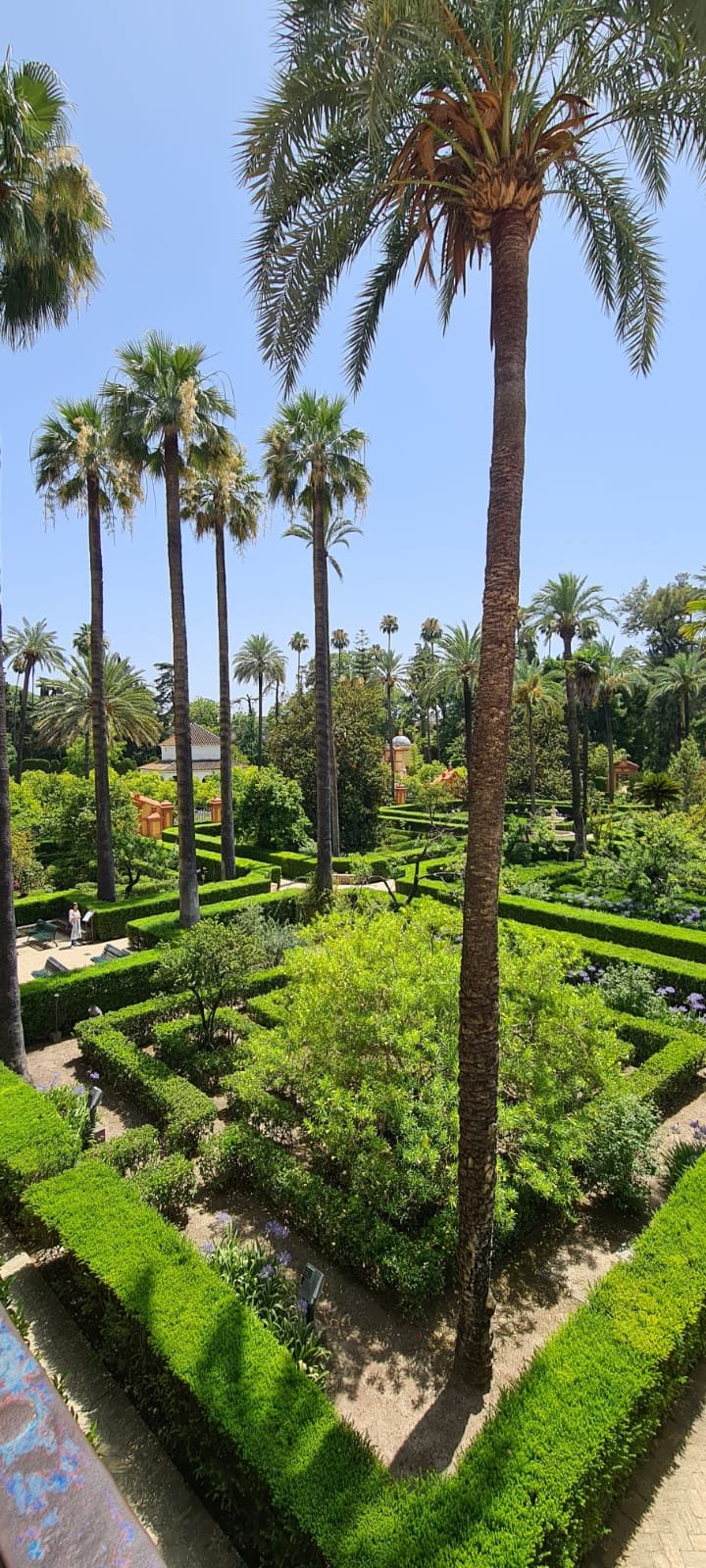
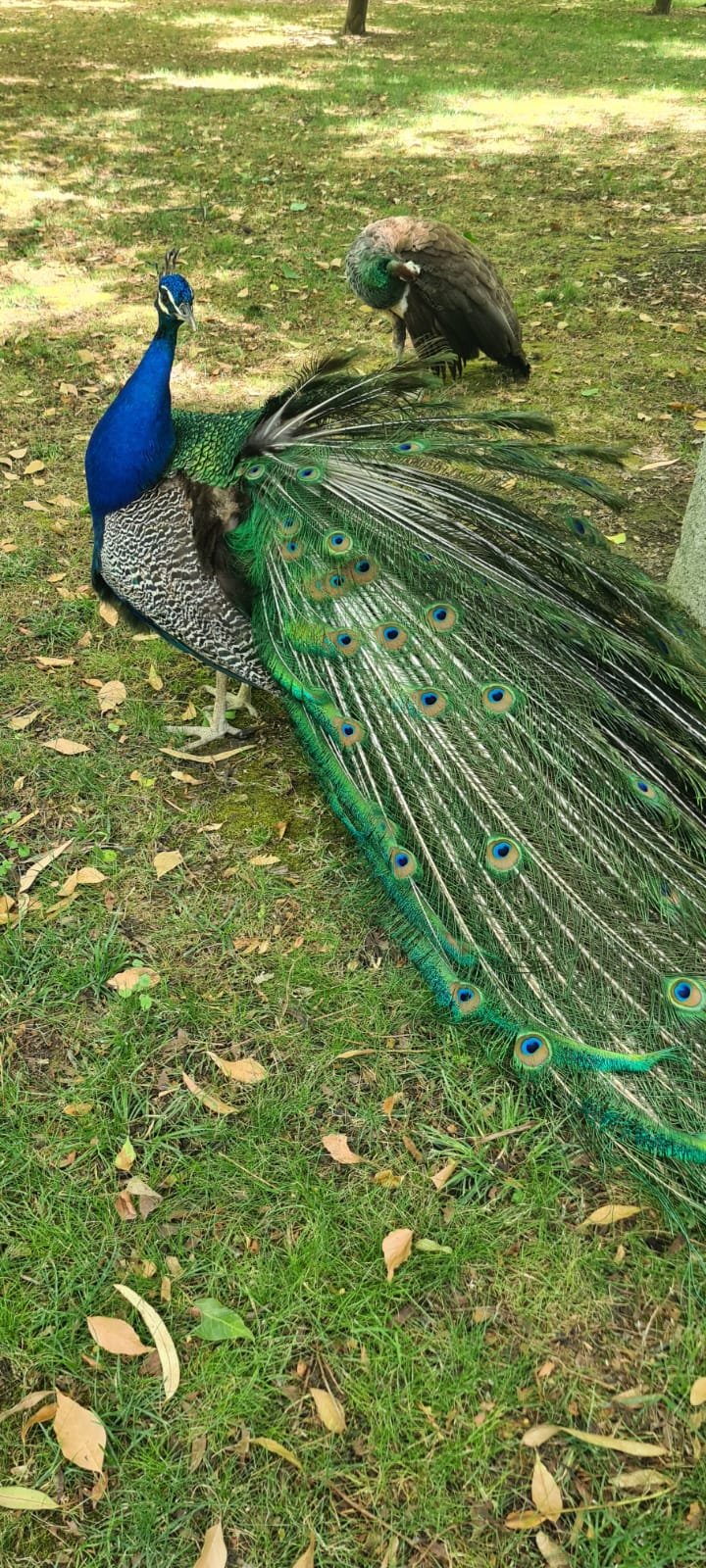
One detail I absolutely loved is the Grotto Gallery, an elevated walkway built on top of an old Almohad wall. From up there, you see the gardens from a whole different perspective: the perfect symmetry of the Renaissance designs and the more wild, natural charm of the older Moorish ones. And then there are the peacocks, wandering freely decorating the place. Their presence, along with other birds we had already seen in María Luisa Park, makes the whole experience feel like a living fairytale.
A garden that truly stood out for us is the Jardín del Laberinto, the famous maze inside the Alcazar. It’s not just a little game, it feels like a real adventure. The high hedges, the quietness, the excitement of not knowing what’s around the next corner, you hear your family laughing somewhere inside, yet you feel completely hidden. Kids love it, adults love it, it’s one of those rare moments that makes you feel playful again, no matter your age.
Tip: Wear comfortable shoes and arrive early to fully enjoy the Royal Alcazar. Take your time to explore every corner, and don’t forget to bring a bottle of water or a small snack for a little break in the gardens.
Seville Cathedral and the Giralda
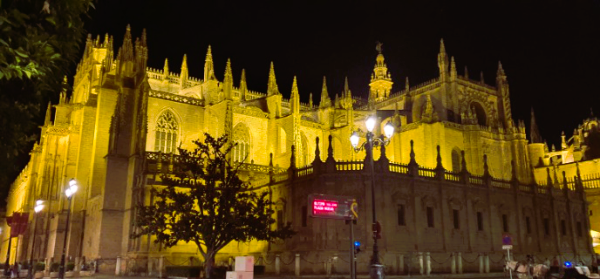
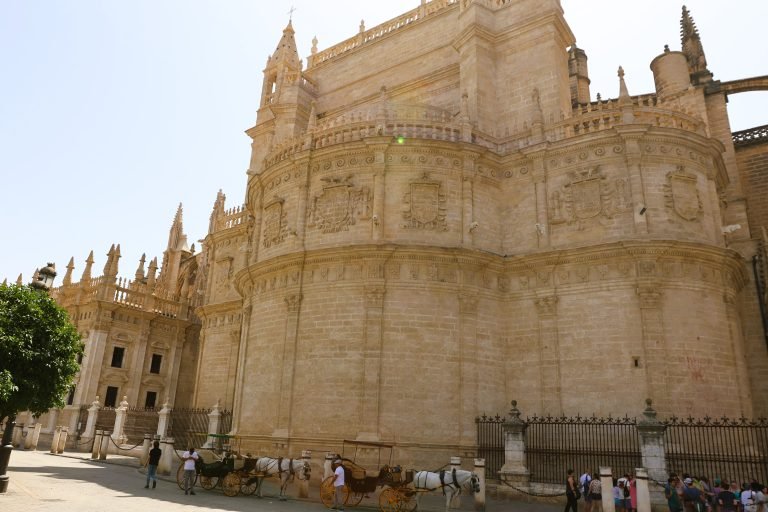
The Seville Cathedral has a truly fascinating history. It wasn’t always a cathedral — it was originally the Almohad Mosque, the spiritual heart of Islamic Seville. After King Ferdinand III conquered the city, the mosque was gradually transformed and used as the cathedral for many years. But as Seville grew wealthier and more powerful, its leaders wanted something that would reflect the city’s new status. So they made a bold decision: to build a cathedral so magnificent that, in their own words, “future generations will think we were mad to attempt it.” And honestly, they succeeded. The cathedral is not just a religious monument, it’s a declaration of Seville’s pride, ambition, and golden age.You can feel that power the moment you stand beneath it. The sheer size of the façade makes you feel tiny, almost as if you’re standing in front of a giant stone mountain carved by human hands. And when you step inside, the feeling only grows.
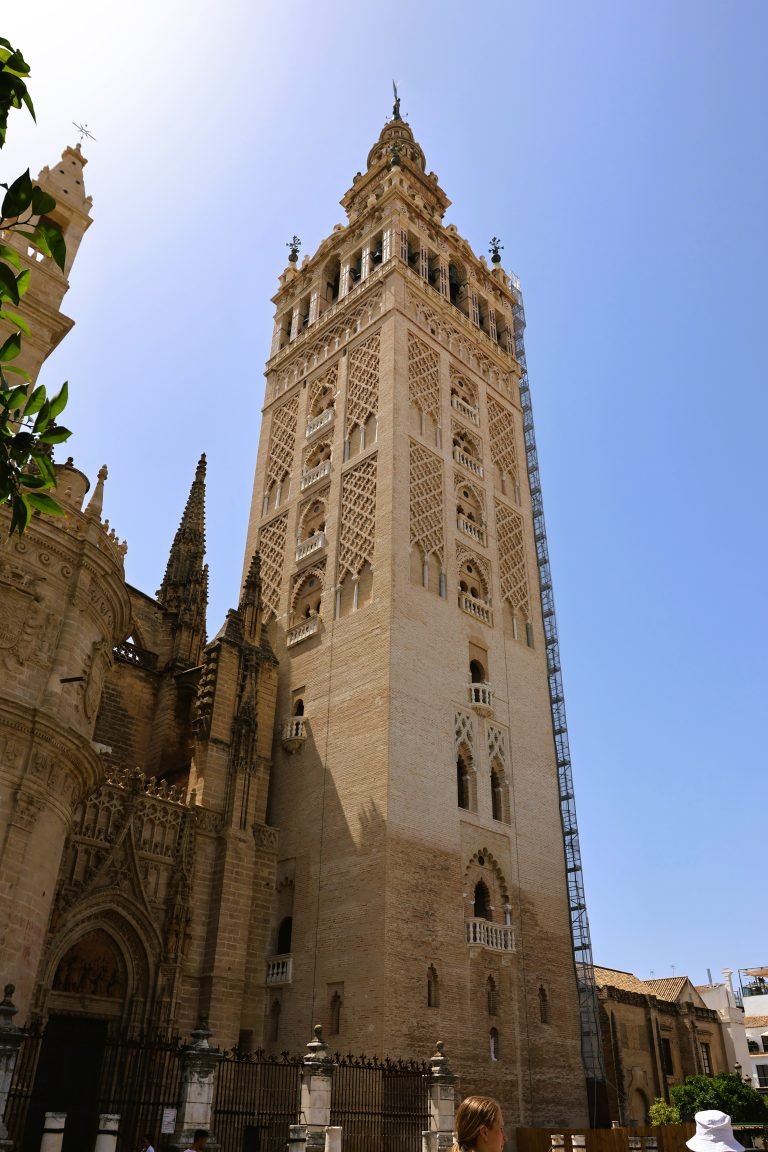
The Giralda is, without doubt, one of the most iconic symbols of Moorish architecture in all of Spain. Originally built as the minaret of the Great Mosque, it once called the faithful to prayer. Standing in front of it, you can still feel the soul of al-Andalus in its intricate brick patterns and perfect proportions. Later, when the mosque was transformed into the cathedral, a Renaissance-style extension was added to the top, the part that now holds the bells. This blend of Islamic elegance and Christian architecture makes the Giralda truly unique. Instead of feeling divided, the tower feels like a beautiful dialogue between two cultures, two moments in history, standing proudly together.
Tip: visit early or late in the day to avoid the crowds, so you enjoy your time and take photos peacfully.
Torre del Oro
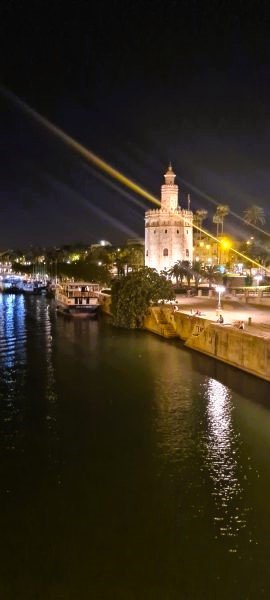
The Torre del Oro, also known as the “Tower of Gold,” owes its name to the golden reflection it once cast over the Guadalquivir River. Originally built as a military watchtower, it played a crucial role in controlling access to Seville, guarding the city from any threats arriving by water.
During the Middle Ages, this striking tower even served as a prison — hard to imagine today when you see it glowing peacefully by the river.
Now, the Torre del Oro has a much gentler life as a maritime museum, home to ancient navigational tools, ship models, old documents, engravings, and beautiful nautical maps that take you back to the age of exploration.
But what I loved the most wasn’t just the museum inside — it was its location. The tower stands proudly along the river, and whether you’re walking by, sitting beneath it for a short break, or crossing the nearby bridge, it feels like a piece of golden decoration that completes the whole riverside view. Every time we crossed the bridge, I found myself looking at it again, admiring its shape, its history, and the way it has watched over Seville for centuries.
Buhaira Palace & Gardens
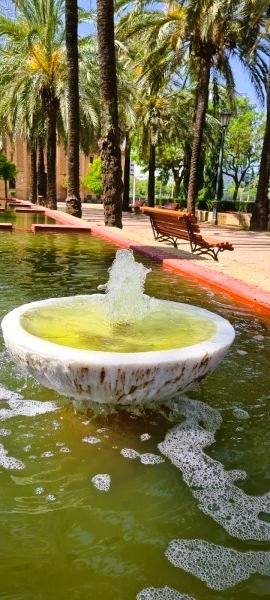
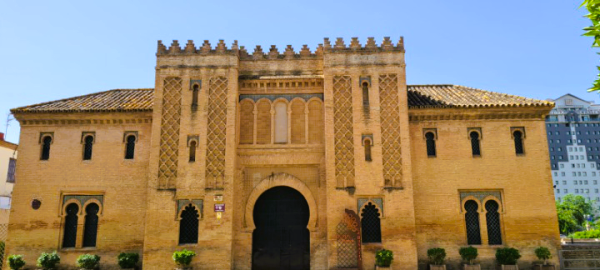
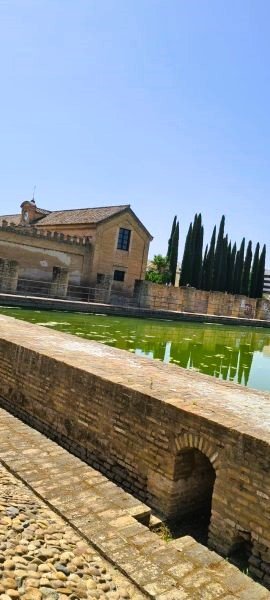
While exploring Seville, you may come across the Buhaira Palace, another historical place in Seville. The name “Buhaira” is an Arabic word “al-buhayra,” which means “the Lake” “the small sea,” referring to the large pond or small lake located in the gardens. It was initially built as a royal residence and recreational area. The gardens include lush greenery, palm trees, orange trees, and the pond. But according to historical sources, the gardens around the palace were planted with some ten thousand pear trees, apple trees, fig trees, olive trees, and other fruit trees.
Today, the Buhaira Gardens are devided on two parts by a street, and the site is sometimes used for private events and gatherings.
Tip: The place is worth seeing, but it’s not a must-visit destination because it doesn’t quite compare to the splendor of Maria Luisa Park. If you’re nearby, it makes for a pleasant stop, but I wouldn’t prioritize it over Seville’s more iconic spots.
Setas de Sevilla
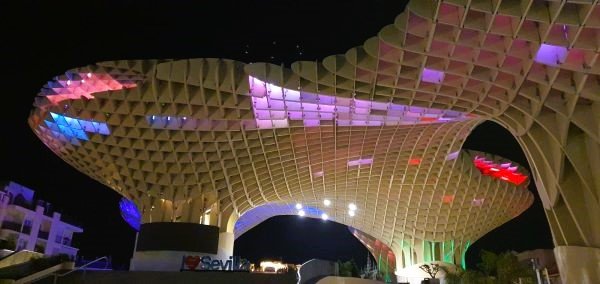
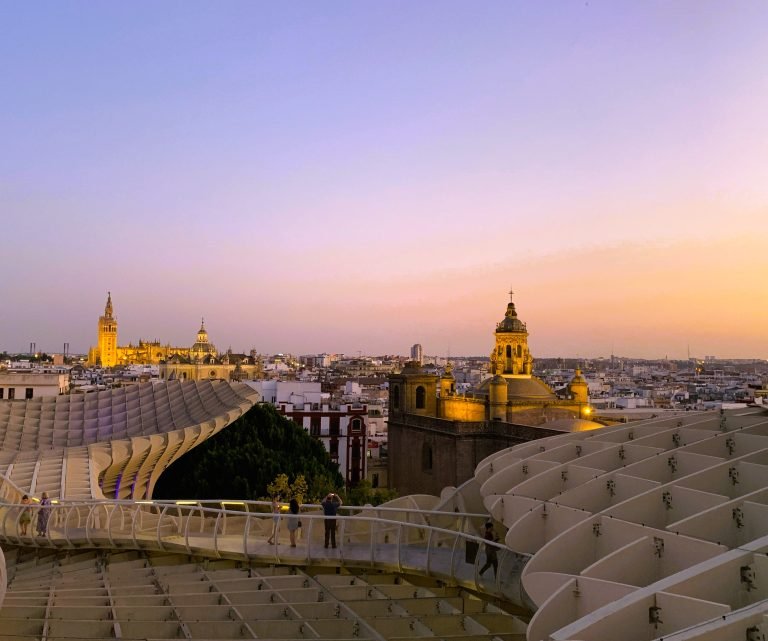
Setas de Sevilla, also known as Las Setas or Metropol Parasol, is a striking modern architectural landmark located in La Encarnación Square, in Seville’s historic district. At first glance, it might resemble a contemporary museum or shopping space, but a visit to the top reveals its true charm, a breathtaking panoramic view of the city that perfectly contrasts with the old streets below.
Tip: Visit Setas de Sevilla at sunset for truly spectacular views of the city bathed in golden light.
Plaza de Toros de la Maestranza
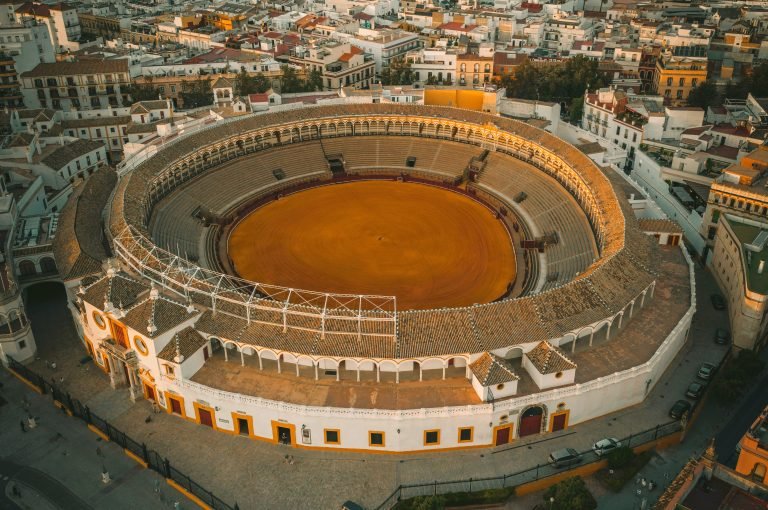
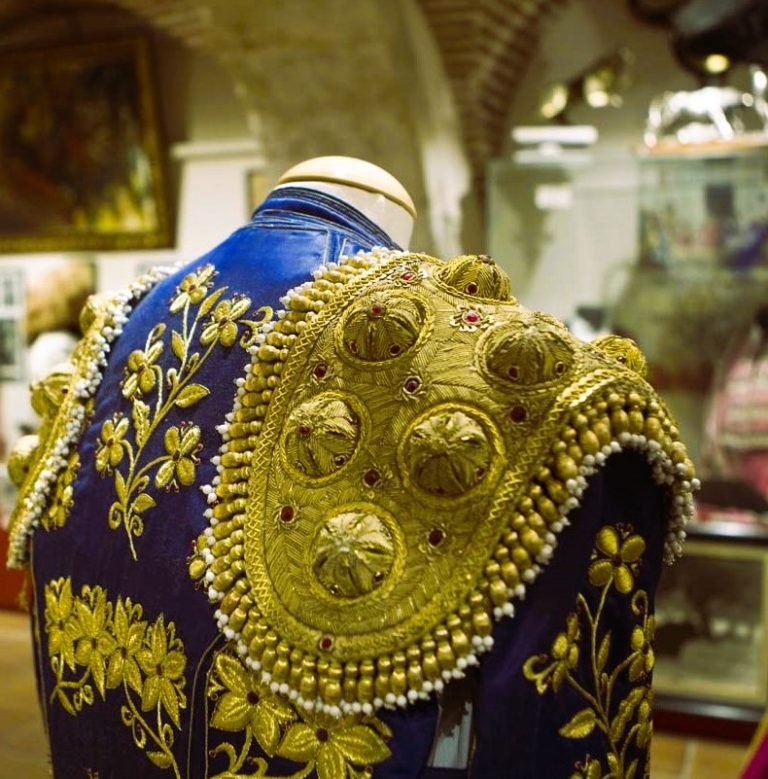
The Plaza de Toros de la Maestranza is one of Spain’s most iconic bullrings and a legendary part of Seville’s skyline. Built in the 18th century, it draws your eye with its elegant baroque architecture, beautifully painted façade, and distinctive red-and-white exterior. Inside, you’ll find a fascinating museum with a collection of traditional costumes, old bulls‑fighting gear, engravings, and cultural artifacts that tell the rich story of this Spanish tradition
Seeing the Plaza de Toros immediately took me back to my childhood, remembering the Laurel & Hardy movie The Bullfighters that I watched with my father when I was a little girl. It’s incredible how strong and vivid a child’s memory can be, connecting a place and a moment from so long ago.
Tip: Visit if you have time. Even if bullfighting isn’t your thing, the building is absolutely worth visiting for its architectural beauty and historical importance.
Tips for Seville visit
Disclosure: “This post may contain links that could result in me earning a commission from purchases you make through these links (no extra cost to you). I exclusively recommend products that I’ve personally used or that have been utilized by my family.”
- Stay in downtown Seville or a nearby area where you can explore the city without the need for a car as most of the city’s attractions are in downtown and easily accessible on foot. If you find yourself in need of transportation, you can use the bus.
- A stroller can be a practical item to have when travelling with a child, it make it easier for you to move around the city while keeping your child safe and comfortable. If you don’t have a stroller yet you can buy it from this link https://amzn.to/46a4wS3 .
- Save time by purchasing Royal Alcazar tickets in advance as it allows you to skip the long lines at the ticket counters. You can buy it online from https://www.alcazarsevilla.org/en/
- Stay hydrated is essential especially in the warm weather. Carrying a refillable water bottle is a practical and eco-friendly choice. Many parks and palaces have public fountains where you can easily refill your bottle, check this out https://amzn.to/44M3qdW I like it because you can clip it anywhere and have free hands .
- If you’re bringing a backpack to the palace, opt for a small one. Some places may request that you wear it on your front. This way, you can comfortably enjoy your visit without any obstruction or inconvenience https://amzn.to/3r60uev .
- Bringing snacks like cereal bars and fruits with you when visiting the Alcazar is a practical idea. The palace gardens offer plenty of picturesque spots where you can sit, relax, and enjoy a quick bite.
- Having a picnic at Maria Luisa Park is a fantastic idea. Bring your backpack, relax amidst the park’s stunning surroundings, and enjoy a delightful meal. If you need any additional refreshments or snacks, there’s a coffee shop or a small store nearby.https://amzn.to/3sF4K56
- Always wear a comfortable shoes and clothes .
- Consider planning your trip to Andalucía during the spring or autumn when the weather is milder, making it more pleasant to explore the attractions and outdoor spaces.
- Apply sunscreen to protect your skin from the risk of sunburn, allowing you to enjoy your time outdoors safely. Buy it now https://amzn.to/3Zr3mj7
- Exploring the same places at night such as walking by the bridge or the cathedral, offers a completely different experience. The city’s landmarks are often beautifully illuminated, creating a romantic and magical atmosphere.
- Be aware of pickpockets when visiting popular tourist destinations like Andalucia, secure your valuable, use hotel safe, use anti theft bag https://amzn.to/3PxoGzS, or https://amzn.to/44PsZLg ,keep copies of important documents like your passport and separate them from originals.
- Due to the siesta culture in Spain many stores and businesses tend to close between 12 pm and 4 pm. Additionally, stores in Europe may close early in the evening, so it is good to do your shopping early in the day.
- Consider a road trip to Cordoba, it is definitely worth visiting. You can travel by train or by car. If you decide to rent a car you can use https://www.rentalcars.com/ . if you’ve booked your accommodation through Booking.com, you may be eligible for a 10% discount on car rentals, I do not recommend Expedia in car rentals, we had a problem with them twice. Click here for more driving tips.
- If your planning to rent a car, check with the accommodation for a parking before booking, even if they mention “parking available” in their ads, it’s best to verify whether it’s free or if there are any additional charges.
- Checking for air conditioning (AC) in your accommodations when traveling to Spain during the summer is indeed a wise move. Spain can experience scorching temperatures in the summer, especially in regions like Andalusia and the interior parts of the country.
- If you need a SIM card for your mobile phone when traveling to Spain, you can consider purchasing one from LycaMobile or Vodafone, among other options. Both are well-known mobile network providers in Spain, and they offer a variety of prepaid SIM card plans that cater to different needs, including data, talk time, and text messaging.
Related Articles