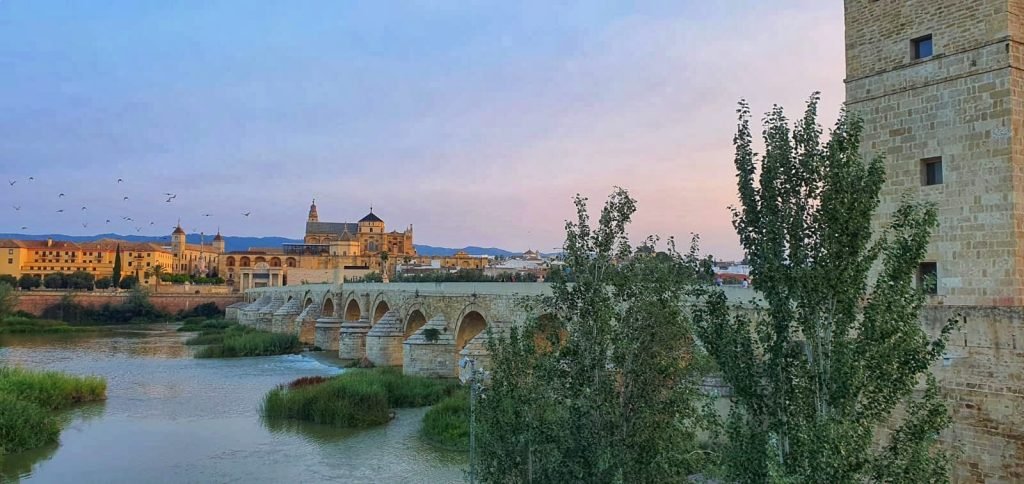
After our amazing visit to Seville, it was time to explore another gem in Andalucía, Córdoba, one of the most important cities during the Islamic Golden Age. Because during the 10th century, Córdoba was the capital of Al-Andalus and one of the largest, richest, and most advanced cities in Europe. It was a center of science, philosophy, medicine, architecture, and culture. Scholars from around the world came to study in its libraries and universities, and its streets were known for their beauty, knowledge, and tolerance.
Today, the city still carries the charm of a place shaped by many cultures, Roman, Muslim, Jewish, and Christian, which is exactly why we chose to stay in the old town: to fully enjoy its atmosphere and feel the true soul of Córdoba.
By the time we arrived, it was siesta time, and you might not believe me if I tell you it felt like a ghost city. Not a single movement outside. As we drove toward our accommodation, both sides of the street were fully parked with cars, yet not a single person in sight. The scene was exactly what you would expect at 2 a.m. only it was 2 p.m.
We drove from Seville to Córdoba, a pleasant ride of around 1 hour and 30 minutes. We stayed for two nights, giving us a day and a half to explore the city comfortably.
Tip: Córdoba is a historical gem that is definitely worth a visit when you are in Andalucía. Whether you are in Seville or Granada, consider taking a road trip to explore this city, even if you have just one day, it’s a journey well worth it.
Cordoba At Night
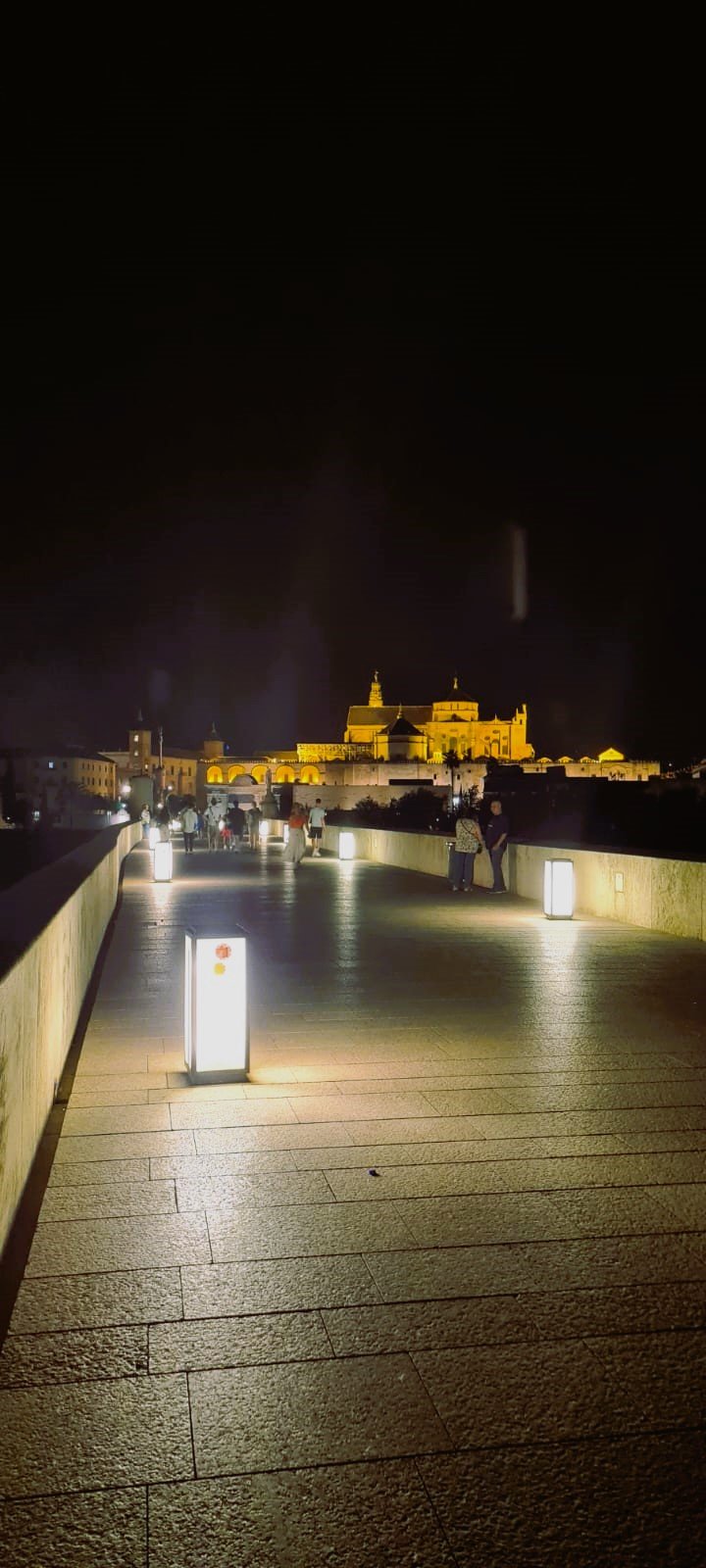
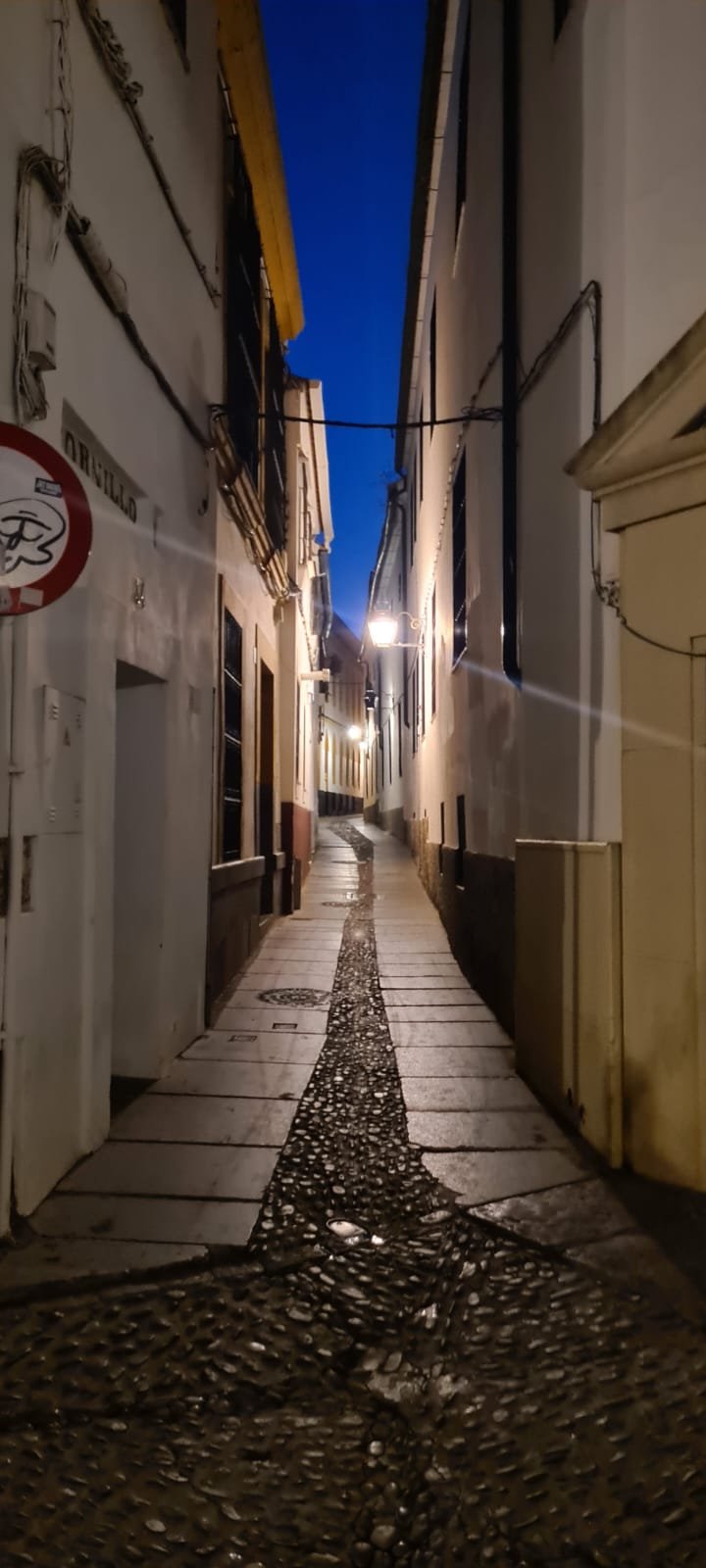
After the weather cooled down, we were excited to go out and finally discover the city. We wandered through the old town at night, walking trough the narrow streets, and the courtyards were suddenly full of people, after the long siesta silence, it felt as if Córdoba had finally awakened. We passed by the Mezquita-Cathedral, the magnificent gem we planned to visit the next morning, glowing softly under the night lights.
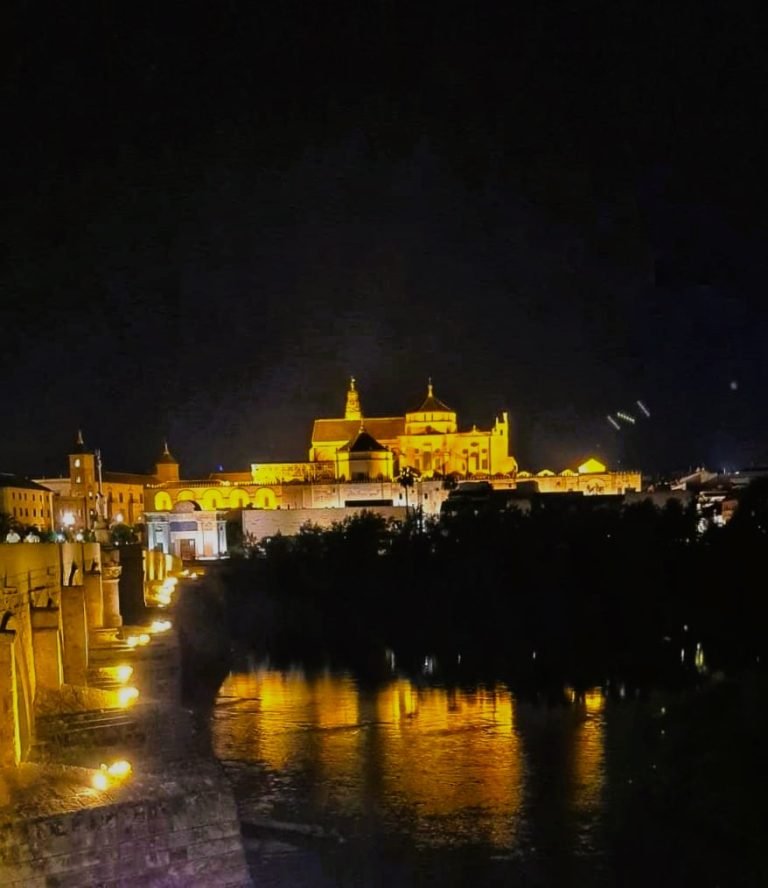
Our walk led us to the Roman Bridge, where warm lights adorned the entire structure. Their reflection shimmered on the river, creating a scene that felt almost unreal. Crossing to the other side, we stood there watching the old town glowing in those gentle lights, breathtaking from that angle, like a painting come to life.
What made the moment even more special was the soft music drifting through the air, a live Andalusian guitar performance. It felt so special, helping us truly experience the soul of Córdoba. We continued wandering by the riverside, bought ice cream, and enjoyed a peaceful evening in this quiet, enchanting city.
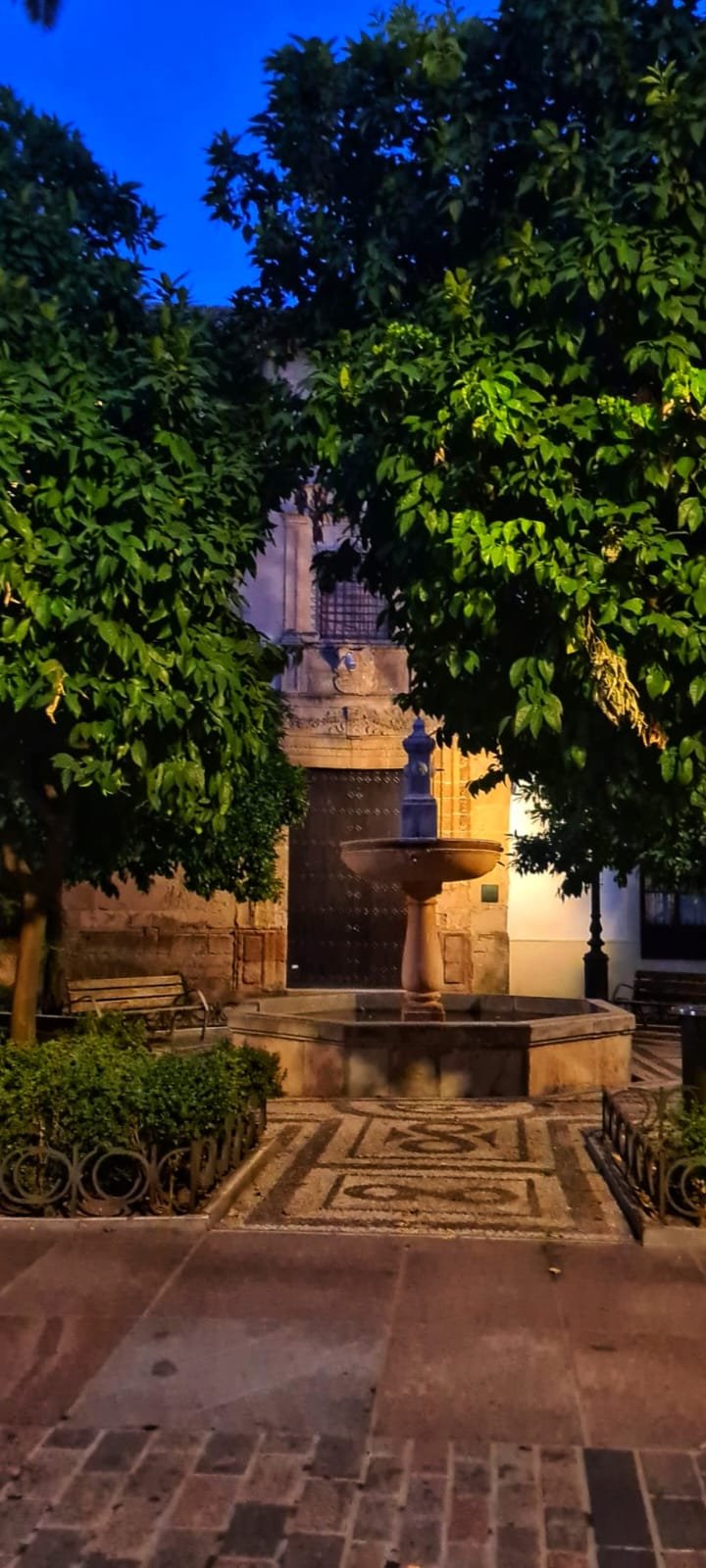
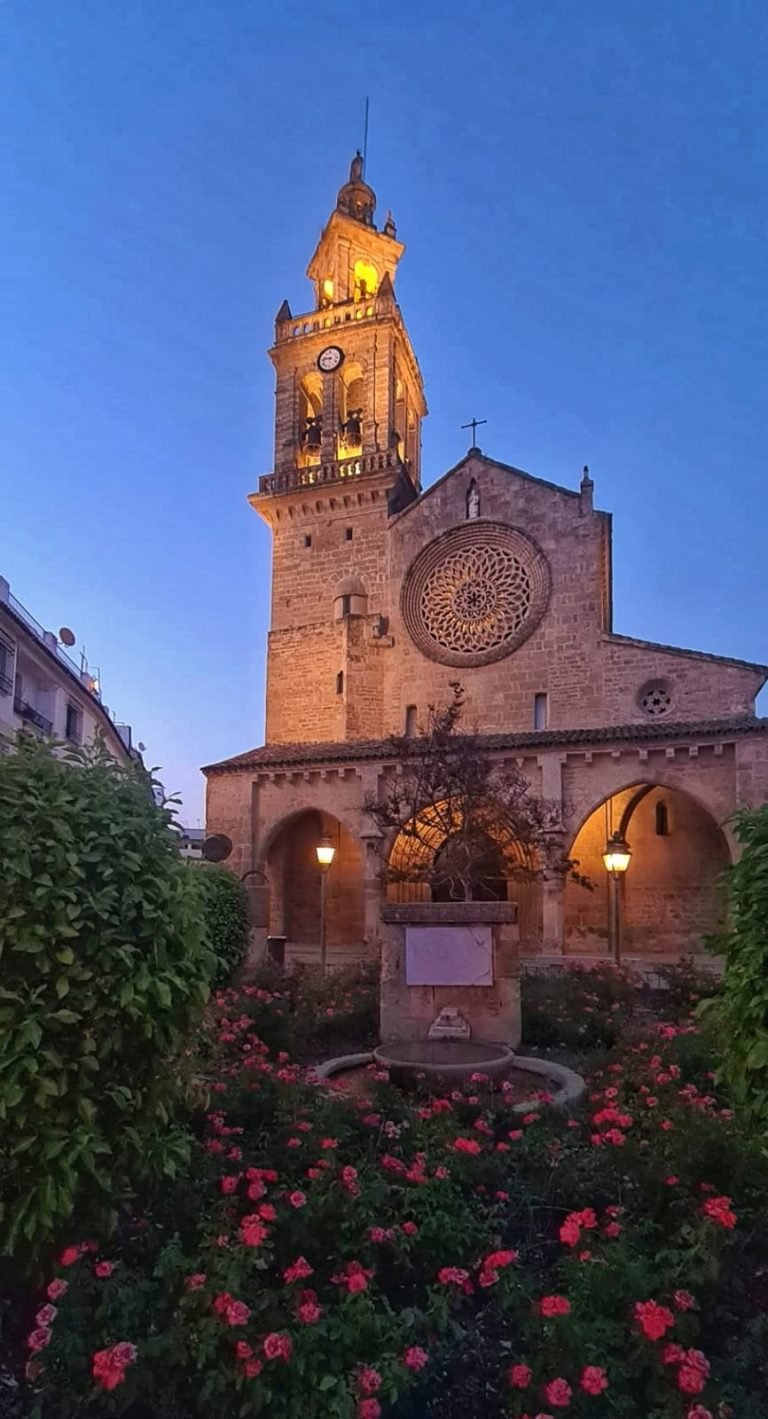
Iglesia de San Lorenzo
If you love discovering places that feel authentic and quietly beautiful, then the Church of San Lorenzo is one of those spots you shouldn’t miss. It’s one of Córdoba’s twelve Fernandine churches, built after the Christian conquest in the 13th century. The moment you see it, you’ll notice its striking rose window and the tall square tower that looks a bit like a minaret, because it was actually built on top of an old mosque. What I really enjoyed was the quietness around it, no rush, no crowds, just a charming neighborhood and a church that tells the story of Córdoba through layers of history.
The Mezquita Cathedral
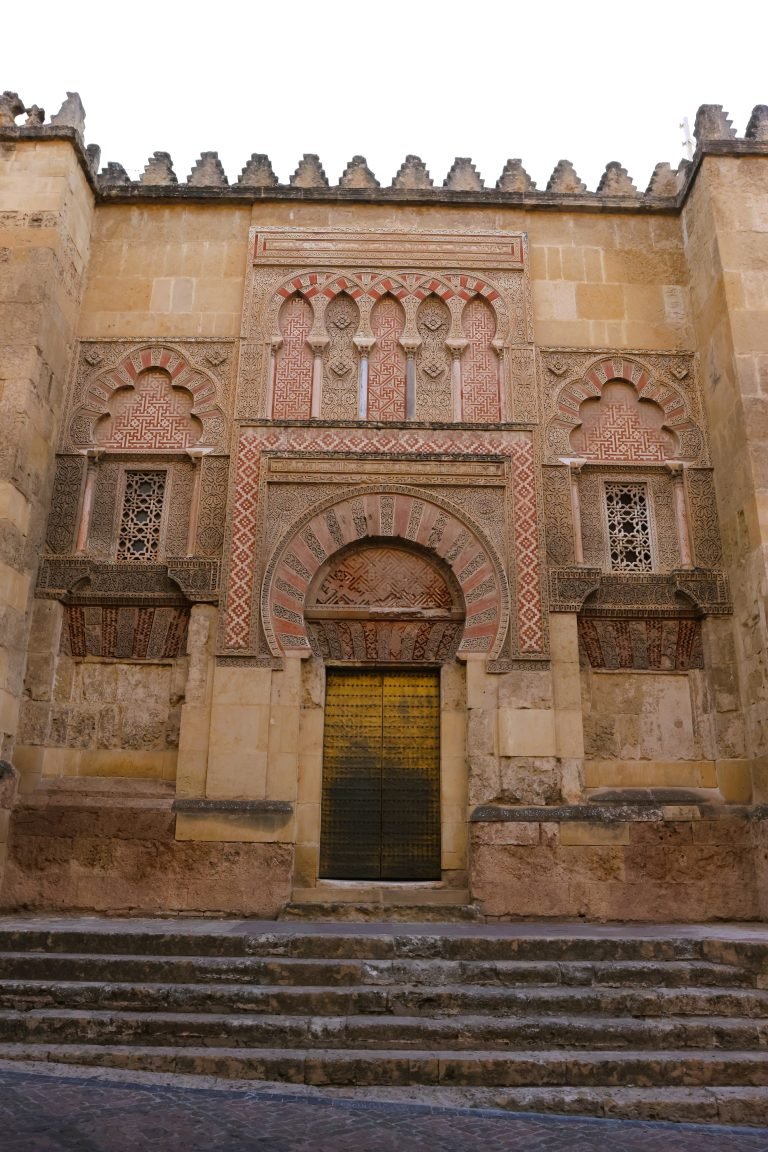
Are you excited to go through that door? Because I am! The Mezquita-Cathedral was our reason for visiting Córdoba, and seeing its gates at dusk felt like waiting for a secret to be revealed the next morning.
You’ll be surprised that the Mezquita-Cathedral actually has 19 different gates.
Some of the most important are:
Puerta de los Deanes: a very historic entrance
- Puerta de Santa Catalina: on the east side, near a former convent
- Puerta de San Ildefonso: part of the expansion from Al-Hakén II’s era.
Each gate is more than just an entrance. They give you little hints about the architectural styles, the layers of history, and how this building evolved over centuries.
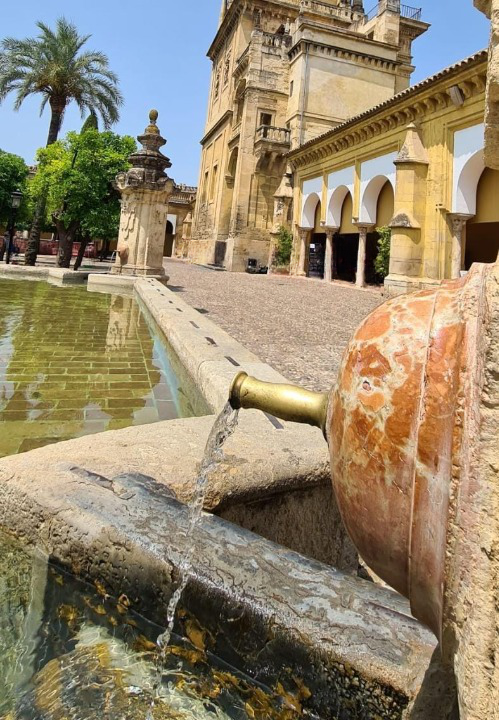
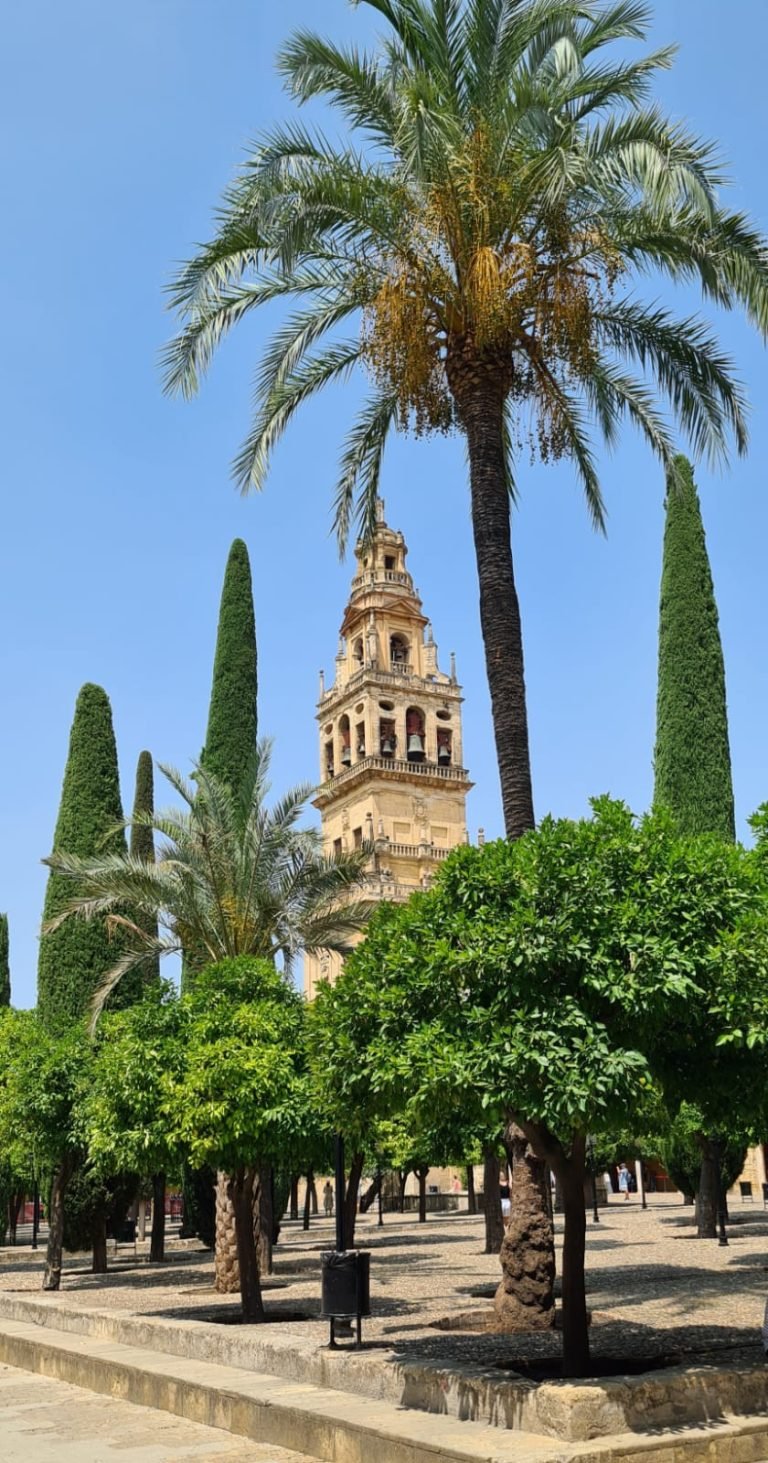
Our day began with a visit to Córdoba’s most iconic landmark, the Mezquita-Cathedral. Even before stepping inside, the exterior captivated us the massive walls, the ancient gates, and the beautifully crafted windows all hinted at the grandeur within.
Once we entered, we found ourselves in a serene courtyard filled with life. Orange trees, olive trees, and tall palms surrounded us, and the large fountain in the center adorned the space with its cold, refreshing water. The tower rising above it, the gates enclosing it, everything looked perfect and inviting. It felt like the ideal introduction to the beauty and history waiting inside.
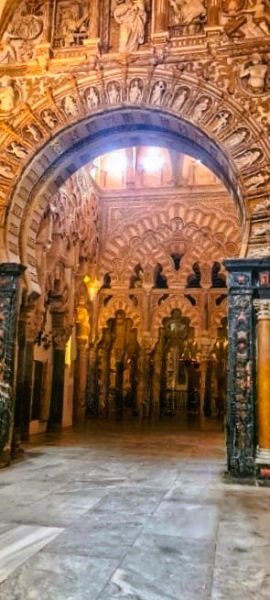
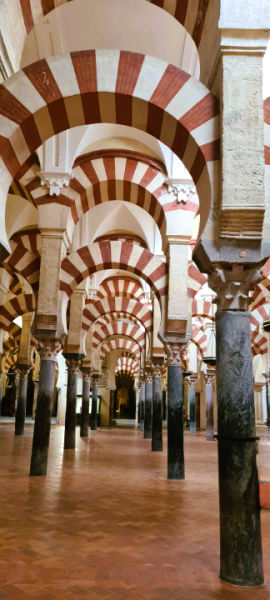
Then we took our first step into the Mezquita-Cathedral, and suddenly we were transported to another time, a time when tolerance shaped the very walls of this sacred place. The atmosphere was so solemn and serene that I instantly felt at peace. It was a scene almost impossible to comprehend: endless rows of arches stretching into the distance, quiet chapels tucked between columns, the golden Mihrab glowing softly, and the soaring cruciform nave rising in contrast.
A mosque and a cathedral coexisting under one roof, two religions intertwined in a single sacred space. A breathtaking marriage of cultures, architecture, and history.
The Mezquita is one of the largest religious buildings in the world, a reflection of Córdoba’s prominence as a major center of learning, culture, and religion during the Islamic Golden Age. It was not just a place of worship; it also served as a hub of intellectual and cultural activity, where scholars, artists, and thinkers gathered, leaving a legacy that still resonates today.
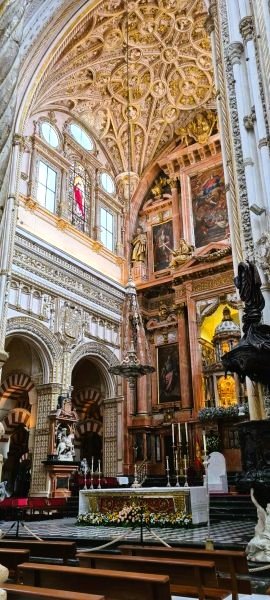
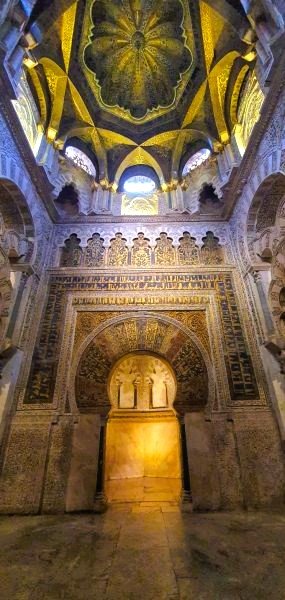
As I walked deeper inside, the first thing that captured my eyes was the forest of arches, endless rows of red-and-white stripes rising above more than 850 columns, creating a sense of depth and perfect symmetry. The light was soft, filtered in a way that made the whole space feel mysterious and alive at the same time. I could sense the centuries layered around me, the whisper of prayers, the echo of footsteps, the silence that carried a thousand stories.
Then I turned a corner and suddenly found myself standing in the cathedral’s nave, bright, soaring, and in complete contrast to the dim, intimate feel of the mosque. It was as if two worlds met right in front of my eyes, yet somehow they blended beautifully. Every detail, from the carved ceilings to the intricate Mihrab, told a tale of faith, power, and transformation.
Inside the Mezquita-Cathedral, history didn’t just sit behind stones, I actually felt it.
And that feeling stayed with me long after I left, returning every time I looked at the photos, just as I feel it now.
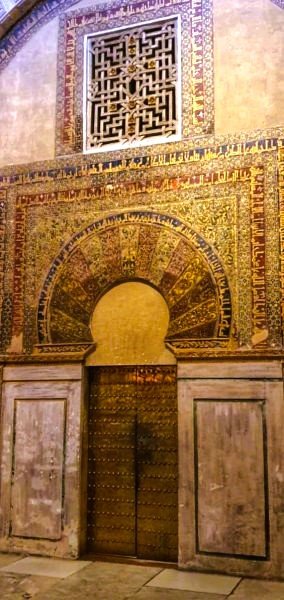
The Bell Tower
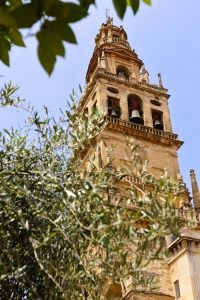
the Bell Tower or Torre Campanario, was originally built on the site of the mosque’s minaret. After the Christian conquest, the minaret was transformed into a bell tower, blending Islamic and Christian architectural elements. The tower is not only a functional part of the cathedral; it has become a symbol of Córdoba itself, visible from across the city and representing centuries of faith, history, and architectural mastery. Climbing the tower (or viewing it from the courtyard) offers panoramic views of Córdoba, the old town, the winding streets of the Jewish Quarter, and the river.
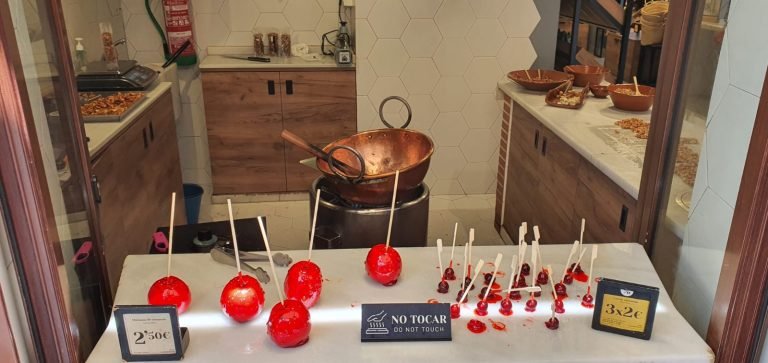
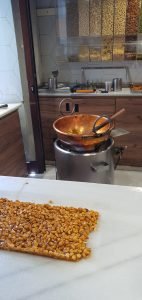
After exploring the Mezquita-Cathedral, we followed the enticing scent of caramel to a charming sweet shop, where traditional nut-infused candies were crafted right before our eyes. With our sweet cravings happily satisfied, we continued wandering through Córdoba’s narrow, winding streets, popping into quaint souvenir shops along the way. Before long, we stumbled upon the Roman Bridge, the Puerta del Puente (Bridge Gate), the Calahorra Tower, and other captivating landmarks that give Córdoba its unique historical charm. Every corner seemed to tell a story, making our stroll a perfect blend of history, culture, and local life.

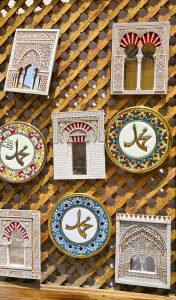
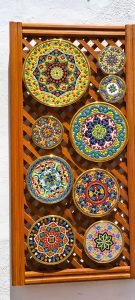
Many attractions are conveniently close to each other, making it easy to move around. But due to Cordoba’s intense heat we realized the importance of taking a break to recharge before continuing our evening adventure and we decided to narrow down our list of places to visit.
I have attached the Google map of the 12 things to do in Cordoba; you can also get it from the tourist information center located near The Bridge Gate https://www.google.com/maps/d/u/0/viewer?mid=1LwGUhhYlVU9ISoWn7f67XGQPNVEC8vIQ&hl=en&ll=37.87593214389433%2C-4.7910472875342&z=14
The Roman Gate & Roman Temple
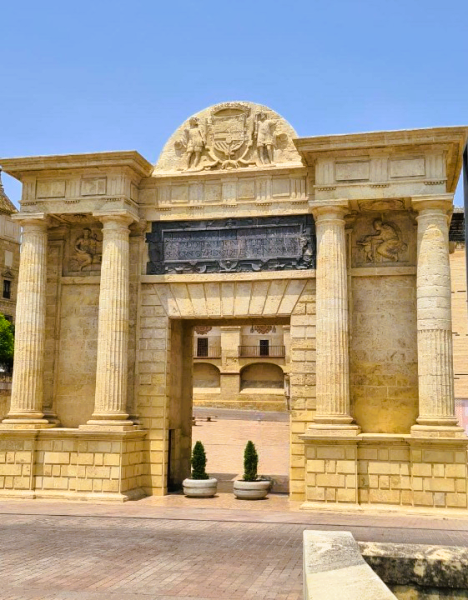
Walking toward the Roman Bridge, we passed through the Puerta del Puente, a stunning Renaissance gate that immediately caught our eyes with its elegant arches and intricate stonework. Built in the 16th century, it once served as a symbolic entrance to the city, connecting Córdoba to the river and beyond. Standing there, framed by the gate, we admired the view of the Guadalquivir River and the old town.
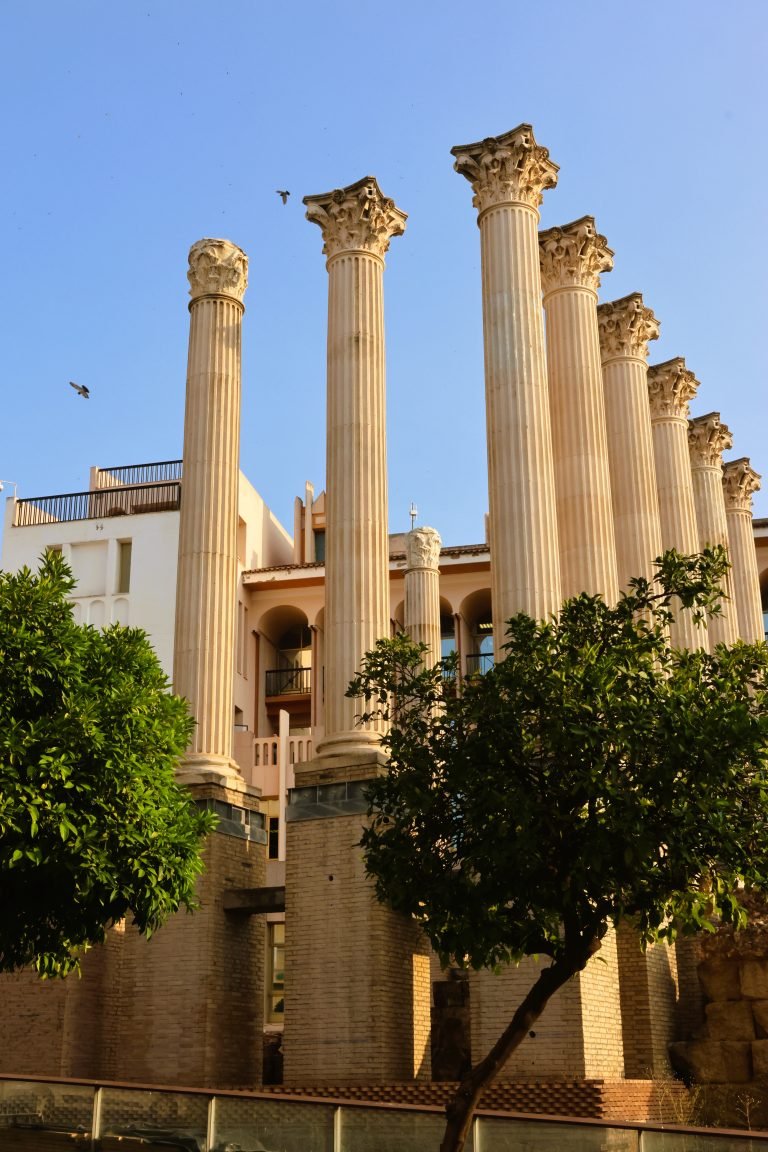
we also came across the Roman Temple, one of those places that makes you stop for a moment and imagine the city in ancient times. The temple was discovered in the 1950s during construction work, and what you see today are the restored remains of a grand structure from the 1st century AD, built during the reign of Emperor Claudius.
It once stood as an impressive symbol of Roman power, with massive Corinthian columns, a raised platform, and a layout typical of imperial temples. Even though only part of it survives today, the columns rising above the modern street give you a glimpse of what Córdoba must have looked like when it was an important Roman city. It’s a quick stop, but a powerful reminder of how many civilizations shaped Córdoba long before it became the jewel of Al-Andalus.
Roman Bridge & Calahorra Tower
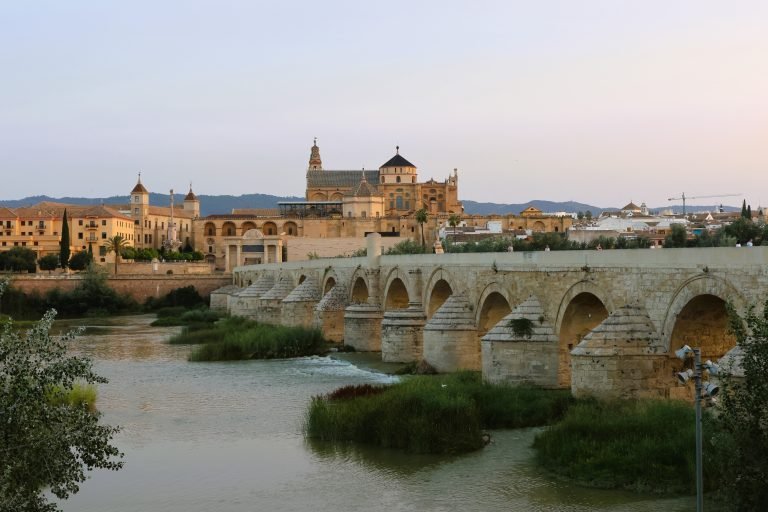
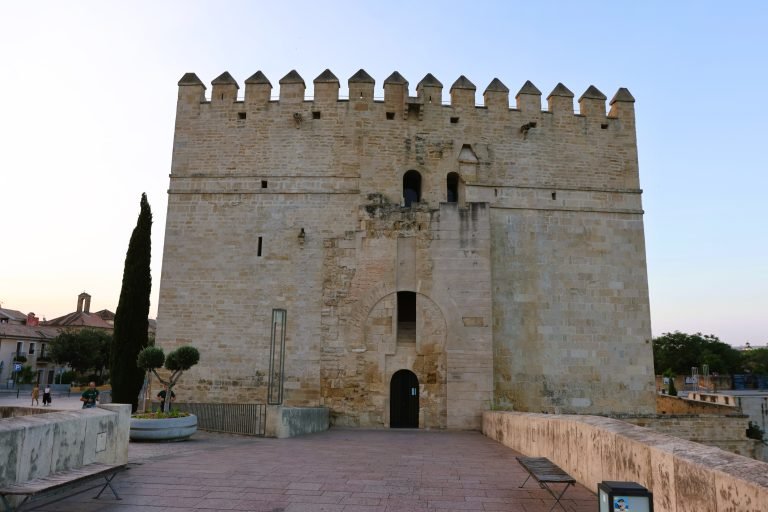
We continued our walk and reached the Roman Bridge, an impressive structure stretching across the Guadalquivir River. Walking on it, you feel the history beneath your feet, centuries of people have crossed this same bridge. At the southern end stands the Calahorra Tower, once built for defense, now a museum celebrating Córdoba’s multicultural past. From the bridge, the view of the old town is amazing: the Mezquita-Cathedral, the river, and the surrounding streets all come into sight. It’s a place where history and the city’s everyday life meet, and it’s easy to spend time just taking it all in.
Triumph of San Rafael
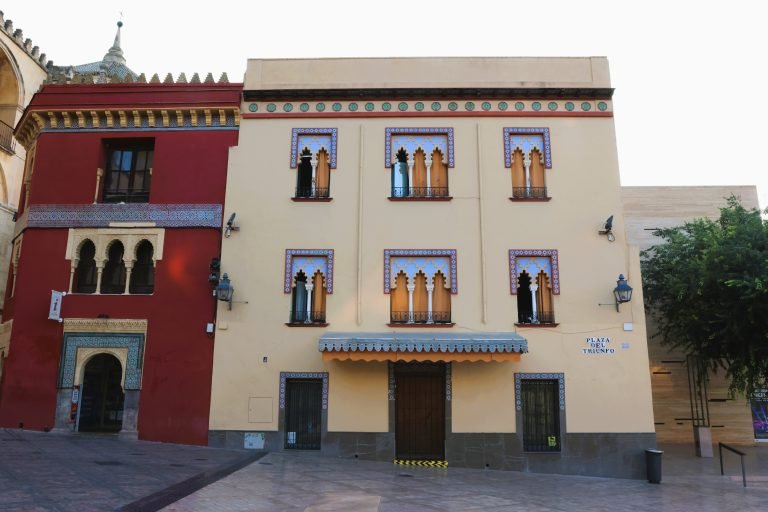
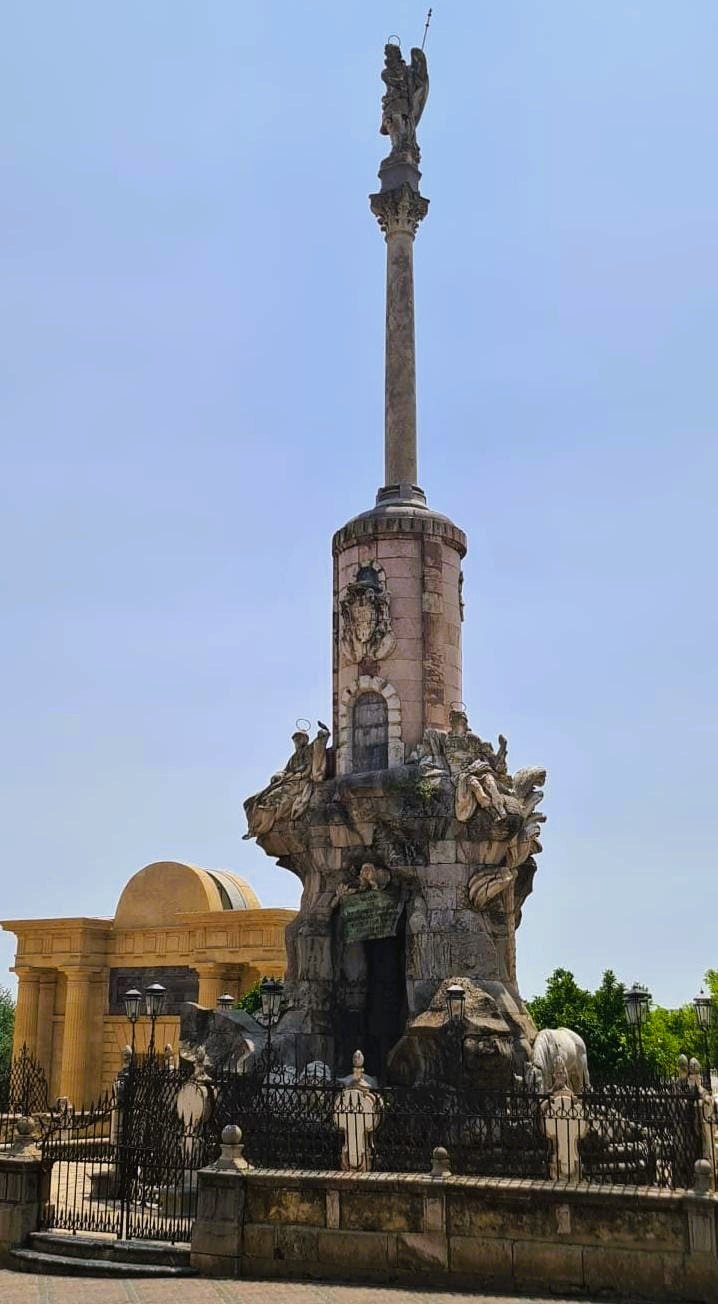
Right next to the Roman Bridge Gate, in Plaza del Triunfo, you’ll find the Triumph of San Rafael, one of Córdoba’s most iconic monuments. You’ll notice it immediately, a tall, elegant column topped with a statue of San Rafael, the city’s patron archangel, also decorated with sculptures, angels, and inscriptions.
Córdoba is full of smaller San Rafael statues, but this one is the most famous. It was built in the 18th century as a gesture of gratitude after the city survived a terrible plague. People believed San Rafael protected Córdoba, so this monument became a symbol of faith, hope, and the city’s resilience. With the Mezquita standing behind it and the Roman Bridge just a few steps away, this spot feels like a blend of history, spirituality, and quiet beauty.
Plaza de la Corredera
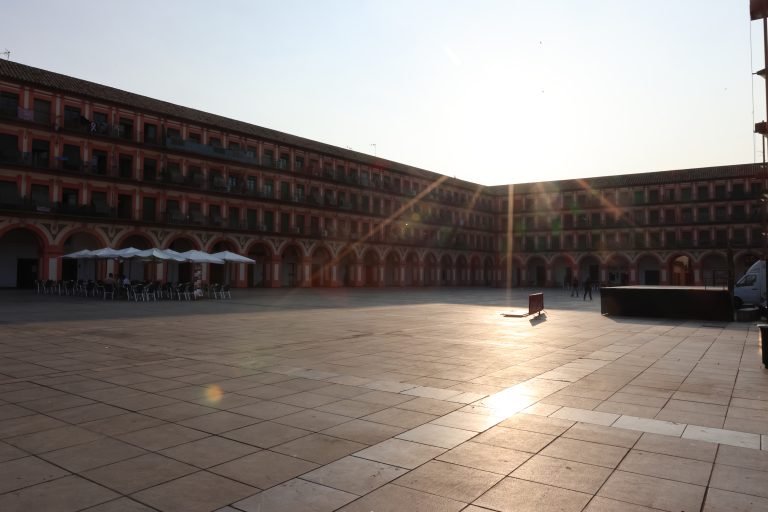
Plaza de la Corredera is one of those places in Córdoba that instantly feels alive. It’s a wide, rectangular square surrounded by colorful old buildings with arches on the ground floor, almost like a little touch of Madrid’s famous plazas, but with Córdoba’s calmer charm. Historically, this square has seen everything: markets, bullfights, celebrations, and gatherings. Today, it’s the perfect spot to slow down and enjoy the city’s daily rhythm.
We loved walking through it, watching people sitting in cafés, children running around, and locals enjoying their conversations as if time didn’t matter. It has that authentic Andalusian feeling, simple, lively, and full of character. If you’re visiting Córdoba, it’s a great place to take a break, grab a drink, or just sit for a moment and soak in the atmosphere. My husband took this amazing picture during his morning walk which can show you how big is the plaza.
The Alcazar of Córdoba
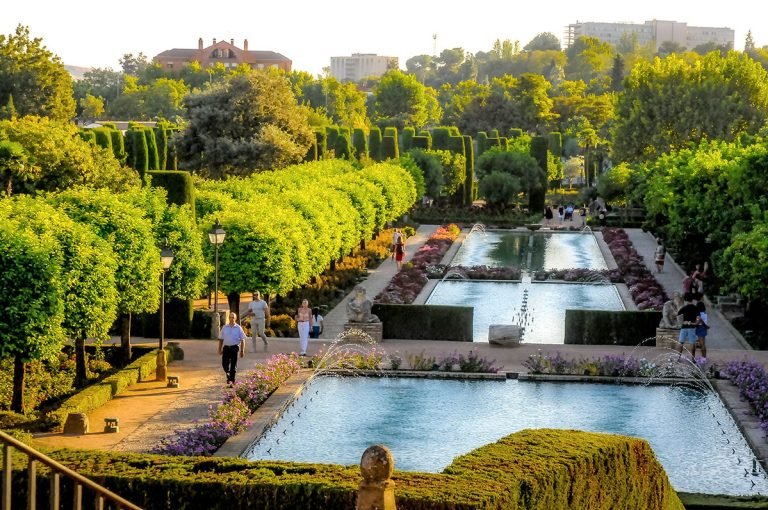
Our next stop was the Alcazar of the Christian Monarchs, a fortress-palace that has stood proudly in Córdoba for centuries. Originally built in the 8th century and expanded after the Christian Reconquista, in 1236, it was expanded and transformed into a royal residence for Ferdinand and Isabella, served both as a military fortress and a royal palace.
The Alcazar immediately impresses with its high walls, imposing towers, and beautifully decorated courtyards. Inside, the gardens are the highlight, so beautiful and perfectly symmetrical, full of orange trees, fountains, and flowerbeds, with paths shaded by tall hedges. Walking through them, you can understand why this was a place for rest, reflection, and royal gatherings.
Climbing the towers gives a panoramic view of the city, including the river, the Roman Bridge, and the Mezquita-Cathedral in the distance. The Alcázar is not just about architecture; it’s about history you can feel. Every stone, fountain, and garden path tells a story of Córdoba’s rich past, from the Islamic period to the Christian era.
Madinat Al Zahra
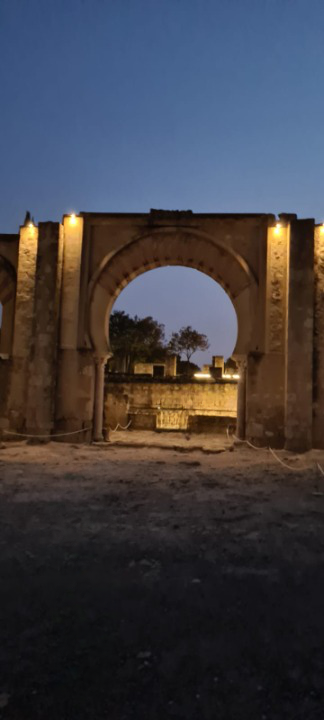
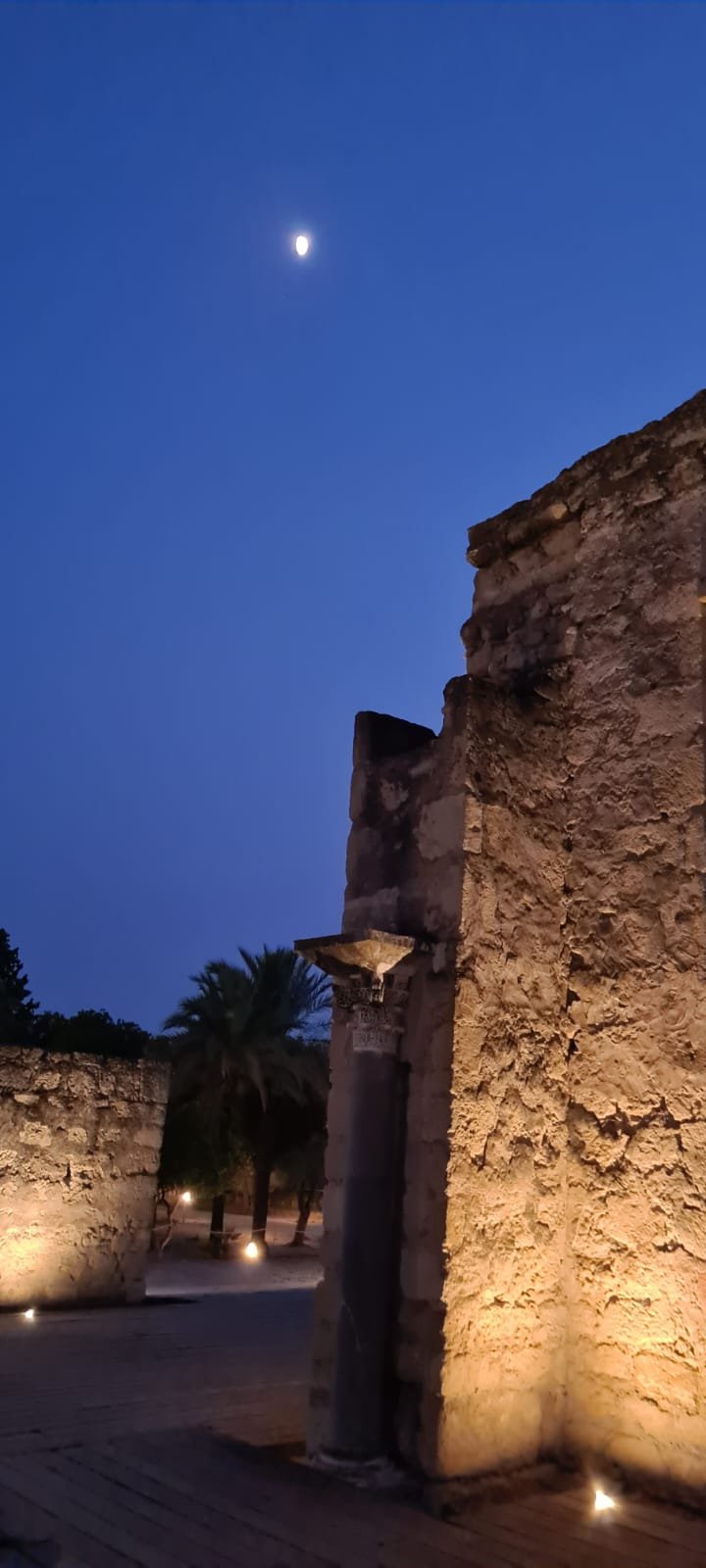
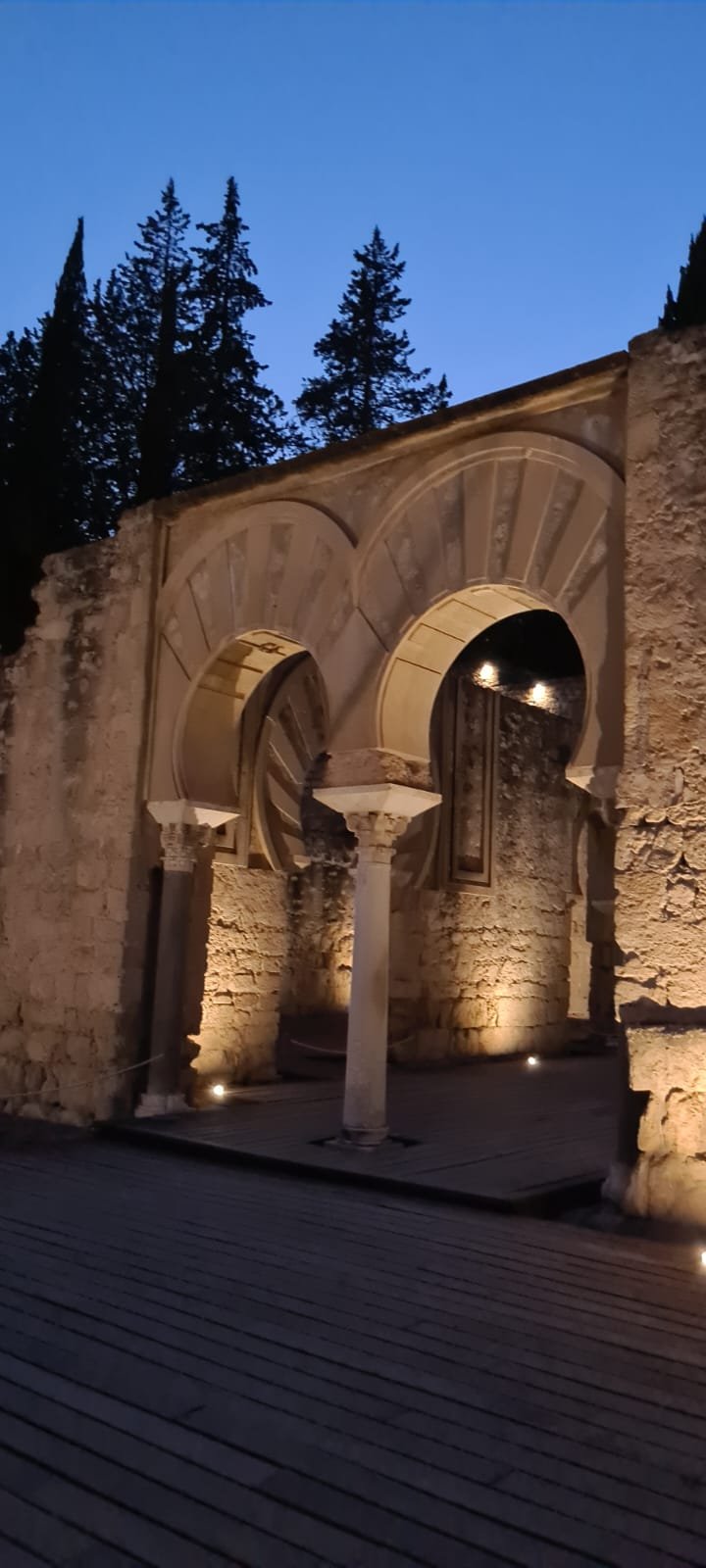
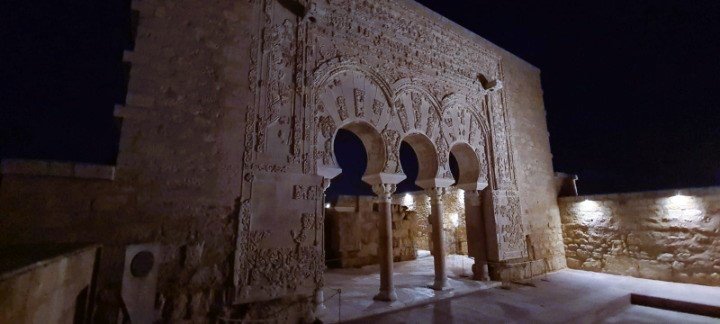
Right before sunset, we made our way to Madinat al-Zahra, about a 20-minute drive from the city. These are the impressive remains of the ancient city of Zahra, built in the 10th century by Abd al-Rahman III as a symbol of power and wealth during the Islamic Golden Age. Walking among the old arches, partially restored walls, and scattered stones, you can almost feel the life that once thrived here.
The atmosphere was magical. The sunset cast a warm, golden glow over the ruins, highlighting the intricate designs and the layout of this once grand palace city, almost as if the place itself was preparing for a grand celebration. I felt so lucky to be there in that moment. I couldn’t help but imagine this spot as the perfect setting for a proposal, the kind of romantic scene you see in movies.
As I stood among the remnants of the old walls, my imagination ran wild. I pictured the city bustling with people, courtyards filled with water features, gardens in full bloom, and the sound of music drifting through the air. Madinat al-Zahra was a place of power, elegance, and daily life, and even in ruins, it still whispers stories of its glorious past
Our Cordoban Breakfast
In the morning, my husband went for a walk saying goodbye to Cordoba before our departure, and he stumbled upon a small crowd lined up at a traditional breakfast shop that only opens early. They were serving a fried pastry, something like ftayer from home, I’m not sure of the exact name, but it reminded me of what we have in Algeria and even Tunisia: simple fried dough, sometimes plain, sometimes with honey or sugar. I think they call it Buñuelos. It was wonderful to see this little connection between cultures and enjoy a sweet, local start to the day in Córdoba.

Tips for Cordoba visit
Disclosure: “This post may contain links that could result in me earning a commission from purchases you make through these links. I exclusively recommend products that I’ve personally used or that have been utilized by my family.”
- Opting to stay within the old city is a smart choice, eliminating the need for transportation to reach tourist attractions; all within walking distance. Plus, there’s an added charm to savoring your morning coffee in the heart of the historic town.
- Carry a refillable bottle with you so you fill it up from the Mezquita’s fountain. The water is clean and fresh. I recommend the one in the following link because you can clip it onto your bag, backpack or your pant https://amzn.to/3QR2ulh,
- Bring along a snack and enjoy it in the courtyard under the shade of trees and appreciate the beauty of the ancient architecture around you. this is a lightweight travel lunch backpack if you are interested https://amzn.to/3PbP6a8
- There is no need to purchase tickets in advance. You can easily buy them on-site from the ticket booths or the available machines.
- Read up on the places before your visit, so you don’t need to hire a guide.
- Make sure to take a walk on the bridge during the evening and early morning hours. Both times provide breathtaking views that showcase the beauty of Cordoba.
- Just a few meters to the right on the other side of the bridge, you’ll discover the most picturesque view of the city. It’s a fantastic spot for capturing stunning photographs.
- If you are in need of free Wi-Fi, restrooms, information, map, or a comfortable spot to unwind, head to the tourist information center located near the Bridge gate. It’s a convenient hub that caters to various needs.
- Visiting Madinat al-Zahra in the evening is free of charge; you’ll only need to pay 3 euros for a round-trip bus ticket that takes you to from the parking to the entrance. The weather is pleasant, especially during the hot summer months, making it a great time to explore. Additionally, it provides a delightful experience at night.
- Remember to wear comfortable clothing and shoes. Don’t forget your sunscreen and a hat to stay protected from the sun.
- Keep in mind the ‘siesta’ tradition in Spain, where stores are closed between 12 PM and 4 PM. If you plan to do some shopping, it’s best to do it in the morning. We faced a challenge when we waited until evening to shop around 9 to 9:30 PM, only to find the stores closed again.
- If you are driving a car check out our driving tips Click here.
- Evoide visiting Andalucia in summer months, the best time to enjoy the visit is in spring or fall where the outdoor activities are more enjoyable.
so beautiful, thank you.