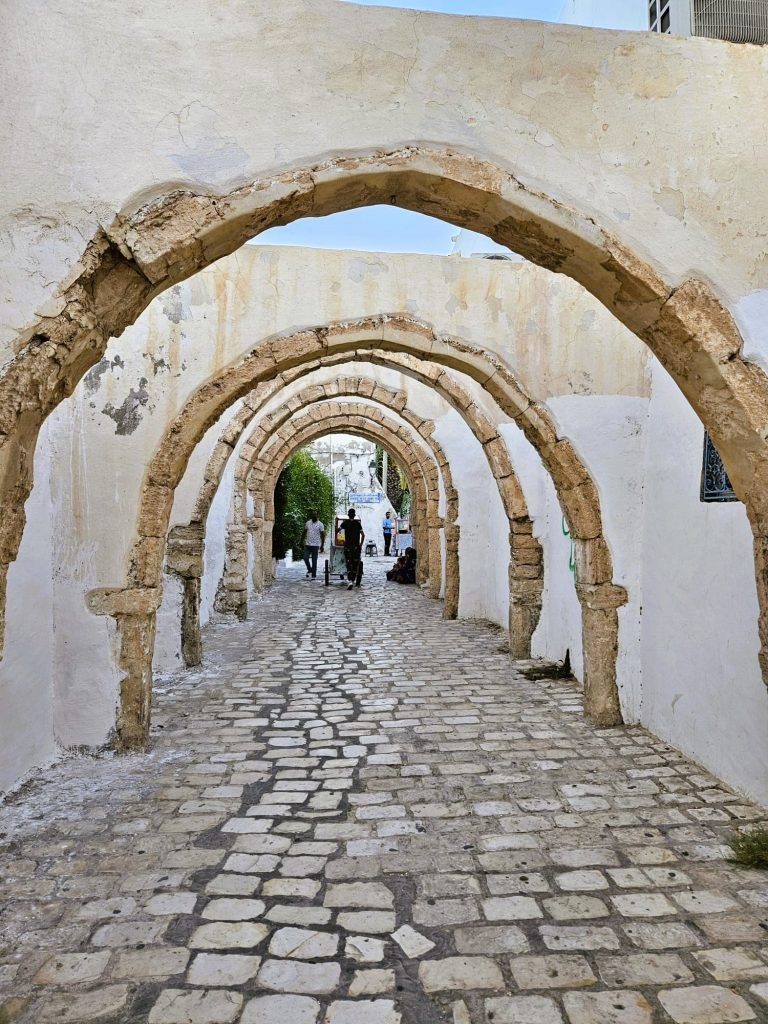
Tunisia is our neighbouring country, and with its beautiful landscapes, shared history, and familiar culture, visiting it at least once a year almost feels like a tradition. It's close enough for a road trip, yet different enough to feel like a real getaway. This time, we headed to Tunis, the capital, and as always, traveling with friends made all the difference. Suddenly every interesting viewpoint, café, or roadside stop becomes a reason to pull over. So instead of rushing to Tunis, we took our time, enjoying the journey as much as the destination. Along the way, we stopped in Tabarka, Béja, and a few other places, turning what could have been a simple drive into the beginning of the adventure itself. So le'ts explore Tunis together, from the historic Medina and Zaytouna Mosque to the charming streets of Sidi Bou Said, and a few hidden gems along the way.
Road Trip to Tunis: From Tabarka to the Capital
Pure Nature Restaurant – Tabarka
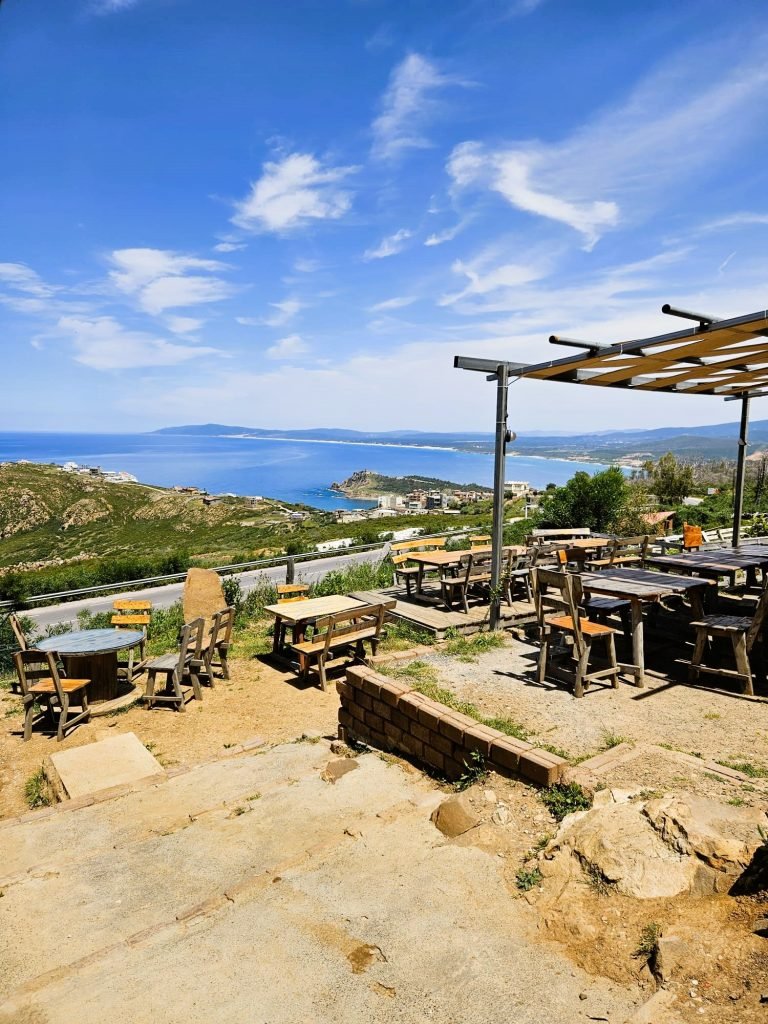
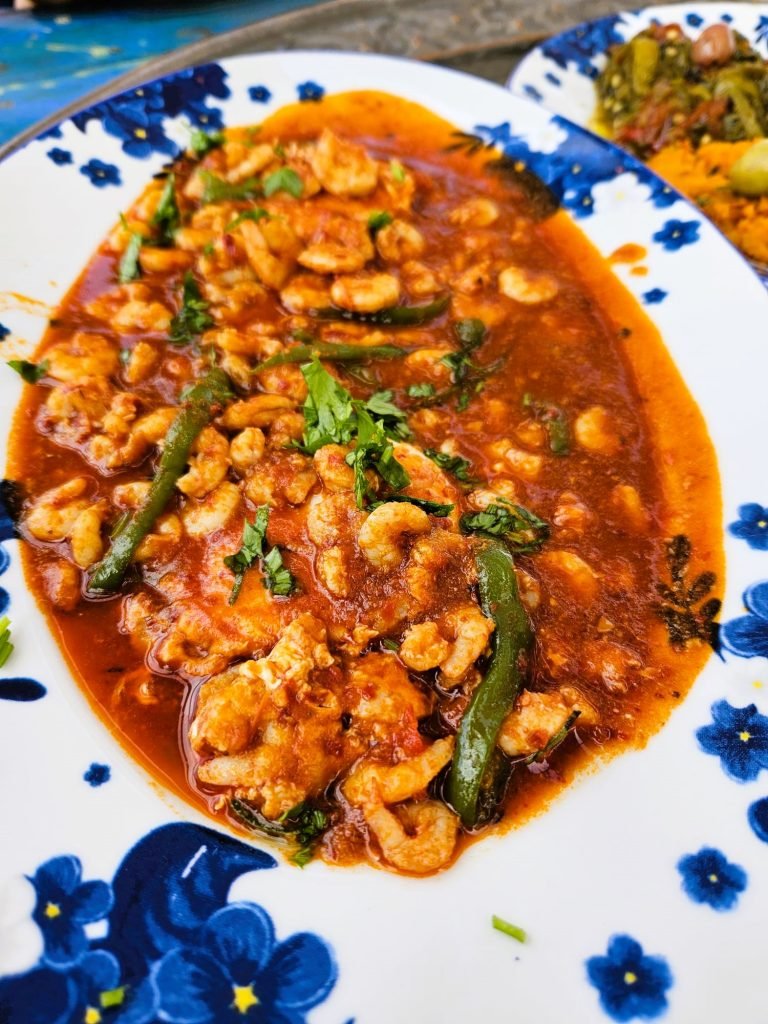
After crossing the border into Tunisia, our friend surprised us by taking us to a restaurant with a breathtaking view near Tabarka. The moment we parked the car and climbed the stairs, we were greeted with a huge “wow” moment. Pure Nature is an eco-friendly restaurant surrounded by forest, sea, and even animals, creating a truly unique experience. It has different seating areas, both indoors and outdoors, blending perfectly with nature. The food is equally impressive, cooked in a traditional way over charcoal and wood, which gives it an incredible smoky flavor you don’t easily forget. It’s definitely a place I highly recommend if you’re passing through Tabarka. click here to check their Instagram
Le Moulin Vert - Beja
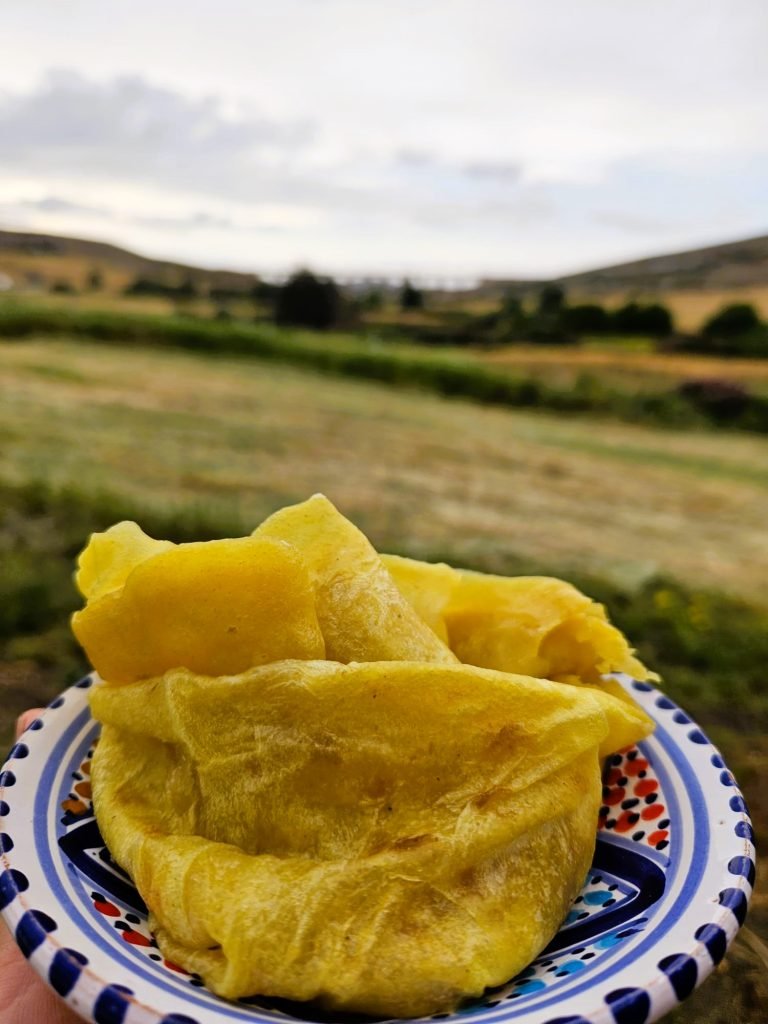
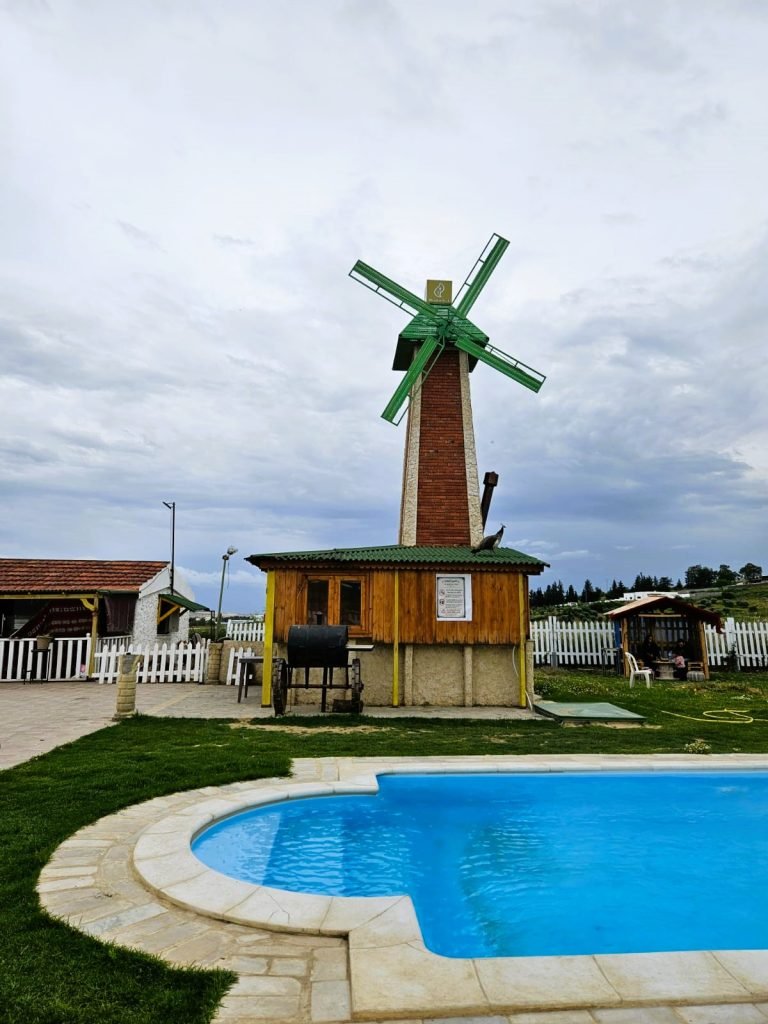
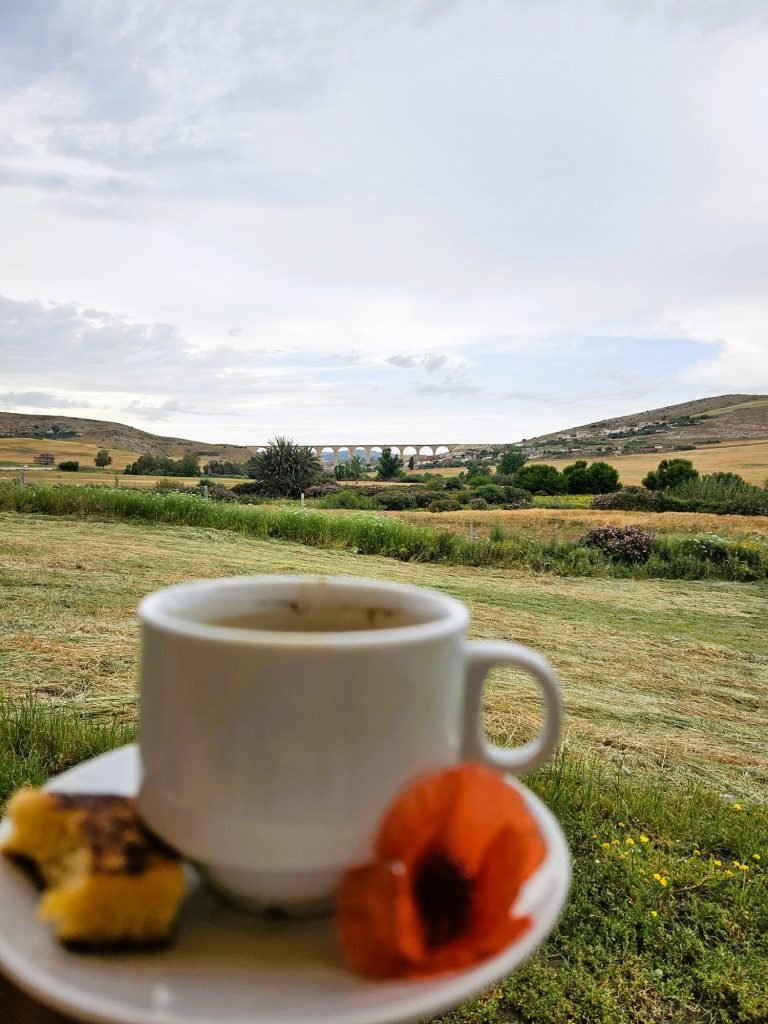
We continued our journey towards Tunis, stopping in Béja for a coffee break at Le Moulin Vert. It’s a beautiful place in the middle of nature, with tables facing the Béja bridge. The atmosphere is peaceful, and the hospitality is truly outstanding.

After a while, we hit the road again and passed through a small town called Ouchtata, famous for its strawberries. Of course, we couldn’t resist stopping to pick some up to later make homemade jam. With little detours, good food, and spontaneous stops, the journey itself became just as memorable as the destination.
Tunis
The Old Medina Souks
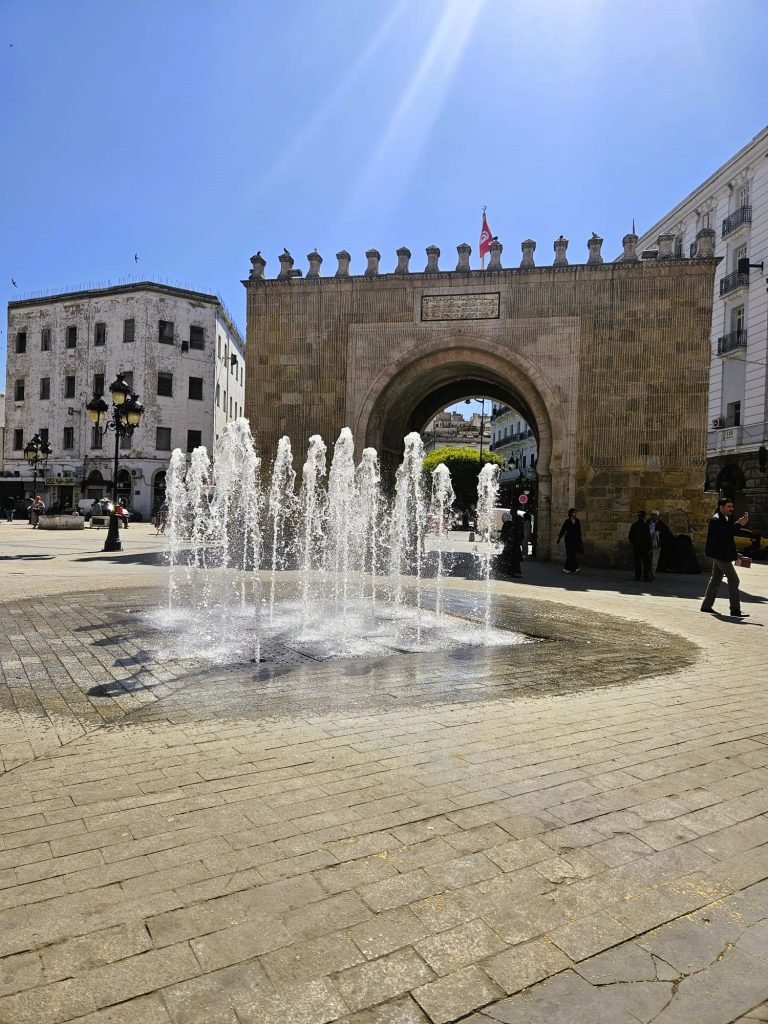
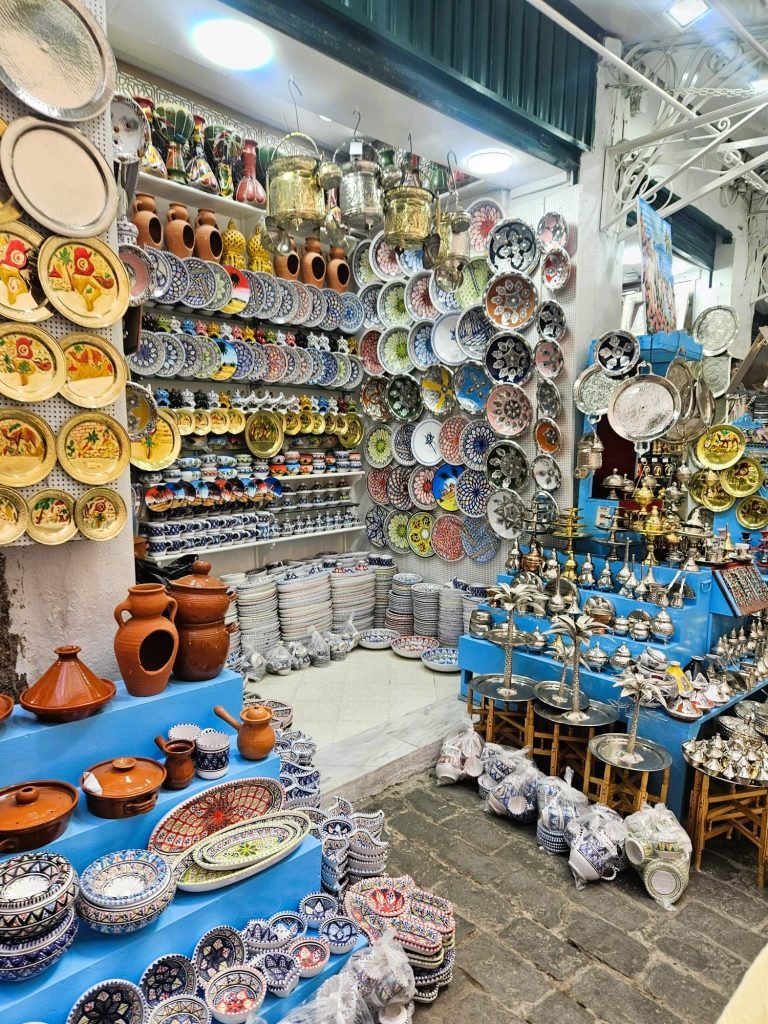
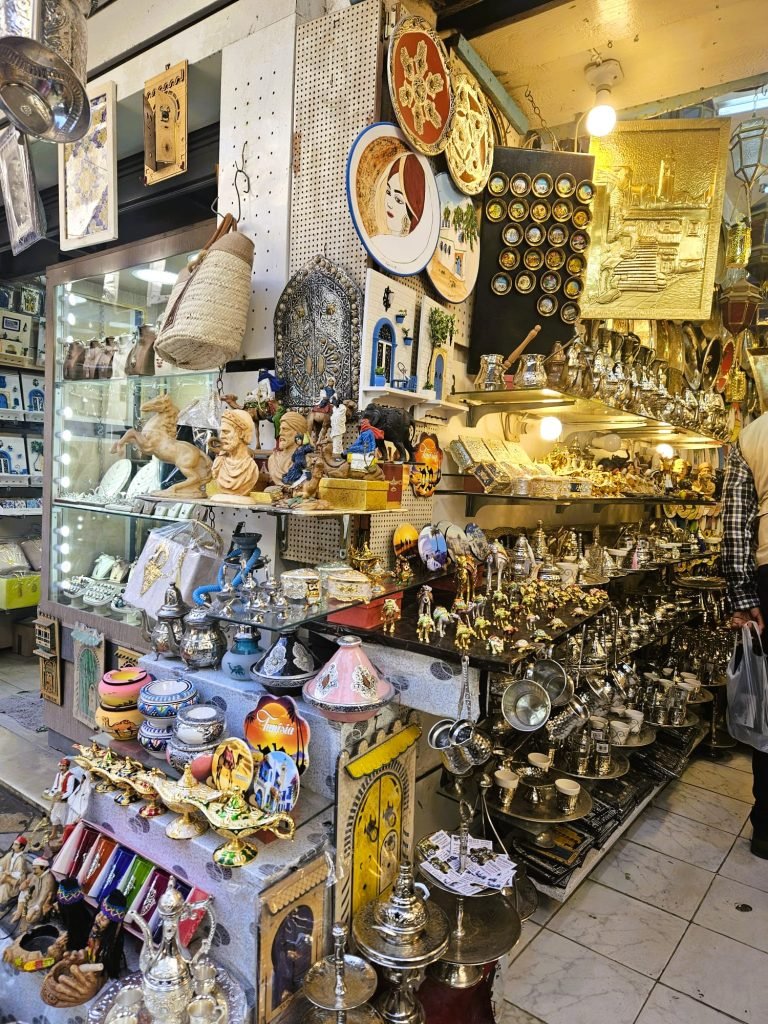
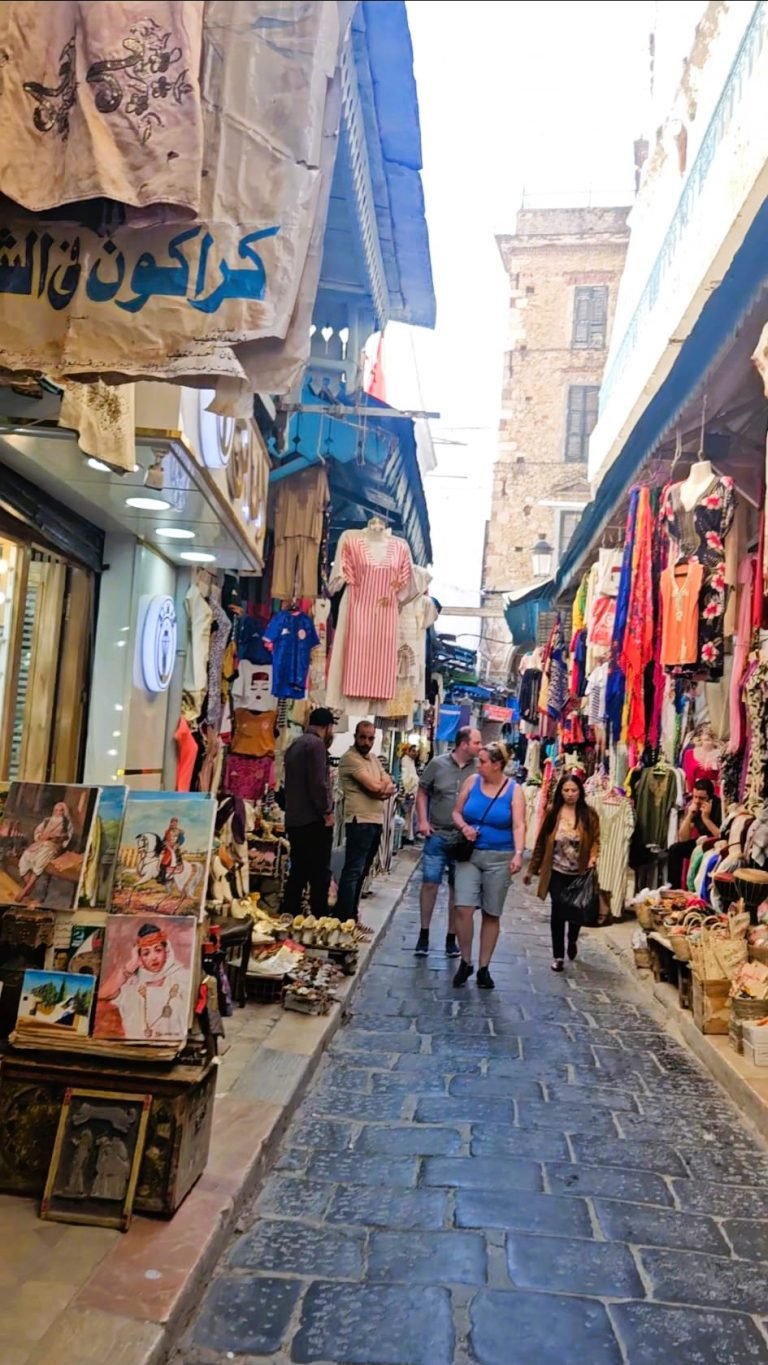
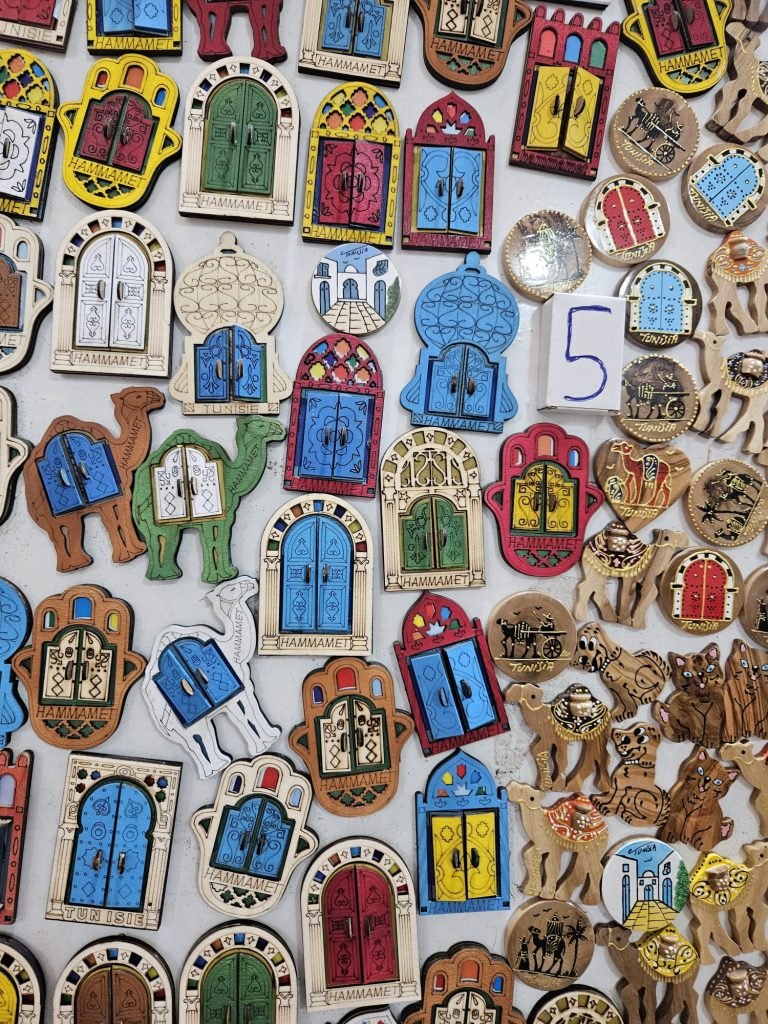
No trip to Tunis is complete without visiting the old Medina souks, one of the city’s top attractions. It’s a charming maze of narrow streets filled with tradition, culture, handmade crafts, and endless souvenirs.
The Medina is known for its historic gates, with several entrances including Bab El Bhar (Sea Gate), Bab Jdid (New Gate), Bab Mnara, Bab Souika, Bab Cartagena, Bab Laassal, Bab El Khadra, Bab Saadoun, Bab Alioua, and Bab El Jazira. Among them, Bab El Bhar is the most famous, located right next to Avenue Habib Bourguiba, the main avenue of Tunis and a central point of the city.
Once inside, the souks open into a vibrant network of streets, each dedicated to a different craft. You’ll find Souk En-Nhas (the copper souk), Souk Edhab (gold souk), Souk El Blaghia (traditional leather slippers), and many others, each carrying its own atmosphere and history.
Tips: - If you plan to buy anything from the souks, don't be afraid to bargain, the given price is usually triple or more. Take your time, compare prices between different shops, and don't be afraid to walk away if the price doesn't feel right.
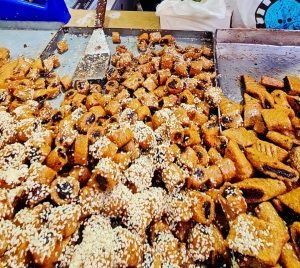
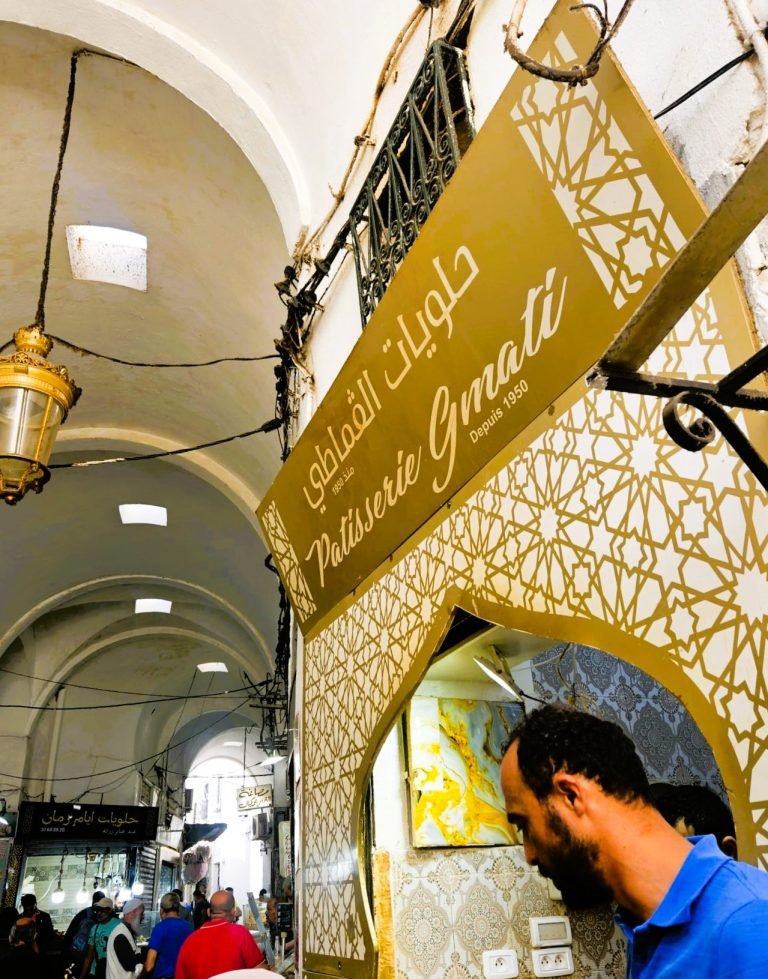
- If you want to try some traditional Tunisian sweets, I highly recommend Pâtisserie Gmati. During my visit, I tried their makroud, a delicious pastry filled with dates, and it's so good. You can find the pâtisserie while exploring the Medina: starting from Bab El Bhar, walk through the Copper Souk towards the upper part of the Medina, and you'll find the pastry shops area on your left. It's a well-known spot, so you probably won't miss it, and if you're unsure, don't hesitate to ask a local for directions.
Zaytouna Mosque
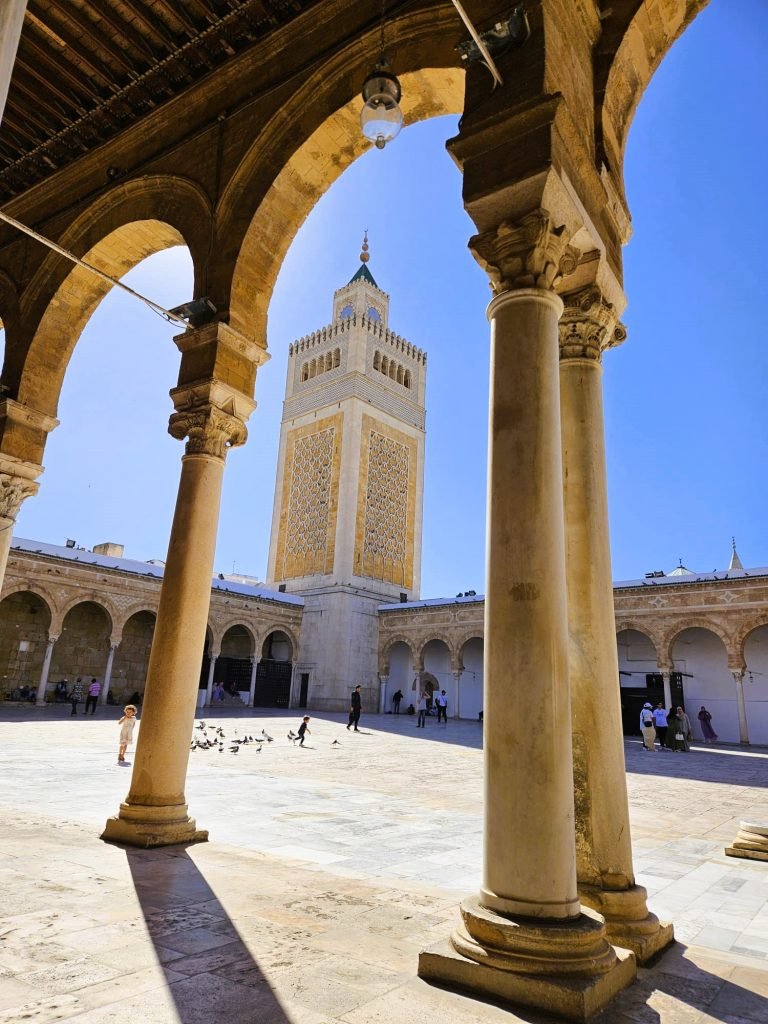
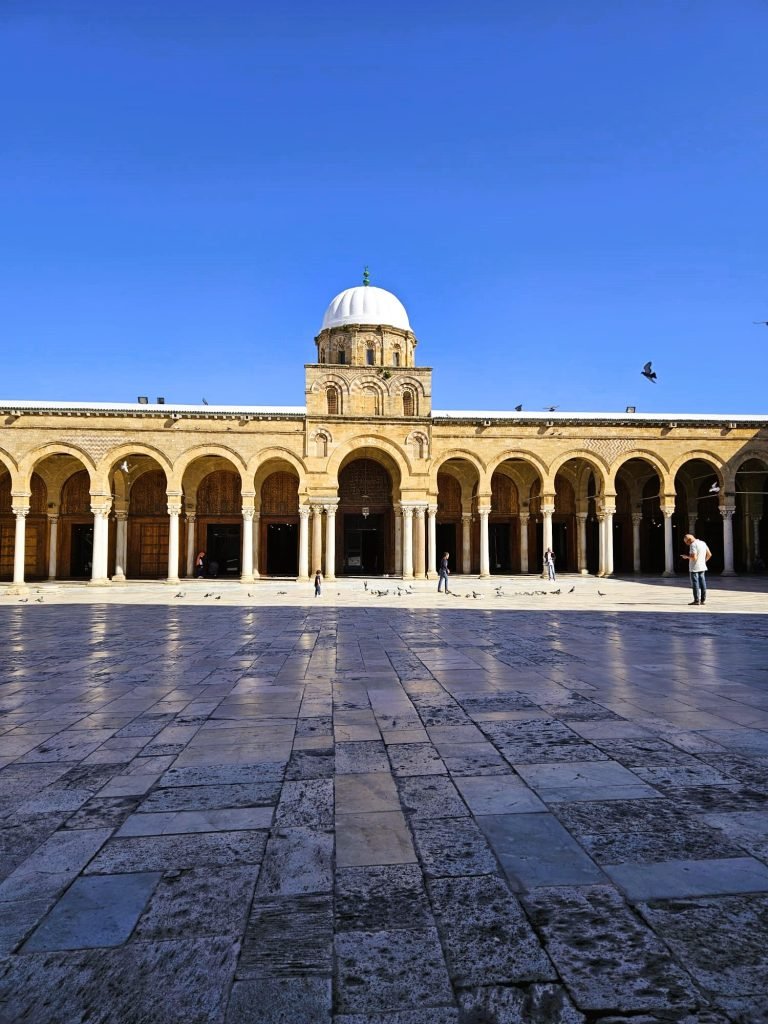
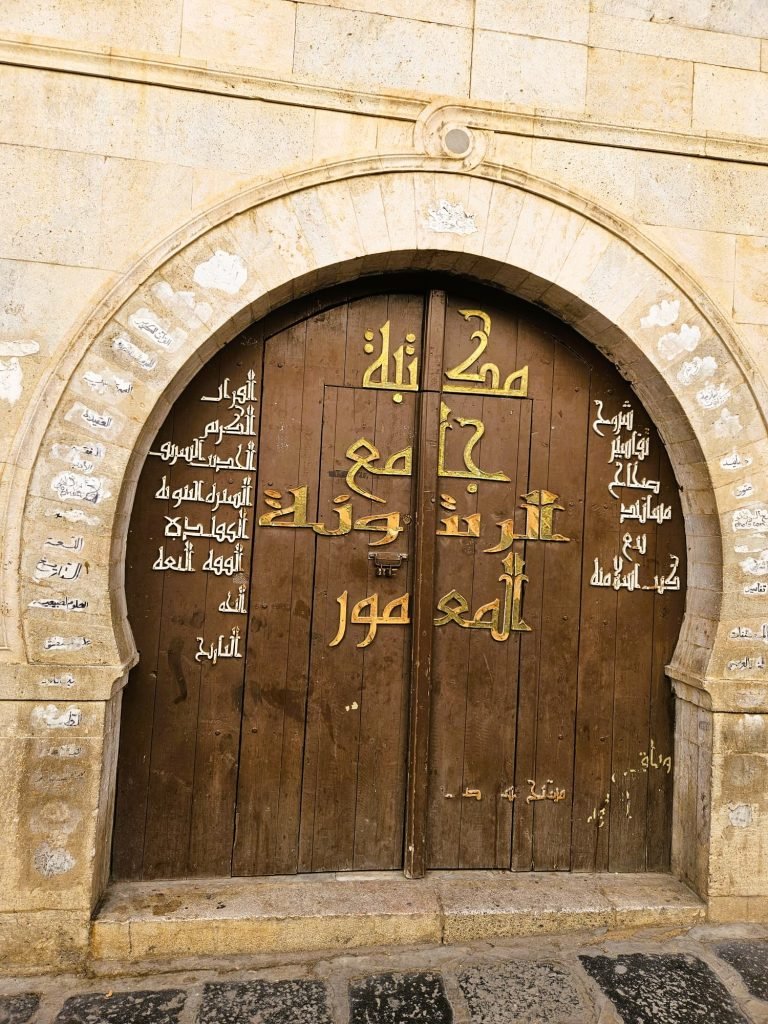
Zaytouna Mosque is one of the oldest and most important mosques in the Islamic world. Over the centuries, it has been a major center of learning, where renowned scholars such as Ibn Khaldun, Abdelhamid Ben Badis, and Mohamed Bachir El Ibrahimi studied and taught.Despite its importance, what struck me most was its peaceful atmosphere. Away from the busy souks, the mosque offers a calm and beautiful space to pause and appreciate its history and architecture.
Located within the old Medina, Zaytouna Mosque is easy to find. Simply enter through Bab El Bhar and follow the Copper Souk all the way to the end, where this historic landmark awaits.
Tip: Like any sacred place, a dress code is required before entering. Scarves and skirts are available for women if needed, while men are required to wear long pants, as shorts are not permitted.
Tunis Cathedral
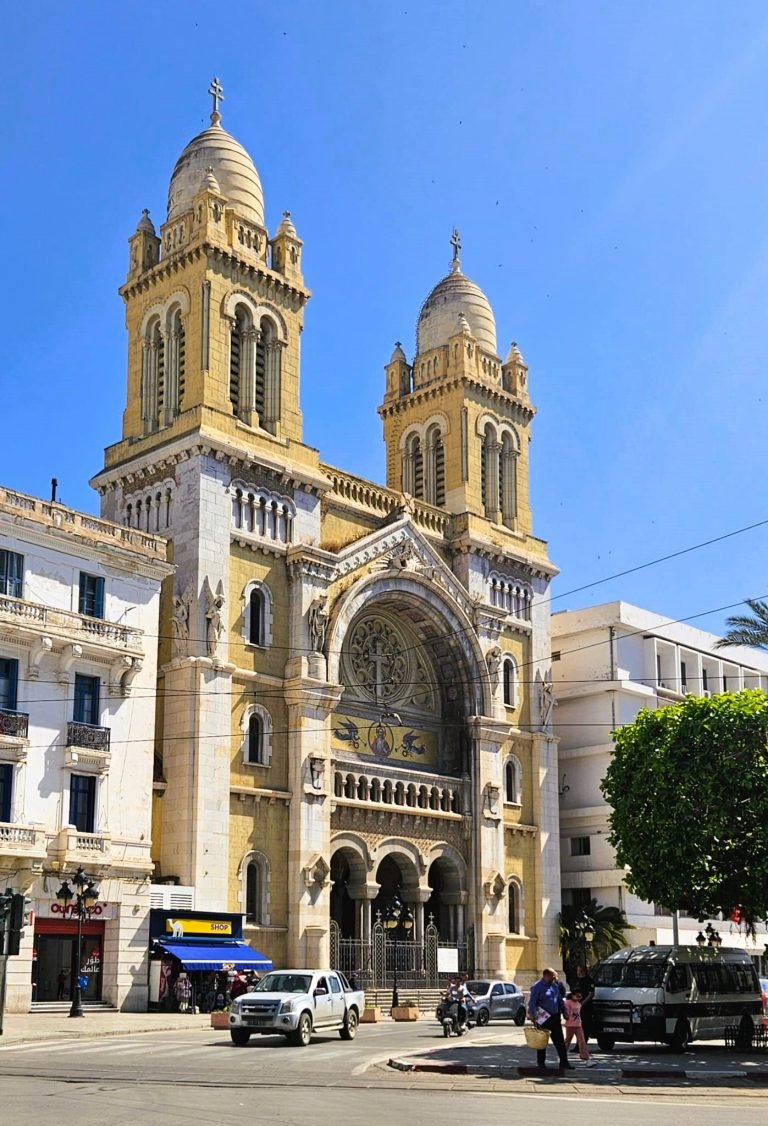
Located on Avenue Habib Bourguiba, just a short walk from Bab El Bhar and the entrance to the Medina, the Cathedral of Saint Vincent de Paul is one of the most recognizable landmarks in Tunis. Its impressive façade stands out among the surrounding buildings and reflects an important chapter of the city's history.
Built in the late 19th century, the cathedral remains the most important Catholic church in Tunisia and symbolizes the cultural and historical diversity that has shaped the country over the centuries.
What I found particularly interesting was the contrast between the cathedral and the nearby Medina. Within a few minutes' walk, you can move from the traditional souks and the historic Zaytouna Mosque to this remarkable religious monument overlooking the capital's main avenue.
Unfortunately, I didn't have the opportunity to visit the interior during this trip, but the architecture alone makes it worth stopping by while exploring downtown Tunis.
Avenue Habib Bourguiba & Bourguiba Clock
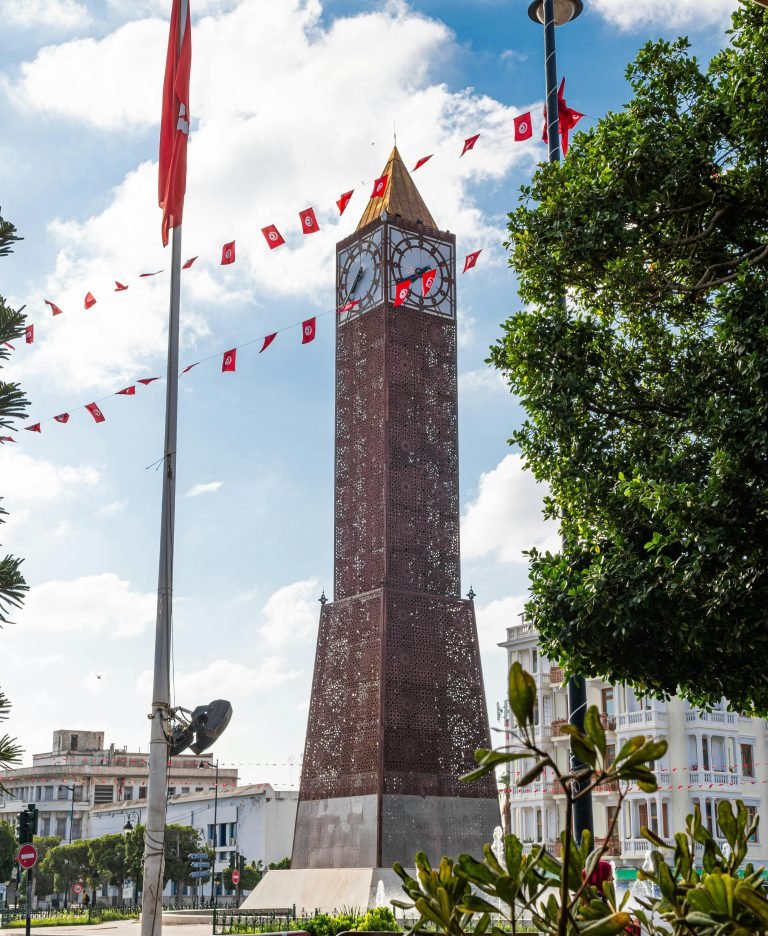
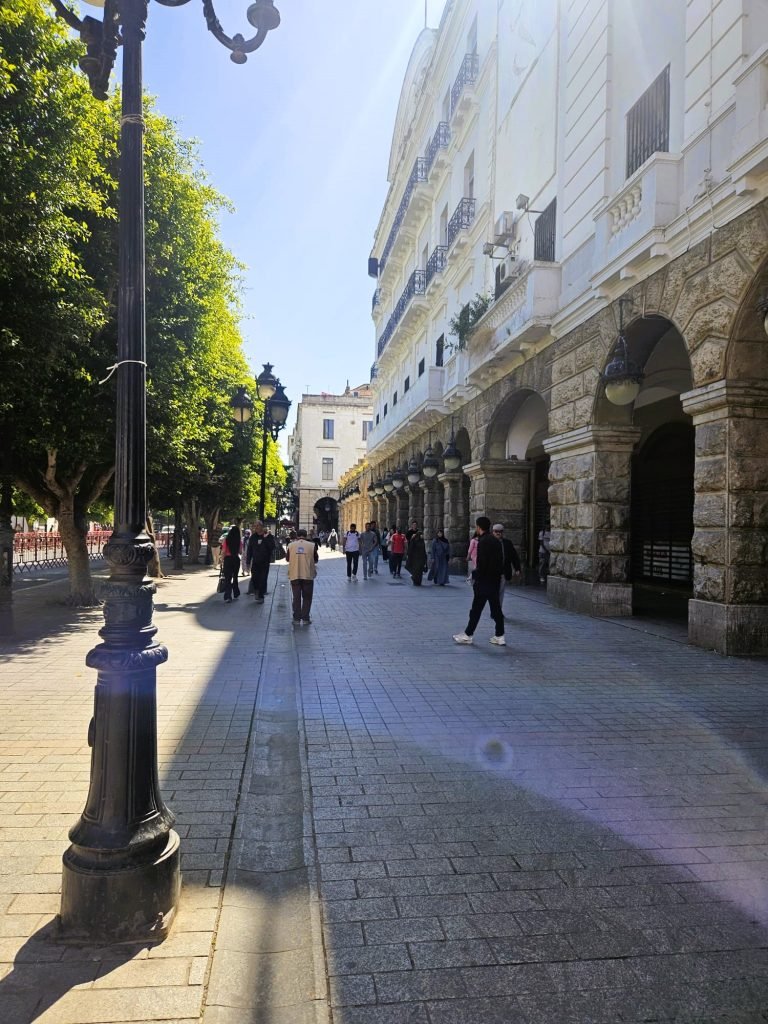
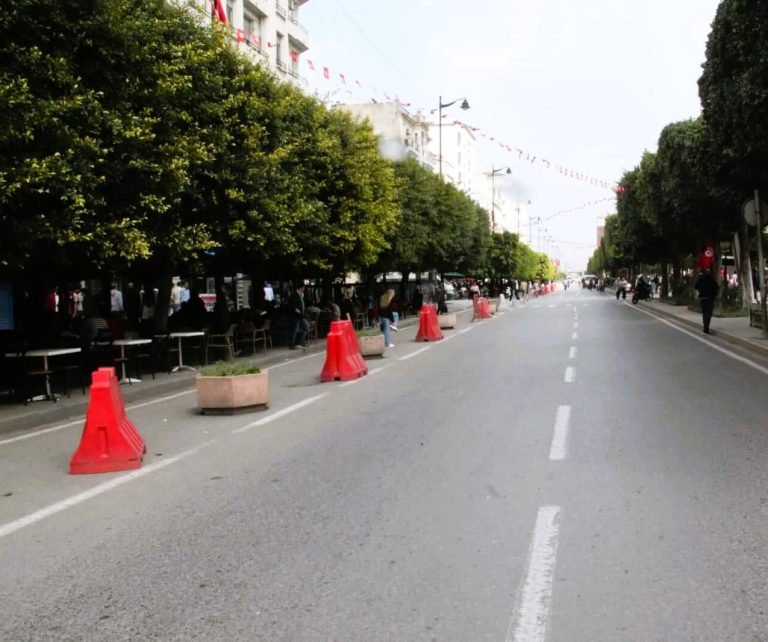
Avenue Habib Bourguiba is the main boulevard of Tunis and one of the most important streets in the city. Often described as the “Champs-Élysées of Tunis,” it is the heart of modern downtown life, lined with cafés, hotels, shops, and historic buildings that reflect both French colonial influence and Tunisian identity. Walking along the avenue gives you a real sense of the city’s rhythm, lively during the day, and elegant in the evening. At the end of the avenue stands the famous Bourguiba Clock, one of Tunis’s main landmarks and a symbol of the modern city. Surrounded by fountains and open squares, it is a popular meeting point for visitors. For me, the clock is especially beautiful at night, when the lights come on and the fountains around it are illuminated, giving the whole area a calm and magical look.
Tip: One of the best ways to experience Tunis is to go early in the morning when the city is still calm. Start your day with a coffee at one of the cafés on Avenue Habib Bourguiba, watching the city slowly wake up.
Sidi Bou Said
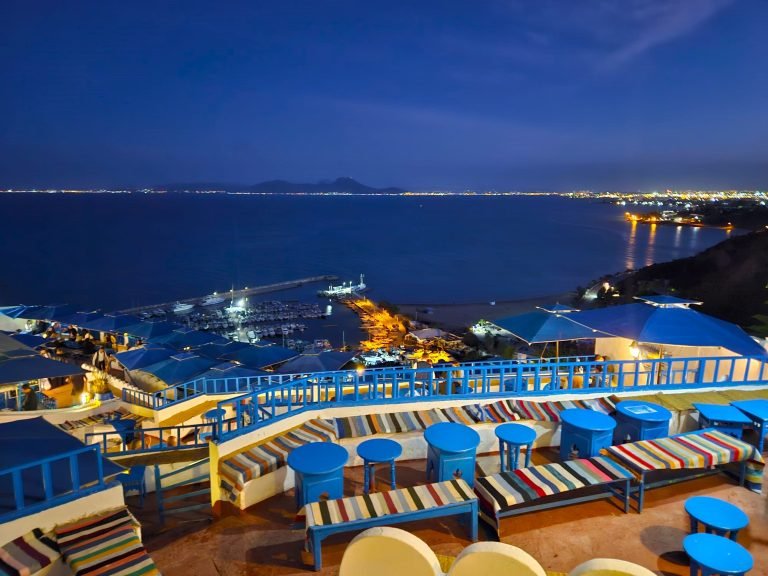
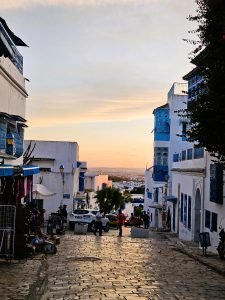
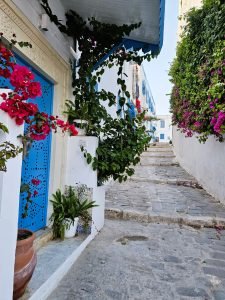
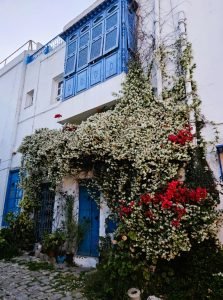
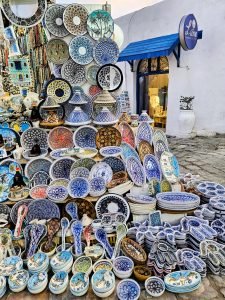
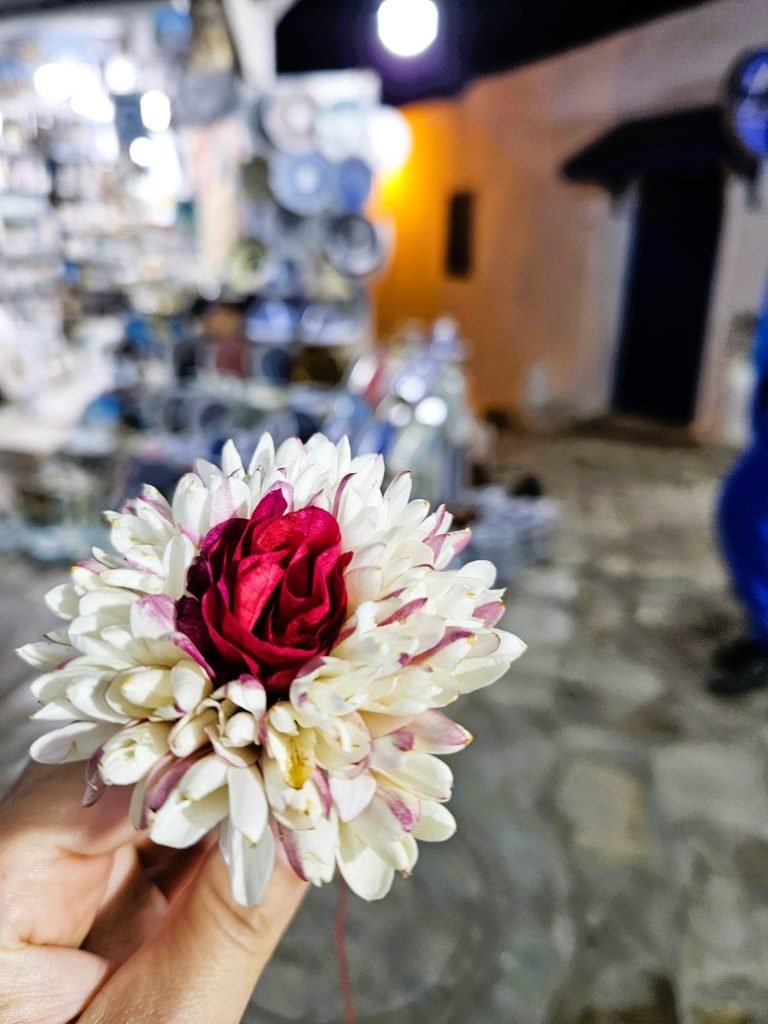
Sidi Bou Said is the most charming and beautiful village in Tunis. I could easily stay there for days without complaining. It has that traditional architecture that I love, moucharabieh windows, arched wooden doors, and white-and-blue walls surrounded by jasmine and bougainvillea, which I absolutely adore. I remember that as a child I used to dislike the bright blue color. It felt too strong for me at the time. But now, I really appreciate it, especially with the contrast of the white. Maybe it’s because it has become the identity of the place, I can’t imagine Sidi Bou Said in any other color. Wandering through its narrow alleys is always full of surprises: a beautifully carved door, a hidden window, or suddenly a sea view opening between the houses. It’s the kind of place where you naturally slow down, and admire.
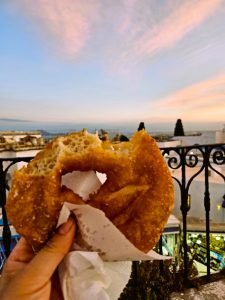
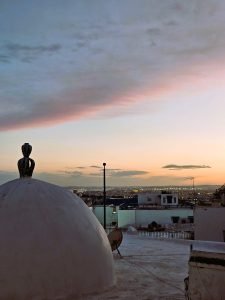
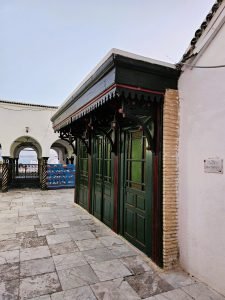
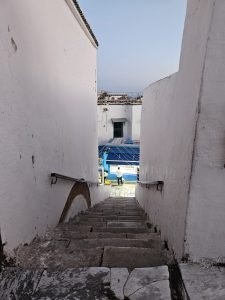
Because we were traveling with Tunisian friends, they showed us one of their little secret corners in Sidi Bou Said. We grabbed fresh bambalouni from Bambalouni Sidi Bou Said, took our tea, and walked just a few steps away before finding a quiet spot away from the crowds. Right after the shop, you’ll notice a staircase on the left. Climb it, and you’ll reach a peaceful terrace overlooking the sea, a hidden viewpoint most visitors easily miss. It’s a calm little corner, very close to the Zawyet Sidi Bou Said and its tomb, where you can sit, slow down, and enjoy the view in complete peace.
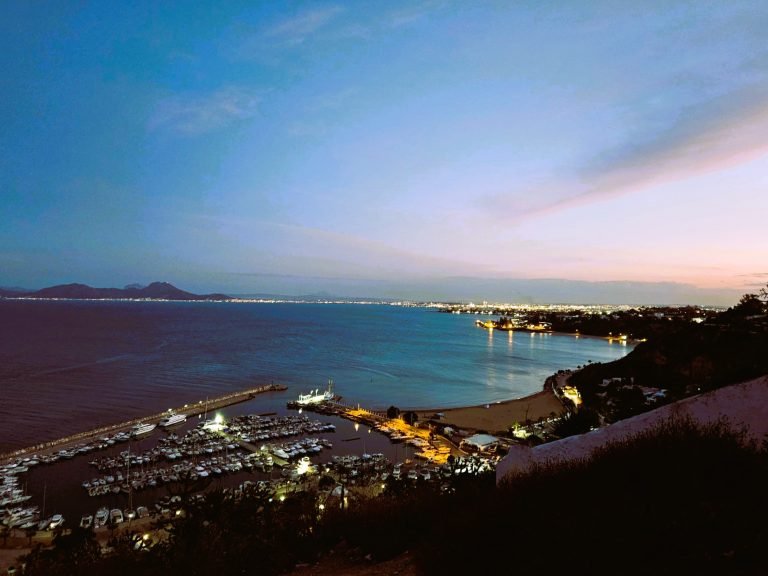
Sidi Bou Said has many beautiful corners, but one of my favorites is Café des Délices. Known worldwide thanks to the famous song “Café des Délices,” it has always held a special place in my heart. For me, it’s more than just a café, my life once changed here in ways I still can’t fully describe or understand hhh. So coming back after so many years felt indescribable, just me and my thoughts, standing in a place filled with memories. Another spot worth discovering is the viewpoint overlooking the sea and marina. After passing Café Sidi Chabaane or Café des Délices, you continue walking down all the way until you reach this quieter area. The view opens up beautifully, offering a peaceful perspective away from the crowds. There, I also noticed a beautiful hotel overlooking the sea, and I couldn’t help but wish, for a moment, that I could stay there and wake up to that view.
Tips:
- if you have just a couple of hours in Tunis, don’t think twice, go to Sidi Bou Said. Some places you don’t just visit, you experience.
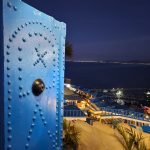
- Café des Délices is probably one of the places with the most beautiful views in all of Sidi Bou Said, the prices are a bit higher than elsewhere, but if you’re there for the experience, it’s worth it.


- One spot I enjoyed was Les Saveurs de Sidi Bou Said. Their sandwiches are light, fresh, and perfect for a simple meal. Even their Bambalooni was good.
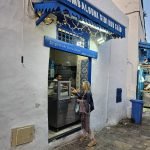
- We also stopped at Bambalouni de Sidi Bou Said and tried their fresh bambalouni. They were absolutely delicious

- Don’t miss the sunset from the mosque terrace in Sidi Bou Said. The mosque is located near the roundabout at the entrance of the village, and it’s one of the best spots to end the day. As you go up into Sidi Bou Said, you’ll also notice several cafés on the right side of the road facing the mosque, all with terraces overlooking the area. They offer a beautiful view as the sun goes down
Halq El Oued (La Goulette)
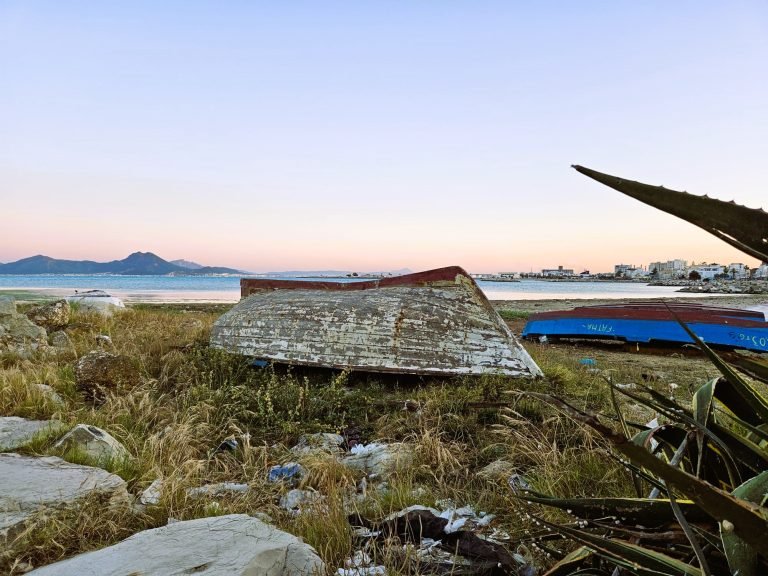
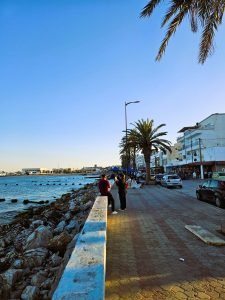
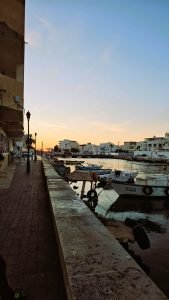
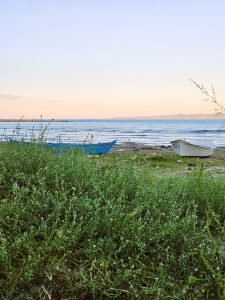
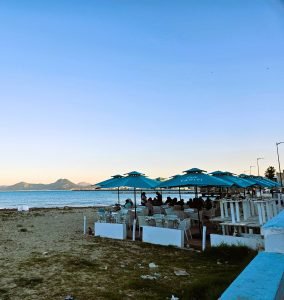
Halq El Oued, known as La Goulette, is a famous fishing port area near Tunis. It is well known for its strong connection to the sea, fresh fish, and seafood restaurants. In fact, when locals want good fish, this is usually the first place they recommend. The area has a simple, authentic charm. We enjoyed a nice walk by the sea before heading to a local restaurant where we had our dinner.
where we ate?
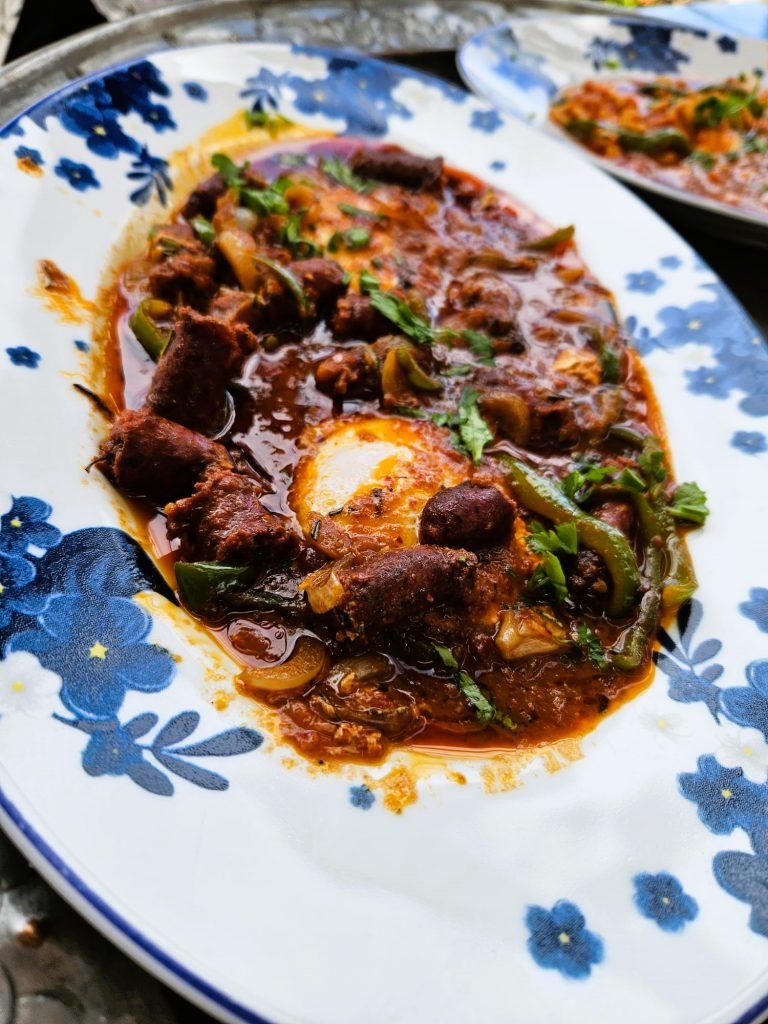
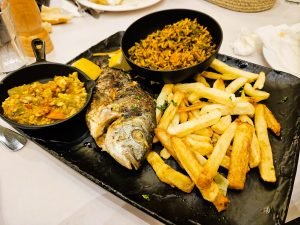
The restaurant name is Le Grand Vert, it didn’t really have a view, but was known for its food and traditional seafood platters. Following our friend’s recommendation, we ordered the full set menu: soup, brick, fish, salad, and rice, without even checking the menu. Honestly, I just trusted the advice and went with it,. You had to see me, while I was still trying to figure out what exactly I was eating, my dish was so spicy I couldn’t even taste anything properly because of the heat. then I looked at the next table and saw a huge platter of grilled king prawns, . I nearly cried.
Lesson learned: no matter how much you trust your friends, always read the menu first!
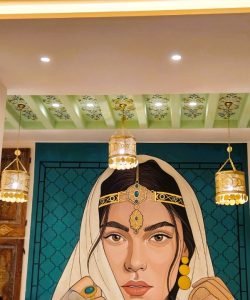
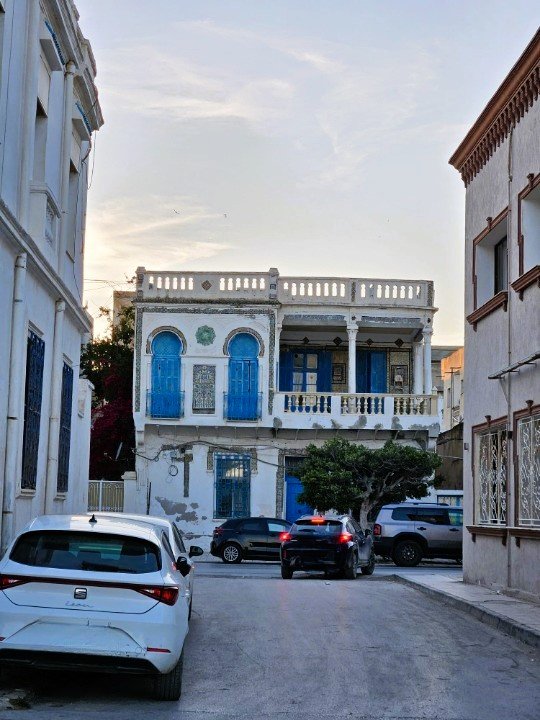
Guess what I found while wandering in Halq El Oued… a dream house. As a dreamy person who isn’t exactly rich enough to buy everything I fall in love with, I couldn’t help but imagine myself owning a place like this one day. A charming traditional house that feels real, lived in, and full of stories. I fell in love with the arches, the hand-painted tiles, the wooden window shutters, and all those small details that give it so much character. It wasn’t just a house, it felt like history preserved in walls. Moments like this make me realise I’m always drawn to places with soul, not just beauty.
The Lakes of Tunis
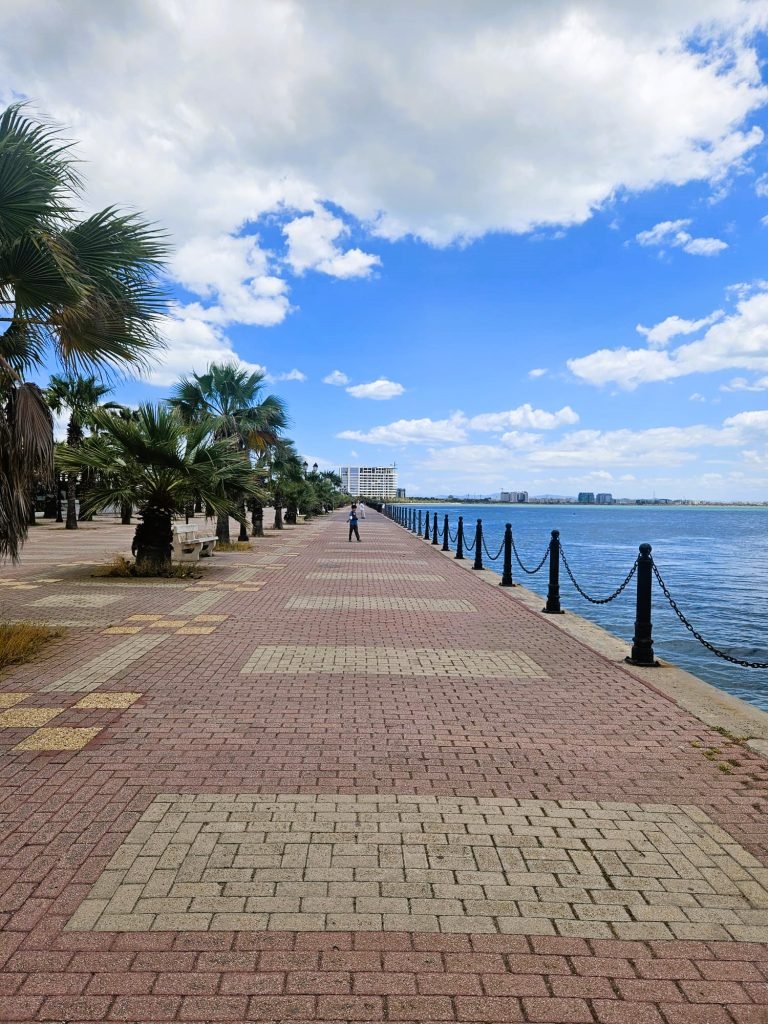
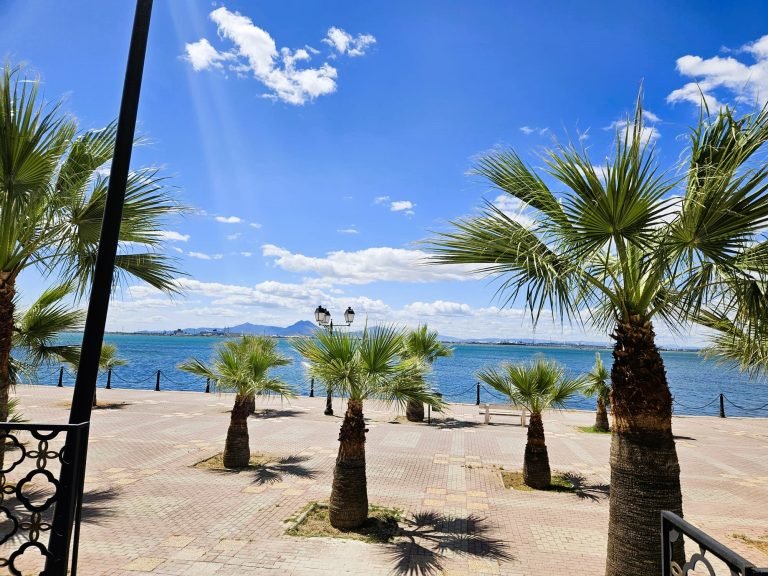
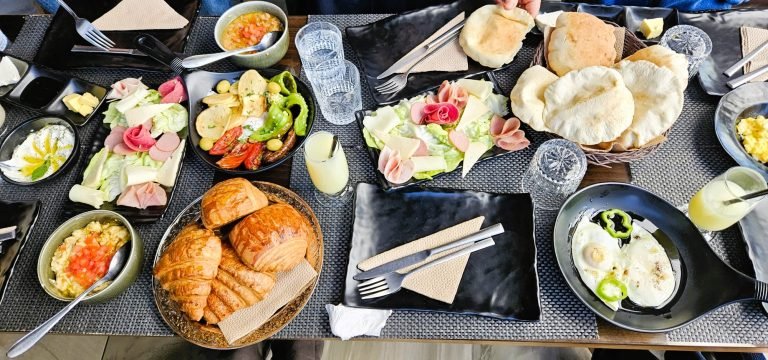
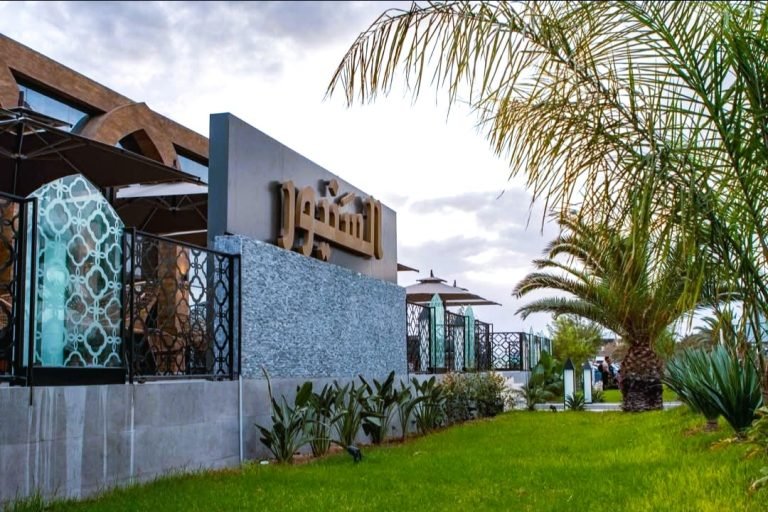
One of the modern sides of Tunis that many visitors don't know about is its lake district. The city is home to Lake 1 and Lake 2, while Lake 0 is currently under development. These areas have become popular leisure spots, with waterfront cafés, restaurants, and promenades where locals come to walk, relax, and enjoy the view. During our stay, we visited Lake 2 for breakfast at Seniour Restaurant. It was the perfect way to start the day. The breakfast was delicious, the service was excellent, and the comfortable setting overlooking the water made the day more enjoyable.
Beauty Everywhere: Montfleury
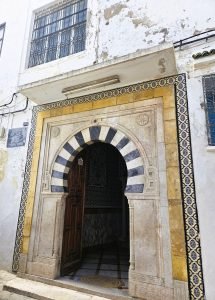
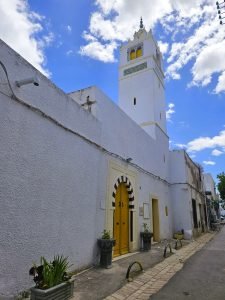
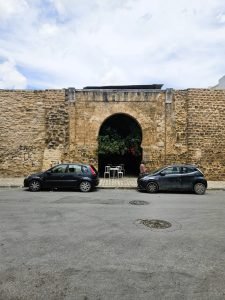
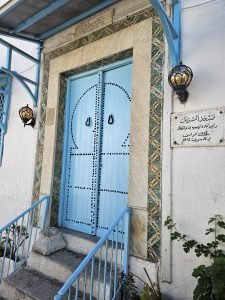
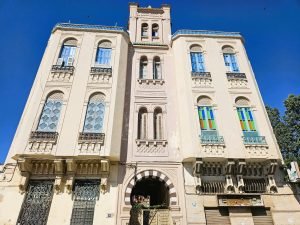
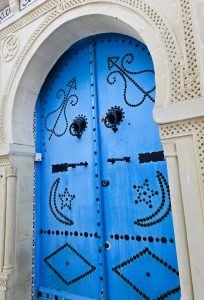
I was staying in Montfleury, an old neighbourhood near the souks, and every day on my walks I kept noticing small details that made the area feel so special. Old buildings with character, a historic mosque, a traditional hammam, and small bakeries still baking the old way. What struck me most was how many traditional crafts are still alive here. I passed by small workshops that felt like stepping back in time, a TV repair shop fixing old bulky television sets I hadn’t seen in decades, a carpenter carefully working on wood, and a shoe repairer still practicing his craft the traditional way. It’s a kind of everyday life we rarely see anymore, and walking through these streets reminded me how much charm still exists in these older neighbourhoods, quietly continuing their rhythm away from the modern city.
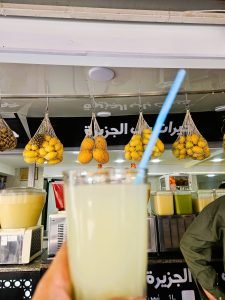
Tip: While exploring Tunis, make sure to try two of the country's most popular traditional drinks: citronnade and rosata. Citronnade, the Tunisian version of lemonade, quickly became one of my favourites. Made with fresh lemons and prepared using a traditional Tunisian recipe, it is incredibly refreshing, especially after hours of walking through the Medina and the souks. I bought mine after a long tour of the souks from a place called Khayrat Bab Dzira, but the truth is that every citronnade I tried in Tunisia was delicious. Rosata, on the other hand, is a sweet almond-based drink. It is rich, creamy, and very different from citronnade. Personally, I found it quite sweet, but it was still a tasty experience and worth trying at least once. Both drinks are part of the Tunisian experience and offer a refreshing taste of local traditions.
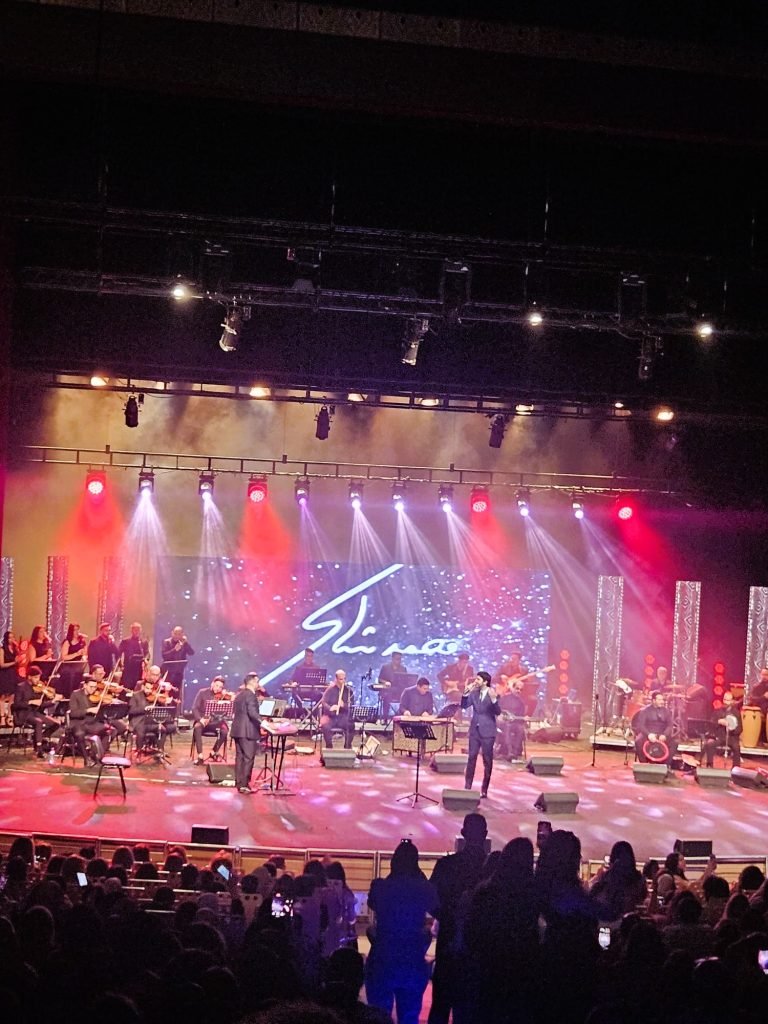
If you enjoy live music and cultural events, it's always worth checking online to see what's happening during your visit. Especially on weekends, you'll often find concerts, performances, festivals, and special events taking place across the city. During our stay, we attended a concert by Mohammed Fadel Shaker at the Tunis Opera House, and it turned out to be one of the highlights of the trip.
Tunis has so much more to offer than I could possibly fit into a single article. From its historic Medina and charming cafés to its lively neighborhoods, beautiful coastline, and cultural events, it is a city that deserves to be explored slowly. But now it's time for us to leave the capital and continue our road trip towards Kelibia, one of the most beautiful coastal destinations in Tunisia. I'll be sharing that part of the journey in a separate article, along with Dar Allouche and some of the stunning places we discovered along the way. So this isn't really the end of the Tunis adventure, just the beginning. To be continued...